Aschenbrenner's AI Fund Liquidates Entire Public Book; Bitcoin Miners Surge
Leopold Aschenbrunner's Situational Awareness LP sold its entire public equity portfolio to a single unnamed buyer on July 30 after margin calls from three prime brokers. Bitcoin miner stocks including IREN and Core Scientific surged as the forced selling cleared.
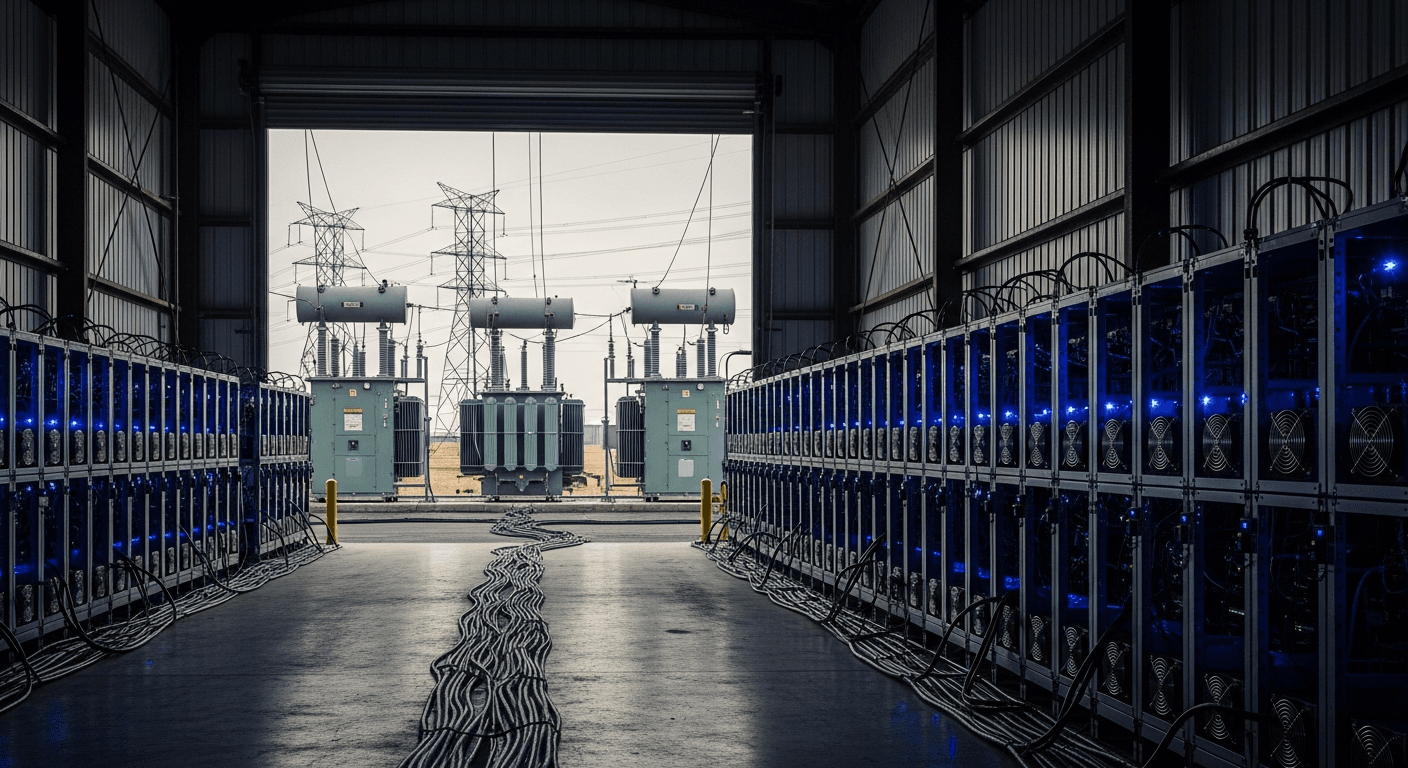
Leopold Aschenbrenner's Situational Awareness LP sold every public equity position it held on July 30 after prime brokers forced the unwind of a reportedly 4x-leveraged book, and Bitcoin miners were the unexpected beneficiaries.
Key takeaways
- Situational Awareness LP, which grew from roughly $225 million at its late-2024 launch to between $20 billion and $24 billion in AUM, sold its entire public equity book to a single unnamed buyer before Thursday's open after margin calls from Bank of America, Goldman Sachs, and JPMorgan Chase, per CNBC's David Faber. The leverage involved was reportedly as high as 4x.
- Bitcoin miner stocks in the fund's disclosed long book surged on the news: IREN climbed approximately 26% and Core Scientific (CORZ) gained approximately 21% as of approximately 10:50 AM ET on July 30; these are intraday figures and final close prices will differ.
- The liquidation is a leverage and risk-management blowup, not a repudiation of the underlying thesis: Aschenbrenner built the fund on the premise that power and data-center capacity are the binding constraint on AI scaling, the same thesis underpinning Bitcoin miners' energy-monetization value proposition.
Situational Awareness LP, the AI-focused hedge fund founded by former OpenAI researcher Leopold Aschenbrenner, sold its complete book of public equity positions to a single unnamed buyer before markets opened on July 30, 2026, first reported by CNBC's David Faber. The forced exit came after prime brokers Bank of America, Goldman Sachs, and JPMorgan Chase moved to satisfy reportedly 4x-leveraged margin requirements. The fund continues operating and now holds only private investments.
The Q1 2026 SEC Form 13F (filed May 15, 2026, available via SEC EDGAR) showed roughly $13.68 billion in total notional exposure as of March 31. The long book was concentrated in power, AI compute, and Bitcoin miners: IREN, Core Scientific, Riot Platforms, CleanSpark, Applied Digital, HIVE Digital Technologies, and Bitdeer Technologies were all disclosed positions. The same filing showed approximately $8.46 billion in put exposure against semiconductor names. The fund had posted returns of roughly 439% net after fees since inception through June 30, per its July 24 investor letter as reported by the Financial Times.
The Miner Surge Is Not Coincidence
IREN and Core Scientific posted the sharpest moves in the miner complex on July 30 because both carried meaningful weight in Aschenbrenner's disclosed long book. When a buyer absorbed the entire Situational Awareness public portfolio in one transaction, the forced-selling pressure that had been dragging miner equities down as an AI-infrastructure basket trade cleared in a single session.
The miner stocks had been trading in sympathy with AI infrastructure names like Bloom Energy and CoreWeave, not because Bitcoin fundamentals were weak, but because crossover institutional holders were force-selling the basket to meet margin. The July 30 relief rally reflects the market repricing miners on standalone fundamentals once that selling pressure exits. This is the AI-energy-mining nexus made visible in one trading session. The mechanism, that basket-acquisition forced buying and short-cover clearing drove the miner moves specifically, is an analytical inference; no primary source has stated it as confirmed fact.
The thesis Aschenbrenner built the fund around, that constrained energy and data-center capacity are the scarce input to AI scaling, is exactly what underpins Bitcoin miners' position in the power grid. CleanSpark's infrastructure commitments, the AMD-Anthropic power deal, and the race for firm, dispatchable power all point to the same constraint Aschenbrenner was betting on. The blowup was a leverage failure. The intellectual call was not wrong.
What the Unwind Actually Changes
Aschenbrenner's July 24 investor letter, as reported by the Financial Times, called the environment the most attractive entry point for AI investments since early 2025 (paraphrased; exact wording not confirmed verbatim). He opened an August 1 window for capital additions and cited a potential Anthropic IPO as a forward catalyst. CNBC reported a sizeable Anthropic stake was sold; a fund spokesman disputed that characterization, saying reports that the firm was marketing its Anthropic stake are "not accurate," per CNBC. That specific question remains unresolved, with both the reported sale and the denial on record.
What is clear: a single, unnamed buyer now holds the entire former Situational Awareness public book, including every disclosed Bitcoin miner position. Who that buyer is, and whether they are a long-term holder or a flip desk, will matter enormously for miner equity price action in the days ahead. That identity has not been disclosed in any primary reporting.
For long-term holders of miner equities, the sharper read here is structural. When a leveraged institutional tourist blows up on the AI capex trade, it creates temporary dislocation in the names that sit at the power-and-capacity constraint. Miners without reportedly 4x leverage are the cleaner expression of the same underlying bet, and the July 30 tape made that argument for itself.
What to Watch
If IREN, CORZ, and the broader miner complex give back the July 30 surge within the next five trading sessions and return to pre-liquidation-news lows without any corresponding deterioration in the AI capex cycle or power availability data, it signals the move was a pure technical short-cover with no fundamental bid behind it. That outcome would indicate institutional sponsorship for the miners-as-AI-infrastructure-proxy trade has thinned materially post-Aschenbrenner. If the gains hold or extend as the identity of the new book buyer becomes known, the thesis survives the stress test intact.
Sources
- CNBC, David Faber, Situational Awareness LP liquidation (first reported)
- SEC Form 13F, Situational Awareness LP, Q1 2026, filed May 15, 2026 (available via SEC EDGAR)
- Financial Times, July 24 investor letter reporting and 439% return figure (paywalled; cited via secondary attribution)
Frequently Asked Questions
Situational Awareness LP held Bitcoin miners as long positions in an AI-infrastructure basket. When prime brokers moved the entire book onto a single buyer, the selling pressure that had been dragging miner equities down cleared all at once. The stocks repriced upward as the forced-selling overhang disappeared. The specific mechanism, that basket-acquisition buying and short-cover clearing drove the miner moves, is an analytical inference based on the structure of the trade, not a conclusion stated explicitly in any primary source.
The fund's Q1 2026 13F filing (as of March 31, 2026) disclosed long positions in IREN, Core Scientific (CORZ), Riot Platforms (RIOT), CleanSpark (CLSK), Applied Digital (APLD), HIVE Digital Technologies, and Bitdeer Technologies. Position sizes as of the liquidation date are not confirmed; the 13F is a March 31 snapshot.
No. The fund blew up on leverage, not on a flawed thesis. The core premise, that power and data-center capacity are the binding constraint on AI scaling, remains intact and is being validated daily by the volume of capital chasing firm power commitments across the industry. Miners operating without reportedly 4x leverage hold the same exposure with a fraction of the forced-selling risk.


