Poolin Files Chapter 11 With $52M Asset Sale and 163M in Debt
Poolin Technology filed Chapter 11 in New Jersey on July 22, 2026, with up to $163M in debt against $1M, $10M in scheduled assets. A $52M stalking-horse bid for two West Texas mines covers roughly 32 cents on the dollar before fees and priority claims.
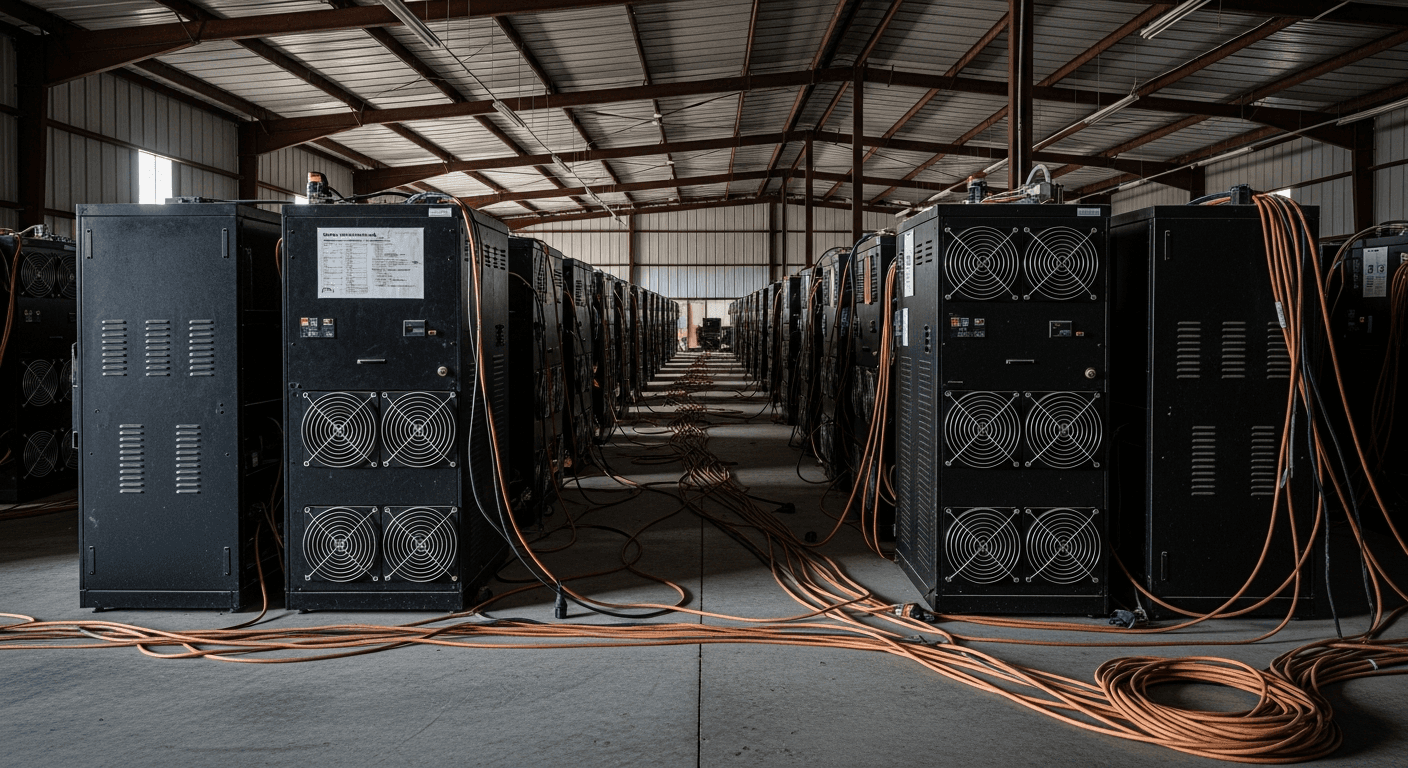
Once the world's largest Bitcoin mining pool, Poolin is liquidating. The math for creditors is brutal.
Key takeaways
- Poolin Technology and two U.S. affiliates filed voluntary Chapter 11 in the U.S. Bankruptcy Court for the District of New Jersey (Case No. 26-18325) on July 22, 2026, with estimated liabilities of $100M, $500M and only $1M, $10M in scheduled assets.
- A proposed $52M stalking-horse sale of the Tarbush ($37M) and Pyote ($15M) West Texas sites equals roughly 32 cents on the dollar against approximately $163M in unsecured IOU obligations, before administrative costs and priority claims take their cut.
- The 10,001-25,000 creditors holding Poolin IOU tokens since September 2022 are the real victims: this is what unvetted counterparty risk in a pool wallet looks like when it finally unwinds.
Poolin Technology PTE. Ltd., once the dominant force in Bitcoin mining by hashrate, filed for Chapter 11 bankruptcy liquidation on July 22, 2026, proposing to sell its two remaining West Texas mining sites for a combined $52M stalking-horse bid. The filing, first reported by Cointelegraph, puts a stark number on what miners who left earned sats in a pool wallet have been owed since 2022: roughly $163M in unsecured promissory notes, with a recovery path that looks like single digits after fees.
The Anatomy of the Collapse
Poolin and its U.S. affiliates, Lonestar Dream and Lonestar Taproot, filed in the District of New Jersey under Case No. 26-18325. The filing is a liquidating Chapter 11, not a reorganization. The company has no intention of emerging as a going concern.
Lonestar Dream ceased operations July 10, 2026; all mining had stopped by the July 22 petition date.
The proposed sale structure: $37M for the Tarbush assets (including assumed liabilities) and $15M for the Pyote site (power rights, equipment, all associated assets). Stalking-horse buyer is Thor CALAP LLC. A court-supervised auction is proposed, with a bid deadline that, per the proposed bidding procedures, has been reported as September 8, 2026 -- confirm against the filed docket before drawing final conclusions.
The marketing process generated 28 NDAs, seven LOIs, and three additional indications of interest. The $52M was the best the market had to offer.
The debt picture: court-estimated liabilities of $100M, $500M, with debts of almost $173 million, mostly owing to customers whose crypto funds have been blocked since 2022.
Approximately $163.7 million of that total are IOUs issued to wallet holders, approximately 11,700 of whom held balances exceeding $100. Those IOU tokens, issued at a 1:1 ratio to represent frozen BTC, ETH, and other balances, are now claims in a bankruptcy estate.
The backstory matters. Poolin transferred substantially all such collateral to Antalpha and borrowed approximately $213 million against collateral then valued at approximately $355.8 million.
After Bitcoin fell below approximately $16,800 in November 2022, Poolin ceased operations, and Antalpha liquidated Poolin Wallet's collateral , leaving thousands of customers holding IOU tokens.
The Custodial Wallet Was the Problem, Not the Pool
The Bitcoin network notices none of this. Poolin currently commands a negligible share of global hashrate, per Hashrate Index -- verify the live figure before publish, as pool rankings shift in real time -- down from the top position it held in 2019. The network is indifferent.
The creditors are not. The arithmetic here is merciless: $52M stalking-horse divided by $163M in unsecured IOU obligations equals roughly 32 cents on the dollar. Secured creditors and administrative costs (legal fees, CRO fees, auction costs) take priority.
Unsecured IOU holders sit at the back of the line. Real recovery could land in single digits.
Poolin ran a custodial wallet layer on top of its core pool business, then used that pooled customer collateral as the basis for a leveraged equipment purchase. Miners who pointed payouts to a wallet they controlled had zero exposure to the IOU freeze. Miners who left sats in the pool wallet made an unsecured loan to an operator they never vetted, backed by collateral that was already pledged elsewhere. The loan is not coming back at par.
That lesson sits at the center of every honest evaluation of bitcoin mining hosting and pool selection. The pool coordination layer is one product. The custodial wallet is another, with completely different risk.
Conflating them cost a lot of people a lot of money. For anyone still evaluating whether bitcoin mining is worth it in 2026, the Poolin estate is a useful case study in why payout address hygiene is not optional.
Sector Shakeout, Not Sector Collapse
This is the second Chapter 11 from a mining operator in 2026. NFN8 Group filed for Chapter 11 bankruptcy in the United States Bankruptcy Court for the Western District of Texas on February 2, citing a catastrophic fire at its Crystal City, Texas, facility as the primary catalyst. The sector is bifurcating: large-cap operators (MARA, Hut 8, IREN, Bitfarms) are pivoting aggressively toward AI and high-performance compute, while smaller and mid-tier operators carrying legacy custodial products and leveraged equipment purchases are getting cleared out.
What is worth watching is how much of the surviving pool industry still runs a custodial wallet product layered over its hashrate coordination. Poolin is not the only pool that ever offered wallet services. The question now is who else has a similar liability sitting off the balance sheet.
What to Watch
The proposed bid deadline is the first real data point. If competing bids materially exceed the $52M stalking-horse, unsecured creditors recover more. If the stalking-horse holds or is barely beaten out, the IOU holders get cents.
Creditors with claims in Case No. 26-18325 need to file proofs of claim; the U.S. Bankruptcy Court for the District of New Jersey is the docket. Michael DuFrayne's CRO declaration, once fully available on PACER, will give the most precise accounting of assets, the Antalpha loan structure, and the IOU issuance history. Pull it before drawing final conclusions on recovery math.
Sources
Frequently Asked Questions
What happens to miners who held funds in Poolin's wallet?
Creditors holding IOU tokens are part of the bankruptcy estate and must file proofs of claim in Case No. 26-18325 (D.N.J.). Recovery depends entirely on the auction outcome and creditor priority.
Unsecured promissory noteholders are last in line after secured creditors and administrative costs are paid. The realistic range, given the $52M stalking-horse against ~$163M in unsecured claims, is far below par.
Does this filing affect the Bitcoin network or global hashrate?
No. Poolin held a negligible share of global hashrate at filing, per Hashrate Index, and mining operations had already ceased before the petition date. The Bitcoin network is unaffected. The narrative consequence, validating self-custodied payout addresses and decentralized pool structures over custodial wallet products, is more significant than any hashrate impact.
What is the difference between a mining pool and a custodial pool wallet?
A mining pool coordinates hashrate and distributes block rewards proportionally. A custodial pool wallet holds those rewards on the miner's behalf until they withdraw.
Poolin's disaster originated in the wallet layer: the custodied balances became collateral for the Antalpha loan facility. Miners who directed payouts to a self-custodied address had no exposure to the freeze. The pool coordination function and the custody function are separate risks, and Poolin collapsed because most users never treated them that way.