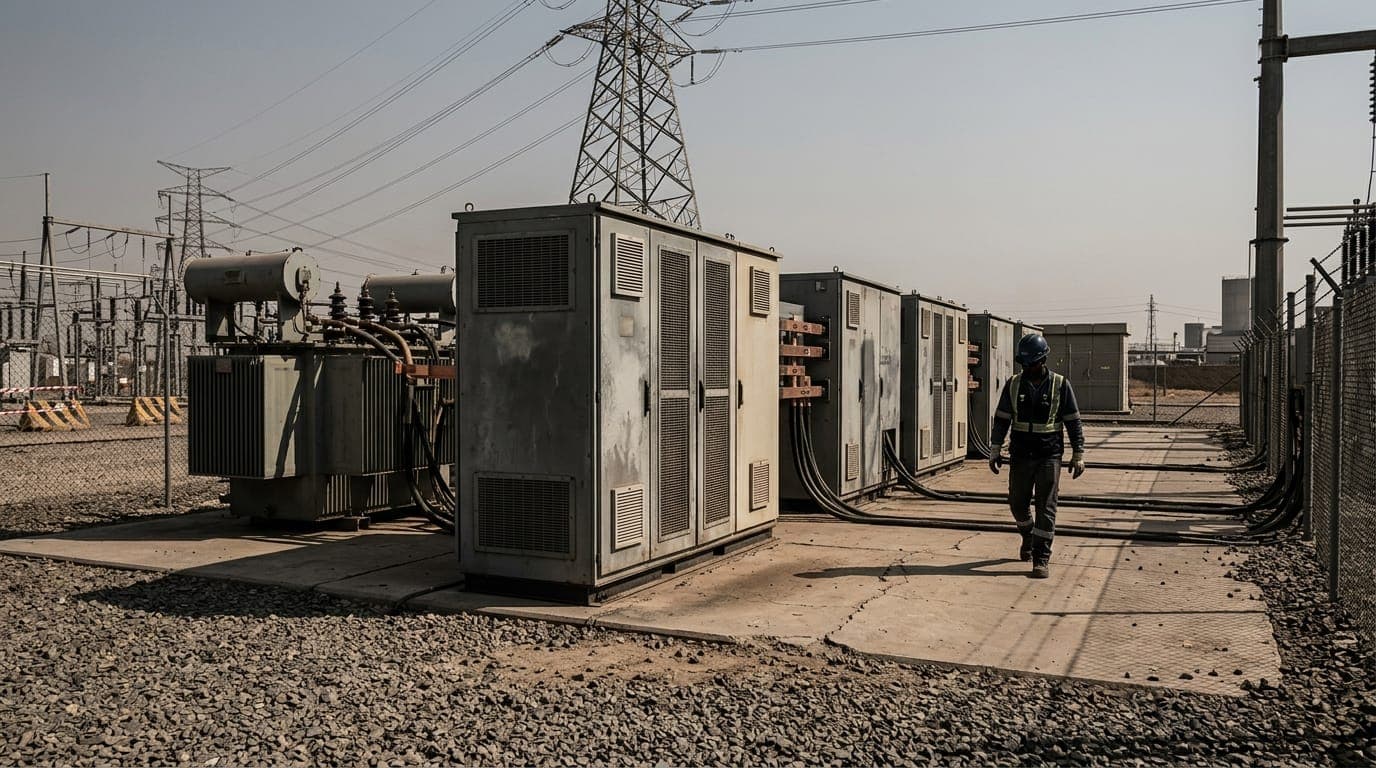
State Policy Is Strangling PJM, and Bitcoin Miners Are Watching
EPSA CEO Todd Snitchler makes the case that state-mandated plant retirements and permitting blockades, not PJM's governance structure, are manufacturing the grid capacity crunch that governors are blaming on the market.
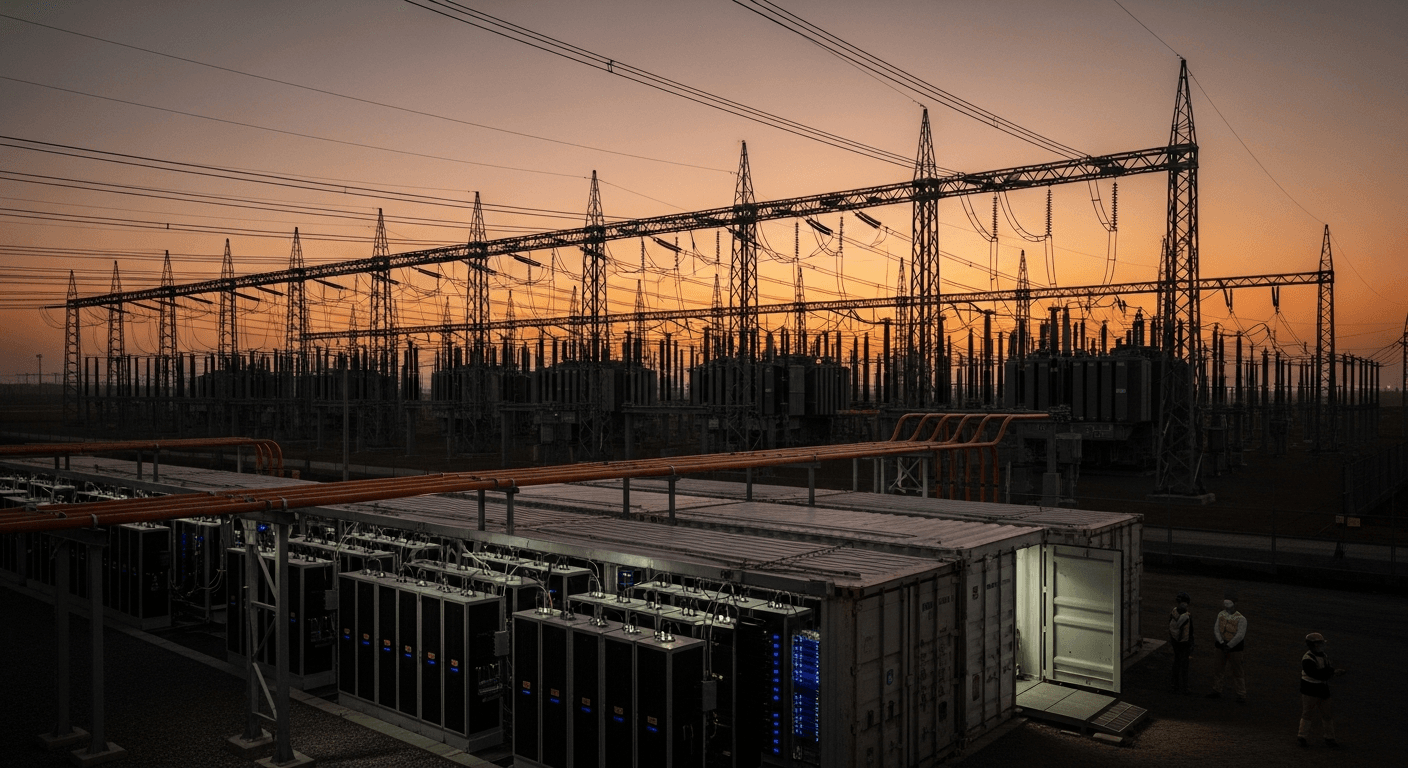
Governors are blaming the grid operator for a capacity crunch their own permitting offices created.
Key takeaways
- Over 37,000 MW of PJM-approved generation cannot break ground due to state and local permitting fights, while those same states mandate early retirement of working dispatchable plants.
- FERC has scheduled a Chairman-led technical conference on PJM governance for July 23, 2026, under Docket No. AD26-7-000, but restructuring stakeholder processes won't build a single megawatt.
- Bitcoin miners, as permissionless flexible load, are the honest price-takers in this distorted market, and the outcome of that July 23 conference will directly shape mining economics across the mid-Atlantic and Midwest.
Todd Snitchler, President and CEO of the Electric Power Supply Association (EPSA), published a sharp rebuttal on July 8, 2026, at RealClearEnergy, arguing that the real crisis facing PJM, the largest grid operator in the United States, serving 67 million people across 13 states and D.C., is a state-manufactured supply squeeze dressed up as a governance problem. The timing is pointed: FERC has scheduled a technical conference on PJM governance and stakeholder reforms for July 23, 2026, with Chair Laura Swett having already suggested publicly that PJM may have "grown too big to function."
The Supply Blockade Governors Won't Acknowledge
Snitchler's case rests on concrete numbers. More than 46,000 MW of PJM-approved projects, over a quarter of PJM's existing capacity, hold the right to build but cannot move forward. Of that, 37,000 MW cannot even break ground because of state and local permitting fights. Both figures are Snitchler's assertions drawn from his RealClearEnergy op-ed, and PJM's own Inside Lines reporting has separately noted that "a total of 46,000 MW of new generation has signed interconnection agreements and are ready to construct" but that "many of the projects are being hampered by factors outside of PJM's control, such as siting and permitting challenges." At the same time, state policy mandates have pushed working dispatchable plants into early retirement, tightening supply from both ends.
The structural fault line runs through the exporter/importer divide. Pennsylvania ships out roughly a quarter of everything it generates within PJM. Illinois, West Virginia, and Michigan also produce more than they consume. Virginia, Maryland, New Jersey, and Delaware are net importers, and that deficit is deepening as data centers expand across their footprints. When Virginia pulls in expensive power from its neighbors, Snitchler argues that's not a governance failure, it's the market accurately pricing what divergent state energy policies actually cost.
PJM, for its part, has been moving. The operator has cleared more than 60% of its interconnection backlog under a reformed study process (Snitchler's assertion in the op-ed, pending independent verification against PJM queue data), launched a separate Reliability Resource Initiative that pulled in more than 11,000 MW of new projects, a figure PJM itself confirmed in its 2027/2028 Base Residual Auction results, describing the RRI as attracting "11,000 MW of nameplate capacity in proposed, shovel-ready, high-reliability generation projects", and even accepted a price collar through 2030 to respond to political pressure from state executives. None of that addresses what PJM structurally cannot do: permit generation or draft legislation.
As Snitchler put it directly: "The states are absolutely responsible for chucking icebergs into the path of this ship, and if it goes down, they'll have themselves to blame for the aftermath."
What FERC's July 23 Conference Can and Cannot Fix
FERC Chair Laura Swett's remark at PJM's Annual Meeting on May 12, "If this can't be landed given PJM's huge and diverse footprint, perhaps it simply has grown too big to function," is the sharpest institutional admission to date that the regulator is weighing structural intervention. The July 23 conference, running 9 a.m. to 4 p.m. ET at FERC headquarters in Washington D.C. under Docket No. AD26-7-000, will examine whether PJM's stakeholder structure can respond fast enough to surging demand.
The governance question is real but secondary. Board composition and voting procedures don't permit a gas plant. If the conference produces structural changes that hand states more formal governance authority over PJM, it risks embedding the political preferences that created the supply squeeze deeper into market operations. If it reaffirms cleaner market design, it's a partial win, but only if states then allow permitted generation to actually get built.
The background pressure from governors is worth noting. At a September 23, 2025 technical conference in Philadelphia, governors from PJM states threatened to leave the grid operator entirely unless given a governance role, with Pennsylvania Governor Josh Shapiro leading the push and 11 states forming a "governors' collaborative." That threat surfaced five months before FERC scheduled its own conference. The sequencing suggests FERC is responding to political pressure, not purely technical findings.
The AI capex wave amplifies the stakes. FERC has already directed PJM to create new rules for co-located AI loads, responding to the data center buildout concentrated in Virginia, Maryland, and New Jersey, all net-importer states with restrictive permitting environments. That demand is inelastic. It shows up regardless of capacity market design. The grid repricing driven by AI infrastructure commitments is already real and accelerating.
Where Bitcoin Miners Fit
Bitcoin mining is the elastic load the grid needs and that politically captured regulators keep trying to complicate. Miners can curtail to near-zero power draw within seconds without equipment damage, the demand-response property that makes them uniquely valuable to grid operators managing sudden imbalances. That flexibility earns revenue directly: demand-response and capacity market participation turn grid stress into operational income.
The 37,000 MW stranded by permitting fights has a second-order effect that the state-level framing obscures. Broken permitting increases the availability of stranded or underutilized electrons, power that exists but can't reach a permitted load. Miners co-locating with existing generation or sourcing directly from producers operate outside the permitting chokepoint. The case for sovereign Bitcoin mining as energy policy, not just opportunistic arbitrage, runs directly through this dynamic.
The price collar PJM accepted through 2030 is the complicating factor. Artificially suppressing capacity market signals reduces the revenue upside for flexible loads while doing nothing to fix the supply shortfall. Miners hedging into demand-response programs still benefit from real scarcity pricing, but a politically administered ceiling compresses that signal. Bitcoin miners operating or planning to operate in PJM's footprint need to watch July 23 closely. More state governance authority over PJM's market structure would be a negative for clean price discovery. A reaffirmation of market-based capacity design, even with political noise around it, is the better outcome.
What to Watch After July 23
The FERC conference is not a rulemaking, it's a structured discussion. What matters is whether the record built there leads to a formal proceeding that hands states more direct authority over PJM market design, or whether FERC holds the line on competitive markets and redirects political pressure back to state legislatures where the permitting authority actually sits. Any formal notice of proposed rulemaking coming out of Docket No. AD26-7-000 in the months following the conference will be the real signal. If the thesis here is wrong, the tell is simple: a governance restructuring that resolves PJM's capacity shortage without any rollback of state permitting blockades or early-retirement mandates. That outcome would require believing process reform alone can build 37,000 MW of stranded generation. That's a hard case to make.
Update, July 14, 2026
PJM just dropped the results of its 2028/2029 Base Residual Auction this afternoon, and the number that matters is 6.8 GW. PJM said its auction to procure power for the year starting June 2028 fell 6.8 gigawatts short of what it will need to guarantee system reliability during demand spikes.
The shortfall follows a roughly 6,500 MW miss in the prior 2027/2028 auction, and these are the first auctions in PJM history in which the entire RTO fell short of the reliability requirement. Three consecutive years of price-cap auctions, three consecutive years of failing to clear enough capacity. That is not a trend line that bends on its own.
The capacity price came in at the FERC-approved cap of $325/MW-day.
Without that regulatory ceiling, the uncapped price for 2028/2029 would have been $554.72 per MW-day in most zones, meaning the cap is suppressing prices by roughly 70%. Generators are being paid well below what the market would otherwise clear, which is exactly the wrong signal to send when you need billions of dollars of new dispatchable build. PJM President and CEO David Mills acknowledged that "demand for electricity continues to grow faster than electricity supply" and said the grid is "working with government and industry leaders on multiple fronts to restore that balance."
PJM plans to seek FERC approval to hold a special "Backstop Procurement" in September to help address the near-term shortfall.
That backstop process would focus on new resources and give states options to tailor cost allocation to those they deem appropriate. For Bitcoin miners, the read is straightforward: a grid that cannot clear its own reliability requirement for three straight years, while simultaneously suppressing the price signal that would incentivize new supply, is a grid that will increasingly reward flexible load. Miners who can curtail on demand are not the problem here. They are the pressure valve the market needs while the permitting wars described elsewhere in this piece continue to block actual megawatts from reaching the interconnection queue.
Update, July 21, 2026
Now there's a dollar figure to put next to the capacity shortfall. Joseph Bowring, president of Monitoring Analytics, PJM's independent market monitor, pegs data centers at $6.3 billion, or 38%, of the $16.4 billion in total charges from the 2028/2029 Base Residual Auction. Zoom out one more step and the number gets harder to wave away: across PJM's last four base capacity auctions, data center-driven capacity charges totaled $29.4 billion, 46% of the $63.6 billion in total capacity charges over that period.
Bowring is not letting PJM off the hook on what that means structurally. He says PJM is "continuing to act like it's business as usual" and is not fully grappling with the ramifications of data center development, calling it "a paradigm shift" whose costs are being imposed on all other customers. PJM's senior communications manager, for his part, declined to engage with the Monitoring Analytics estimate, saying only, "Their numbers are their numbers."
The market monitor's proposed fix cuts to the structural core: Bowring said it is Monitoring Analytics' position that "data center load should be removed from the capacity market and procured through a dedicated auction." That proposal will land directly in front of FERC's July 23 technical conference. For Bitcoin miners, the competitive picture is now quantified: AI capex is not merely crowding the interconnection queue in theory, it is eating nearly half of every dollar spent in PJM's capacity market, and every one of those dollars raises the floor cost for every other load on the grid.
Sources
- EPSA / Todd Snitchler, RealClearEnergy op-ed, July 8, 2026
- FERC official event page, PJM Governance and Stakeholder Reforms, Docket AD26-7-000
- Federal Register, Second Supplemental Notice of FERC Technical Conference, July 8, 2026 (2026-13773)
- Federal Register, Original FERC Notice of Technical Conference, May 18, 2026 (2026-09924)
- EPSA response to PJM governors' grid reliability conference, September 23, 2025
- FERC fact sheet, FERC directs PJM to create new rules for co-located AI loads
Frequently Asked Questions
What is FERC's July 23 PJM governance conference actually deciding?
The conference is a technical discussion, not a final rulemaking. FERC is examining whether PJM's stakeholder process, the structure through which utilities, generators, state regulators, and end users negotiate market rules, can respond quickly enough to rising load from data centers and other large consumers. The specific questions on the table include board authority, state participation rights, and voting procedures. Any formal regulatory change would require a subsequent notice of proposed rulemaking under Docket No. AD26-7-000.
Why can't PJM just approve more power plants to meet rising demand?
PJM manages the interconnection queue and operates the wholesale electricity market. It does not issue construction permits, approve transmission corridors through state and local jurisdictions, or override state environmental regulations. The 37,000 MW cited by EPSA represents generation that has cleared PJM's interconnection process but is stuck waiting on state and local permits that the grid operator has no authority to grant or expedite.
How does Bitcoin mining fit into PJM's capacity crunch?
Bitcoin miners are dispatchable flexible load. They can reduce power draw to near-zero within seconds, making them effective demand-response assets during grid stress events. In markets where capacity is tight and real-time prices spike, that flexibility earns direct revenue through demand-response programs. The broader opportunity in PJM's footprint is that stranded generation (approved but unbuilt, or existing but without an obvious grid-connected buyer) creates power sourcing opportunities for miners operating outside the state permitting bottleneck.