Reuters Found $3.2B in Nvidia China AI Deals the Company Said Didn't Exist
Reuters reviewed more than 150 Chinese procurement notices and found over $3.2 billion in AI data-center projects explicitly specifying Nvidia's restricted H100, H200, and H800 processors, chips the company's SEC filings said it was legally barred from selling into China.
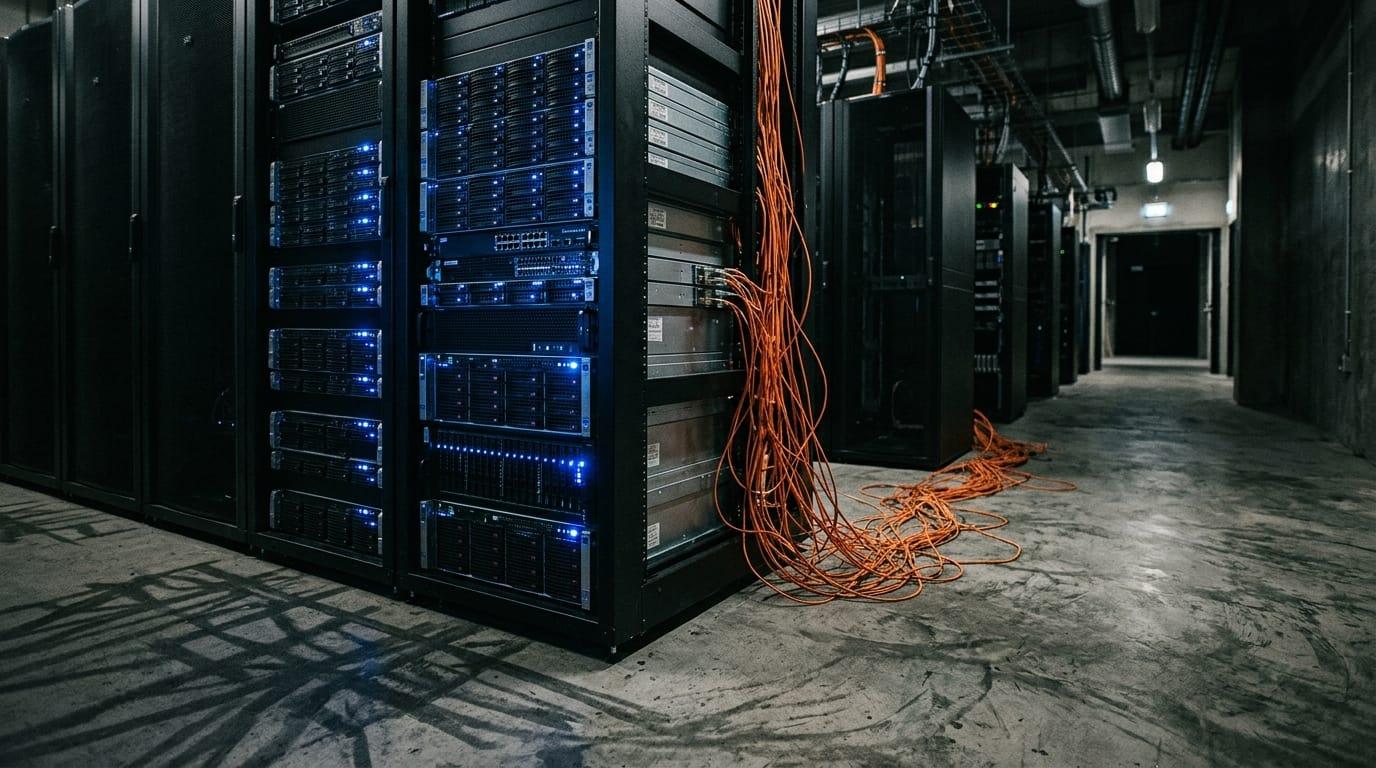
A document review of 150+ Chinese procurement notices puts Nvidia's official China narrative in direct conflict with the paper trail.
Key takeaways
- Reuters reviewed more than 150 Chinese procurement notices and found over 23 billion yuan (~$3.2 billion) in AI data-center projects designed around Nvidia's export-restricted H100, H200, and H800 processors.
- Jensen Huang resigned as Nvidia CEO on November 12, 2026, one day before the Reuters investigation published, while the company's SEC filings described it as "effectively foreclosed" from China's AI market.
- The procurement documents do not establish that Nvidia sold the chips illegally, but they do establish that Chinese entities specified and in some cases installed restricted Nvidia hardware at scale, without regulators or analysts catching it in real time.
Reuters published an investigation on November 13, 2026 showing that Chinese AI infrastructure worth over $3.2 billion was being built around Nvidia chips the company's own SEC filings described as effectively off-limits. Nvidia's FY2026 10-K stated the company was "effectively foreclosed from competing in China's data center computing/compute market." The procurement record Reuters assembled tells a different story.
The investigation, first reported by Reuters on November 13, covered more than 150 Chinese procurement notices, investment plans, construction contracts, and corporate disclosures. The total: over 23 billion yuan (~$3.2 billion) in AI computing projects explicitly specifying Nvidia's restricted processors.
What the Documents Show
The named projects are specific. A proposed computing center in Xianyou county, Fujian, specified H100 chips in a 6.2 billion yuan (~$873 million) plan. A 3 billion yuan facility in Shaanxi, where a subsidiary of state-owned Sinomach won the contract, called for H100 and H200 processors.
A 1.16 billion yuan construction contract in Gansu, awarded July 2026, laid out plans for approximately 3,072 Nvidia processors. A municipal cluster in Wuxi, Jiangsu, using H800 chips was reported operational as of March 2025.
The documents do not establish how restricted chips reached Chinese buyers. They establish that projects were designed around those chips, and in some cases that the hardware was physically present or on order.
That gap matters. The H100 was never supposed to ship to China at all. The H800 was a China-modified chip with reduced chip-to-chip transfer speeds, engineered specifically to clear early export rules, and subsequently banned anyway in October 2023.
The H20, a further-downgraded China chip, was banned under licensing requirements imposed in April 2025, a move that forced Nvidia to take a $4.5 billion inventory charge on excess H20 stock and purchase obligations. Nvidia reported $4.6 billion in H20 sales in Q1 FY2026 prior to those licensing requirements hitting, per the same filing.
Nvidia's Q1 FY2026 earnings guidance projected an $8 billion loss in H20 revenue in the second quarter from not being able to sell its H20 AI chips in China. The official story was clear: China was closed.
The Gap Between the Disclosure and the Document Trail
This is where the story gets uncomfortable for anyone who took Nvidia's public guidance at face value.
Nvidia's 10-K declared it "effectively foreclosed" from China's AI market, and the company's public earnings guidance described the $50 billion China market as "effectively closed." Meanwhile, Reuters' document review shows $3.2 billion in Chinese AI infrastructure specifying the company's restricted chips, and IDC, whose data was cited by Reuters, pegged Nvidia's share of Chinese AI-accelerator shipments at 34% in the first half of 2026, despite the controls.
The timing compounds the optics. Huang resigned on November 12, the day before the investigation published. Nvidia's board had separately opened an independent investigation related to allegations involving an entity called Megaspeed and alleged ties to a Chinese intelligence asset. Congress has since demanded a briefing on those intelligence asset ties. The Reuters procurement review is a distinct body of reporting, and there is no confirmed public finding that Huang violated export-control laws.
But the structure of the problem is not ambiguous: regulators didn't catch this, analysts didn't catch this, and the disclosure regime investors relied on was operating on management's word. A news organization with a document-review team caught it.
This matters far beyond Nvidia. The PLA-linked university that reportedly bought restricted chips through a blacklist loophole, the ghost companies reportedly cleared by Commerce to handle restricted hardware, these aren't isolated incidents. They are what a broken audit architecture produces. And separately, Oracle leasing Nvidia chips to Tencent while routing around export controls shows the same pattern at scale: the control regime is porous, and the opacity is load-bearing.
The second-order point for anyone paying attention to the AI buildout: the entire case for centralized AI infrastructure rests on the assumption that the institutions managing it are transparent and auditable. Reuters just showed that the most important hardware company in that buildout had a $3.2 billion paper trail in a country it told you it couldn't do business with.
What to Watch
Whether the $3.2 billion in procurement documents represents tender specifications that were never fulfilled, or actual hardware installations, is the investigation's most important open question, because those two scenarios carry entirely different legal and policy implications for Nvidia's disclosure record. Congressional pressure is already building. The board investigation is live.
Any independent audit confirming physical delivery of restricted chips to Chinese buyers under the current export regime would force a reckoning with how the SEC's disclosure framework handles material market misrepresentation. Watch the Q2 FY2027 10-Q filings and any updates on the board's independent investigation for the next data point.
Sources
- Nvidia FY2026 10-K (SEC filing)
- Nvidia Q1 FY2026 Earnings Release 8-K (SEC filing)
- Nvidia Q2 FY2027 10-Q (SEC filing)
- First reported by Reuters, November 13, 2026
Frequently Asked Questions
Does the Reuters investigation prove Nvidia broke US export control laws?
No. The procurement documents establish that Chinese entities specified and in some cases ordered or installed restricted Nvidia chips. They do not establish that Nvidia sold those chips illegally or that Huang personally directed violations.
How restricted hardware reached Chinese buyers at this scale remains an open question, and that is precisely what makes the story more consequential, not less. The controls failed without anyone catching it in real time.
What is the difference between the H100, H800, H20, and H200, and which are restricted?
The H100 is Nvidia's unrestricted flagship chip; it was never approved for sale into China. The H800 was a China-modified version engineered with reduced chip-to-chip transfer speeds to clear early export rules; it was subsequently banned in October 2023.
The H20 was a further-downgraded China chip banned under licensing requirements in April 2025, triggering Nvidia's $4.5 billion inventory charge. The H200 has been subject to licensing requirements, with the US government granting limited licenses for specific customers beginning in February 2026. Reuters found Chinese projects specifying all three restricted variants.
Why did Jensen Huang resign and what is the connection to this story?
Huang resigned as CEO on November 12, 2026, one day before the Reuters investigation published. Nvidia's board separately opened an independent investigation related to allegations involving an entity called Megaspeed and alleged ties to a Chinese intelligence asset. The Reuters procurement review is a distinct body of reporting, and no confirmed public finding links the two. The timing is notable; the causal connection is not yet established.