30-Year Mortgage Hits 7.28%, Housing Market Stalls as Bond Selloff Bites
The 30-year fixed mortgage rate hit 7.28% as of October 1, 2026, its highest reading since November 2023. Applications fell for a fourth consecutive week as the bond-market selloff prices out rate-dependent buyers and fractures the market along a wealth line.
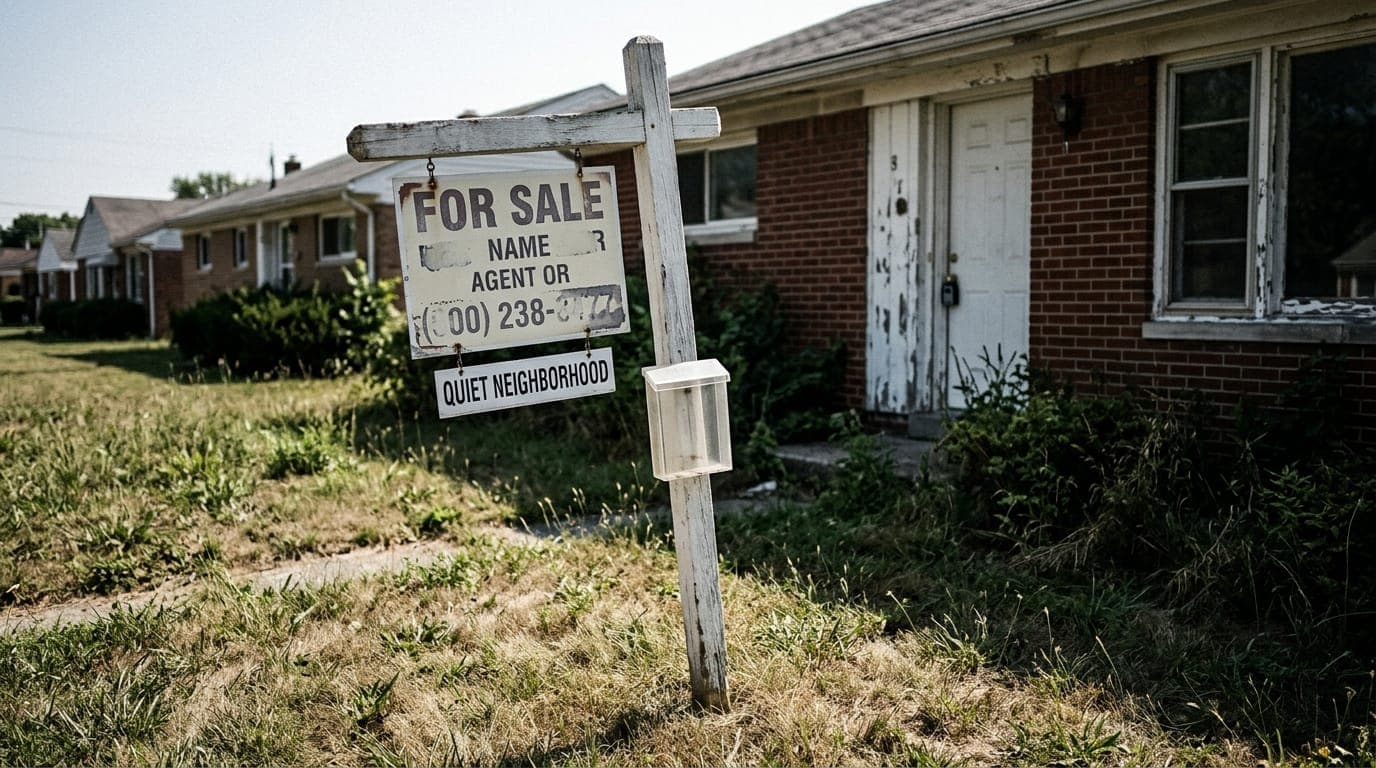
The bond-market selloff has crossed the threshold that breaks housing demand. Buyers are gone, and the math is not coming back on its own.
Key takeaways
- The 30-year fixed mortgage rate jumped to 7.28% as of October 1, 2026, its highest reading since November 2023 and a 25-basis-point surge from 7.03% the prior week, per Freddie Mac's Primary Mortgage Market Survey.
- Mortgage applications fell 6% for the week ending September 25, the fourth consecutive weekly decline, per the Mortgage Bankers Association; purchase applications were 14% below year-ago levels, refinance applications 56% below.
- The freeze is splitting along a wealth line: cash buyers at the high end keep transacting; anyone relying on a mortgage below the $500k range has effectively exited the market.
The 30-year fixed mortgage rate hit 7.28% as of October 1, 2026, according to Freddie Mac's Primary Mortgage Market Survey, the highest level since November 2023. Rates began September at 6.71%, per the Freddie Mac PMMS archive, and have now surged more than 57 basis points in a single month as the bond market continues to reprice sovereign debt risk upward.
The MBA's weekly survey put its own 30-year rate reading at 7.30% and confirmed the damage: applications fell 6% for the week ending September 25, purchase applications dropped 4% week-over-week (14% below the same week last year on an unadjusted basis), and refinance applications collapsed 9% week-over-week and 56% below year-ago levels. The adjustable-rate mortgage share climbed to 10.3% of applications, the highest since October 2025, as borrowers get increasingly desperate to shave any basis points they can.
"Mortgage rates jumped to their highest level in almost three years, pushing borrowers to the sidelines," said Joel Kan, MBA VP and Deputy Chief Economist. "The 30-year fixed rate increased for the sixth consecutive week to 7.3%. Mortgage applications fell by 6% due to the recent surge in rates, with purchase and refinance applications both declining to their slowest weekly pace since 2025."
The Market Is Not Frozen Uniformly
That's what makes this moment structurally different from a simple demand slowdown. The freeze has a fault line running through it, and it runs exactly where fiat distortion drew it.
Per The Wall Street Journal, Don Wessel, a real estate agent in Greenville, S.C., put it plainly: "Showings have stopped basically. I've got good listings in downtown Greenville, which is one of the hottest areas, and nobody's looking at them." He added: "I still see it declining and you're coming into the slow part with the holidays. I think there's a short window now for sellers to sell and then buyers get out of the market."
At the upper end, per the WSJ, Denver agent Anthony Rael described a completely different market: "They seem to be flush with cash, bringing 20%, 30% down payments into the mix. Whereas the lower market, let's just say closer to a half a million and below, is really struggling."
That bifurcation is the data point the rate number alone cannot convey. The housing market is seizing for anyone who needs a mortgage. Cash buyers, flush with appreciating assets, keep transacting. The rate-dependent buyer, the first-time buyer, the move-up buyer in the sub-$500k range, has been mathematically priced out.
The 15-year fixed rate moved to 6.60% from 6.42% the prior week, per Freddie Mac. The full rate path is tracked in the FRED data series.
The Lock-In Trap Has No Clean Exit
The second-order problem is the feedback loop the rate number does not capture on its own. Homeowners who locked in 2-4% mortgages between 2020 and 2022 have no rational incentive to sell. Trading a sub-$1,000 monthly payment for one north of $2,500 on the same loan balance is not a transaction most families can or will make. So they hold, supply stays constrained, prices stay elevated, and the monthly payment math for a first-time buyer at 7.28% becomes impossible.
Per the WSJ, Adam Wharton and his wife bought a new home in Georgia and listed their old house in early September. They received a full-price offer within four days. The buyer walked after rates jumped. Their last showing was two weeks prior, per the WSJ.
"Since that, it's been nothing," Wharton said. "No scheduled showings, no offers, no nothing from people who have looked at it before." Their existing mortgage carries a 3.35% rate and a monthly payment under $1,000. They're now considering pulling the listing and renting it out rather than selling into a frozen market.
That story is playing out across the country. The market is caught in a structural trap built by a decade of financial repression that has no painless exit. TFTC has covered the underlying housing market fragility in depth.
Freddie Mac's chief economist Sam Khater offered the institutional read: "With mortgage rates on their current trajectory, the housing market continues to be supported by favorable economic conditions." The data released alongside that statement tells a different story.
What the Wealth Gap Looks Like in Real Time
Housing has been the primary non-sovereign store of wealth for the American middle class for generations. When it becomes gated behind a 7.28% toll, the wealth gap between cash holders and mortgage-dependent buyers widens in real time, mechanically, without anyone having to make a policy decision to do it.
This is what the K-shaped economy looks like at street level. The bond-market selloff is not an abstraction. It shows up as a for-sale sign that stops getting showings.
The falsifiable thesis: the bond market's sovereign-debt-driven repricing has crossed the affordability threshold that structurally breaks housing demand for the mortgage-dependent majority. That thesis weakens if mortgage applications rebound sharply in the next two to four weeks without a material drop in Treasury yields (which would suggest demand is stickier than the data implies) or if the Fed pivots hard before year-end and rates rapidly retrace below 6.5%.
Neither of those outcomes looks likely from where rates are today.
What to Watch
The next Freddie Mac PMMS reads Thursday, October 8. MBA applications for the week ending October 2 follow shortly after. If the rate holds above 7% through mid-October, the seasonal slowdown Wessel flagged (holidays, school calendars, year-end listing pullbacks) will compound the demand destruction already in the data. Watch inventory figures for the first sign that locked-in sellers are capitulating; any meaningful uptick in supply without a corresponding demand recovery would pressure prices, which is the one variable that could start to move the math for buyers, if rates cooperate.
Sources
- Freddie Mac PMMS, October 1, 2026
- Freddie Mac PMMS data series, FRED, St. Louis Fed
- Freddie Mac PMMS archive
- MBA Weekly Mortgage Applications Survey, week ending September 25, 2026
- On-the-ground quotes (Wessel, Rael, Wharton) first reported by The Wall Street Journal
Frequently Asked Questions
Why are mortgage rates rising even if the Fed's rate path is uncertain?
The 30-year fixed tracks the 10-year Treasury yield, not the federal funds rate directly. When bond market participants demand higher term premiums because of ballooning sovereign debt issuance, sticky inflation, and heavy corporate borrowing (including for AI infrastructure build-out), Treasury yields move up regardless of where the Fed sets overnight rates. The Fed controls the short end; the bond market controls the long end.
What is the lock-in effect and why does it make the freeze self-reinforcing?
Homeowners who financed at 2-4% between 2020 and 2022 face a steep financial penalty for selling: their next mortgage comes at 7.28%. So they hold. Constrained supply keeps prices elevated even as demand collapses. Elevated prices plus high rates make the monthly payment math unworkable for first-time buyers. The market seizes from both ends simultaneously.
What does a housing freeze mean for someone trying to protect purchasing power?
Housing has historically been the primary way the American middle class builds and stores non-sovereign wealth. When it becomes inaccessible (to enter or to exit without taking a large rate penalty), a liquid, permissionless, fixed-supply asset without counterparty risk becomes more legible as an alternative store of value. The argument does not require anyone to make a philosophical case for Bitcoin. The monthly payment calculator makes it.