Meta Releases Muse Glimmer 30B: Frontier AI on a Consumer GPU
Meta released Muse Glimmer on August 10, a 30B-parameter open-weight agentic AI model under Apache 2.0 that fits on a consumer GPU and runs without any cloud dependency or usage restrictions.
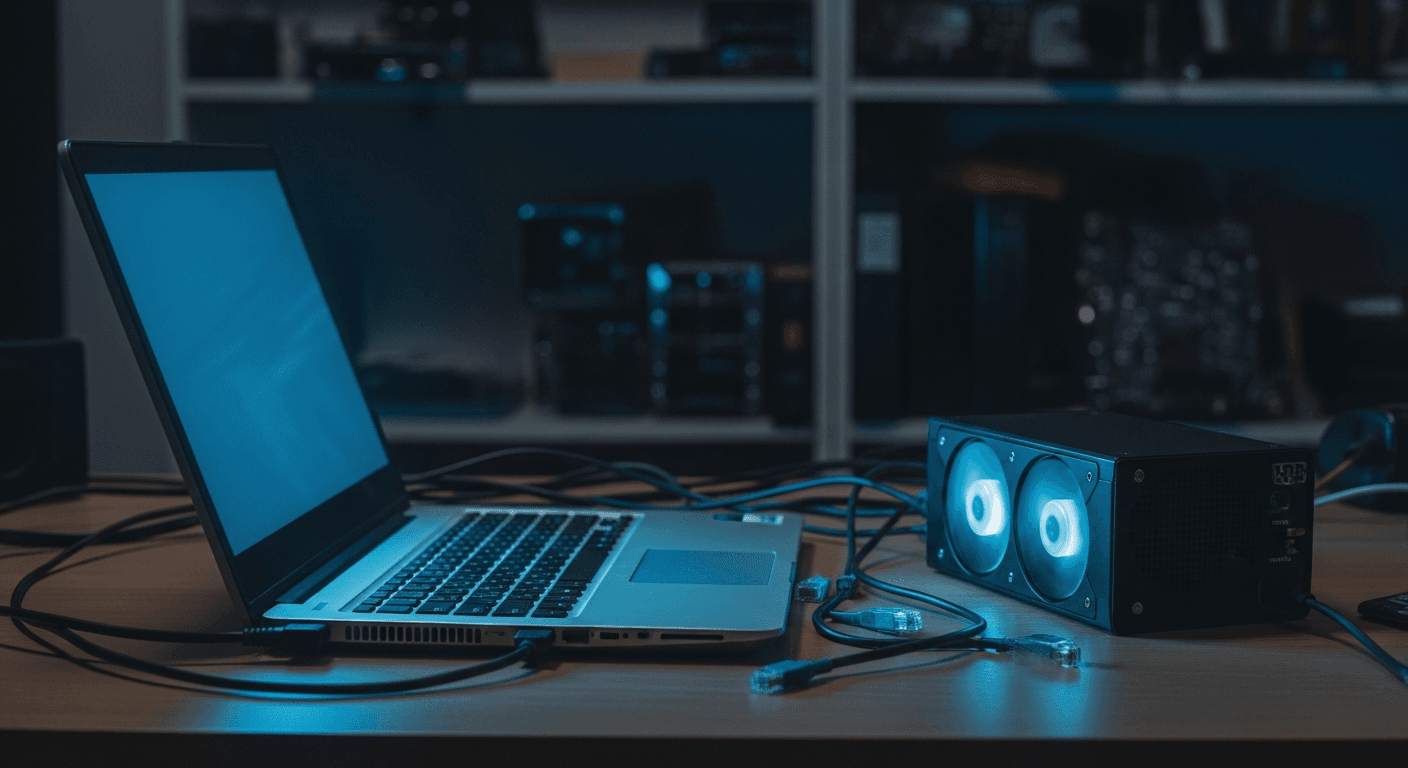
Apache 2.0, no cloud, no kill switch. The math on local AI sovereignty just changed.
Key takeaways
- Meta released Muse Glimmer on August 10, a 30B-parameter agentic AI model on Hugging Face under Apache 2.0 with no usage restrictions, quantized to under 20 GB so it fits on a 24 GB or 32 GB consumer GPU.
- Glimmer is distilled from Meta's frontier Muse Spark model and targets multi-step agentic tasks: bug fixing, tool calls, error recovery. Meta self-reports 3.1x throughput gains on an RTX 5090 via speculative decoding (unverified by independent benchmarkers as of publish).
- Mark Zuckerberg paired the release with a 6,500-word essay arguing distributed AI is safer than concentrated AI, called for U.S. policy to protect model distillation, and announced a $1B fund for data center host communities, with a full open-weight release of Muse Spark 1.2 to follow in coming weeks.
Meta's Meta AI Research dropped Muse Glimmer on Monday, August 10: a 30-billion-parameter agentic model published on Hugging Face under Apache 2.0, available for anyone to download, run, and modify without usage restrictions. It fits on a single consumer GPU. No API key, no subscription, no corporate permission layer required.
That last part matters more than the benchmark numbers.
What Glimmer Actually Is
Glimmer was built from Muse Spark, Meta's frontier model, via logit distillation: the smaller model trains on the larger model's outputs until it approximates the same reasoning. The resulting 30B model at full precision needs more than 55 GB of memory. Meta solved that with quantization, compressing the weights to under 20 GB so the model fits inside a 24 GB or 32 GB card with room to operate.
Speed comes from speculative decoding. A small companion model predicts text chunks in advance; Muse Glimmer checks and accepts the correct guesses in parallel. Checking is faster than generating, so throughput improves significantly. Meta reports 3.1x gains on an RTX 5090, 1.8x on an M5 Max, and 1.5x on an M4 Max. Those are self-reported figures from Meta's own testing. Independent benchmarkers now have the weights; treat the numbers as preliminary until they do.
Ollama 0.32.7 already supports Glimmer. The GGUF quantized variants are on Hugging Face now.
Meta positioned Glimmer against Google's Gemma 4 31B and Alibaba's Qwen3.6-27B, citing performance on SWE-Bench, MCP-Atlas, and other agentic benchmarks that measure real multi-step task completion. The company describes it plainly: "an open model built for always-on local agents."
The Sovereignty Angle
A locally-run agentic model is the AI equivalent of self-custody. No API call means no usage logs, no rate limits, no deplatforming, no model behavior changes pushed silently via a post-hoc policy update. For anyone running sovereign infrastructure, that matters structurally, not just philosophically.
The open-source AI case has always been that the artifact's value is independent of the distributor's motive. Meta benefits from the ecosystem it seeds, and open weights aren't charity. But the artifact is real regardless. Apache 2.0 is a genuinely permissive license; the prior Llama releases carried commercial-use thresholds and sublicensing restrictions that Apache 2.0 does not. (Verify USAGE_POLICY.md on the repo before treating this as a clean open-weight win in production deployment.)
The agentic dimension sharpens the stakes further. Frontier-capable models running locally without cloud dependency are the compute layer that makes autonomous machine-to-machine payments meaningful. An agent that can call tools, fix code, and recover from failures without phoning home is a runtime that could actually execute agentic AI payments without a corporate intermediary approving each step. The infrastructure for that payment layer is being built now; Block's Nostr-native agent workspace and the x402 Foundation are both live. What was missing was a frontier-class local runtime. Glimmer is a credible candidate.
Zuckerberg's essay makes the concentration argument directly: "The notion that AI is so dangerous that the only safe path is an extreme concentration of power seems inherently problematic." That argument maps cleanly onto the Bitcoin critique of financial surveillance infrastructure. Whether Zuckerberg believes it or is running a lobbying play, the logic is correct on its merits.
His distillation ask is the tell. Glimmer itself is a distilled model, released the same morning he wrote: "Some have tried to frame distillation as harmful, but I think it is important to protect the principle that you can learn from anything you can observe." He wants policy cover for the research method his lab just used. That's transparent, but it doesn't make the argument wrong.
What to Watch
The thesis that Glimmer is a genuine decentralization unlock rests on two conditions holding. First, that independent benchmarkers confirm the quantized model performs at or near Meta's self-reported numbers on real agentic tasks. If performance degrades significantly on multi-step tool use at 4-bit precision, the sovereignty win is overstated. Second, that the Apache 2.0 license is the operative document, not a separate USAGE_POLICY.md addendum that adds restrictions. Pull the repo and check before deploying in any context where that matters.
Meta also announced Muse Spark 1.2 open-weight release is coming in the next few weeks. If that ships on time and without a separate policy layer, the open-weight commitment is real. If the reported pause on open-weight releases quietly resumes after Spark 1.2, this week looks more like a PR moment than a durable direction.
Sources
Frequently Asked Questions
Can Muse Glimmer run on a gaming PC?
Yes, with the right GPU. The quantized model fits in under 20 GB, so any card with 24 GB or 32 GB VRAM (NVIDIA RTX 4090, RTX 5090, or equivalent) can run it. Ollama 0.32.7 already has native support. The GGUF variants on Hugging Face allow further quantization for cards with less VRAM, with some performance trade-off.
How is Apache 2.0 different from Meta's previous Llama license?
The Llama license restricted commercial use above certain user-count thresholds and limited sublicensing. Apache 2.0 carries neither restriction: anyone can use, modify, and distribute the model commercially with no user-count cap. The one caveat to verify: whether a separate USAGE_POLICY.md file on the Hugging Face repo adds conditions that Apache 2.0 alone does not impose.
What is model distillation and why does U.S. policy matter for it?
Distillation trains a smaller model on the outputs of a larger one, transferring capability without requiring the smaller model to train on raw data from scratch. Zuckerberg argues this technique should be protected as a matter of law, specifically because U.S. training-data restrictions that foreign competitors don't face already put American labs at a disadvantage. His policy ask: "U.S. policy must reduce this additional friction if we want American open source models to lead over time." Glimmer is the demonstration model for that argument.