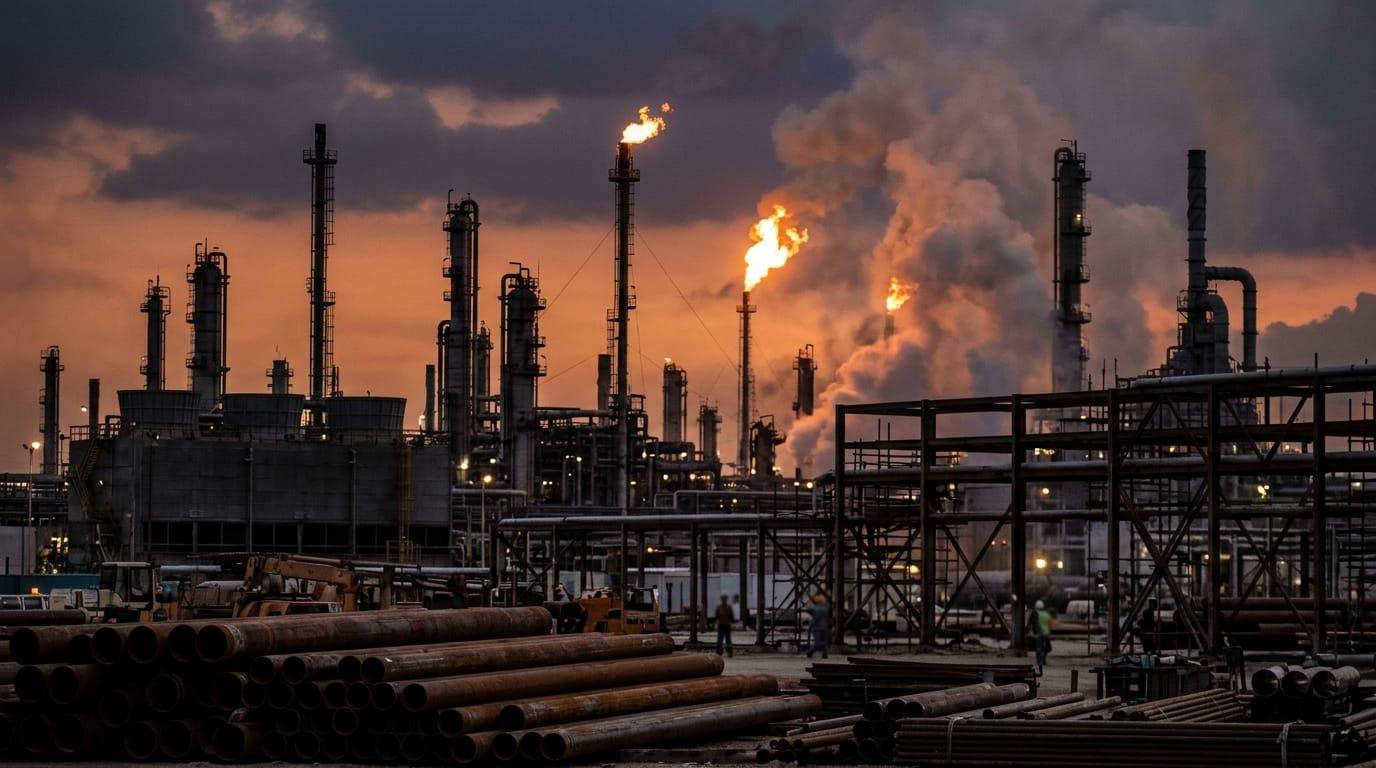
Libya Loses 365,000 bpd as Armed Groups Shut Sharara and Hamada Pipelines
Libya's NOC confirms two simultaneous pipeline shutdowns have wiped out roughly 365,000 barrels per day, with cumulative Hamada losses already at $30.8 million and Sharara, the country's largest oilfield, now dark.
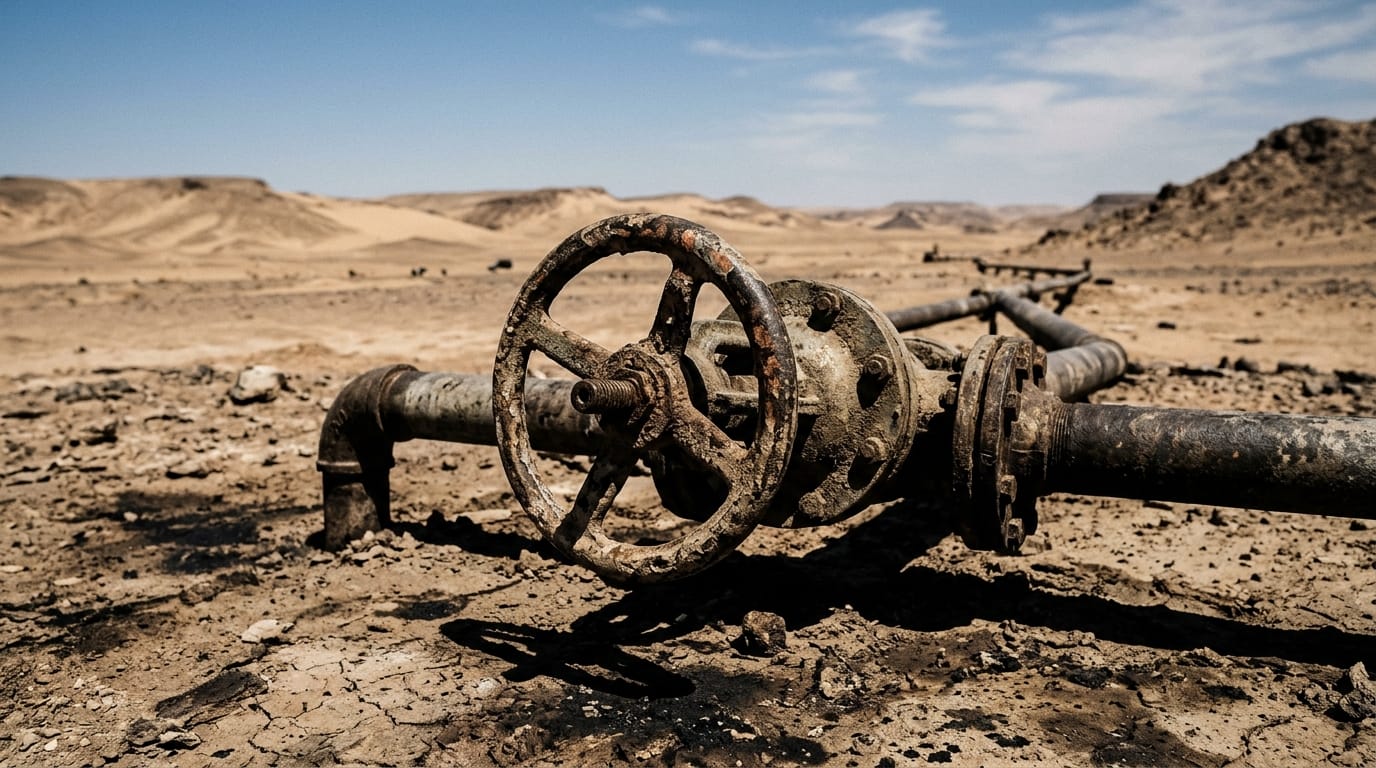
Armed groups have simultaneously closed valves on Libya's two key crude pipelines, taking the country's largest oilfield offline and pushing total production losses to roughly 365,000 barrels per day.
Key takeaways
- Libya's National Oil Corporation confirmed Monday that an outlaw group closed a valve on the Sharara pipeline, wiping out up to 350,000 bpd from the country's largest oilfield, on top of an ongoing Hamada pipeline shutdown now exceeding 20 days.
- Cumulative Hamada losses have reached 302,778 barrels, equivalent to $30.8 million at current prices, per NOC; combined daily losses from both closures now sit at approximately 365,000 bpd.
- The dual shutdowns expose a recurring failure of state protection for critical energy infrastructure, compressing global supply buffers at a moment when oil prices are already elevated and MENA tensions remain unresolved.
Libya's National Oil Corporation confirmed Monday that an outlaw group had closed a crude pipeline valve linking Sharara, Libya's largest oilfield, to Zawiya port on the Mediterranean. Combined with the Hamada pipeline shutdown now stretching past 20 days, Libya has lost roughly 365,000 barrels per day of output. NOC issued the statement "at a time when global oil prices are rising, and the country is facing a critical economic situation."
Two Closures, One Compounding Crisis
Sharara produces up to 350,000 bpd at full capacity, accounting for roughly one-third of Libya's total crude output. The field is operated by Akakus Oil Operations, a joint venture between NOC and four European majors: Repsol, TotalEnergies, OMV, and Equinor.
The Hamada pipeline, first shut by an armed group on October 30, drains a smaller 15,000 bpd from daily output. But the cumulative toll has reached 302,778 barrels and $30.8 million in losses at current prices, per NOC's own accounting. This weekend, NOC described the Hamada blockade as "directly undermining the strategic growth that the entire NOC workforce has been working tirelessly, day and night, to achieve."
NOC's board called on the Petroleum Facilities Guard and relevant government authorities "to fulfill their responsibilities in safeguarding oil facilities and infrastructure, preventing any attacks or disruptions to their operations, and intensifying efforts to reopen both pipelines and resume production as soon as possible."
What 365,000 bpd Gone Actually Means
The wire covers the supply number. The more important story is what this sequence reveals about the structural fragility underneath dollar-denominated energy markets.
365,000 bpd is roughly equivalent to taking a small OPEC member offline overnight. With OPEC+ already operating on thin spare capacity, an unplanned outage of this size carries direct pass-through into energy CPI, freight costs, and input costs across manufacturing. Central banks that declared inflation contained have to reprice that assumption every time a valve turns in southwestern Libya.
The European counterparty exposure sharpens the picture. Repsol, TotalEnergies, OMV, and Equinor, all navigating post-Ukraine energy insecurity, take direct balance sheet hits each time Sharara goes dark. That feeds into ECB policy, euro weakness, and capital reallocation pressure that historically benefits hard assets. This is a live budget problem for Spain, France, Austria, and Norway simultaneously.
Libya also does not have a one-time problem. A previous Sharara blockade ran from late 2014 through December 2016. A September 2026 Sharara shutdown by an armed group cost NOC significant losses, per NOC. The October Hamada closure followed weeks later. Now both are down together.
The Petroleum Facilities Guard, whose job is to prevent exactly this, has itself been the subject of wage disputes with a state that struggles to fund its own security apparatus. Oil revenues that would pay the guards are suppressed because the guards don't guard. That loop does not resolve without structural political settlement, which Libya has not achieved since 2011.
For context on how physical energy infrastructure can become a pressure point against global supply chains, the Houthi attacks on Hormuz tankers earlier this year showed exactly how that plays out in a tight-supply environment. Libya adds a second simultaneous fragility point in North Africa. These are not additive risks, in a supply-constrained market, they are multiplicative. Zawiya, the destination port for both affected pipelines, sits at the center of this compounding disruption.
Bitcoin does not fix Libya's civil war. But armed groups vetoing a nation-state's oil output with a single valve turn is a live demonstration of what happens to fiat-denominated revenue streams when the sovereign guarantee evaporates. Permissionless, non-sovereign money becomes more legible as a reserve asset every time this plays out.
The falsifiable version of that thesis: if the Libyan government secures the infrastructure rapidly, restores full output within days, and no additional disruptions emerge through Q1 2027, the "recurring structural fragility" framing weakens. A single quickly-resolved incident would undercut it. The September, October, and November 2026 sequence points the other direction.
What to Watch
NOC has not yet formally declared force majeure, though its September 2026 statement on the Sharara shutdown explicitly warned it "may be compelled to declare force majeure" if closure continued. Watch the Petroleum Facilities Guard's response timeline, any named identification of the armed group responsible for the Sharara valve closure, and whether Brent crude prices move on sustained Libyan outage rather than a single-day spike. A prolonged shutdown through December would put real pressure on year-end energy CPI prints in Europe.
Sources
Frequently Asked Questions
How much of Libya's total oil output does Sharara represent?
Sharara produces up to 350,000 bpd at full capacity, accounting for roughly one-third of Libya's total crude production. Combined with the Hamada closure, the two shutdowns have eliminated approximately 365,000 bpd from Libyan output, per NOC's November 23 statement.
Why does Libya keep experiencing these pipeline shutdowns?
Libya has been politically fractured since Gaddafi's fall in 2011. Armed factions, including groups connected to the Petroleum Facilities Guard itself, repeatedly weaponize oil infrastructure to press wage and political demands. The state's inability to credibly fund or command the guard creates a structural loop that has produced repeated closures across Sharara, El-Feel, Hamada, and other fields for more than a decade.
What does a Libyan supply shock mean for oil prices and inflation?
Libya is an OPEC member. Unplanned outages of this size, stacked on existing MENA supply pressures, remove market buffer at a moment when OPEC+ spare capacity is limited. That has direct upside pressure on Brent crude, which flows through into energy CPI and goods inflation broadly, complicating central bank rate-cut timelines heading into 2027.