Bianco: Refinery Strikes and De-Globalization Lock In Structural Inflation
Bianco Research founder Jim Bianco argues two structural forces, destroyed Russian refining capacity and Washington's bipartisan lock on protectionism, are compounding into a goods inflation floor the Fed has no clean policy tool to address.
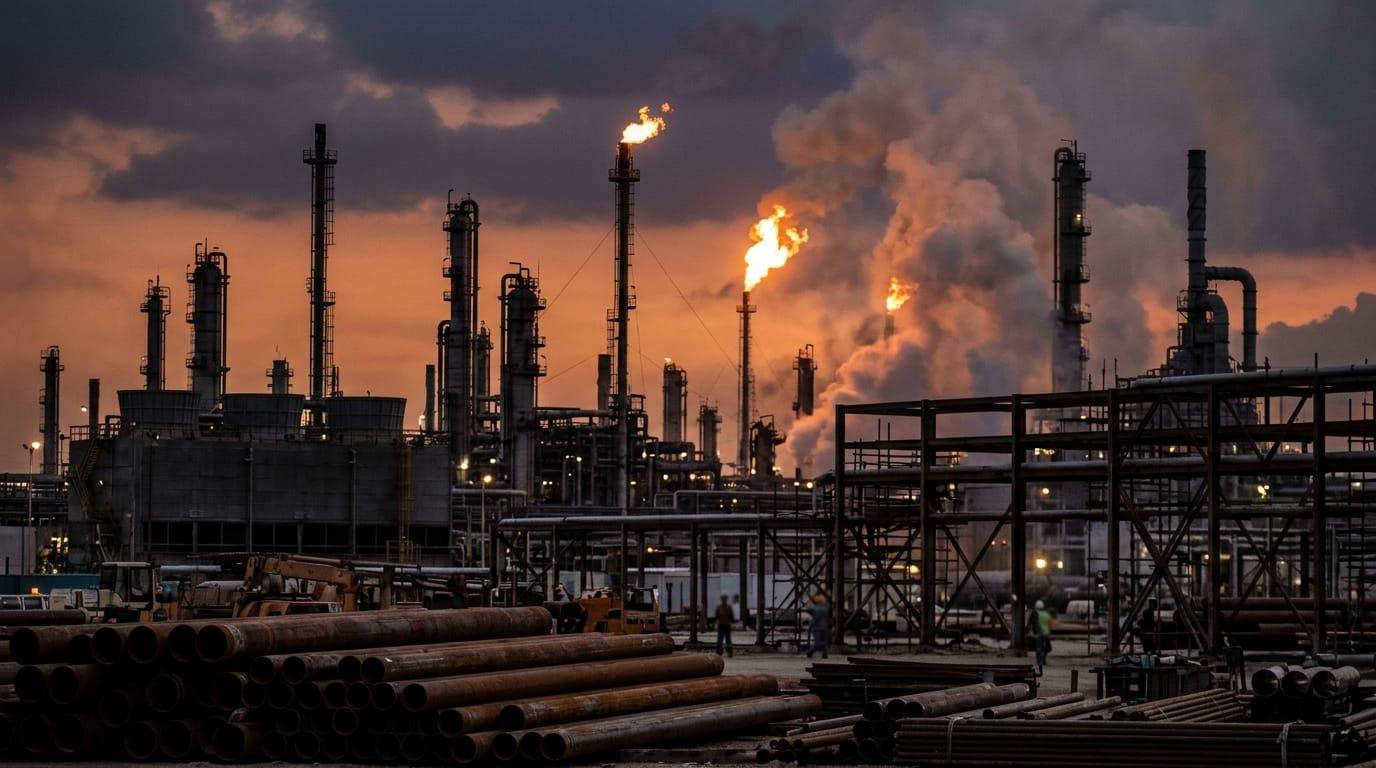
Jim Bianco says cheaper crude means nothing when the refineries to process it are on fire or politically off-limits.
Key takeaways
- Ukrainian strikes on Russian refineries have created a crude surplus alongside a refined-product shortage, with global refinery utilization near capacity, meaning lower oil prices are not translating into cheaper diesel.
- Bipartisan U.S. protectionism, from Chinese EV import bans to laws preventing insurance coverage of overseas medical procedures, has legislated away Americans' access to cheaper foreign goods, cementing a higher goods inflation floor regardless of administration.
- Bianco argues the Fed is trapped: two structural forces are now reinforcing each other in a way the central bank's existing models don't adequately price, with no clean policy lever available.
Jim Bianco, founder and president of Bianco Research, appeared on ZeroHedge Debates' WTF Is Happening In Markets? livestream on November 23, 2026 alongside Brent Johnson (CEO, Santiago Capital) and Dave Collum (Cornell University professor) to argue that inflation will prove far more persistent than markets expect. His case rests on two compounding structural forces: the systematic destruction of Russian refining capacity by Ukrainian strikes, and Washington's bipartisan lock-in of protectionism that has closed off cheaper foreign goods for American consumers.
The Refinery Bottleneck the Crude Price Doesn't Show
The energy story that surfaces in headlines is falling crude prices. The story Bianco is telling is different.
Ukrainian strikes have taken substantial Russian refining capacity offline. Crude is still moving out of Russia, but the downstream infrastructure to convert it into gasoline and diesel is damaged. The crude has nowhere useful to go.
"The Ukrainians have blown up a lot of refineries in Russia. So hey, oil's getting out, but where am I gonna send it? All the refineries in Russia are on fire and I can't send it right back to the refineries in the Middle East to turn it into gasoline. So who wants this oil?" said Bianco.
The answer, per Bianco, is effectively nobody, because the rest of the world's refining infrastructure is already running near its limits. "Every other refinery is running at 97%. They don't need more oil. We need more refining capacity. The price of oil is going down, but the price of diesel isn't. And that is going to continue to be an issue."
Diesel is the price of everything that moves. It powers every truck, every farm, every distribution network. A crude surplus that cannot be converted into diesel is a bottleneck dressed up as abundance, and it feeds directly into the goods inflation Bianco says now has no near-term release valve.
(Per the EIA Weekly Petroleum Status Report, U.S. refinery utilization historically runs 85-93%. The 97% figure reflects Bianco's spoken characterization of global capacity constraints; verify against the most current EIA release.)
De-Globalization as a Bipartisan Inflation Policy
The refinery problem is a supply shock. The de-globalization problem is a policy choice, and Bianco argues it now has the same inflation effect regardless of which party holds power.
"The tide has turned when it comes to globalization. We are no longer searching the world for the cheapest place to make stuff," Bianco said. "That's why I think we are stuck with more goods inflation, and we're going to be at a higher inflation level."
His examples are concrete. BYD sells an EV in China for approximately $15,000 (the specific model and current Chinese market MSRP should be confirmed at publish; the figure is Bianco's characterization of the price differential). The 2026 Tesla Model 3 starts at $36,990 in the U.S. The gap is explained in large part by import bans and tariffs that keep the cheaper product out of the American market, not by physics or labor costs alone.
The same dynamic applies in healthcare. Bianco's illustrative example, stated as an attributed claim rather than a verified dataset: "The average hip replacement in the United States is $70,000. The average hip replacement in India is $10,000. Why can't you go to India and get the hip replacement? Because we put in laws that your insurance company won't cover it."
Whether or not the precise figures survive independent verification, the structural point is sound and consistent with published international health cost comparisons. Americans are legally and financially prevented from accessing cheaper versions of goods and services that exist and function elsewhere. That is an inflation floor enforced by statute, not by scarcity.
Why the Fed Cannot Solve This
This is where Bianco's thesis becomes a problem for anyone expecting the central bank to eventually normalize.
The Fed's disinflation framework assumes the inflation that began post-2021 was cyclical: pandemic disruptions, fiscal stimulus overhang, supply chains that would eventually heal. If Bianco is right, two of the structural inputs driving goods prices higher are not cyclical. Destroyed refinery capacity does not rebuild quickly. Bipartisan political consensus on protectionism does not reverse on a rate-cut cycle.
The sovereign debt math tightens in this environment. The U.S. is rolling over trillions in debt at elevated nominal rates. If the inflation floor is structurally higher, the Fed faces a genuine trap: cut rates to relieve debt-service pressure and risk re-accelerating inflation; hold rates to fight inflation and risk breaking sovereign borrowing costs.
Either path is a form of loss. The politically viable exit, as it has been before, is to let real rates drift negative and quietly default on debt obligations in inflation-adjusted terms.
That is the environment where Bitcoin's fixed-supply thesis earns its keep. Every tariff, every import restriction, every law preventing an American from buying a cheaper hip replacement or a cheaper car is a government-enforced extraction tax on the productive class, financed by the currency that inflates to cover the spread. Bitcoin does not eliminate that extraction politically. It hedges it financially.
The falsifiable version of this thesis: if Russian refinery capacity is meaningfully restored within 12 months, AND a future administration reverses tariff architecture on Chinese EVs and manufactured goods, AND core CPI falls below 2.5% and holds for two consecutive quarters, then Bianco's structural inflation floor thesis fails and the Fed regains conventional policy space. All three conditions would need to converge. Any one alone is not enough.
What to Watch
The near-term tell is the crude-to-diesel spread. If diesel prices begin tracking crude lower, the refinery bottleneck is easing. If that spread widens or holds even as crude softens, Bianco's bottleneck thesis is tracking correctly.
On the de-globalization side, watch for any bipartisan movement on tariff rollbacks or healthcare coverage portability legislation. Neither appears imminent. The debate is available in full on YouTube and Spotify.
Sources
Frequently Asked Questions
Why does diesel stay expensive even when crude oil prices fall?
Crude oil is the raw input. Diesel is a refined product that requires functioning refinery infrastructure to produce. When refinery capacity is offline or running near its physical limit, additional crude supply cannot be converted into diesel fast enough to lower the price of the finished product. The bottleneck is in the processing layer, not in the ground. Bianco's argument is that Ukrainian strikes on Russian refineries, combined with global utilization near capacity, have created exactly that condition: a crude surplus that cannot relieve the diesel shortage.
How does de-globalization raise consumer prices?
Globalization lowered goods prices by routing production to the cheapest capable supplier. De-globalization reverses that by legally or financially blocking access to cheaper foreign alternatives, through import bans, tariffs, and insurance coverage restrictions. The result is that Americans pay a domestic price premium on everything from electric vehicles to medical procedures, enforced by policy rather than by genuine production cost differences. That premium is effectively a persistent, government-mandated floor on goods inflation.
How does persistent structural inflation affect Bitcoin's investment case?
If inflation stays structurally above target, the Fed's ability to cut rates meaningfully is constrained. That compresses the real return on bonds and cash, and it erodes the purchasing power of dollar-denominated savings over time. Bitcoin's fixed supply of 21 million coins makes it the only liquid macro asset whose monetary properties cannot be altered by a policy committee decision. In a world where the currency inflating the debt is also the currency paying your salary and storing your savings, a non-sovereign, fixed-supply asset becomes a hedge against the policy trap itself, not just against a single inflation print.