Transcript: John Tinsman: AI Stocks Are a Generational Trade
Full speaker-labelled transcript of TFTC with John Tinsman.

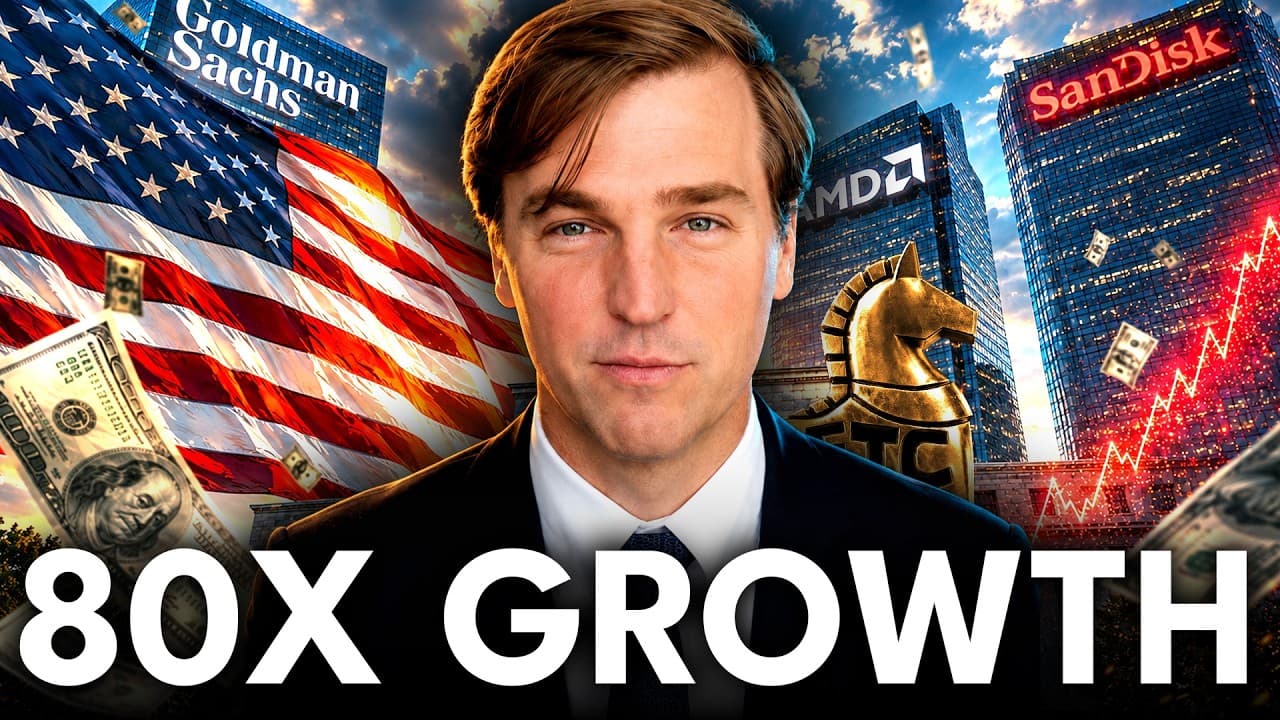
Full speaker-labelled transcript of TFTC with John Tinsman. Read the written article: John Tinsman: AI Stocks Are a Generational Trade. Click any timestamp to watch that moment on YouTube. Machine transcription, lightly cleaned, may contain errors.
Marty Bent [0:01] John Tinsman, welcome to the show.
John Tinsman [0:04] It's a pleasure to be here, Marty. Thank you.
Marty Bent [0:06] Pleasure to have you on such short notice, too. I think we threw this together less than 12 hours ago. I'm excited to have this conversation because we've we've had analysts covering the AI space on quite a few times over the last year. Jordy Visser, probably the most prominent. I've really liked his coverage and was telling you before we hit record, I've I've found some clips of you talking about your thesis and what you're doing. And said I had to reach out to John, get him on the show. And for anybody who's unaware, John is the founder and portfolio manager of AOT Invest, which trades on NASDAQ.
Marty Bent He's also the director of procurement and investments at Twin State Inc. family fertilizer business, which is maybe a topic we can get to later. But I think really respecting your time and jumping into it, I think first laying out your framework, and I believe your thesis is low marginal cost, high growth businesses, trying to find who can outlay the least capital and get the the highest multiple on that capital for for your ETFs and I think just walking us through that because most people hear AI investing, they think Nvidia, but your framework filters for something more specific from what I understand.
John Tinsman [1:19] Yeah, so my first ETF I launched in 2022 is AOTG. That's the ticker, the AOT Growth and Innovation ETF. so you know, I came from the world of market making, which was all about high speed and algorithm and h algorithmic trading and statistical probability. So I tried to take that statistical probability to long-term investing. And so when you invest, you know, 10 years from now, you can almost guarantee that the stocks that have gone up the most. Have had the best earnings growth. So, like in 10 years, if there's a company that's earning 30x more, that is probably have gone up quite a bit. and So I think like when you invest for the future, you think, well, what companies give me the best probability of earning the most in the future?
John Tinsman And so the first thing I came back to was the companies that are earning the most today, like growing the fastest earnings today. So like companies that have really high earnings growth statistically are the most likely to be doing that again tomorrow. So I target and I wait by high earnings growth and high revenue growth, which is really unlike modern investments, I think, because the modern investments I think fall into two categories. You've got the you've got The index funds that are weighting by market cap. So, like if you have a growth fund, Apple might be a top weight. And Apple's like barely growing faster than inflation, right?
John Tinsman And so why would you not put a top weight in something like Micron instead if they're growing their revenue at 300% year over year? You know, like it's a good question to ask. Why would you not wait higher on companies like AMD if and Sandisk if they're growing their earnings at a thousand percent year over year? You would think in a growth fund, you would want the highest possible growth. so that's what I do in AOTG. Then the the and then the other thing about active management, modern active management, is that they focus a lot on like the betas and the sharp ratios and things like that.
John Tinsman And that was kind of counterintuitive because you're using a backward looking volatility metric. So like it's not necessarily indicative of the future. Meanwhile, you kind of avoid companies that are doing really well if they just go up and down too much, maybe like Sandisk and Micron. So like I kind of take a common sense approach to buying high growth companies at the most
John Tinsman [3:27] reasonable valuation metrics possible. So if there's something like super overpriced like Palantir, it won't be in my fund. And you know, even if it is decent growth, like why would you even bother wasting your ammunition on it if you can buy something at one-tenth the valuation metrics and three times the growth? So I take that approach with AOTG. And then number two, the second highest thing I found correlated with long-term stock price performance in my research was low marginal cost. And I think this one's really interesting because nobody else was focusing on it. And that's the second criteria for AOTG, high growth and low marginal cost.
John Tinsman So low marginal cost is the cost to produce one additional unit of good. So think about a company like Microsoft. If they make one additional unit of Microsoft Office and sell it to you, that costs them nothing to make. That means they have a hundred percent profit margin, which is great for for shareholders. That means they can scale to meet demand without any debt. and then they can also have an enormous amount of key free cash flow to keep innovating. So you've got higher innovation, higher profits, higher growth. you compare that to a traditional company like Boeing. If they have to build another airplane for you know, and they're selling it for a hundred million dollars, it might actually cost them ninety-nine million dollars.
John Tinsman And if they really wanna grow, so they have a very low profit margin on new sales. And if they really wanna grow, they have to build new factories. And then they have to sell product at a negative profit margin. To steal the business from a company like Airbus. So growth, not only is it funded by huge amounts of debt, it comes instead with 100% profit margins, it comes with negative profit margins and losses. So that's traditional industry. I learned this in my family business, a fertilizer, because I always like I'm an ambitious guy. And everybody's like, no, if you grow the business, you'll just light your money on fire and you'll never see it again.
John Tinsman And so it's like, let's just be happy with what we have. And
John Tinsman [5:17] It was hard for me to wrap my head around that being you know, wanting to grow and do better than the year before every year. so and so I take that investment approach, that I've learned from personal, you know, managing family businesses and took it to an ETF and focus on that high growth, low marginal cost within profitable businesses. And so it's been out for, you know, three and a half or four years and it's up, you know, it launched at 24 on the NASDAQ and it's trading, I think it traded yesterday in the 63. So in in that short amount of time, it's up over 160%. so it's been great to do well for shareholders, of which I'm a big one, of course. It's like, I have all my money in. Yeah.
Marty Bent [5:59] Well, I mean jumping r like deeper into the framework and particularly I think your your hottest thesis right now, which is being all over this XAI anthropic deal, which was announced I believe last week or the week before, where Anthropic, I believe they're paying what, one point nine, one point six to one point nine billion a month in compute from one of the Colossus sites.
John Tinsman [6:17] Yeah. Yeah, yeah, and I tweeted about it because I hadn't seen anybody talk about it. I'd seen people talk about, they're leasing it, but nobody had talked about the profitability metrics. They were open up the, they opened up, it's so crazy. Marty, they opened up the S1 and they're like, ha ha ha, look at how much money XAI is losing. And in that, they basically had $15 billion a year coming online like next month. So like in like three days. And they somehow didn't realize that it's gonna be making money. Like, like not only is the XAI revenue gonna jump 300%, maybe a lot more, but year over year, but also they're gonna be making a ton of money.
John Tinsman And so, and so the so like everybody was just kind of wrong on their take. And so I tweeted this, and like all the celebrities are in the replies. It's gotten like hundreds of thousands of views on X, maybe millions by now, haven't checked. But but the interesting thing is that they spent Three to four billion. Some people say as high as seven billion. And these are kind of closely guarded secrets. You kind of have to look at how much XAI was spending and try to say, okay, how much of that did they spend on Colossus One? But they build a 300 megawatt data center.
John Tinsman They did it in 122 days. and you know, this thing probably costs a couple hundred million dollars a year to run on the very highest side. You know, it might cost only 150, I don't know. but So if they spent four billion on it, let's just say, and they they lease it to XAI for fifteen billion dollars a year for three years, they will make forty-five million dollars on a four million dollar invest or billion forty-five billion dollars on a four billion dollar investment. So that's a ten X ROI. And I think in three years the asset is probably will appreciate in value. So like I don't think like it's depreciating.
John Tinsman I think it'll still be very useful in three years. So so the ROI is really a lot higher than 10x, and in my opinion. And so that's like the tip of the iceberg because I think this is a closely guarded secret in the industry. Nobody wants to talk about how much money they're making in data centers because they don't want everybody to know. At the same time,
John Tinsman [8:23] The hyperscalers are spending a trillion dollars now this year building them. And you know, did you know like Microsoft and Google historically their return on capital invested is over 35%? And why are they spending so much more now? Is the ROI trending upwards to a hundred percent? And if you look at Google Cloud, if you look at Microsoft Azure, if you look at Amazon Web Services, Oracle, it seems like it quite possibly is. Like The revenue growth is accelerating, the profit margins are getting fatter and fatter. And I think there's a chance that what we're doing is we're building data centers in the US and we're leasing it out to the rest of the world at like 90% profit margins.
John Tinsman And I live in Iowa, I'm not sure where you are, Marty, but like the data center boom here is huge. Like my neighbors work for Oracle, electricians and welders that used to be making like $50,000 a year, making $250K a year building these things. And like they're going up everywhere. And it's just bringing in an enormous amount of wealth. But here's the crazy thing. You talk to these people and they're booked out five years. Like, like the data center demand's not going down. Meanwhile, anthropic grew their tokens sold by 80x in in 12 months. 12 months. And Goldman Sachs is saying they think they're gonna see another 24x token, token demand growth.
John Tinsman And so like we are so far past like 20% revenue growth. 34% revenue growth. When you're starting 20, 80x, 24x, how do you even value that? And it's so bullish. The ROI is so good on data centers that is people really gonna order less semiconductors? Because people are like, are we at the top of a cycle? And you look at the numbers and you're like, this is absurd. I've never seen anything like this before. And so I think there's like, well, it's always good when you invest to have a little bit of pessimism and make sure you keep in mind the downside potential. I think it's really good to be focused on the upside right now and not to kid yourself about like what the potential is.
Marty Bent [10:18] Can't be dooming. Can't be dooming, especially not right now. And it's funny, today in our newsletter we actually covered it. We've been sluicing the banking reports. So one came out of Morgan Stanley yesterday where they're they're citing these these CapEx numbers and they're warning they're saying, has AI made the US economy inelastic? Hyperscaler CapEx estimates nearly doubled to eight hundred and five billion for twenty twenty six, headed towards one point one trillion in twenty twenty seven. US GDP has been revised up to plus two point three percent SP earnings growth.
John Tinsman [10:43] Mm-hmm.
Marty Bent [10:47] Revised up plus twenty three percent. Their thesis is that Google, Microsoft, Meta, and Amazon aren't cutting CapEx in response to higher rates because AI spending is too strategic, too essential, or too well funded to care. if the biggest spenders in the economy are rate insensitive, the Fed's transmission mechanism is weaker than at any point in history. So th they're making a a comment on this CapEx spending as juxtaposed to to high rates and and what the Fed may want to do moving forward. I think to your point, what people haven't really grocked is the ROI on these CapEx investments, particularly if you're you own the compute and the energy infrastructure is so high it's hard to pass up.
John Tinsman [11:27] Yeah, I mean I think there's two things to think there. One, like if the Fed raises rates one or two percent and your ROI is a hundred percent, or actually like an XAI's case, like a thousand percent, do you even care? And of course the answer is of course not. The second thing is you have to remember all these hyperscalers were sitting on like more cash together than the US Treasury had. So they were sitting on huge amounts of cash. And somehow we're supposed to be sad that they're spending it, right? And they're spending it with like the most absurd ROI we've ever heard of.
John Tinsman So like somehow some people want you to be bearish about that. Like, my gosh, look at their spending their cash that they had hundreds of billions sitting on cash on hand. And we should be sad that they're building stuff with it. And then like, you know what they're doing, right? Like you build compute, but then you're leasing it out to customers in like Europe and you're leasing it out to com customers from Africa or the Middle East. so like our compute is really funding and training the whole rest of the world. So we're not talking about like serving 300 million. Our compute is serving the whole seven billion people of the world.
John Tinsman And so the scale of this is not like domestic. The scale of this is international. And the ROIs are great and they're not a in a lot of cases, they're not borrowing money to do it. So they are some of them are, like obviously Oracle is, you know, people like that. But like but like a lot of them are using it with their own cash on hand or funding it with their current revenues, right? Because like if Microsoft has you know a 50% profit margin, that means that they can roll 50% of the profits into building data centers, right? so like it's that I do agree that that's spending's not going to slow down and the Fed doesn't really have any control over that.
John Tinsman And by the way, that's a good thing because what we're doing is we're bringing in profits from the whole world to the US. We're we're winning the AI race and our shareholders you know, our people in like my neighborhood in Iowa, like everybody's flourishing from it, right? The stock markets at rock guard highs and it's something to celebrate. And you see like people on E like Elizabeth Warren, like I I saw she tweeted, like, we need to tax these people and stuff. Like they're mad that they're doing well. And I'm like, how can you be mad about that? Like we all want to win as America and that's what we're doing.
John Tinsman That's what it looks like we're doing. And I'm super excited. I think it's one of the most exciting times to be investing.
Marty Bent [13:43] Yeah, and I mean and to this point too, what are the barriers to entry to this this compute leasing market? is it the constraints of the energy grid and access to to power and power infrastructure? Like how how how long can these ROIs persist? Is it is it because of the the supply of the infrastructure is still constrained and
John Tinsman [14:03] Well, we have a lot of natural gas in the US. And so like in Iowa, what they do, we have natural gas pipelines that run up from like the shale drillers. And what in Iowa what they do is they build their own generators onto the data centers. And then they try to get like wind energy too and things like that. But like generally they're building they're bringing their own power. So is it a concern if we use more natural gas when we have plenty of it and we're exporting it to the rest of the world? Like, I don't think so because it's pretty stupid. To put natural gas on a natural gas tanker and send it to Europe to power a data center over there and raise the cost of natural gas like 20 bucks.
John Tinsman You know what I mean? Like how dumb is that? Like it's so expensive to ship it. Why don't we just do the compute here? Save the $20, you know, a cubic whatever of natural gas. Like it's everything's more efficient about it. And and do the compute closest to where the energy is, you know. So I think there's two things. You need land and you need and but the craziest thing is you've got places like California that are just full of empty deserts. Like they won't let them build data centers there. Like I don't know. So we're building them in Iowa, I guess. So Iowa farmland's a little more productive than California desert, unfortunately, but that's the way things are.
John Tinsman So but yeah, I mean, it's just it's good for everybody involved and it's it's gonna be really good, I think, for shareholders when we start to see the ROI roll in from the data. I mean, we've hardly seen any of these data centers come online. Elon Musk was like one of the first ones to do it because he could build them so fast. But like we're going to see in the next year these come online and the revenues come in. And that's gonna be really exciting for shareholders.
Marty Bent [15:37] Yeah, that Memphis build out. I was telling you before we had recorded, I was been in the Bitcoin mining industry for for almost ten years now, and watching how they did Colossus One by daisy chaining the gen sets and putting the the battery powers, the battery walls inside it he he was acting like a Bitcoin miner, 'cause a Bitcoin mining to point, the the whole name of the game is is basically shortening the the distance between the power production and the compute and it seems like AI is adopting that quickly as well. And I mean to that point it looks like SpaceX is going to build another another large data center classes too. It looks like it may be a seventeen billion dollar outlay.
John Tinsman [16:19] Yeah. I think. Yeah. For two gigawatts. So like if you can lease out three hundred megawatts for forty five billion, how much can you lease out eight times more compute for? Like if they only spend seventeen billion, it sounds like at the current rate they could lease that out for over a hundred billion. I'm sorry. They could lease that out for over I was I was way low on that. But they could lease that out for over three hundred billion. So Like, I mean, if you do a 10x ROI on it, like they're getting on whatever, I mean, it's it's a lot. And how's that gonna be for SpaceX shareholders?
John Tinsman So SpaceX is gonna go public in like two weeks. You know, they obviously can grow their Starlink division. I mean, it provides so much value. I think Starlink could easily 10x their revenues over the next five years. And then what can they bring in from compute? And you know, this is really smart. They have to build the compute leasing business. Before they take it to space. Cause like you don't want to go to space with no customers. So like you build the customer base and then you take it to space. And it's so strategic. It's so smart. And the biggest question I have, like, I I think I'm gonna be pretty bullish on SpaceX, when it IPOs in two weeks.
John Tinsman But the other question is what are the best plays to make money off of this these rising compute like leasing profits? And Is it is it like the hyperscalers like Oracle and Google and Microsoft? Or is it some of the smaller ones like Core Weave, Iron, and some of the Bitcoin miners that are rotating to the leasing out their compute, like like TerraWolf, you know, the tickers W U L F and Cypher. so I think that's pretty exciting. And It's hard to know for sure who are the winners. Can the bigger people like Elon Musk just do it faster and better? Or can people that are in like Texas and they have really friendly regulations down there and they own the lot of the land, can they scale a lot like the fastest?
John Tinsman So I think a lot of this is gonna be who can scale the fastest and get it done quickly and and have that edge to bring in the revenue first. And I I don't know what the future holds, but I do think it's I do think it's gonna be a good for shareholders.
Marty Bent [18:34] Well, I mean, that begs another question too. Like how many winners could there be? I could see there being a lot of winners in this just 'cause of the insatiable demand for for tokens. And it doesn't seem like to your point of I forget which bank was was saying it, but the the growth and token usage just in the last year. And if you think about robotics and things that haven't even come to market at scale yet that are gonna demand probably exponential amounts of of compute compared to the nation agentic economy that exists now.
John Tinsman [18:38] Yeah. Yeah.
Marty Bent [19:03] You could see a ton of winners and not only and I I think that begs another question I I mentioned, I sit on the board of Cathedra. we're in the process of merging with a company called Sphere 3D, but we operate on a lower scale, like twenty to twenty five to fifty megawatt modular data centers. And excuse me?
John Tinsman [19:18] Nice. Well I hope you have stock based compensation. I said I hope you have stock based compensation. Some stock options in case it spikes.
Marty Bent [19:24] Well that's I mean so go going back to going back to I mean, how many winners could there be? Could you could you see a scenario where there's a ton of winners that are that are across the board different scales? Yeah.
John Tinsman [19:36] of course. I think that's where we already are. The question so we've already seen a ton of winners in the semiconductors, because first they have to order the stuff, right? So we've seen all this like we've seen Sandisk and Micron. I mean Micron was up like 20% the other day, like so many back-to-back five, 10% days. It's crazy. And And I think the thing is when you have like a 200% ROI and you really want this stuff because you want to get this data center built right now, how much pricing power does it give the semiconductors? And I think they're figuring that out. AMD, you know, Nvidia, they can continue to raise their prices because they these these semiconductors that are crucial to to the compute are generating such a high profit for the people that have the data center.
John Tinsman So I see that that that profit. you know, continues and they're just the first ones to see it. So the question is like when we built out the when we built out like the first ones, we saw Nvidia like skyrocket. It went up it's earning like 25X more than a couple years ago. Its stock went up like thousands of percent because of course it's earning a lot more. And then we saw the memory chips go up and those went up, you know, thousands of percent, like Sandisk and Micron. And now we've seen the CPU rally. so we've seen AMD and Intel really take off. And so the question is, you know, these are all people that are getting the orders to turn in that to build the data centers and the products that they need to do them.
John Tinsman But the question is who when the data centers come online, I think we're gonna see the the data center winners. And here's the thing like almost all the semiconductors are doing real well. So I could see a scenario where anybody that's been investing in the space gets a really high ROI on their data center, so long as they're like, you know, they're able to to, you know, do things like house quads, like Like Elon Musk's Colossus one is. So I I think it's I think it's gonna be great. It's just hard to know right now because you haven't really seen it in the earnings. So how much do you want to speculate to say I think this is gonna happen versus how much do you wanna be grounded in the earnings and wait for the results to come in first?
John Tinsman But by that time, you know, if it turns out to be true, the stock will have probably already rallied quite a bit. And by the way, you've seen it in Cypher and Terra Wolf. They are up a lot. So there's people in on this trade already that are pushing these stocks.
John Tinsman [21:47] I mean, I'm pretty sure they're up like five hundred percent in the last year. So there's other people that are, you know, that are moving before us, I think, on this one.
Marty Bent [21:55] Yeah, and and to that point, when when do you think it'll the we'll know for sure that that this is happening? Like you you don't wanna wait for those those earning reports. Is this Q three, Q four this year, Q one next year? When do you think all these numbers will hit?
John Tinsman [22:10] Well, I think like a month ago, people s people in the industry started to talk about it. And one of the people that posted it was like David Sachs. And he's like, Hey guys, like you can build a fifty billion dollar set data center and lease it out for thirty billion a year. And then like we just learned with what Elon Musk did that his numbers were way low. Like way low. You can build a thirty fifty billion dollar data center and maybe lease it out for, you know, a hundred and fifty billion a year. So like he was off by a magnitude of five.
John Tinsman And that's what's happened, what we've seen in like memory chip stocks. And the analysts are just like, they'll earn a little bit more next quarter. And then they go and they grow their revenue a hundred percent quarter over quarter and just blow away everybody. And so I think it's hard I think the thing is the market's used to valuing growth that's like one, like twenty percent, thirty percent revenue growth, like year over year. It nobody knows how to value things that could grow by twenty five X earnings. Like, and nobody nobody is that bullish. Nobody's like Cypher's gonna be earning 25X more next year. Oracle's gonna be earning 30x more next year.
John Tinsman So nobody really knows how to do that. And so I think the market frequently, especially in tech, especially when people can make at low marginal costs, so especially when you can make additional sales at 100% profit margins, nobody really knows how to value that. And when you think about the history of companies that have done that, like Google and Microsoft and Amazon and Divisa, they've all crushed the SP five hundred. like by enormous amounts. And so now we kind of have this next stage of these companies that can sell this compute at very high profit margins is what it seems. And and yeah, do you want to be a first mover or do you want to wait six months to see it roll into the earnings and to be a little less speculative.
John Tinsman So I think it's probably, you know, for me it probably makes some sense to do a little bit of both. You know, go in, but don't but but be a little cautious and be ready to double down, you know, when the earnings come in.
Marty Bent [24:01] What what would slow this down? I mean, we've seen the headlines in the last week. Uber has run through their their compute budget for the year. They ran through it, I I believe, mid April. You have many other companies saying, hey, the the use of of these models isn't helping us add add bottom line revenue to to the business. Like is what if like what could slow this down? Is it the inability for companies to actually integrate
John Tinsman [24:20] Yeah.
Marty Bent [24:28] these models in a way that that makes them more productive, more efficient, and most importantly more profitable. what could pop a hole in this this gross story right now?
John Tinsman [24:38] So I think the interesting thing is anybody buying these tokens in the first place has probably already really done the math on it because you'd be pretty stupid to just buy tons of them and make it more expensive than human labor. Okay, so like imagine this, you're sitting in a data call center and your job is literally just to answer the phone and and take customer service calls. You know, so they're paying everybody twenty-five bucks an hour, you have t thousands of employees sitting in this call center. Like you could have a chat bot that's like, okay, like we've seen that you, you know, got a fee on this credit card or this card, this payment was fraudulent, like we're gonna go ahead and reverse it and send you a new card.
John Tinsman Like you don't actually need a human to do most of this, like probably like 90% of the stuff. so almost every customer service call you take today. That's basically done by a token. That's like a tokenized chat box. chat so like with your credit cards, with your banks, pretty much all of that. They're paying they're buying tokens to fund what they're doing. to to fight fund these agentic I AI agents that are carrying out tasks that humans used to do. So like First of all, I don't think that they're doing that because the ROI is bad. And then the second thing is in software development and like Uber and Salesforce, they're buying huge amounts of tokens too, because they can write 10 times the amount of code for one tenth the cost.
John Tinsman And so they're doing it because the ROI is really good on it. And they're the first mover. So you have to remember when like somebody in New York City or Silicon Valley is doing this, the rest of the country and the rest of the world isn't even close to being where they are and adopting it. So like you see like the first one. Moving. You don't see the other 99% yet. And that's why the token demand is like projected to just explode. Like when I'm sitting here in Iowa, I don't know anybody that uses them. You know, but I talked to people my friends that I went to like Northwestern and University of Oxford with, and they're, you know, they're you know, work for some of the tech companies and stuff, and they're all like, yeah, we use this all the time, every day.
John Tinsman And so I think we've seen the early adopters move, but we haven't seen the rest of the 99% of the world. And the rest of the world and the and the rest of the people
John Tinsman [26:44] Iowa and everything, they're gonna be buying those tokens from these companies, and the tokens are gonna be made in the United States. They're not gonna be made in Europe where natural gas is 50 times higher, they're not gonna be made in Africa, they're not gonna be made in China. So, like, we really are the answer to the whole world here. And you cannot like, do you remember like Google, like hundred billion dollar market cap, and people are like. it's so big, it can't grow anymore. You know what I mean? And they just forget that Google can go and sell their ad words to the entire rest of the world at 100% profit margins.
John Tinsman Like nobody can even fathom that the demand will actually be 50 times higher at 100% profit margins. Same thing with Microsoft. Like, and so they just underestimate it. And then the stock goes up, what? 10,000%? Like, so I think we I think we're probably in the same scenario here. I just think it's like, you know, I think it's just the biggest threat would probably be that Anthropic tries to build their own data centers. But I still think that they're so far behind the ball. And there's the demand is so big that they can't possibly do that. So and they don't even have the capital to do it.
John Tinsman So I'm not sure. I'm not sure what what what could deflate this, but right now I'm not thinking not much. Right. I'm thinking that there's not much that could deflate this at the moment. I mean, you there's political opposition against it, but isn't that like even better, you know? Like if the rest of the world doesn't want to build on because there's political opposition, and the red states will.
Marty Bent [28:02] Yeah.
John Tinsman [28:12] You know, like isn't that better that we have like the place where we can break the red type and put up faster than anybody else anywhere in the world? So like that that just gives us a bigger moat and it makes our it makes investing in safer.
Marty Bent [28:24] Yeah, I mean I and two points to add there. I think when it comes to implementation of these AI workflows or agentic workflows, i it really comes down to being able to implement I th I think Jack Dorsey and Block are a great example. I've watched their implementation of AI into their company over the last year, and I think they're doing it the right way. And I think Jack's Interview with the Sequoia partners a couple of months ago really highlighted how they're viewing it. And I think the approach to how you actually implement these AI systems is is very important. There's gonna be a ton of companies who don't think strategically about that those implement d implementation details that that mess it up and they wind up wasting a bunch of money. And then on the other hand, like I think for small teams like my humble media company that we're running here, we've been running an open claw agent since January and it is it is
John Tinsman [29:15] No way. Nice.
Marty Bent [29:18] expanded our ability to do what we do here by orders of magnitude. And I think for small teams it's going to be particularly powerful. And then when you think about the profit margins that can be gained by small teams that implement this from zero, the the the profitability of of the smaller team is going to way exceed the larger companies that have a ton of bloat. And and I think that's going to be actually an interesting
John Tinsman [29:30] Yeah.
Marty Bent [29:44] theme to watch moving forward is the the incumbent behemoths that were using headcount as a KPI back in the easy money days of the two thousand tens and early twenty twenties, trying to unwind the mistake of that KPI.
John Tinsman [29:59] Yeah, I mean, how amazing is it that like Elon Musk went in and like cut eighty percent to X and it worked just the same. You know what I mean? And I do think there's a thing of like When people throw crazy money out of s at things, you there's like it's kind of infamous for getting ripped off. And so what companies are run so well that they can build them the leanest? And I think they'll have a huge competitive advantage, right? To build them the fastest and the leanest. so you probably I honestly it sounds like maybe you know more about some of these like data center plus plays, and it's amazing that you're in this space on the board of a company.
John Tinsman So so you're gonna know better than anybody, but it sounds like you don't wanna scale back your Claud Bot and it also sound or your clo And it sounds like you also like, so you you know you would maybe use more, but also I would say you're a first mover because you're like a high-tech guy. So like how soon until everybody else figures out what you're doing and how great it is?
Marty Bent [30:52] Yeah. And I I mean that's the thing. It's not right now it's the other thing you have to consider too is these models are progressing so quickly. So you'll build something one week and then a new model will be released. It's like, okay, I have to take this out, put this in and r rejigger things a certain way and there it's a lot of learning on the go. And so to your point about like the early movers and not trying to blow smoke up my own ass, but it it is like an involved process and if you're not staying up to date with the the latest developments in the space, it's it's gonna be hard to keep up, but there will be a point, I think, where the model, the return on the model, sort of the the model progression sort of plateaus.
Marty Bent Maybe it doesn't plateau, but it becomes more more stable of a of a rise in efficiency gains and yeah, I guess the the IQ of of the of the models themselves. that you'll be able to create out of the box solutions. They setting up an open claw in January was extremely hard. It's easier today, I imagine a year from now there will be point and click, out of the box sort of agentic flows for for companies that that are very easy to set up.
John Tinsman [32:06] Yeah. I mean and if demand grows by twenty four X or eighty X, we don't have anywhere near the amount of compute. To i even what we're building today, it's it's nowhere close. So it honestly seems like it could be like an eight or ten year build out to catch up, which means we'd be in the very early, I mean, like in the first like, you know, year or two of a very of like a decade-long build out. So it could be one of the longest like CapEx cycles that's ever been in the history of the world. I mean, it it can really only be compared to when they like needed to build railroads across like the whole world because like they realized that was better than taking stuff on a donkey.
Marty Bent [32:44] Yeah, well, and I and I think many people are comparing it to the internet and the broadband build out too and to to your earlier comments about people worrying about this being a bubble and it being too too hard to believe and they're pointing at the dot com bubble. I think that's one thing that many people are missing is that the demand for tokens is there. It's like the the dot com bubble, the infrastructure was built out and we didn't have the means to really lean into the digital economy.
John Tinsman [32:49] Yeah.
Marty Bent [33:11] That exists today in the nineties and it didn't you weren't able to monetize websites the way you are today. There's a ton of sort of software development kit infrastructure and payments infrastructure and logistics infrastructure that need to be built out and Amazon and Google and many others did that in the late nineties, early two thousands, and then that caught up. But I I think with AI, it's different because the the models they work. If you know how to use them, they work well for you and you want to use them more, but the tokens simply aren't there yet. The the the ability to to ping the models as much as you want isn't isn't there. Whereas in the broadband era the the fiber was there. It was laid, but the the the supply of people bringing businesses that that actually worked on the internet wasn't there.
John Tinsman [33:58] Yeah. I mean, and I think the thing is it's like it's kind of like the railroad, like Wells Fargo started as a carriage delivery, like a wagon delivery service. And so like they'd go down the Oregon Trail from whatever in New York all the way down to Oregon. And it's like the railroad basically put that out of business overnight and it became a bank. But it's like if you can do something for one one thousandth the cost. You know, and software has always been limited by extremely expensive developers sitting in seats. If you can or like lower things by one one thousandth of a cost, do you really ever go back to the way things were? Do you r is there really any slowing down the adoption? Because it's savings are so big, it only accelerates. And and I think that's I think that's probably where we sit today.
Marty Bent [34:41] Yeah. What outside of compute infrastructure specifically, again, bringing back to energy, 'cause that's that's one thing I've identified is maybe the the biggest constraint right now is energy infrastructure. I know you talked about natural gas pipelines, but I think we really need to expand generation and great interconnectivity by orders of magnitude in the next decade as well. And I think that's another part of the market that provides an incredible opportunity. And it's it's just good.
John Tinsman [35:07] Yeah. Well, the data centers aren't so I think if the data centers are bringing their own energy and they barely connect to the grid, then one is that true. And two, and two, like there's people like Bloom Energy making like like obviously they make electric generators, right? so that you can like bring your own power to a to a data center. But like the question to that is is that like That's really expensive to build each d data center. So or b to b build each generator, I mean. So the question is like that's not low marginal cost, right? Like you can make an additional memory chip for not a lot of cost, but it's really expensive to build a big generator.
John Tinsman So the question is, is the is the earnings growth gonna be the highest there? And like producing electricity is always going to have a high marginal cost because it costs a lot to make, you know, whether it's in natural gas or wind turbines or solar. It actually costs something and each additional unit you make is not free. It it really has a cost associated with it. So I don't think the ROI is going to be the highest in that sector for that reason. Doesn't mean it won't be good. It doesn't mean it won't be good. It just I don't I think that you could make more money in semiconductors or something, in my opinion.
John Tinsman I think the other thing that I think has really been overlooked. Looked is software in this. And I know the software, these are some of the people buying the tokens. And so there's some increased cost there. because they net maybe necessarily haven't scaled back their workforce. So they've like kept all the high costs, but they but they've also spent all the money on the tokens. So they were like kind of double slamming themselves. but but software has always been limited by the number of subscribers sitting in a seat, right? So manpower. And manpower is expensive. So here's the thing. Like you open your open claw and you're it's doing, you know, advertising work for you and it's working in Adobe.
John Tinsman And maybe you have one doing sales outreach for you and it's working in Salesforce. Software is no longer limited by the number of people you have. So now you could have one person and they could have 20 subscriptions, right? Like you could have the same thing drawing CAD drawings in Autodesk, right? Like, and so now the question is, does demand get totally unleashed?
John Tinsman [37:22] It was always limited by expensive manpower and now software demand is totally unleashed because AI agents need to need the tools to get the work done. And so I think that could be like really interesting in that in that the demand is actually gonna be higher. Additional sales come at 100% profit margins, and you have you know five X demand or something as the tools just become, you know, because the the most expensive thing to Adobe was never was never the a subscription cost of 300 bucks a year or a thousand. It was the person that was you were paying to do the work in it.
John Tinsman You know what I mean? They might cost a hundred thousand. So if you're lowering the cost to use these by a more magnitude of a hundred. Yeah. Doesn't demand go up and and because that additional sales come at high profit margins, doesn't earnings like explode? And so I'm bullish on software. Like I hold it in AOTG. you know, I have top like some of the like top holdings or, you know, besides semiconductors and besides some of this AI infrastructure, are names like AppLovin and Microsoft and and Toast. And so I I think it could really be unleashed and I think that the potential there like should not be understated, you know, and there's a there's downside, of course, that Some of them are losers and always keep that in mind when you invest.
John Tinsman But but when everybody focuses on the downside and nobody focuses on the upside and the ear and the PE ratios are like 15 and 20, and they're really they're really reasonably valued with with very robust earnings growth still today. I think that sets up to some of the best trades. And like you saw that a year ago with memory. You know, everybody was bearish on it, and the PE ratios were really low and the growth was good. And I think
John Tinsman [39:03] Like when you have those things and you come like sorry, I hit my mic. When you combine those all together, those are the makings of the best trades. And so we'll see what the future holds. You know, anything can happen, but I am excited for it.
Marty Bent [39:16] Yeah, I think we saw an example of this a couple of weeks ago when Figma announced their Q one earnings and they surprised massively to the upside. I think many people were thinking Figma UI designer tool was gonna get blown out by by people just building it themselves, but they actually implemented some AI functionality and I think to your point what they experienced is people actually using them more because they had these tools to to go in there and and leverage their their software tools.
John Tinsman [39:45] Yeah, well here's the most interesting thing is a lot of these companies have like a five-10% profit margin. So imagine you're a company like Spotify and you can look at the earnings today and their year over year operating expenses are falling. Meanwhile, they're still growing the revenues at 10%. So What that tells me is that their profit margin will go from 5% to all the all the additional 10% sales go straight to profit. So now their profit margin will be 15%. Well, that's 200% year over year gap earnings per share growth for a company that had a low PE ratio. So it I mean, usually when they have low PE ratios, they shouldn't get any lower.
John Tinsman You know, like you usually they should keep up with earnings growth. And so like making 200% in a year is a big deal, like in any stock, right? You know that. And so how many companies today like Like AppLovin and Robin Hood are implementing, I mean Robinhood's financial services, but what are they really like? They're really proprietary software to implement brokerage services. So, like, how many of these companies are gonna keep their expenses constant and grow their revenues? Not just 10%, but maybe 50%. And like App Lovin's obviously growing at like 60%. And that's really, you know, that really the upside of that potential, I don't think can be overstated.
Marty Bent [40:57] Yeah. So you're not a doomer of this. You don't think AI leads to massive job disruption that completely throws the economy into a tizzy and destroys the demand for tokens that that existed in the first place? Do you think this is gonna be an accelerant for human productivity and creativity? Are you yeah.
John Tinsman [41:16] Yeah. I mean it brings in a lot of wealth. Like I just look at what it's doing in Iowa and every it seems like people are doing better than ever. And so I mean I think in the 1900 they were building the Panama Canal and they built they came out with a steam shovel and there was actually a political debate at the time with like the presidents and stuff. Should we bring this steam shovel to Panama Canal because a bunch of people lose their jobs? Or should we just keep paying all these people to die of malaria in Panama and and like keep doing it because we want them to be employed?
John Tinsman And is that not crazy that they were considering digging the Panama Canal with a shovel because they didn't want to fire people? Like they didn't want to reduce the workforce and have it cause like a political firestorm. And then they did do the steam shovel, and guess what? Everybody went and got better jobs and provided more value to the economy. And so, like I think that's where we are today. Like somebody that's just doing payroll right now or something or they're doing accounts payable and it can really be automated. They can go get a better job doing something else and they'll add more to the GDP than being able to automate that task.
John Tinsman So like when you add more to the GDP, you increase the output, like the the country gets wealthier and as a whole, everybody gets wealthier together. So I'm really bullish on it. I'm really bullish because nobody's just gonna go and sit at their house. They're gonna go and do something. Like they're like you and I would go make a company. You know what I mean? Like, so like Like people go do that. They're not just gonna sit around in general, I think, the majority of people, and then they'll provide value and it'll you'll see a GDP explosion, I think, and you'll see some of the best growth maybe that's ever been seen.
Marty Bent [42:47] Is there anything on this AI topic that we haven't covered yet that's top of mind that you think the audience should be aware of?
John Tinsman [42:54] Yeah. We we've been we've been whacking all the moles on this one. So I'm trying to think, but you got me in the corner now. I'm trying to make sure I didn't leave anything out. yeah. You can't think of anything, man.
Marty Bent [43:10] Well, on that note, moving to fertilizer since you since you're close to the the fertilizer fertilizer industry as well, I think there's been a lot of headlines about obviously the the straighter Hermuse messing up the supply chain for for sulfur and helium, which are key inputs to to fertilize. What are you seeing on on that end?
John Tinsman [43:14] Yeah. Yeah. Yeah, it's not great. so now we're now we're taking a little worse of a step. But I think there's there's three things to keep in mind. I I won't hit on helium, but So you've got nitrogen. The way you make nitrogen is you use a ton of natural gas to superheat the air and cause a catalyst and you take the nitrogen out of the air. So it's like naturally occurring, but you take nitrogen out of the air, the atmosphere is 70% nitrogen, and then you turn it into like ammonia or a UAN, and that's what you use to put on corn and things like that.
John Tinsman So so 30% of the natural gas flows out of cutter and it goes to places like India and China and Europe. So they can't get their natural gas. So all of their nitrogen plants shut down. So they're not like making very much nitrogen over there. so that's a big problem because they made like the majority of the world supply. So the US actually is a net importer. We have a lot of plants, but we actually bring in more than we export. So now the US producers are sitting there making very like they have you know, they're obviously using buying natural gas at like three bucks and they're making it.
John Tinsman And everybody else is like, you know, getting slammed on it in the rest of the world. So the US people like CF Industries and UAN stock, they're all doing really Really well, like great years, everything. But it there be but it's because there's such a tightness and they can export it to the rest of the world. That raises the prices here in the US. That's bad for the farmer because they have higher input costs. So I think that like that's that's number one. Nitrogen prices are up like 100%. So that's tough. that's tough. And corn's not up 100%. So that's tough for the farmer. The second thing is that sulfur.
John Tinsman So sulfur you actually put on carn, like, and that price is going up, of course. So so that's bad. But the second thing is.
John Tinsman [45:16] You like try catalyzed sulfur into sulfuric acid, and then you use sulfuric acid to melt phosphate ore. So when you're mining phosphate, you melt the ore and that takes that makes a phosphoric acid. Well, phosphoric acid is the base of like phosphate fertilizers. and so Now the sulfur prices are so high that this they can't make phosphate profitably. So they're shutting down. Like Mosaic is a publicly listed company. They're shutting down production in their phosphate plans because they can't get enough sulfuric acid. And so phosphate prices are now going through the roof. and sulfur prices, which is another key ingredient. And so you've got sulfur, phosphate, and nitrogen that are all getting are spiking really high in prices.
John Tinsman At the same time, you don't see corn really necessarily reflecting that rally yet. So it's Creating really tough farm economics. , you know, is started by my grandfather, is we buy nitrogen, we buy phosphate, and we buy potash and sulfur and zinc from people that make it, and we turn it into like when you fertilize your yard, you get a bound blended fertilizer, right? So, so you get something that has all five of those ingredients and more, and then you put it on your yard. Well, we're the people that blend it all together, so we're so we have to pay the higher input. Costs also.
John Tinsman It's not like we're like, like, my gosh, prices are higher, we're making more. Like, it's exactly the opposite. Prices are higher, and our our quantity being sold is dropping because people are having to cut back because the prices are so expensive. So, so I mean, it's it's tough there, it's hard on the farmer. What we really need to see is a rally in corn, and then and then the economics will make sense again. And I think that's gonna happen. It's just that there's it just takes time to to have the commodities market react. These things are cyclical, but sometimes it takes a year to see reaction.
John Tinsman As you draw down stockpiles, things like that. So we'll see what happens. but not the best year for AG, I'd say.
Marty Bent [47:12] Have you experienced an environment like this before? As your family?
John Tinsman [47:16] the the not me, my it the farm the farm crisis in the eighties was bad and we're not near that. but that's when a lot of people are going bankrupt. But I would say that usually all of our customers use John Deere financing, which is, you know, kind of thought of as being very easy to get, because John Deere will like lend you know, they'll they'll lend and they'll finance. They actually make more money financing, I think, from John Deere than they do from their tractors. Nobody seems to know that. But but This year John Deere is saying, like, you guys are so stretched we won't lend to you.
John Tinsman So they're going to like non-traditional lenders at much, much higher interest rates. So that's like you I mean, we might be seeing 40% of our our customers that we sell to doing that. So that's not good to see. That means that like people are distressed and the assets are so, you know, the d liabilities are becoming more than the assets. So people won't traditional lenders are no longer lending to them. And that's usually what you see before you see bankruptcies, because after that then obviously they can't pay the interest rate and they go bankrupt. So like I hope we don't get there. I hope we see corn go up and the incomes go up and then they everybody gets out of the of tough spot.
John Tinsman But there are you know you know you could see makings of a crisis here that could be similar.
Marty Bent [48:28] Yeah. Very interesting times. You got the incredible optimism and in growth potential with AI and then some supply chain disruptions messing up messing up the food supply. but I think if we learn anything from twenty twenty, twenty twenty one specifically is the supply chain disruptions can be fixed in time, maybe
John Tinsman [48:50] The Yeah, and part of the problem is that core land prices just had gotten so high, right? So people kept buying higher and higher land and you need a higher profit just to cover the cost of the land and then they rent it out for more. And so some of it is just that the asset prices had been so high, kind of like how you could see like, you know, home prices getting too high in a area and then they kinda stall out for a w while and fall and You know, I I think there's some of that going on too, which is that that this was like farming had been so safe, the land had been such a good investment, that it was so reliable that just more momentum, money just kept pouring into it and it overpriced the land. And that exacerbated, you know, a tough time because rents are high and you know, interest that you're paying on overpriced land is high and all that stuff.
Marty Bent [49:38] Yeah. Maybe the agents can help us figure out a solution to these problems, you know.
John Tinsman [49:43] That's good. That's good. I hadn't thought about that one yet.
Marty Bent [49:47] Awesome. Well John, again, thank you for for hopping on and short notice. This was a fascinating, high dense, high highly dense conversation. And I I have a lot of people on here who are very very skeptical of the AI thing, but just using it myself over the last couple of years, but with the agents over the last five months, it's it's become pretty obvious to me that this there's a there there. It's real. If you know how to use it, it can make you a better operator and
John Tinsman [49:51] Yeah.
Marty Bent [50:17] It's just going to be there's just gonna be a a a lag period bet before the the broader market wakes up to that and begins implementing this. And if that happens the demand for these tokens is going exponential. We're we're at the cusp of of what we're gonna see in the next decade.
John Tinsman [50:34] Yeah, well, you've got a great show. You provide enormous value to your viewers through your insights. So I'm just happy to be a part of it, and thanks for having me on.
Marty Bent [50:42] All right. We'll we'll link to to John's ex account, what he's doing at AOG in the show notes and hopefully we can do this again soon.
John Tinsman [50:51] Yeah, yeah. so thank you and yeah, check out AOTG ETF if you guys are interested.
Marty Bent [50:56] Awesome. Peace and love freaks. Take.