Iran Ditched GPS for China's BeiDou, and US Infrastructure Leverage Is Paying the Price
Iran formally replaced US-controlled GPS with China's BeiDou satellite system after GPS jamming crippled its weapons during the 2025 Israel-Iran war. By early 2026, strike accuracy had improved enough that Western analysts flagged BDS-3 integration as the decisive factor. The second-order story is
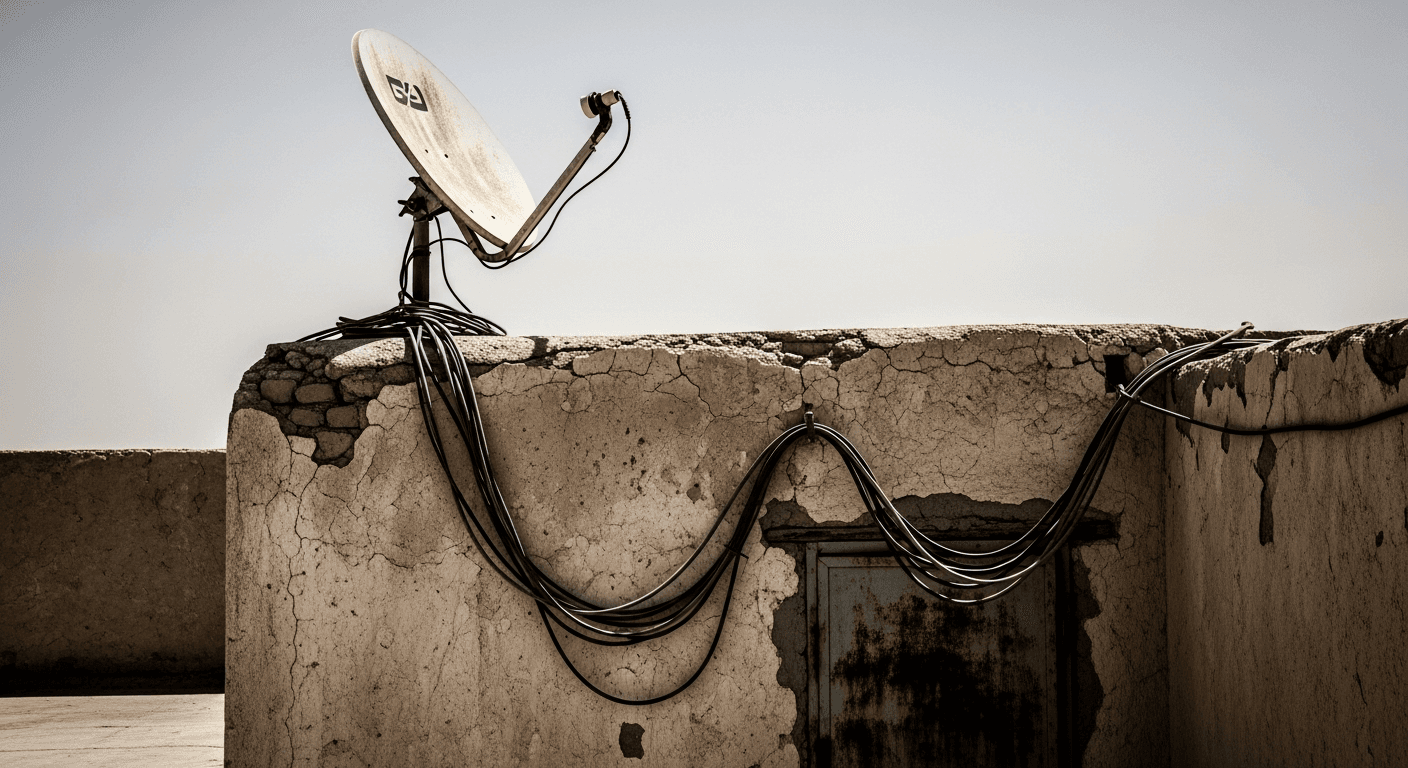
The 1993 Yinhe incident created a 30-year blowback loop. The bill just came due in the Gulf.
Key takeaways
- Iran reportedly deactivated US-controlled GPS nationwide around June 23, 2025, transitioning to China's BeiDou Navigation Satellite System (BDS-3) for both civilian and military applications after GPS jamming degraded its weapons during the 12-day Israel-Iran war.
- By early 2026, Iranian missile and drone accuracy had improved materially. Western analysts, including former French intelligence chief Alain Juillet, publicly attributed the shift to BeiDou integration. BDS-3's military-grade signal is described by analysts as resistant to Western jamming and spoofing techniques, with a circular error probable under 5 meters.
- The strategic logic mirrors the dollar system exactly: every time the US weaponizes infrastructure it controls, it shortens the timeline for adversaries and fence-sitters to build or adopt alternatives outside Washington's reach.
Iran formally transitioned from GPS to China's BeiDou Satellite Navigation System on or around June 23, 2025, according to a public statement from Zhang Heqing, a counselor at the Chinese Embassy in Tehran, posted on X. The switch came directly after GPS jamming disrupted close to 1,000 Iranian civilian and military systems during the June 2025 conflict with Israel, per Defence Security Asia, a figure from that outlet's analysis, not from any US, Israeli, or UN official assessment. By early 2026, Iranian munitions were threading through electronic countermeasures that had worked eight months earlier.
Former French DGSE director Alain Juillet stated on the Tocsin podcast in March 2026: "One of the surprises in this war is that Iranian missiles are more accurate compared to the war that took place eight months ago, raising many questions about the guidance systems of these missiles." Military analyst Patricia Marins was more direct, telling Al Jazeera: "Unlike the civilian-grade GPS signals that were paralysed in 2025, BDS-3's military-tier B3A signal is essentially unjammable."
The 1993 Humiliation That Built the System Now Targeting US Assets
BeiDou did not materialize because China wanted a science project. It exists because the US weaponized GPS against China in 1993.
The Chinese container ship Yinhe, sailing to Iran, was accused by the CIA of carrying chemical weapons precursors. US pressure shut it out of Middle Eastern ports. GPS access was reportedly disabled, stranding the vessel in the Indian Ocean for 24 days. A joint Saudi-US inspection at Dammam ultimately cleared the ship. No apology was issued and no compensation was paid, per documented reporting on the Yinhe incident.
Beijing drew the obvious conclusion: dependence on foreign-controlled navigation infrastructure was a national security liability. BDS-1 regional coverage followed in the 2000s. BDS-3, completed around 2020, now covers more than 165 countries with a 50-plus satellite constellation. Its military-grade B3A signal uses frequency-hopping and Navigation Message Authentication.
The BeiDou Short Message Communication feature allows real-time mid-flight command adjustments to drones and missiles up to 2,000 kilometers away. The US has no equivalent control lever over a Chinese-owned constellation.
Iran's access to military-grade BeiDou signals flows through the 25-year Iran-China Comprehensive Strategic Partnership signed in 2021. The Iranian Deputy Communications Minister, Ehsan Chitsaz, acknowledged GPS disruptions publicly in mid-2025 and said BeiDou was under active consideration as an alternative, per Iran International.
What the Gulf Is Watching, and What It Means for the Dollar
The military story is about missile accuracy. The macro story is about what every Gulf capital is calculating right now.
Roughly 20% of global oil supply transits the Strait of Hormuz. An Iranian interdiction capability that now demonstrably resists US electronic countermeasures is a tier-1 input for every energy-exposed economy on earth. Confidence in the US security umbrella in Bahrain, Qatar, and Saudi Arabia was already softening before the 2026 conflict round. A credible BeiDou-guided Iranian precision-strike capability accelerates that erosion. The war premium in oil prices reflects part of this; the sovereign-debt implications are larger.
The structural chain: degraded US security credibility in the Gulf weakens the core rationale for petrodollar recycling into US Treasuries. Less Gulf demand for Treasuries means upward pressure on yields. That pressure compounds an already deteriorating US fiscal position. Whether the Fed defends the dollar or caps yields, both paths are structurally supportive of hard assets, and both accelerate the timeline for non-dollar reserve alternatives.
ChinaMed Project researcher Theo Nencini framed the larger implication cleanly via Al Jazeera: "This move by Iran shows what future wars will look like. Wars will be won not only by missile launchers on the ground but also by satellite networks in space."
The GPS precedent and the SWIFT/dollar precedent are the same precedent. The US disabled GPS on the Yinhe in 1993 over a false accusation. SWIFT was weaponized against Russia in 2022, against Iran repeatedly, against Venezuela and Afghanistan. Each use of that lever teaches every watching government the same lesson.
The blowback from GPS took 30 years to arrive. The blowback from dollar weaponization is compressing faster because the precedent is established and alternatives exist. That includes Bitcoin, which cannot be jammed, spoofed, or shut down by any state actor.
What to Watch
The falsifiable version of this thesis: if Gulf states publicly reaffirm GPS and dollar-settlement dependency and deepen US basing agreements over the next 12 months despite the demonstrated BeiDou precision advantage, it indicates that US infrastructure network effects still outweigh the sovereignty premium and that Iran's switch is a geopolitical anomaly rather than a systemic signal. Watch Saudi Arabia and UAE specifically. Any move toward BeiDou ground stations or non-dollar oil settlement in either country would confirm the trend is contagious.
The Bab el-Mandeb and Hormuz chokepoints are the immediate physical stress test. If Iranian precision capability translates into sustained interdiction of either corridor, the oil price and inflation effects feed directly into the private credit stress that is already building in the US financial system.
Sources
- Zhang Heqing (Chinese Embassy Tehran), X post, June 23, 2025
- Al Jazeera, March 11, 2026, Juillet, Marins, Nencini named quotes
- Iran International, Ehsan Chitsaz, Iranian Deputy Communications Minister
- Defence Security Asia, technical and timeline analysis
- Small Wars Journal, China-Iran strategic partnership analysis, March 20, 2026
- Wikipedia, Yinhe incident
Frequently Asked Questions
What is China's BeiDou system and how does it compare to GPS?
BDS-3 reached global coverage around 2020 with 50-plus satellites. It covers more than 165 countries by satellite density and offers civilian accuracy comparable to GPS.
Its military-grade B3A signal adds frequency-hopping and Navigation Message Authentication that analysts say defeats known Western jamming and spoofing techniques. The Short Message Communication feature allows two-way data transfer for mid-flight guidance adjustments up to 2,000 km. The US operates GPS and can selectively degrade civilian signals; it has no equivalent authority over BeiDou.
Can the US jam or disable BeiDou the way it disrupted Iran's GPS-guided weapons in 2025?
No. GPS jamming works because the US controls the GPS constellation and can deny or degrade civilian access. BeiDou is a Chinese state system, and the US has no administrative control over it and no confirmed technical means of selectively disrupting BDS-3's military-grade signals at scale.
That asymmetry is the entire point of Iran's switch.
What does Iran's BeiDou switch mean for oil markets and the petrodollar?
Approximately 20% of global oil transits the Strait of Hormuz. Improved Iranian strike accuracy raises the credibility of interdiction threats against Gulf infrastructure and shipping.
That degrades the US security umbrella that has underpinned Gulf state dollar recycling into US Treasuries since the 1970s. Reduced Gulf Treasury demand adds upward pressure to US yields and compounds existing sovereign-debt dynamics. Both the inflation path and the yield-control path from here are structurally supportive of hard assets.