Non-Nvidia AI Chips Lead Nvidia Blackwell by 14 Points on Enterprise Eval Lists
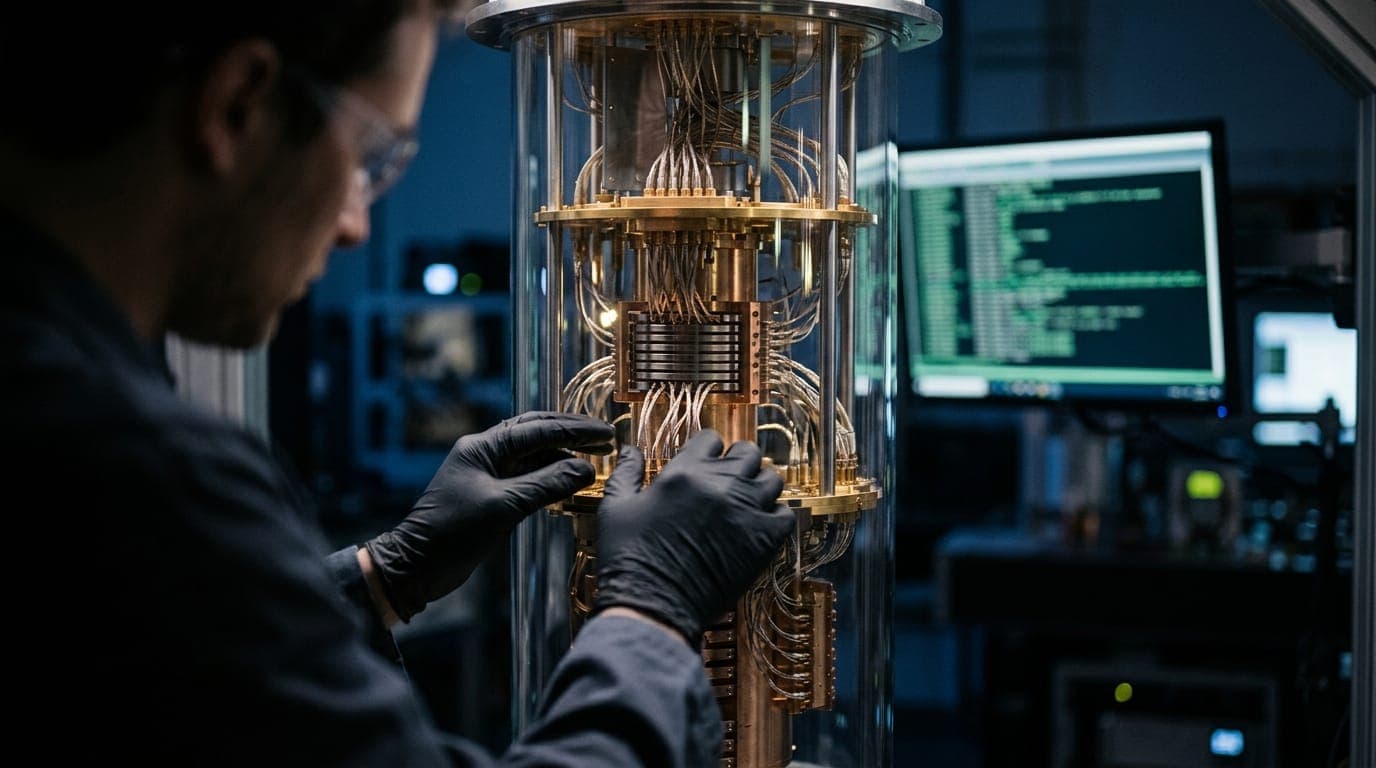
VentureBeat's July 2026 VB Pulse survey of 170 enterprise AI infrastructure buyers finds non-Nvidia accelerators outpacing Blackwell on evaluation intent by 14 percentage points. If the trend converts to purchases, the AI buildout's power demand curve bends down faster than hyperscaler capacity
A new enterprise survey puts non-Nvidia accelerators well ahead of Nvidia's next-gen GPUs on procurement evaluation lists, complicating the "infinite GPU demand" narrative that has underpinned AI capex projections.
Key takeaways
- 39.4% of enterprise AI buyers plan to evaluate non-Nvidia accelerators (AWS Trainium, Google TPU, AMD Instinct, Intel Gaudi, in-house ASICs) over the next 12 months versus only 25.3% for Nvidia's Blackwell or other next-generation Nvidia GPUs, a 14.1-point gap per VentureBeat's July 2026 VB Pulse survey of 170 qualified respondents.
- Nvidia remains the dominant production default; this is evaluation intent, not installed-base data, and one self-selected, single-wave survey is directional, not definitive.
- More distributed, efficiency-oriented AI silicon means less peak power demand per inference workload unit, which eases grid competition with Bitcoin mining over the medium term.
Enterprise AI infrastructure buyers are signaling a meaningful shift away from Nvidia's hardware moat. According to VentureBeat's July 2026 VB Pulse Infrastructure and Compute report, 39.4% of respondents plan to evaluate non-Nvidia accelerators over the next 12 months, versus 25.3% who plan to evaluate Nvidia's Blackwell (GB300) or other next-generation Nvidia GPUs. That 14.1-point gap, across a sample of 170 qualified enterprise AI infrastructure buyers, is the kind of procurement signal that reshapes vendor conversations at the next budget cycle.
The survey skews large enterprise: 57% of respondents are at organizations with more than 1,000 employees. AI-specialized clouds topped planned evaluation areas at 44%. Separately, 62% of enterprises said they plan to switch or add an infrastructure provider within 12 months, suggesting the vendor consolidation that Nvidia has enjoyed is under active review across a broad base of buyers.
The Chips Being Evaluated
The non-Nvidia category in the survey encompasses AWS Trainium, Google TPUs, AMD Instinct GPUs, Intel Gaudi accelerators, and in-house or custom ASICs. These are not equivalent products. Trainium and Google TPUs are inference-optimized, purpose-built for efficiency at scale. AMD Instinct competes more directly with Nvidia on raw training workloads. Intel Gaudi trails all of them in ecosystem depth.
What they share: none carries Nvidia's CUDA lock-in, and most are priced or structured to undercut Blackwell's premium stack. The same report notes that total cost of ownership has fallen to fourth among selection criteria and cost per million tokens sits last, even as most enterprises cannot rigorously track what their compute costs. Cost is not first, which suggests the evaluation shift isn't pure price pressure. Enterprises want optionality, and they want chips that fit existing pipelines.
Nvidia still dominates production. Per Morgan Stanley analyst estimates from March 2026, Nvidia holds roughly 85% of AI processor revenue, with AMD at a distant single-digit share per those same estimates. Evaluation intent and purchase orders are different things. But procurement cycles start with evaluation lists, and a 14-point gap on those lists is a leading indicator worth taking seriously.
What This Means for AI Power Demand
The standard AI capex narrative runs like this: enterprises need more compute, compute means Nvidia GPUs, GPUs are power-hungry, data centers consume more electricity, grid competition intensifies, Bitcoin miners lose access to cheap power. That chain of logic has been load-bearing for two years of hyperscaler capacity announcements.
This survey puts pressure on the first link. Inference-specific chips like Trainium and Google TPUs are engineered for energy efficiency per workload, not brute-force training throughput. If enterprise procurement diversifies toward that class of silicon, the power consumption curve per unit of AI compute bends down. The phantom power demand problem already documented in data center capacity requests gets worse if GPU utilization stays soft. The VB Pulse data shows 69% of enterprises running their own GPUs still operate at half capacity or less, even after improvement from 83% in the prior June wave survey.
Less Nvidia-centric AI infrastructure also has a second-order effect on the capex financing machine. The AI chip financing stack built around Blackwell's premium pricing depends on the assumption that enterprises will pay the Nvidia premium indefinitely. If evaluation diversification converts to actual procurement, total AI capex per unit of compute comes down, which puts the underwriting math on some of the more aggressive data center bond issuance under pressure.
There is a decentralization angle worth naming plainly. One vendor controlling the hardware substrate for AI compute is a single point of failure and, more importantly, a single point of control. Enterprise buyers shopping AMD, Trainium, and custom ASICs are expressing the same instinct as running your own node: don't let one party own your compute stack.
What to Watch
The falsifiable version of this thesis: if Nvidia's Vera Rubin production ramp in late 2026 delivers dramatically superior performance-per-watt over alternatives at scale, and enterprises reverse evaluation intent back toward Nvidia-first across the next two quarterly VB Pulse waves, this survey reads as noise in a still-monolithic market. Similarly, if actual hardware purchases over the following 12 months remain Nvidia-dominated despite the stated evaluation diversification, intention failed to convert and the 14-point gap was a polling artifact. Watch the next VB Pulse wave and AMD's data center GPU revenue for the early read.
Sources
Frequently Asked Questions
What non-Nvidia chips are enterprises actually considering?
The VentureBeat survey groups AWS Trainium, Google TPUs, AMD Instinct GPUs, Intel Gaudi accelerators, and in-house or custom ASICs under the non-Nvidia category. Trainium and TPUs are inference-optimized and energy-efficient by design. AMD Instinct targets training workloads more directly. Intel Gaudi has the thinnest ecosystem of the group. All avoid CUDA lock-in.
Does this mean Nvidia is losing the AI chip market?
No. Nvidia retains an estimated 85% of AI processor revenue per Morgan Stanley analyst estimates and remains the default in most production environments. The survey captures evaluation intent over the next 12 months, not current market share. Procurement cycles begin with evaluation lists, which is why the 14-point gap matters as a signal, but intent does not automatically convert to purchase orders.
How does AI chip competition affect Bitcoin miners and energy markets?
Inference-optimized chips (Trainium, TPUs, custom ASICs) consume significantly less power per workload unit than Nvidia's general-purpose GPU stack. If enterprise AI procurement shifts meaningfully toward efficiency-oriented silicon, peak power demand per unit of AI compute declines. That reduces the pressure AI data centers place on grid capacity, easing competition with Bitcoin mining operations for cheap, dispatchable electricity over the medium term.