Amazon, the Navy, and Canada Just Claimed Indiana as a Nuclear State
Three reactor announcements in two days put Indiana at the center of the next U.S. grid architecture. Amazon is both financier and offtaker. The Navy wants a microreactor inland. Canada wants 6 GW. Bitcoin miners should be paying attention.
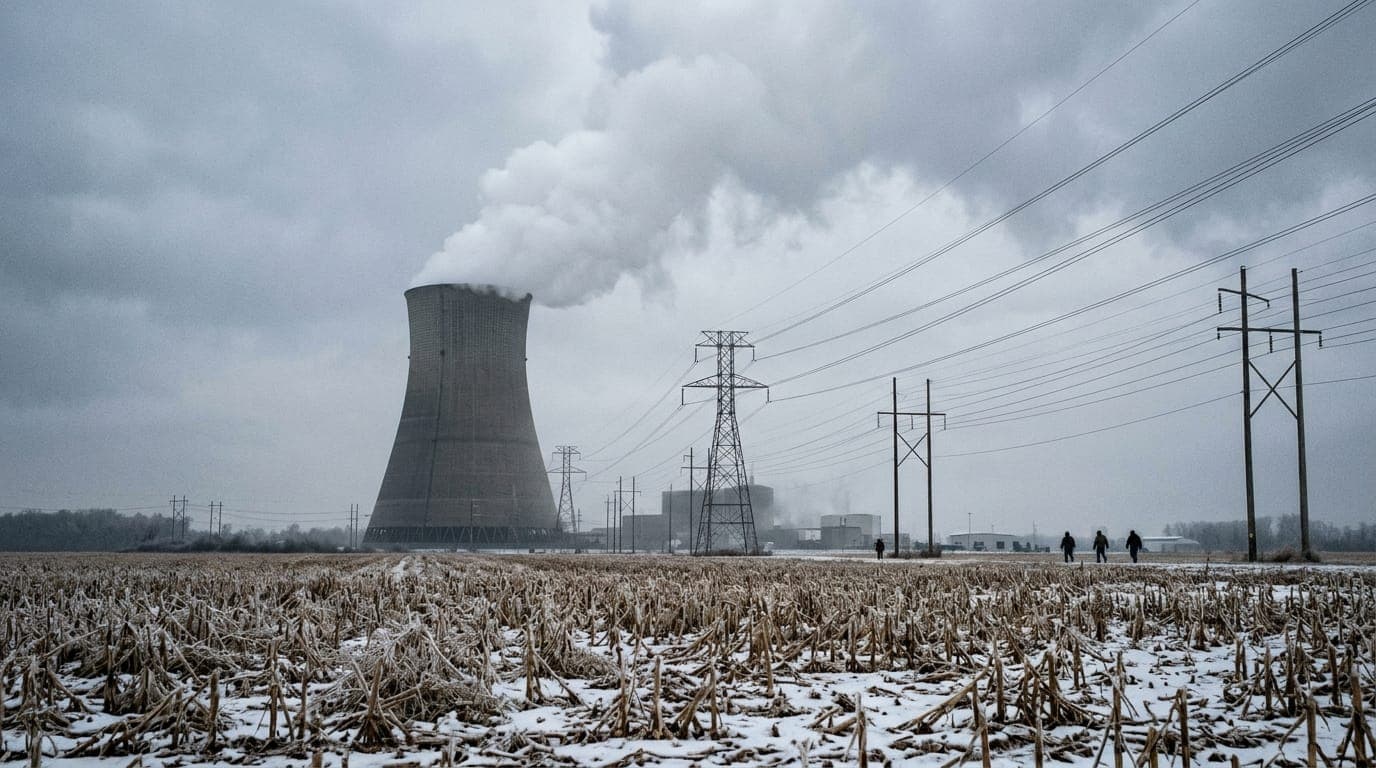
Three reactor announcements in two days have turned a state that has never operated a commercial nuclear plant into the proving ground for the next U.S. grid architecture.
Key takeaways
- AEP, X-energy, and Amazon unveiled a 960 MW, 12-reactor SMR project in Sullivan County, Indiana, with Amazon serving as both financier and long-term power buyer, meaning no cost exposure for ratepayers.
- AtkinsRéalis signed an MOU with the State of Indiana and Hoosier Energy the same day to study up to eight CANDU reactors totaling as much as 6 GW, though no site, budget, or schedule exists yet.
- The Navy selected Radiant Industries to install a 1 MW Kaleidos microreactor at Naval Weapons Station Crane by September 2028, making Radiant the only microreactor company under contract with all three U.S. military services simultaneously.
On October 19 and 20, 2026, Indiana went from zero nuclear announcements to 21 proposed reactors across three separate deals spanning a Big Tech-backed SMR campus, a Canadian heavy-water fleet study, and the U.S. military's first shore-based microreactor. The state's last serious nuclear attempt, Marble Hill, was abandoned half-built in 1984 after roughly $2.5 billion was spent. The contrast is stark and the stakes are real, but the three deals carry radically different levels of credibility and the distinction matters enormously.
The Deal That Actually Has Money Behind It
AEP and X-energy signed a joint development agreement to evaluate 12 of X-energy's 80 MW Xe-100 reactors at the former Breed Generating Station site in Sullivan County. Total nameplate capacity: 960 MW. Amazon is funding the development phase and has committed to purchase the power under a long-term offtake agreement covering the full costs of the facility and its operations for the contract's duration.
That structure is the headline. Most new nuclear projects arrive without a buyer or without capital. This one has both.
"Our agreements with Amazon and X-energy will provide all necessary capital protections and financial safeguards that we have said are essential for any potential nuclear project to move forward," AEP Chairman and CEO Bill Fehrman said in the announcement.
Amazon led X-energy's Series C-1 financing round in 2024, which ultimately closed at $700 million, so its commitment here is layered. Ratepayers carry none of the capital load, consistent with the Ratepayer Protection Pledge Amazon signed at the White House in March 2026. The final investment decision is expected by late 2029. No Xe-100 units are currently under construction anywhere.
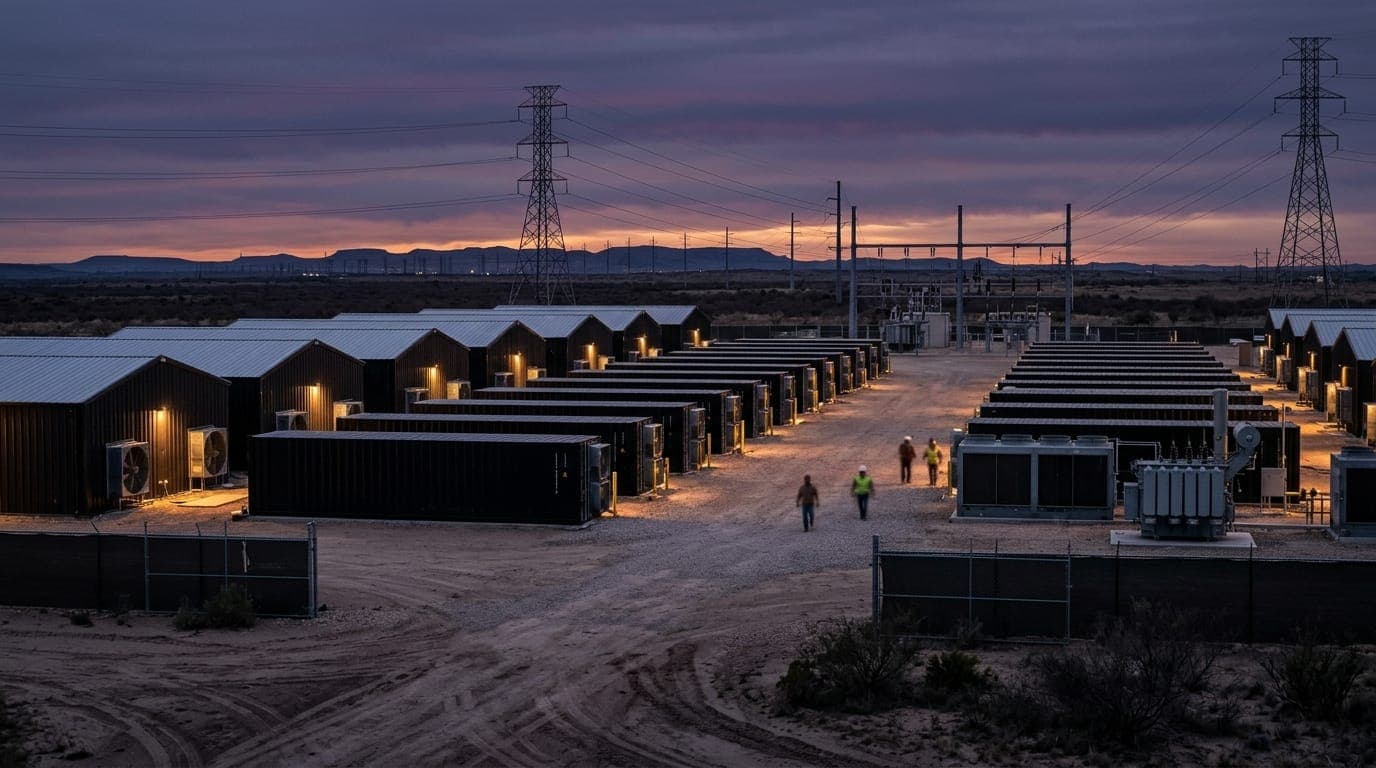
Indiana Michigan Power's load forecasts explain why the urgency is real even before a shovel touches the ground. Per I&M's 2024 Indiana IRP, the utility expects Indiana peak load to jump from approximately 2,800 MW to more than 7,000 MW by 2030. Amazon's $11 billion data center campus near New Carlisle is among the named new loads.
That nearly 2.5x load increase is arriving in four years. The reactors won't produce a watt until the early 2030s at the earliest.
The MOU and the Microreactor
The AtkinsRéalis announcement, signed the same day at Purdue's Global Nuclear Energy Economic Summit in Indianapolis, reads very differently. AtkinsRéalis, the State of Indiana, and Hoosier Energy Rural Electric Cooperative signed a memorandum of understanding to explore deploying up to eight CANDU reactors with a combined capacity of up to 6 GW. The announcement included no site, financing plan, construction schedule, or disclosed study fee.
Hoosier Energy President and CEO Donna Walker's quote signals the appropriate temperature: "Through this MOU, Hoosier Energy is pleased to offer our expertise as part of early discussions to evaluate whether advanced nuclear energy could be an option worth considering."
CANDU reactors use heavy water as a moderator, run on natural uranium without enrichment, and refuel without shutting down. AtkinsRéalis has 34 CANDUs built across four continents and has initiated pre-application engagement with the U.S. Nuclear Regulatory Commission, building on a June 2026 notice of intent submission to begin the U.S. licensing process. That licensing runway is long. Treat this as a directional commitment, not a construction plan.
The Navy announcement is the most concrete near-term deliverable of the three. Radiant Industries was selected to design, build, and deliver its Kaleidos microreactor at Naval Weapons Station Crane, Indiana, with a target operational date of no later than September 2028. Kaleidos is a 1 MWe, helium-cooled, TRISO-fueled unit that ships in a 35-foot container, runs up to five years between refuelings, and requires no cooling water.
The project runs through the Army's Janus Program. With the Navy selection, Radiant becomes the only microreactor company contracted with all three U.S. military services.
That Crane installation will be Indiana's first power-producing nuclear reactor of any kind. For context on microreactor regulatory momentum, the DOE has moved faster on small-unit safety approvals than on grid-scale projects, and the military pathway is currently the clearest route to an operating unit in the U.S.
What the Grid Math Means for Miners
The "21 reactors in two days" framing is a useful shorthand and a potential trap. One deal has a funded feasibility agreement and a named offtaker with deep pockets. One is an exploratory MOU with no site or money attached. One is a 1 MW military prototype with a firm 2028 target.
Stacking them into a single number blurs maturity levels that span years and billions of dollars in capital formation risk.
The question that matters for anyone operating energy-intensive loads in the Midwest is simpler: what does this do to power costs and grid access, and when?
Near-term, data center demand is already tightening the grid before any of these reactors produce power. Indiana Michigan Power's load roughly triples by 2030, driven by hyperscale buildout. That is the actual pressure arriving now. Miners operating in Indiana on the assumption of cheap, underutilized grid capacity should be modeling tighter capacity margins today, not in 2029. The 32 GW U.S. data center power shortfall Morgan Stanley flagged is not an abstract forecast; it has a specific ZIP code now.
Medium-term, if the SMR campus gets built, 960 MW of always-on baseload running at 90-plus percent capacity factor changes the demand structure for curtailment. Coal and gas dispatch creates off-peak windows miners exploit. Nuclear, which runs indifferent to time-of-day pricing signals, compresses those windows. The cheap-power arbitrage narrows. The grid-stabilization co-location opportunity, where a miner sits next to a nuclear asset and offers flexible load as a balancing service, expands.
The larger structural signal is Amazon's role as both capital source and offtaker. That model, a hyperscaler vertically integrating energy infrastructure rather than buying off the spot market, is a template. Miners who can offer a similar large-load, long-term offtake commitment to anchor a project's economics get a seat at the table. Those who rely on passive access to cheap grid power get priced out by better-capitalized industrial loads. The Nvidia and PreussenElektra playbook in Germany is the same pattern running in parallel.
What to Watch
The Amazon/AEP/X-energy FID, expected by late 2029, is the first hard gate. If that decision gets pushed or cancelled, the thesis softens considerably. NRC licensing timelines for both Xe-100 and CANDU in the U.S. are the other variable.
Indiana has built a serious policy stack: pre-construction cost recovery for SMR development, a Nuclear Ready Communities certification program, and a state government publicly committed to becoming a nuclear hub. The policy scaffolding is real. The reactors are not yet.
Watch the I&M interconnection queue for data center load additions between now and 2027. That queue, not the SMR announcement calendar, is the leading indicator of when grid tightness actually bites.
Sources
Frequently Asked Questions
Does Amazon's involvement mean the Indiana SMR project will actually get built?
It improves the odds meaningfully. The Amazon/AEP/X-energy structure is unusual: Amazon is funding the development phase and has committed to buy the power under a long-term offtake agreement, which removes two of the most common failure modes for new nuclear projects (no capital and no buyer). The final investment decision is expected by late 2029. The remaining risks are NRC licensing and construction execution. No Xe-100 units are currently under construction anywhere, so this project would be among the first to reach the build phase if it clears FID.
What is the CANDU reactor and how does it differ from the Xe-100 SMR?
CANDU reactors use heavy water as a moderator instead of light water, which allows them to run on natural uranium without enrichment and to refuel while operating at full power. The Xe-100 is a high-temperature gas-cooled SMR that uses enriched uranium TRISO fuel and requires periodic shutdown for refueling. The two technologies take different paths through the NRC licensing process. AtkinsRéalis has 34 CANDUs operating globally and has initiated pre-application engagement with the NRC following a June 2026 notice of intent submission; X-energy's Xe-100 has been in the NRC pre-application review process for several years. Both face years of U.S. regulatory work before construction can begin.
What does Indiana's nuclear buildout mean for Bitcoin miners using Midwest grid power?
Indiana Michigan Power's own forecasts show Indiana peak load nearly tripling by 2030, driven by hyperscale campuses already in the interconnection queue. That load tightens capacity margins and compresses cheap off-peak power windows before any reactor goes online. Medium-term, if baseload nuclear capacity does arrive, it changes the curtailment structure miners depend on for low-cost access. The actionable insight: miners in PJM/Indiana territory should be stress-testing their power cost assumptions against a 2030 peak load of 7,000+ MW, not the current 2,800 MW baseline.