Gulf Bond Boom Hits Record $30B as States Borrow to Escape Hormuz
UAE sovereigns and companies have issued a record $30.3 billion in bonds through July 28, 2026, up one-third year-over-year, as Gulf states race to fund Hormuz bypass infrastructure. The borrowing surge exposes a quiet contradiction at the heart of the petrodollar system.
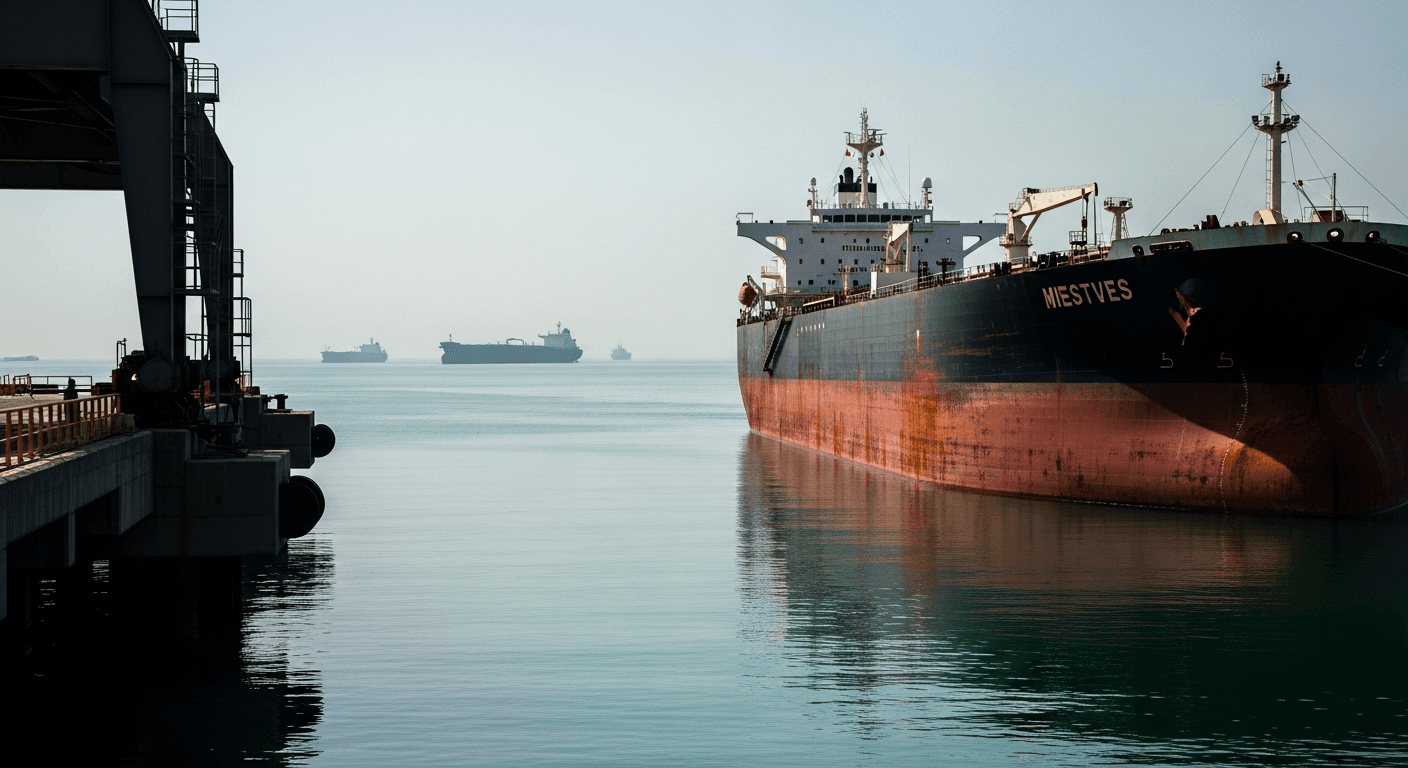
Gulf sovereigns are going deep into dollar debt to reroute oil exports around a chokepoint that a U.S.-led war closed. The petrodollar architecture is showing its seams.
Key takeaways
- UAE sovereigns and companies issued a record $30.3 billion in bonds through July 28, 2026, up roughly one-third year-over-year and $3.7 billion above the previous record for this period, per Bloomberg data.
- GCC primary bond and sukuk issuances reached $102.69 billion across 161 deals in H1 2026, up 6.5% from H1 2025, according to the Kuwait Financial Centre's H1 2026 Fixed Income Report.
- Goldman Sachs estimates pipeline projects under construction will insulate only about 45% of pre-war Gulf export volume from a future Hormuz closure by end-2027, meaning the structural vulnerability persists well beyond any near-term infrastructure sprint.
UAE sovereigns and companies have sold a combined $30.3 billion in dollar- and euro-denominated bonds through July 28, 2026, a new record for this period and $3.7 billion above the prior high set in 2020, per Bloomberg. The surge follows the effective closure of the Strait of Hormuz in early March 2026 after U.S.-Israeli strikes on Iran, which sent oil prices above $100 per barrel and halted roughly 90% of tanker traffic through the strait.
The broader GCC picture reinforces the scale. The Kuwait Financial Centre's H1 2026 Fixed Income Report puts regional primary bond and sukuk issuances at $102.69 billion through 161 deals in the first half of 2026, up 6.5% from $96.42 billion in H1 2025. Saudi Arabia led GCC issuances at $49.34 billion through 58 deals, including a $1 billion 10-year USD bond on June 3, the first Gulf sovereign debt issuance since the start of the U.S.-Iran war.
The Borrowing Blitz
When the conflict peaked in March and April, regional banks froze fundraising and capital markets went quiet. The reopening was led by Emirates NBD, which priced a $750 million Additional Tier 1 bond on April 29, 2026, drawing subscriptions three times the offer size despite ongoing market volatility, per its official press release. The bank's group treasurer, Ammar Al Haj, noted "significant investor engagement" as evidence of "sustained demand for high-quality financial instruments issued by UAE institutions."
First Abu Dhabi Bank followed as the region's most active debt issuer in Q2, completing a EUR 750 million ($858.3 million) three-year green bond and a separate $300 million issuance under its $20 billion euro medium-term note programme, according to Khaleej Times.
The capital is headed toward a specific problem. ADNOC CEO Sultan Al Jaber confirmed in May that a second UAE pipeline, doubling export capacity through Fujairah port on the Gulf of Oman, is roughly 50% complete and expected operational by 2027, per CNBC. Saudi Arabia's East-West Petroline capacity was already raised to 7 million barrels per day in March 2025. The IEA estimates combined bypass capacity for Saudi Arabia and the UAE at 3.5 to 5.5 million barrels per day, per CNBC's July reporting. Al Jaber put the cost of the closure bluntly: more than 1 billion barrels of oil lost since the strait effectively shut, with roughly 100 million additional barrels lost every week it remains closed.
The Math the Press Releases Skip
Goldman Sachs estimates that seven pipeline and infrastructure projects under construction or planned could insulate more than 45% of pre-war Gulf export volume from a Hormuz closure by end-2027, and more than 60% by end-2028, per Axios. That leaves 40%-plus of pre-war volume still exposed on any near-term timeline. The infrastructure sprint solves part of the problem. It does not solve the problem.
The borrowing costs compound this. GCC bond yields are tightly correlated with U.S. Treasuries, all Gulf currencies except Kuwait's dinar are dollar-pegged, and Fitch projects no Federal Reserve rate cuts in the second half of 2026. Gulf states are borrowing expensive to build infrastructure that partially addresses a vulnerability created by their primary currency partner's military action in their neighborhood.
Al Jaber framed the underlying dynamic plainly at an Atlantic Council interview in May: "Right now, too much of the world's energy still moves through too few chokepoints." The petrodollar moat depends on exactly those chokepoints staying open. The moment they close, every dollar-denominated energy settlement arrangement starts looking like a single point of failure.
The long-run pressure on Gulf capitals to explore settlement alternatives, or at minimum hedge their monetary exposure, grows with each bond issued to repair infrastructure the current arrangement failed to protect. The Hormuz disruption has already demonstrated, as analysts cited by CNBC noted, that long-standing assumptions about the strait's reliability as a transit route proved wrong. Bitcoin is geography-agnostic. No pipeline build-out changes that structural fact.
What to Watch
The bypass infrastructure timeline runs through 2027 and 2028. Watch whether GCC sovereign wealth funds absorb future issuance costs from reserves rather than net new debt. If they do, the thesis that this borrowing reflects structural monetary fragility weakens. If dollar-denominated issuance keeps climbing while Gulf states simultaneously probe non-dollar settlement options, the architecture is cracking faster than the bond prospectuses suggest.
Update, October 7, 2026
The Hormuz closure is no longer just a Gulf sovereign balance-sheet problem. The World Bank's East Asia & Pacific Economic Update, released October 6, puts hard numbers on the reserve drain hitting the largest buyer class for Gulf crude. Asian countries' subsidy-driven response to the energy crunch has come at the direct cost of foreign exchange reserves, with Indonesia, Thailand, and Vietnam each seeing dollar reserves fall by between 15% and 40% since the war began.
The World Bank forecasts Middle East oil exports will not return to pre-conflict levels until mid-2027 , meaning the reserve bleed has roughly eight more months to run at minimum. The bank called the subsidy approach potentially "unsustainable," warning that such measures impose fiscal costs and lower foreign currency reserves while delaying the behavioral adjustments a persistent shock demands.
The bank added that "a renewed rise in energy prices may be more damaging to economic activity than initially observed, particularly as the drag from higher inflation and tighter financial conditions grows."
The loop this closes matters for the Gulf borrowing story. Gulf sovereigns are issuing dollar debt to fund bypass infrastructure while the Asian sovereigns who consume that oil are burning dollar reserves to suppress domestic fuel prices. Both sides of the trade are drawing down hard-currency buffers at the same time, on the same timeline, with the same mid-2027 target date for any normalization. A longer-lasting energy shock could put regional economic resilience at risk, especially if coupled with a downturn in the AI cycle, with higher energy costs already weighing on manufacturing and the surge in transport prices hitting consumer demand. The petrodollar plumbing is stressed at both ends simultaneously.
Sources
- Bloomberg, July 28, 2026: UAE bond sales at record pace
- Kuwait Financial Centre (Markaz) H1 2026 GCC Fixed Income Report, via Zawya
- Emirates NBD official press release, AT1 issuance, April 29, 2026
- CNBC, ADNOC CEO Sultan Al Jaber on UAE pipeline progress, May 20, 2026
- CNBC, IEA bypass pipeline capacity figures, July 14, 2026
- Axios, Goldman Sachs pipeline infrastructure figures, July 14, 2026
- Khaleej Times, UAE lenders return to capital markets, Q2 2026
Frequently Asked Questions
Is the Strait of Hormuz currently open or closed?
The strait was effectively closed to most commercial tanker traffic starting in early March 2026 following U.S.-Israeli strikes on Iran, with traffic volumes dropping roughly 90%. A ceasefire was reached on April 8, 2026. The current operational status remains contested. The bypass infrastructure buildout described in this piece reflects Gulf states' operating assumption that the strait cannot be treated as reliably open on any near-term basis.
How much oil normally passes through the Strait of Hormuz?
The EIA estimates roughly 20% of global petroleum liquids consumption transits the strait under normal conditions, equivalent to around 20 million barrels per day. ADNOC CEO Sultan Al Jaber stated that more than 1 billion barrels of oil have been lost since the closure, with approximately 100 million additional barrels lost per week the strait remains closed.
Why are Gulf states issuing bonds in dollars if a U.S.-led war closed their main shipping lane?
All Gulf currencies except Kuwait's dinar are pegged to the dollar, meaning sovereign borrowing is structurally dollar-denominated. The dollar peg provides short-term stability and access to deep international capital markets. The long-run tension is real: Gulf states are taking on dollar debt to fix infrastructure disrupted by a U.S. military operation, deepening exposure to the same monetary system whose geopolitical decisions created the problem.