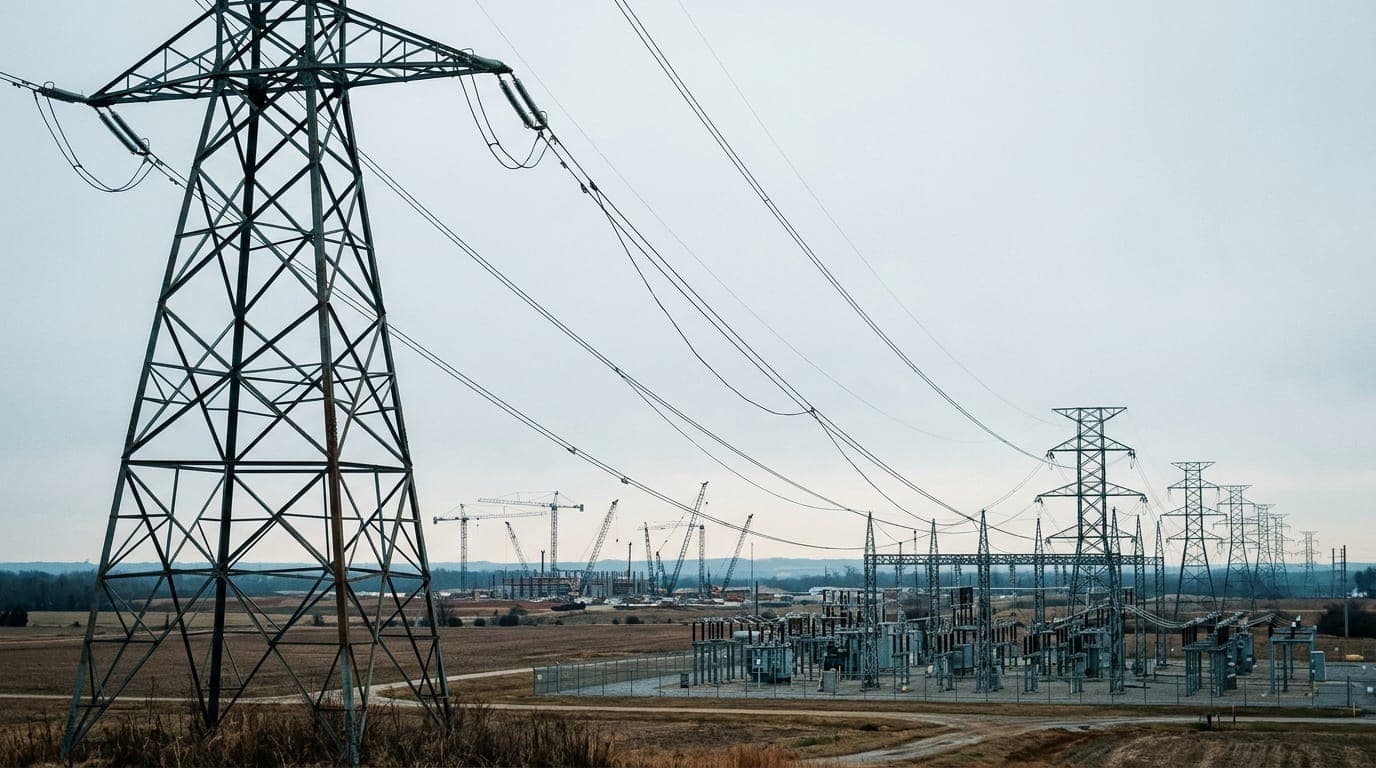
Gartner: $3.5T in AI Infrastructure Faces Write-Down Risk by 2030
Gartner says AI providers are committing $7 trillion through 2030 against $3.6 trillion in forecast revenue. The math leaves a $4.9 trillion gap and sets up the largest stranded-energy opportunity in Bitcoin mining history.
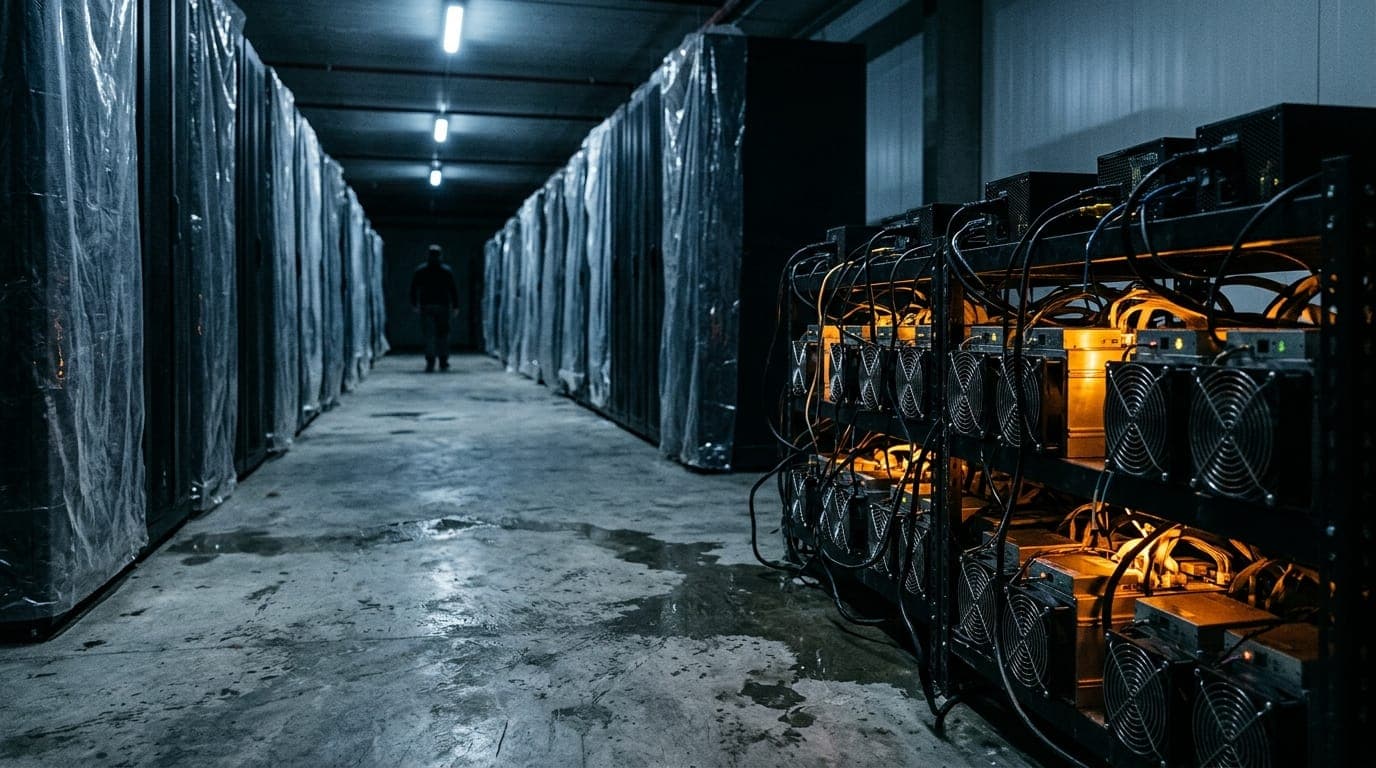
Forecast AI revenue covers less than half of what the buildout requires to break even, and more than 80% of specialized cloud providers won't survive it.
Key takeaways
- Gartner forecasts a $4.9 trillion gap between the $8.5 trillion AI data centers need to earn a 12% return and the $3.6 trillion in revenue they are actually projected to generate through 2030.
- More than 80% of neocloud providers, the GPU-as-a-service firms that built out at speed on debt and equity, are predicted to cease independent operations by 2030.
- Stranded power capacity from failed AI tenants is the setup Bitcoin mining has been waiting for: price-responsive, geography-agnostic load absorbing electricity that needs a buyer.
Gartner warned on October 14 that more than $3.5 trillion in AI infrastructure spending is exposed to impairment by the end of 2030, with exposure climbing past $4 trillion through 2032. The reason is arithmetic, not sentiment: the industry is committing capital at a rate the revenue projections cannot justify.
Senior Director Analyst Will Sommer put the numbers plainly: "In 2026, AI providers are expected to spend nearly $1 trillion on AI infrastructure, and are forecast to invest an additional $6 trillion between 2027 and 2030. However, our research indicates that enterprise and consumer AI revenue will be insufficient to support profitable returns on all planned AI capital expenditures during this period."
The Gap the Numbers Leave Behind
Gartner's hurdle rate is 12% return on invested capital. At that threshold, covering announced capital spending plus financing costs requires cumulative revenue of $8.5 trillion through 2030. Gartner's actual forecast for AI data center revenue over the same period: no more than $3.6 trillion.
The gap is $4.9 trillion. Forecast revenue covers roughly 42% of what is required. Less than half.
Sommer again: "The growth in spending on AI-optimized IaaS will be too low for most AI compute providers to recover their AI investments before the current generation of AI semiconductors is replaced."
The neocloud category, specialized AI-compute providers that scaled on GPU density rather than diversified revenue, faces the harshest outcome. Gartner predicts more than 80% of them will cease independent operations by 2030. Hyperscalers (AWS, Azure, Google Cloud) carry more diversified revenue and are better positioned to absorb losses while waiting for AI demand to scale. The neoclouds have no such cushion.
Gartner's underlying research note, "Prepare for AI Market Consolidation: Capital Write-Downs Could Exceed $4 Trillion by 2032," is available to subscribers at the Gartner document abstract.
This pattern is one TFTC has tracked as it developed. AI capex turned cash-flow negative in 2026, and Oracle's force majeure on Project Jupiter earlier this year exposed how fragile the contracting structure underneath these commitments actually is.
Fiat-Era Malinvestment, Running on Schedule
This is what a capital cycle looks like when cheap debt and speculative momentum do the allocating. Seven trillion dollars in committed infrastructure spending, priced against a revenue projection that covers 42 cents on every required dollar. The assets being built are real: power contracts, cooling systems, fiber, concrete. The returns are not.
The debt financing this buildout is priced against equity valuations that assume the AI revenue materializes. If it doesn't, the write-downs don't stay contained to data center balance sheets. They move into the private credit markets that have been bankrolling the buildout, into the sovereign wealth commitments that have been allocated as AI-infrastructure plays, and into the equity marks of every hyperscaler that has been defending its capex cycle to shareholders.
That is the second-order effect. It's another chapter in the sovereign debt and malinvestment story fiat-financed capital cycles keep writing.
Bitcoin's supply does not respond to demand signals. No central planner can authorize $7 trillion worth of new blocks because an investor thesis requires it. Twenty-one million is twenty-one million. The AI buildout is the inverse: supply (compute capacity) was manufactured at scale against a demand forecast that Gartner now says was off by more than a factor of two.
Stranded Power and Who Buys It
The physical consequence of neocloud failures is contracted power with no tenant.
Nuclear restarts, gas peakers, and dedicated grid infrastructure that were built or reserved for AI data centers don't disappear when the tenant fails. They need a buyer for electricity. Bitcoin mining is structurally the best answer to that problem. Miners are price-responsive, they require no geographic proximity to a product or customer, they can deploy against baseload power without a multi-year lease renegotiation, and they operate continuously.
FERC's intervention in the ComEd/Joliet data center dispute illustrates how locked-in these power commitments already are. When the AI tenant defaults, the power commitment survives.
The thesis: if Gartner's write-down timeline holds, stranded compute and power assets become the cheapest energy input Bitcoin mining has seen in years. Every dollar of AI capex that doesn't earn its return quietly subsidizes cheaper hashrate for the network.
The trigger that breaks it: enterprise and consumer AI revenue scales to meet or exceed the $8.5 trillion threshold by 2030, driven by autonomous agents, robotics integration, or a demonstrated productivity step-change. If that happens, the impairment risk retreats and the stranded-asset setup never materializes. Separately, if Bitcoin mining cannot expand into vacated power markets due to regulatory constraints or capital limits, the energy opportunity exists on paper but doesn't convert.
Sommer offered the unsentimental summary: "Not everyone is in trouble. Some will outperform, some will underperform, and some will have to exit the market."
What to Watch
The write-downs are not imminent. Gartner does not expect 12% ROIC to be achievable until end of 2032 at the earliest, and the worst of the impairment risk tracks to when the current generation of AI semiconductors depreciates fully.
Watch neocloud balance sheets through 2027 and 2028 for the first wave of restructurings. Watch power purchase agreements for assignment activity. That is where the stranded energy story becomes concrete.
Sources
Frequently Asked Questions
What is a neocloud and why is Gartner predicting 80% will fail?
Neoclouds are GPU-as-a-service providers that built out expensive AI compute capacity on debt and equity financing. Unlike hyperscalers, they lack diversified revenue streams to carry losses while waiting for AI demand to scale. When the current generation of chips depreciates faster than revenue arrives, they face a binary outcome: acquisition or shutdown.
How does a $3.5 trillion AI write-down connect to Bitcoin mining?
Data center build-outs have driven new power procurement across nuclear, gas, and dedicated grid infrastructure. If AI tenants fail or vacate, that power needs a buyer. Bitcoin miners are the only always-on, price-elastic load category that can absorb stranded baseload electricity without requiring a fixed-location product or long-term lease renegotiation. The AI capex bust, if it arrives on Gartner's timeline, is a supply shock for mining in the form of cheaper, available power.
Is this similar to the dot-com bust, and when does Gartner expect the worst?
Gartner characterizes the write-down risk as real but not imminent. The crunch follows semiconductor depreciation cycles, pushing the worst of it toward 2030-2032.
The dot-com bust unwound faster because it lacked a physical asset base. AI data centers have real infrastructure that won't vanish. It will get repriced, restructured, and, for the best-positioned buyers, repurposed.