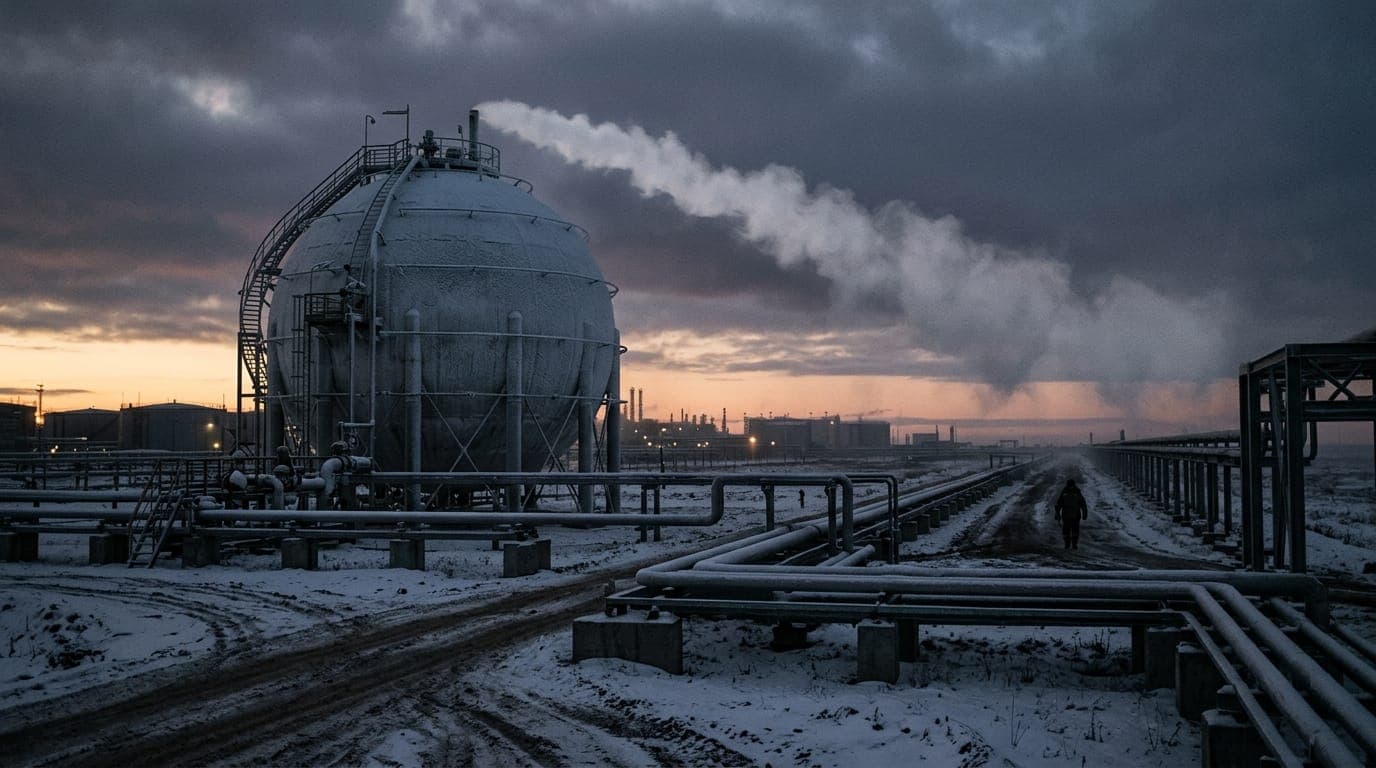
Florida PSC Tells Duke Energy Its AI Data Center Rate Plan Is on 'Shaky Ground'
Florida regulators let Duke Energy's AI data center rate petition survive dismissal 4-1, but Commissioner Gary Clark told the utility it is on 'real shaky ground.' The decisive evidentiary hearing comes in late August 2026.
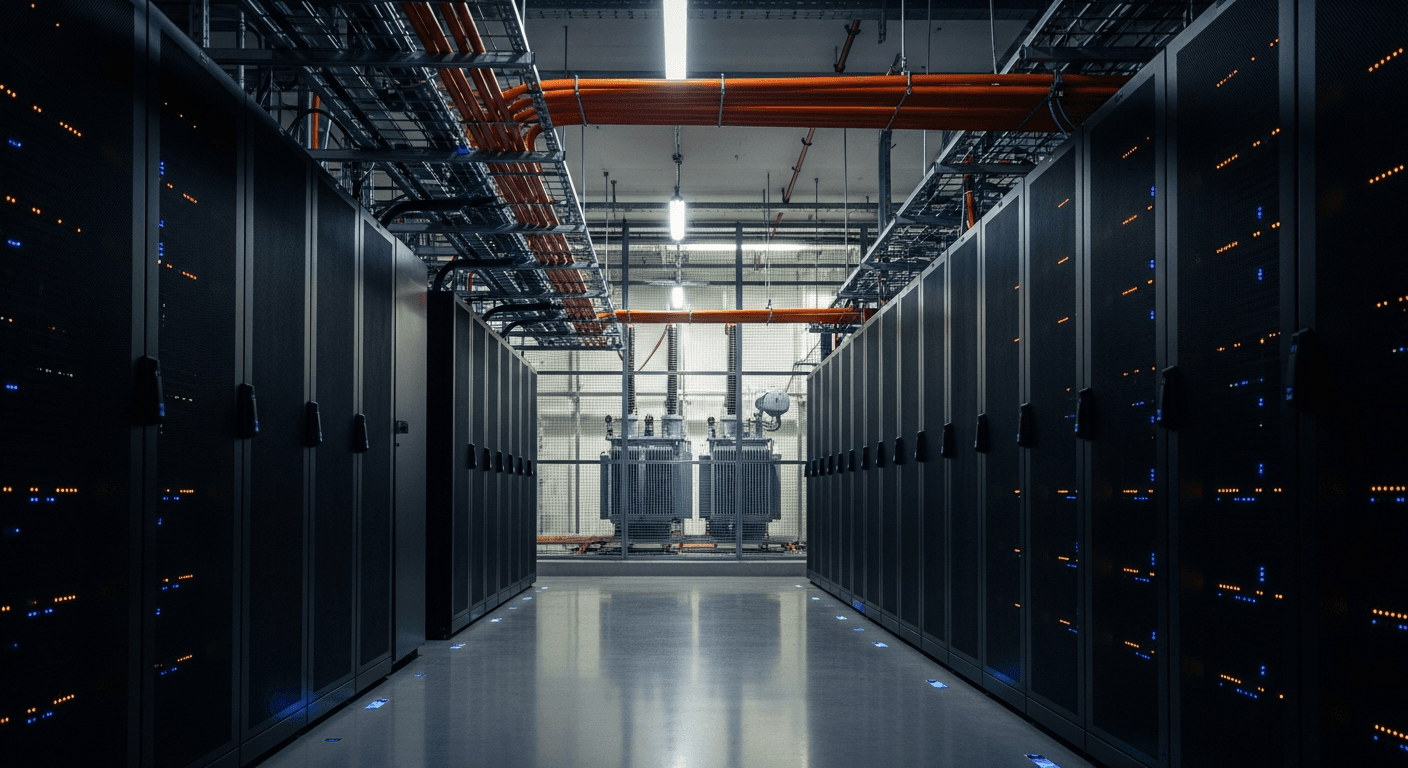
Florida regulators let the case move forward but made clear the utility's cost-recovery plan faces a steep climb at a late-August evidentiary hearing.
Key takeaways
- The Florida PSC voted 4-1 to deny a motion to dismiss Duke Energy's AI data center rate petition, advancing it to a full evidentiary hearing scheduled for late August 2026.
- Commissioner Gary Clark told Duke directly it is on "real shaky ground"; the lone dissenter voted to throw the case out entirely; and Florida's state consumer advocate has called the plan "unlawful."
- The case is the first test of Florida's new data center law signed by Gov. Ron DeSantis requiring large electricity users to cover infrastructure costs rather than shifting them to residential ratepayers.
The Florida Public Service Commission voted 4-1 this week to keep Duke Energy Florida's proposed AI data center rate tariff alive, rejecting a motion to dismiss the petition outright, per reporting first published by the Tampa Bay Times. The survival comes with a warning: Commissioner Gary Clark told Duke during the hearing, "I think you're on real shaky ground, if you ask me."
The decisive moment is not this vote. A two-day evidentiary hearing in late August 2026 will determine whether Duke's plan actually complies with state law, and the early signals from the commission are not favorable for the utility.
What Duke Is Asking For and Why Regulators Are Skeptical
Duke Energy Florida serves roughly 2.1 million customers across approximately 13,000 square miles. It does not currently have a single large-load data center customer. The company filed its petition with the FPSC in September 2025 anticipating demand, stating in its filing that it "does not currently have any large load data center customers, but given the recent trends that have been identified, the company anticipates that it may be requested to provide service to these kinds of customers."
The petition asks the commission to establish a new rate tariff specifically for AI data center customers, one that would require those customers to cover infrastructure costs rather than spreading them across Duke's residential base. Duke has argued that under its current rate settlement, customer base rates will not include data center costs through the end of 2027, with shareholders absorbing any shortfall if a large-load customer does not generate sufficient revenue before then.
That framing did not persuade Commissioner Mike La Rosa, the former Republican lawmaker who cast the lone vote to dismiss. La Rosa cited "areas of concern" about whether Duke's approach complies with requirements set by the Legislature. Florida's state consumer advocate, Walt Trierweiler, went further, calling Duke's approach "unlawful" and accusing the utility of seeking profit at the expense of customer protections.
The case is, by the commission's own description, the first time the PSC has had to interpret Florida's new data center law, legislation signed by Gov. Ron DeSantis designed to keep AI energy infrastructure costs off residential ratepayers. The commission advanced the petition, but none of the skepticism on display this week disappears before August.
The Permission Problem AI Infrastructure Cannot Route Around
The consumer-protection framing of this story, will Floridians pay higher electric bills to power AI, misses the more durable signal.
Every centralized AI data center that requires a utility to build dedicated infrastructure also requires a regulator to approve who pays for it. Florida's PSC just demonstrated that approval is not a formality. A purpose-built rate tariff, cleared legislation, and a cooperative utility were not enough to avoid a near-dismissal vote and a commissioner telling the company it is on shaky ground. The Stargate AI buildout and the broader wave of hyperscale AI capex run into this same wall at state commissions across the country, stacked on top of FERC interconnection queues that already stretch years.
Bitcoin mining does not file rate petitions. A miner can co-locate with a generator, sign a direct power purchase agreement, or operate as a behind-the-meter load under existing programs without requiring a state legislature to pass enabling legislation first. The permissionless energy arbitrage available to miners, moving to where electrons are cheapest at the speed of a contract rather than a rate case, is structurally inaccessible to a hyperscale data center that needs a utility to build transmission and substation infrastructure on its behalf.
The falsifiable version of that thesis: if the FPSC approves Duke's plan in August with full cost recovery from the data center customer and zero ratepayer subsidy, and other state commissions follow the same pattern, it signals that regulated utility frameworks can actually accelerate centralized AI infrastructure buildout. If that becomes the norm, the comparative friction advantage Bitcoin mining holds at the utility layer narrows. The August hearing is the first data point.
There is a second-order tension worth noting. Miners who have priced in accelerating grid investment driven partly by AI capex demand face a slower build if regulatory friction keeps large-load projects in rate-case limbo for months or years. Delayed grid upgrades push out the timeline for cheaper, more abundant power in key mining markets. The same friction that validates Bitcoin mining's permissionless model also slows the infrastructure buildout miners are counting on.
What to Watch in Late August
The FPSC's two-day evidentiary hearing will produce the commission's actual ruling on whether Duke's tariff structure satisfies the requirements of Florida's new data center law. Commissioner La Rosa's dissent and Clark's "shaky ground" comment suggest Duke will need to substantially address the statutory compliance questions before then. A ruling against Duke would leave Florida's AI data center pipeline without a clear utility cost-recovery path and would put every other state commission watching this proceeding on notice that purpose-built large-load tariffs face real legal exposure.
Update, August 13, 2026
While Florida's PSC signals skepticism heading into its late-August hearing, Georgia is running a parallel story with a very different early texture. Georgia's Public Service Commission is now reviewing a contract between OpenAI and Georgia Power to deliver electricity to a proposed Effingham County data center, a $20 billion campus projected to launch in 2028, with Georgia Power supplying 3.2 gigawatts delivered in phases from 2028 to 2032.
Georgia Power submitted a 100-page unsigned contract to the PSC on July 15, triggering the commission's mandatory 30-day pre-execution review window, a rule the PSC passed in April 2025 that applies to all new data center contracts above 100 megawatts -- a threshold the OpenAI deal exceeds by a factor of 32.
The Georgia framework is structurally different from Duke's situation in Florida. Georgia Power and OpenAI announced that OpenAI would pay all construction costs for the utility infrastructure, and the contract includes what the companies describe as "financial assurances designed to protect Georgia Power customers" from higher rates -- though the PSC is required only to review large-load contracts, not vote to approve them. That last detail matters: the review window is procedural, not a veto. A PSC commissioner noted in June that loopholes in the 2025 rules allow a company to make only four years of payments rather than the full 15-year term the rules were written to require.
Consumer advocates are pushing back hard on the opacity of the deal. NRDC's Georgia policy advocate told the PSC the contract Georgia Power provided was "redacted in its entirety," calling it an unacceptable level of transparency for what would be the largest customer ever added to Georgia's electric system, one potentially requiring billions in infrastructure investment.
Advocates have recommended the PSC reject the OpenAI contract unless it includes more enforceable protections for ratepayers. The contrast with Florida is sharp: Georgia has pre-built rules, a base-rate freeze through 2028, and a utility already deep in the deal. Florida has a tariff petition that nearly got thrown out. Two states, two playbooks -- neither one closed.
Update, August 14, 2026
The Georgia thread just got more concrete. With a deadline a day away and PSC staff prepared to raise objections to the contract terms, Georgia Power moved Thursday to buy itself more time to negotiate.
An attorney representing Georgia Power wrote to the PSC agreeing that the filing date for the purposes of the 30-day review cycle would be reset to July 27, 2026, pushing the staff review deadline from August 14 to August 26 and giving Georgia Power time to provide staff with additional information, per The Current GA's reporting.
That is a meaningful signal. The extension was not procedural housekeeping; it came one day before a hard deadline with staff objections on the table. Whatever gaps PSC staff found in the contract terms were serious enough that Georgia Power opted to restart the clock rather than let the review expire with unresolved concerns. The deal is not dead, but the utility now has roughly 12 days to close those gaps before the new deadline.
The bottleneck this illustrates is structural. A 3.2-gigawatt load representing the largest customer ever added to Georgia's electric system requires regulators to work through contract terms that have no real precedent in the commission's history. Staff objections, extended timelines, and redacted filings are not anomalies -- they are what the intake process looks like when AI capex hits the grid at scale. Florida's PSC pushed Duke to a late-August evidentiary hearing; Georgia's PSC just reset its own clock on the same week. Two states, one bottleneck.
Update, August 27, 2026
The Georgia thread closed on August 26. Georgia Power announced that its contract to serve OpenAI's new project in Effingham County has been approved as part of the regulatory process with the Georgia Public Service Commission. The deal that nearly died two weeks ago on staff objections cleared the extended review window without the full commission being forced to vote on it.
The contract terms that resolved the staff concerns carry real operational weight. Under the agreement, OpenAI will pay the full cost of the infrastructure needed to serve it and has committed up to 1,000 MW of flexible demand response, which enables Georgia Power to reduce energy delivered to the facility during periods of high demand and invest in fewer new generation resources to serve future growth. That demand-response commitment is the price of admission: OpenAI agreed to hand Georgia Power a curtailment lever over up to a third of its contracted load whenever grid stress requires it. That is not a minor concession for an AI inference operation. This allows Georgia Power to curtail power delivered to the data center during periods of peak grid demand.
The residential math Georgia Power is now leading with: Georgia Power customers are expected to see savings of at least $15 per month beginning in 2029 for the typical residential customer using 1,000 kilowatt-hours per month, an increase from the company's December 2025 commitment of $102 per year to $180 per year, the result of projected incremental revenue from new large-load customers expected to provide savings of approximately $950 million per year. That framing is doing political work -- regulators in Georgia approved because the deal is structured to make existing customers better off, not worse. The Georgia Power press release is explicit that this contract is now the template the company intends to replicate across its growing large-load portfolio. The pattern is clear: AI load gets access to the grid, but only after agreeing to fund its own infrastructure and submit to dispatch control when regulators need a release valve. Florida's Duke Energy goes to its evidentiary hearing this week still trying to get a tariff authorized at all. Georgia just showed what the finish line looks like -- and it comes with strings attached.
Sources
- Florida Public Service Commission, FPSC docket portal for Duke Energy Florida large-load data center petition
- First reported by Tampa Bay Times, Commissioner Clark quote and hearing coverage
- Duke Energy Florida September 2025 FPSC petition, original large-load data center tariff filing (docket number to be confirmed via FPSC e-filing portal)
Frequently Asked Questions
Can Florida utilities charge AI data centers a different rate than residential customers?
That is precisely the legal question the FPSC's late-August evidentiary hearing will resolve. Florida's new data center law requires large electricity users to cover infrastructure costs rather than shifting them to residential ratepayers, but the commission has not yet determined whether Duke's specific tariff structure satisfies that requirement. The consumer advocate has argued it does not.
What is Florida's new data center law and what does it require?
The law, signed by Gov. Ron DeSantis, is the first Florida legislation specifically governing how large-load AI data center customers interact with state-regulated utilities. Its core requirement is that data center customers, not residential ratepayers, bear the cost of the infrastructure built to serve them. The FPSC's August hearing is the first time the commission has been asked to interpret and apply the law in a live rate proceeding.
How does Bitcoin mining avoid the regulatory friction AI data centers face with utilities?
Bitcoin miners are not required to file rate petitions or obtain commission approval for new tariff structures. A mining operation can contract directly with a power generator, operate behind the meter, or participate in demand-response programs under frameworks that already exist, none of which depend on a state legislature passing enabling legislation or a utility commission approving a new tariff class. That optionality lets miners respond to power price signals at the speed of a contract. A hyperscale AI data center tied to utility-provided transmission and substation infrastructure does not have that flexibility.