Transcript: Théo Mogenet: The Debt Trap Has No Exit
Full speaker-labelled transcript of TFTC episode #812 with Théo Mogenet.

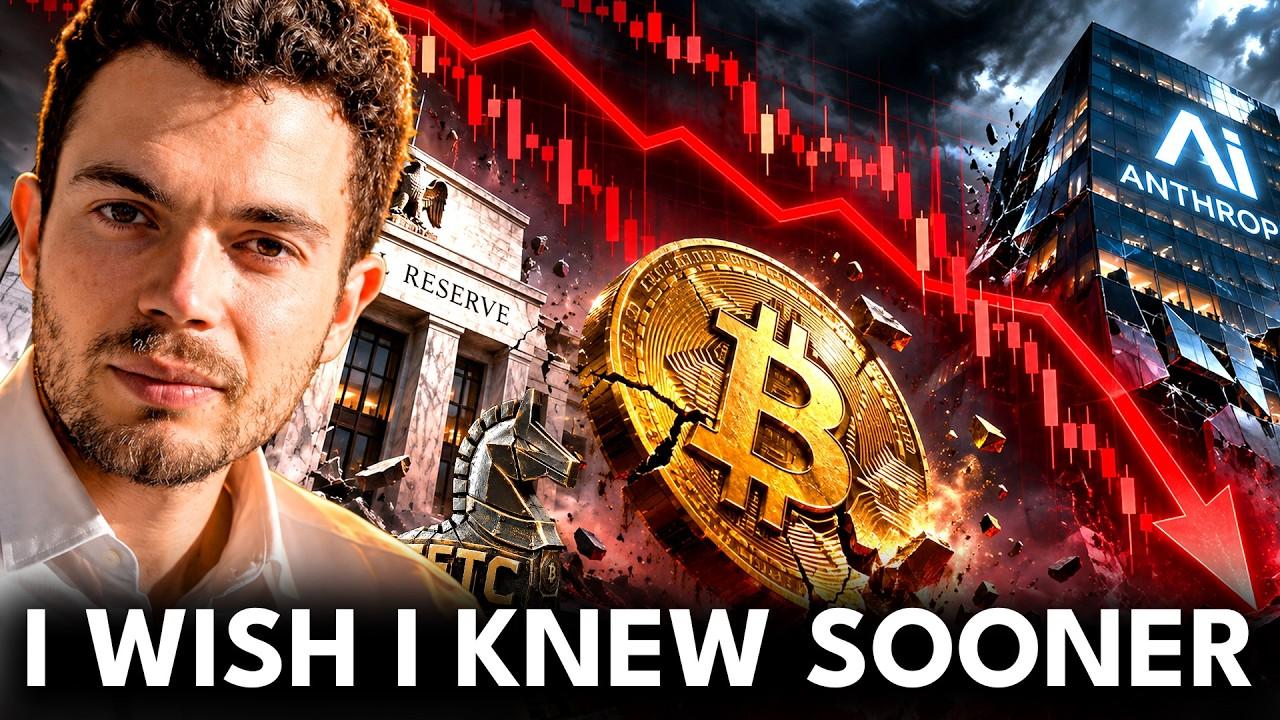
Full speaker-labelled transcript of TFTC episode #812 with Théo Mogenet. Read the written article: Théo Mogenet: The Debt Trap Has No Exit. Click any timestamp to watch that moment on YouTube. Machine transcription, lightly cleaned, may contain errors.
Marty Bent [0:36] Theo Mojanay, welcome back to the show, sir. It's been a long time.
Théo Mogenet [0:40] Thanks for having me, Marty. Indeed.
Marty Bent [0:43] I mean, the last time you were on, we were talking about what? Bitcoin money market funds.
Théo Mogenet [0:46] Exactly.
Marty Bent [0:48] Yeah. And it's been a long time. A lot has passed. You've joined Bull Bitcoin since we last spoke, and you guys are putting out a blog series that started with a manifesto called The Cost of Lies. I think everybody should go read it. Number one, we'll link to it in the show notes, but I just reread the manifesto and the most recent piece on France titled— what's the title of this? Laissez-nous faire. That I think is really important, particularly right now, and particularly for Bitcoiners, because it feels like we're somewhat wandering in the wilderness here in the bear market. It feels like the sentiment is lower than it's ever been, and one of my bigger focuses in the newsletter and more recently on the show is trying to get people back to first principles.
Marty Bent Why are we here? And I think. The manifesto and the first piece in the series that you guys are going to be rolling out every 2 weeks moving forward is a great grounding, great grounding pieces to remember why we're here in the first place. So with that, I think, why did you decide to start this?
Théo Mogenet [2:03] First, because I got Francis to pay my salary for returns, for writing stuff that I wanted to write for a long time. You know, this type of newsletter takes a lot of time, especially if you try to write them mostly without using AI. I think it's also really enjoyable for folks to read well-thought-out and well-written pieces in this age of AI slop. I have a kind of AI slop fatigue myself. So, and Francis too, even worse, I would say, than mine. And so yeah, I think it was a good endeavor. And as you mentioned, we can witness in our friends, family, sometimes clients, that a lot of people, especially in the last cycle, have been drawn to Bitcoin for like sailorism, price action, and they have a hard time focusing on the ball and understanding that the path towards Bitcoin being like the main form of capital or money in the world is extremely volatile and it will knock out a lot of legacy systems along the way, which makes it really logical that you kind of get this type of really volatile price action.
Théo Mogenet And I think that understanding what happens and being able to make sense of what happens not only in Bitcoin but with currencies, bond markets, and generally speaking other markets to better explain why we have this burst of volatility once in a while helps people just get better, I would say, conviction on what they hold and why they are holding this in the first place.
Marty Bent [4:03] Yeah, and so let's let's jump into it. I love the the titles of the first two pieces of the manifesto: The Cost of Lies and then Laissez-nous faire. But I think really setting this up and again grounding people in first principles: Why are we here? Why do we Bitcoin? Bitcoin is was launched as a reaction to the unfettered sort of debasement of currencies that. central banks and governments have proven to revert to when, when times get tough. And I think the manifesto setting up the lie and really tying it to Chernobyl in the beginning is important that, that we're basically selling each other lies in the monetary system. Most people don't realize this.
Théo Mogenet [4:52] Yeah, I use that as an introduction because I watched the HBO series about retelling the Chernobyl accident. And at the end of the series, you have this scene where the scientist, nuclear scientist leading the state response, is asked to testify at the trial of the operators of the reactor. And he's asked how such a nuclear reactor could explode, because it's not supposed— To be a nuclear bomb, it's a really different physical system, and it's not supposed in its design to behave that way. And of course, the USSR being the USSR, they wanted to pin the error on humans because the one thing you can't do in the USSR is saying our system is defective.
Théo Mogenet You cannot say that out loud, even if everybody knows. And that's exactly what this guy does in the series. And the way he answers is saying. Lies. This is how an RBMK reactor explodes, because when the truth offends, we bury it under a pile of lies until we can no longer remember it's there. And it basically is explaining this, like, nuclear incidents by the central planned nature of the system and the political like the political reflex to tell lies and propagandize about everything so that nobody can really have the information that is really pertinent, which is in that case that the design was flawed, which was known by other scientists.
Théo Mogenet And when you think about it, you can imagine like 10, 20, I don't know how many years down the road, somebody will have to explain to the NPCs how the financial and monetary system could explode or implode in such a way. And I think you could retell Legasov's response almost word for word, because at the end of the day, as I think many people in your audience know, what we have been doing since 1971 is printing the difference, is basically living in a world of fake prices, These fixed prices call for a political response because at the end of the day, a socialist or an interventionist is somebody that wakes up in the morning with this want to have reality, especially economic reality, because they want to manufacture economic outcome that will get them elected.
Théo Mogenet So they want to have reality fit in their idea of what is an ideal world. And for that, they pass new laws, they fix prices. As we know, this creates imbalances and then they have to be papered over. This is this truth that offends and that they need to hide between— below, excuse me, credit creation deficits and other ways to paper the reality of our life. And at the end of the day, you cannot change reality in that way. You can only kick the can down the road and make it so that the operator of capital, as in the Chernobyl accident, don't really know what they are doing, such that in some really serendipitous and specific situation, one flap of a butterfly wing will just create a chain reaction where the whole fucking thing is on the brink of collapse, and then you need to paper it over and over until you can't.
Marty Bent [8:47] Yeah. And that's, that's again, I really want the theme of this to be like grounding in first principles. Why are we here? And I think that's one thing that myself is— I'm guilty of myself is, is getting disillusioned and forgetting about the math behind all this. And so to your point about the comparing this to the Chernobyl incident, you have it in here. The RBMK reactor had a positive void coefficient. The more its cooling water boiled into steam, And the more reactive the core became, the hotter it ran and the more water boiled. So you create this sort of negative feedback loop. And that is a— it's a problem of physics with the steam reactors.
Marty Bent And when it comes to the debt, it's a problem of math. And you lay out the math, particularly leaning into and highlighting the dynamics and the interplay between interest rates and debt across many economies. And I think one of the more interesting examples you had is, I believe you're comparing France and Japan, where Japan's overall debt to GDP is much, much higher, but until recently their interest rates were much lower.
Théo Mogenet [10:01] Yeah, I think it's an interesting way to look at this because mathematics in finance and in economics at large have always been linear mathematics, I would say, because the mathematical education of people getting a PhD in economics or people getting an MBA, such as myself, are not on par with nuclear scientists, for example. But when you delve in this type of math that are full of feedback loops, as you mentioned, so causes retroacting over themselves, you are better equipped to understand these second-order effects and this chain reaction that can appear. One example I give in the piece is that the economic theory holds that if you raise interest rates, you are supposed to get less money printing because it should curb the ability of banks to extend new credits, and it should also curb the ability of the governments to increase deficits.
Théo Mogenet As we are witnessing now in many countries, your country, my country, and many others, this is not exactly what happens in reality, contrary to what the theory holds. And one of the reasons for that is that if your interest expense has become a really big item in your budget every year, Because, for example, you run very low interest rate policy for a long time, therefore encouraging people to take on a lot of debt, governments and private sector included. When then you have an event such as the COVID inflation that force the markets to raise interest rates, because we often say it's a central bank, but they are more in a reactionary role here because They can really pin short-term interest rate, but long-term interest rates are extremely difficult to control for them.
Théo Mogenet Then you get the situation where higher interest rates actually create a bigger interest rate expense as the old debts that was issued at low interest rate matures and needs to be rolled over at higher interest rate. And you get this system where If the government deficits and the government debts are really high, then the deficits increase, which means more money creation. And this is a theme that a lot of people have seen on Bitcoin Twitter, for example, or finance Twitter. Generally speaking, this is a fiscal dominance theme. For example, Lyn Alden is talking about a lot, and they basically painted themselves into a corner because even putting interest rates higher will not diminish deficits and will not decrease inflation.
Théo Mogenet And this is the same type of positive feedback loop that Legasov is talking about in the theory to explain how putting water, which is supposed to cool the reactor, would actually create more steam. And this steam will create a void which itself will run the reactor hotter and create the exact opposite effect than what theoretically it should do.
Marty Bent [13:28] Yeah. And as it pertains to like the debt situation, deficits on the side of governments, I mean, this gets exacerbated when you have the nanny state offering welfare. And I think that was the focus of your most recent piece on France, which we'll dive into. But I think really highlighting to your point, like the theory may say, here's how things should work if we do these things. But the reality of the situation is such that theory doesn't compute because I think the welfare state globally has grown too large. And so you can't cut a lot of the spending that is necessary to bring down the overall debt burden.
Marty Bent And so you get stuck in this feedback loop that you just described, which— Brings us to the point. And I think, again, framing this series that you guys at Bull Bitcoin are going to be putting out moving forward, I really like how you framed it, which is, hey, bring it back to first principles. Here's what's going to happen. Here's the problem. It's mathematics. We all know it. Here's the different ways out of the problem that are presented to these different governments and different actors throughout the global economy. And we're essentially going to write pieces moving forward, first starting with France, highlighting where the problem exists and how each individual country is trying to get out of it and what options they have.
Marty Bent But in the manifesto, you lay out 5 ways to get out of this problem that have different trade-offs.
Théo Mogenet [15:05] If we lay out the problem in the simplest way possible, I think is that if you define it's an abstraction, don't consider that this is something that really exists. But if you define like R as the average interest rate across the debt securities issued by your government and G the average growth rate of your economy, in theory, your tax receipt should increase as a linear function of the growth rate because we just have the same interest, like tax rates levied on bigger flows. Whereas then the difference between these 2 quantities, G and R, times the size of the stock of debts as a percentage of GDP, should tell you what is the size of the flow that is gobbled up every period, every year, let's say, just for the interest expense.
Théo Mogenet And when this quantity is bigger than your, your, your growth, understood as a flow, as like the new dollars that the government can get in, in tax receipts, then you are in a situation that we call a debt trap, where basically you get less money as the government to pay a larger interest expense, which means that you need to issue more debt Just to service the existing debt. So very logically, it means that your debt stock— we were talking about all the flows here, but all the debt stock can only rise. And if this debt stock is also rising in an environment where the existing debt has been issued at lower interest rates compared to the new debts that will be issued at higher interest rates, then it also accelerates, meaning that it's not only that the debt stock increases, is that the rate at which it increases itself increases, which in physics it's called an unstable system.
Théo Mogenet That's how you get a storm. That's how you get a nuclear reactor exploding. And of course, you have different ways to engineer your way out of that. The first way, the happy way, is growth. However, politicians are usually not the solution for growth. The disappearance of politicians usually is. And there are usually reluctant in getting out of the way to let the economy fix the problems they created in the first place. Because to do that, they would have to acknowledge that they are responsible for this mess, which their incentives prevent them to do. The second way to do that would be austerity. And austerity is usually really not popular politically because what you say is that, hey guys, we'll have to cut spending, we'll have to fire civil servants.
Théo Mogenet We'll have to limit the ping-pongies and the social welfare that we distribute to everybody. We will have to raise taxes in some cases when it's still possible, because in some countries you already cannot get more tax receipts by raising the tax rate. Anyway, in every case, it's not something that is popular, and that's why usually it's something that is imposed by the bond markets, by your lenders, and it's not really chosen by the political elites in power at the moment. Another way to get out of this situation would be inflation. The problem with inflation is that once you get the genie out of the bottle, and we saw that with COVID it's difficult to control how it will behave.
Théo Mogenet And in many examples, especially for economies that have less demand for their products and capital markets, it usually goes south really fast. So if you are maybe in Germany, in Japan, in the US, where a lot of people want to invest in or to buy products that are manufactured there, okay, you can start printing money and hope that you won't get 8%, 10%, 20% inflation. Year over year, but in other countries where the manufacturing base, the exports, and the capital markets are less strong, that's a dangerous bargain. And then it leaves it leaves out one. I think I forgot one option. Yeah, one one other option is default, which is usually a catastrophic option.
Théo Mogenet That's what countries such as Argentina used. But not really willingly. First, they trashed their own currency, because when you print your own currency and when your debts are denominated in your own currency, you can just trash the currency first to pay the people holding your debts in devalued currency. The problem is that once you do that, usually you get to the situation I described before, which is High inflation, then hyperinflation, then nobody trusts your money anymore. And then basically nobody wants to be paid that way. And at this point, you are in default mode. And then you have to negotiate with your lenders. You have to negotiate with the IMF.
Théo Mogenet Nobody wants to do business with you. Nobody wants to trade with you. Nobody wants to invest in your country. You experience a brain drain. The youth flees. And so it usually makes the situation way worse. So it's more the end of the road for the mismanagement than a real solution. And it leaves us with one last solution, which is one that is fairly cowardly, and that's why it's often chosen by politicians, which is called financial repression. For most people, financial repression means I don't have access to my money, or my government is like doing shenanigans with access, with AML laws, with access to my money and stuff like that.
Théo Mogenet It's usually a consequence of what economists truly call financial repression, which is mostly this system whereby the rates, the return on the savings, which is the same way of saying what we pay people that are holding our debts, is lower than the inflation itself. So imagine your bank accounts, imagine your government debt yielding 4%, for example, and inflation running at 6% or 7%. The thing is that in economic theory, in a purely fantasized free market, the long-term inflation expectation should equal at least the yield on the debt securities. Plus an eventual interest adding on top of that for growth if there is growth expectation. Because if I hold debt securities, at least I want to make sure that the money I would get in the future is worth the same things in terms of purchasing power parity.
Théo Mogenet And I will also want to be compensated for the opportunity cost of not investing in the growth of this economy. And so it makes a lot of sense. But in reality, as in many cases with economic theory, it doesn't really work that way. And the government has a lot of tools that are available to actually make it so that the interest rate is capped below this natural inflation plus growth rate in the long run. One of these tools is just what we call prudential rules, which basically are global rules that we force the bank to obey to when they need to structure their balance sheet.
Théo Mogenet So you go to the banker, you say, guys, we remember 2008. You are actually in a very dangerous business. So we think that you need to hold as much government paper as we want because it's actually really safe compared to other financial instruments. And that way, you slowly force banks and other types of savings institutions, whether it's insurance, whether it's pension funds, whether it's different hedge funds or other intermediaries, to hold a certain buffer in government securities. And that way, people are usually blind to the fact that their long-term savings are actually invested with the government because there is this kind of big institution in the middle that is heavily regulated that you can lean on to so that they actually invest a larger chunk of the capital that has been endowed to them by the savers in these government securities.
Théo Mogenet And this is, for example, something that the UK and the US used at the end of World War II to try to inflate away the war debts that were quite huge. And the generation of our grandparents— I think we are more or less the same age— were the ones paying the bill in the end because they were the ones having savings that were kind of locked in this financial system that were giving them, let's say, 4% a year when inflation plus growth was 7, 8, 9. And so over the course of 10 years, more or less, Depends on the country. We wiped out most of the debt in nominal term, and then it alleviated the debt burden for the whole economy, and it restarted growth.
Théo Mogenet And then this cycle goes all over again. And so one of my intuition is that in the current incentives that are given to politicians, this is the painless way to get rid of most of the debt. And so they are very likely to resort. To this expedient. Problem being that in order to do that, you need also to trap capital in some investment pockets because people are not stupid. They don't like to lose money even in real terms. And so if you give them 4 when actually the hurdle rate to beat inflation is 7, they are very likely to take their capital out and invest it elsewhere, either in other instruments to lend it to other institutions or even abroad.
Théo Mogenet And the thing is that when you have these big pockets of savings that are managed by big and overly regulated institutions, it's quite easy to create new rules, to create tax exemption systems, to create tax penalties, to invoke national security, to invoke espionage, to invoke like French shoring, to invoke a lot of pretext. Emergencies, whatever. Choose your current crisis and find a way to carve a narrative to justify the fact that, guys, we need to keep this money in the hands of Americans to invest in America. For example, if I take America as an example. And so it's kind of what we call capital control.
Théo Mogenet And in this environment of capital control, Bitcoin shines because that's the only thing they cannot really directly control. As long as you held it in self-custody. So sorry, it was a mouthful, but this is to paint the overall system we are in, the possible exits, and explaining why in some cases financial repression is the most likely of those 5, mostly because it's something the politicians can actually do and it's something they are actually incentivized to do if they want to get reelected.
Marty Bent [27:19] Yeah. And they can spin a narrative too. Like, oh, we need to do this national security. We're packing it in. Can't move your money outside the borders. Do your part. Buy the war bonds.
Théo Mogenet [27:29] And in many cases, they don't even need to at the beginning because people are not aware of it, because the financial system is so complicated that when, for example, the Trump administration will say, okay, I like stablecoins, but I want you guys to back the stablecoin by short-dated government securities. I don't think that the millions of stablecoin holders in the world are really understanding that they are financing the operation of the US government, the war in Iran, or the welfare systems in the US or whatever. It's something that is really silent. At some point that we figure it out. But usually it's too late.
Marty Bent [28:12] Sup, freaks? Listen, stacking Bitcoin doesn't mean making a big purchase every time you go to buy. Everybody's like, oh, I gotta get a whole Bitcoin, I gotta do this, I gotta do that. No, you don't. On Cash App, it can happen in the background of your everyday life. You turn on roundups, and as you're going and you're spending using the Cash App card, every purchase rounds up to the nearest dollar with spare change going into Bitcoin. You can also get paid in Bitcoin, so part of your paycheck stacks the moment it lands. You can set up direct deposits into Cash App. You can send Bitcoin to friends and family wherever they are.
Marty Bent If you want to get further protection by moving your stack to self-custody, auto withdrawal sends it straight to BitKey, which is right here. Your own cold storage, no seed phrase required. Coffee, groceries, payday, it all adds up. The fees, ta ta, slash slash slash, little by little, your Bitcoin in your hands. It all adds up. Cash App was built for serious Bitcoiners. So download Cash App and BitKey today. Use my promo code TFTC10. You're gonna get 10% off the second generation BitKey this episode. Was sponsored by Bitki.
Marty Bent [29:05] What's up, freaks? This episode was brought to you by Simple Mining. I'm sure many of you listening to this right now own Bitcoin and own it the same way. You go on an exchange, you buy it, sweep it to the cold storage, maybe you keep it on the exchange and you pay full price. But there's a smaller group of business owners, family offices, and investors with sharp CPAs that are quietly getting theirs a different way. They own the machines that make it. Here's how it works. You buy the miners at Simple Mining. Simple Mining hosts them, runs them at their facilities in Iowa on industrial power rates you could never get on your own. Bitcoin they mine goes straight from your machine to your wallet. 2 reasons I find this interesting right now.
Marty Bent [29:37] The second one is the one that nobody's talking about. One is the economics, cheap power. This lets you convert your electricity into Bitcoin at a discount to spot. You're acquiring the asset below the sticker price everyone else pays. 2, and listen closely, if you've had a big income year, making a lot of money out there, I know a lot of you freaks are making a lot of money. Miners are classified as computer equipment with the big beautiful bill. Equipment means depreciation. Qualifying buyers can write off the entire purchase in year one, It's the same playbook real estate investors have run for decades pointed at Bitcoin.
Marty Bent Your CPA will want to see this before the end of the year. And with attractive financing available, you can deploy without selling assets to do it. This is not a garage operation. Simple Mining runs over 40,000 machines, which just ranked the fastest growing company in Iowa on the Inc. 5000 chart. We put together a valuable resource called the 2026 Bitcoin Mining Blueprint. Covers the 5 mistakes investors make when allocating to mining and how to avoid them before deploying capital. io/tftc. io/tftc. Another part of the manifesto that I really liked, because I think it goes underappreciated, and I think particularly for the American audience listening to this who's watched the development of the AI trade build for the last few years, a lot of people like to single out governments and look at government debt, point at the $40 trillion in debt that we have, At the federal level here in the United States, but you also make the point that that public or excuse me private sector debt has has a role to play here too, particularly in tax receipts and growth.
Théo Mogenet [31:13] Yeah, this is a really important part of the picture because the public debt is usually what financial commentators focus on, but it can only be serviced with a real thriving economy. And the extent to which you will be able to wiggle your way out of an overindebted problem depends largely on the debt burden that is carried by the private sector, the private non-financial sector, I should say. So basically the real economy. And in the US, for example, you don't have that much non-financial private sector debt. It's the same in the UK. I would point out other countries that have a way bigger problem, such as France, for example, Because there the private debt is way higher in points of GDP.
Théo Mogenet And most importantly, the debt service cost of these debts is way higher. So the cost service of the private debt is basically how much the private sector will pay every year to pay the interest bill on the stock of debts. So the flow compared to the stock. And it also includes how much of the cash flow, the free cash flow that this private sector has, will be needed to pay back the principal that is coming due. And in France, for example, is north of 20 points of GDP, which is completely enormous. So it means that basically €1 out of €5 that is earned by the private sector in France, both by families and by corporations basically disappears and cannot be used for investment, cannot be used for consumption, and cannot be used to pay back the public debt because it's not increasing the tax receipts for the government.
Théo Mogenet If you look at Japan, and that's why I use those 2 examples, the debt burden, public debt in France is basically 120 points of GDP. In Japan, it's 250. So it's twice that. And everybody looking just at this number would say Japan is in the most precarious situation, in a more precarious situation. This is a catastrophe. The thing is, Japan also has what we call a foreign net asset position, which is basically how much money the rest of the world owes to Japan, or how much assets they hold within our own countries, in the US, in France, in Italy, mostly in the form of stocks, government debts, And real estate, and this net asset position is mind-boggling.
Théo Mogenet Last time I checked, it was something like seven thousand billion dollars, and the second in the world. So it's net; it's net of how many debts foreigners hold in yen. So that's that's a really important picture. And the the second country in this ranking is China with fourteen hundred billion. So five times less, even though China is the biggest economy in terms of export in the world, and it created this like competitive currency devaluation for thirty years in order to become the manufacturing center of the world. And so this makes it so that the Japan debt problem is actually a French problem, in the sense that when shit hits the fan, if I'm a Japanese politician.
Théo Mogenet I will not watch my economy dying just to save France or the US. What I will actually do is that I will actually sell euros. I will actually sell French government debt. I will sell US Treasuries. I will sell whatever my central bank holds. That way I will get yen. The yen will appreciate, and then I will pay back the debt that is mostly held by the central bank. And I will cancel it. And what I've done at that point is that I've trashed capital markets in other countries. I've trashed their currency. Mine appreciated, and I just cancelled the debt in pure accounting terms. Of course, this comes with internal economic effects within the country itself.
Théo Mogenet So there is kind of a political bargain to be made between the old generation, between the new generation, the civil servants, the entrepreneur. Or whatever. But Japanese being Japanese, they are extremely nationalist, and they will definitely accept sacrificing their partners or foreigners for the sake of not having their society blew up. But then in the West, we should watch that really carefully because how can we react to that? Because in France, we have this private debt burden because we don't. Own our own debt. It's mostly owned by foreigners, whether it's US pension fund, whether it's the King of Saudi Arabia, the Norwegian Sovereign Fund, or whatever.
Théo Mogenet It makes it so that we have no political, no geopolitical leeway to maneuver our way out of this precarious situation. So that's the full picture that we are trying to to look at in this newsletter, doing some sort of zooms on specific countries and specific sectors in order to try to understand this second-order effect and follow these consequences to be able to say, maybe if this happened to Japan, I will watch what happens to France and vice versa.
Marty Bent [37:00] Yeah. I'm trying to find the quote that you— I forget if it was in the manifesto or the piece on France, but I think, I mean, basically, it's not verbatim, but essentially like the young are going to take the burden of the cost on all this. They're going to pay for the old.
Théo Mogenet [37:23] Yeah. So I think the he who pays last pays most.
Marty Bent [37:31] Yes, that's what it is. He who pays last pays most. And so I think this is a good time to transition and zoom in on France, where you talked about the ongoing protests and how the sort of animus behind them is misdirected and the people participating in them, if they are earnestly rioting against high the cost of education don't understand the problem. And you start with a history lesson again on the phrase laissez-nous faire, going back to 1681 where Jean-Baptiste Colbert met with French merchants and counterparties in Britain and in the Netherlands and created this or breathed this line. Into existence. So what's what's the back the historical backdrop and how does it connect with what's currently happening in France?
Théo Mogenet [38:31] So yeah, this was during so at the end of the 17th century during the reign of Louis XIV, which is famous for Versailles, for like the big French culture, big state expenditure, and also for waging war against a lot of European powers. And losing every one of them. So at the time, taxes increased, you had a lot of government intervention, and at the same time you had the beginning of, we would say, a liberal institution forming both in the UK and in the United Province, which is now the Netherlands. And so French merchants and French manufacturing base were outcompeted by the British and Dutch one.
Théo Mogenet And so Colbert, who had this vision, very central planning motto and early Keynesian vision that you need to help your champion to be competitive, met with this merchant and asked them, what the government of this majesty can do for you? And this merchant answered, straightforwardly, please do nothing. You have helped us enough. Because he meant that all these norms and rules and taxes were actually the thing that make them non-competitive. And so please get out of the way because that's the only way we can grow out of this. So just this to show that this is not new in my country. It's something that is in the DNA of the French government, and it has been so even before We were republic, and nothing had changed.
Théo Mogenet It's something that is deep embedded in the French mentality. When somebody has a problem, he asks the government to help him. " In France, you have a free education system. that has a tradition of highly— of good education, I would say. We have very good engineers, mathematicians, and whatever. That's one of the reasons why, for example, you will find a lot of Frenchmen in the AI labs in the US. However, now we spend a lot of money already in education. If you count the first item in the French budget, We spend €90 million a year for education, which divided by the number of students is something like €12,000 a year per student.
Théo Mogenet And just to give you an element of comparison, I went to kind of private school in France, which is not really frequent and some of the best in the country. And that's what my private school cost every year on top of what my parents were already paying in taxes for subsidizing, for paying for the the free education of other people. So my point is that you can have elite education with this kind of money if you ask the private sector to provide it. And then when you look into the detail of how this money is spent, for a third, it's just paying the pension of the communist professors because they are civil servants.
Théo Mogenet It's paying for overpriced school supplies and furnitures and stuff like that because we created this system where the public school cannot go on the free market to buy tables, to buy chairs, to buy whatever. They need to go on specific government-labeled suppliers that of course charge 4 times more than Amazon would charge for a fucking chair. So this is a bit like the Pentagon, but in the education. And so you have all this socialist mindset in France that develops where you have students and professors that are denouncing a reality that is not to argue against. Like, actually, the classrooms are leaking from the roof. The professors are actually absent most of the time.
Théo Mogenet The education level is collapsing at a pace that is frightening. So you have all this problem. The teachers are extremely ill-paid. And but this is not because of a lack of funding. This is because every funding that we give to this state administration actually ends up in a black hole in forms of waste, corruption, misallocation of capital. And they are impervious to a change in mentality. They are blind to the fact that it's not by putting more money in something that doesn't work already. that you will solve the problem. You will actually make it worse because of what we explained on the private sector, because more funding means more deficits or more taxes.
Théo Mogenet And so it will create a lot of knock-on effects in other sectors. And that then creates this kind of stupid divide against working people and students, teachers, unemployed people that go in the street because they have the time to do so. create wreckage because also on top of that, we have a big immigration problem and a big propaganda problem, I would say, where a lot of people that are foreigners or that had foreign parents or grandparents and that immigrated to France don't feel French at this point, and they don't have the same self-limitation when it comes to not trash public goods, to not Fucking put the streets of Paris on fire or stuff like that.
Théo Mogenet And then this creates a lot of tensions because the guy who just had a shop in Paris and that wants to make money in this fiscal hell is kind of attacked because he is considered an enemy of the poor people, of the common people. But I think people know that all too well. This happens in many countries. It's just that in France, The madness runs higher than in other countries with this because of our history, as I mentioned at the beginning. And if you are, I don't know, somebody that holds French debts, you see all this mess and you see that the government actually lost control because it cannot stop the riots.
Théo Mogenet It cannot raise more taxes because at this point, the tax rate in France is the highest in the world. So if you increase taxes, you actually collect less tax receipts because you incentivize people to work less, to invest their money elsewhere, or just to cheat. And then it means that if you hold government debts, French government debt, you look at the situation and you're like, this guy will default, or they will pay me in inflated currency, so I will just dump it. And then your interest rates rise, and then it creates all the problems that we described before, where the crisis feeds on itself with the specific situation of France that we actually don't print our own currency because we have this magical, wonderful, stupid union currency that we call the euro.
Théo Mogenet And so if we try to actually inflate away our debt, we create a problem in Finland, in the Netherlands, in Germany, in Italy, in all the other countries. that will share the burden with us. And they might not be really interested in allowing French people to live in this socialist fantasy and retire at 60 and all these nice things that we take for granted at the cost of their own economies, their own growth, and their own purchasing power. So this creates a big stalemate and a political situation where at some point maybe the Germans will say, You know, go fuck yourself. Like, the euro was a nice experiment, but now you will go back to the franc, which means that then our national currency will devalue, I don't know, 30% overnight.
Théo Mogenet Then it means that the people holding French debt will ask crazy high interest rates. Then it also means that civil servants, pensioners, everybody that has a fixed promised income will be paid in inflated away currency. It will be nice for the new generation and the entrepreneur because they will also inflate away their existing debt. So student debt, corporate debt, or stuff like that. And they will also have gained more competitiveness compared to other countries because now they can sell cars, handbags, or agricultural products, whatever French produce in a lower currency. Which was kind of the reason why French economy was not going well in the first place.
Théo Mogenet Because since we tethered our currency to the Deutsche Mark and that we have way more civil servants and socialist madness running in our country, we are just not as competitive as the Germans are when it comes to car manufacturing and exports. And so basically we created more civil servants in France. More factories in Germany, which is kind of this Faustian bargain between the German entrepreneur and the French civil servants or the French retiree at the expense of the French entrepreneur and the German saver. But this is not sustainable as any price fixing. At some point, the lies will appear and the debt to the truth needs to be paid.
Théo Mogenet And I would argue that it's also why the German economy is not doing that well. These days they have a self-inflicted energy problem, but they also have this too low exchange rate that they have run for too long, which prevented them to invest in higher, more technical capital goods. And instead of producing cars or stuff like that, that China in the end can also produce, They didn't invest in, I don't know, space exploration or computer chips or just higher value-added type of industries. And they misallocated capital on a very large scale. And this creates the current situation.
Marty Bent [49:14] All right, freaks, you know I don't take sponsored money from products I wouldn't use myself. So listen up. The Aave and Bitcoin Visa card is one of the most interesting things I've seen in the Bitcoin lending space in a long time. Here's the deal. You can get a line of credit up to $1 million backed by your Bitcoin without selling a single sat. No games, no annual fees, no minimum draws, and your Bitcoin is custodied by BitGo, one of the most trusted names in digital asset security. Aven never lends it out. There's no rehypothecation. You stay in control. You can lock in a fixed rate for up to 10 years.
Marty Bent 10 years. That's 10 times longer than most lenders out there, or go interest only for up to 5 years. 99% APR, For a product that lets you keep your stack and still access liquidity, it's hard to beat. On top of this, guess what? You also get 2% unlimited cash back every time you use the card. Spend fiat, keep your Bitcoin. That's the whole game. If you've been stacking for years and you need liquidity without triggering a taxable event, this is worth a serious look. com/bitcoin. com/bitcoin. Check it out. What's up, freaks? This Rip at TFTC was brought to you by our good friends at CrowdHealth.
Marty Bent It's open enrollment season. to decide which health insurance plan you want to get on or if you want to drop insurance altogether. I did that 5 years ago. It's one of the best decisions I've ever made. My family and I have been using CrowdHealth since 2021. Through that period, the last 5 years, my wife and I have brought 2 new children into the world. We've had multiple health events and CrowdHealth has been incredible for us. It's been there when we needed it. It's helped negotiate bills lower and it's really given us peace of mind while saving us a significant amount of money. on healthcare. CrowdHealth is not insurance, it's crowdfunded healthcare.
Marty Bent You pay a monthly membership fee, help out with other people's eligible medical bills, and when something happens to you, your eligible bills can be submitted to the crowd. And you have an actual person helping you. It's one of my favorite parts of CrowdHealth. You have a personal care advocate who's there to walk you through the process, to help you find doctors, to help you find the care that you need, and be there to help negotiate your bills lower with the rest of the CrowdHealth team. Again, I've had all my family's bills funded to date. There's been many. My son had a rock in his ear he had to get removed.
Marty Bent The crowd helped fund that. It works both ways, and I love that. The crowd pays our bills, we help pay other members' bills. com/tftc, and when you sign up, use the code TFTC for $99 per month for your first 3 months. Do it. I'm uninsured, baby, and I love it.
Marty Bent [51:37] It's insane. 3% of GDP is the public spending. 6% of GDP is raised from compulsory levies. 1% of GDP. I mean, the public debt, 190% of GDP, that's getting to almost the point of no return that many people like to cite, which is 120%. 14%. And GDP growth going negative in Q1 of this year and being flat in Q2. I mean, this highlights right here that option number one, you can't grow your way out of this. It's not happening. It's obviously not manifesting in France. And to your point about Germany sort of footing the bill, or the more productive economies in the eurozone that use the euro currency footing the bill for the countries that, that trend towards socialism and welfare, that's not going to persist.
Marty Bent It cannot persist, especially when you consider the sort of social tensions that exist across Europe right now, whether it's because of the war in Ukraine or the immigration problem. It feels like things are getting to a point where this is coming to a head. So I look at that chart you put in the essay and say, this seems like the Event horizon for France specifically.
Théo Mogenet [53:06] Yeah, and there's an interesting game theoretic implication with this, which is also that we have some assets that Germany needs in some sense. So we are the only real nuclear power within the European Union, and because they are quite afraid of the Germans and the— not the Germans, the Russians and and the war in Ukraine escalating in something in which Europe is dragged on, if we had some political leaders with balls, we could also basically fold their hand and leverage these geopolitical assets to get some debt restructuring. Because a large part of this debt, as we mentioned, is also held by the German Bundesbank or by German financial institutions.
Théo Mogenet So maybe the German taxpayer can also appreciate the fact that most of its energy, thanks to their own energy hierarchy policy, is now coming from our own nuclear reactors. And their defence system is mostly French nuclear submarines, French fighter jets that have nuclear capabilities and stuff like that. And maybe we don't want also as Europeans that France goes under because it doesn't look nice to have a country that has this type of strategic assets to be ruled by mob rule and crazy socialists and just have this type of political instability. If I were German people, I would prefer that some serious people get a grip on power and maybe we negotiate this.
Théo Mogenet And of course it will look like austerity for France. It will look like the end of the fairy tale where we can just paper over the real costs of our welfare system. But even as a French citizen and a French national, I long for that because at the end of the day, The longer this madness lasts, the most dire the consequences will be. And we will have lost decades, as Japan did for a long time, because they propped up their own bubble during the '70s, '80s, and '90s. And so we should expect that this ends sooner rather than later. But this is not what the political situation and the political debates at the— just before a new presidential election that will happen in May next year.
Théo Mogenet This is not what the debates look. Even the people that call themselves liberal and that are denouncing this excess spending problem, this excess debt problem, and this too much social welfare program problem, they are not way near the truth. They are just negotiating with reality at the margin. But we don't have a €100 billion per year problem. We have like €400, €500 billion per year problem. And if you look at the mass, just the public spending, the different items in the budgets, as many people do in the US, less people do that, fewer people do that, excuse me, in France. If you look at the arithmetic, you're like, no, no, we actually need to do Millet-style cuts in the budget.
Marty Bent [56:57] Yeah. And you end the piece with a paragraph I'm going to read now. In Choose's views, Victor Hugo wrote, Providence has willed that there has always been something great at the head of France. Under the Old Regime, it was a king. Under the Empire, a man. Under the Republican Assembly— an avid student of history, the French writer knew all too well his country's unique tendency to collapse and then come back from nowhere. Perhaps it's going to be yet another time, but this time Providence would have to put something greater still at its head: freedom. And do you have any hope that this can happen in France? This is the cultural sort of fortitude of the French people strong enough to collapse yet again and rise from the ashes?
Théo Mogenet [57:39] I actually do, and for another reason, which is that since its formation as a nation, France has been a country built upon ideas. So the country was first created at the end of the 5th century, so it's one of the oldest A country in Europe, actually, when this Frank lord called Clovis actually converted to Catholicism on the back of the fall of the Roman Empire and had a big victory against all his enemies and decided that, okay, it means that God is on my side. It's a sign of providence. And so now I will create this Rome. under the tutelage and the patronage of the Roman Catholic Church.
Théo Mogenet And this lasted until the French Revolution, when we actually decided to replace the monarchy and the king, something that the English didn't do because they understood that proclaiming freedom and human rights and then putting up the guillotine next door and cutting people's heads was a bit hypocritical. And so we decided in our case to put the ideal, the universalist ideal of governments that can take any problem and solve it for the populace, was what will be at the helm, at the head of France for centuries. Now, of course, it didn't pan out well. It was just the blueprint for the first communist revolution. We decided to kill each other in an unending kind of civil war.
Théo Mogenet And then arrived this Corsican bald guy with his army coming back from Egypt. He decided to clean this mess, and everybody in France was kind of tired of this ongoing civil unrest, and they welcomed it into power. He actually inherited a lot of war that the new French Republic had declared against a lot of monarchies that were not too looking for this idea of killing kings with a good eye, especially because it's usually somebody, some other king's cousin. And so France was already in war with the Austro-Hungarian Empire, with Italy. It had its own civil war in the west. And so Napoleon arrived and take on all this war, actually won.
Théo Mogenet But for the non-French audience, you need to understand that at this point we were in hyperinflation. The country was collapsing. We killed all the priests. We seized all the Catholic Church properties to try to back our failing currency. We created price-fixing laws that people were beheaded for not respecting. It was a completely crazy situation on with the Bolshevik Revolution. Marx and Lenin themselves actually called the French Revolution the blueprint of communism. And so really sorry for that. We created a nasty idea, then we exported around the world. And then so we had Napoleon, he was defeated. Then we had a relatively liberal republic, then relatively liberal empire.
Théo Mogenet Then we collapsed during the First World War, then again in the Second World War, we actually were that close to become an American state or colony. We had this crazy guy called de Gaulle that actually fucking managed to restore the country as a sovereign country and then had this vision of, okay, if we want to be independent, we need the fucking nuclear bombs, we need nuclear reactors, we need good military capabilities. We need to be able to sit at the table with Britain, with the US, with China, with a non-aligned kind of policy. He's famous to actually visit Mao in '67, way before Nixon did.
Théo Mogenet He was famous for saying Russia will gobble up communism as paper gobbles up ink, understanding the long gameplay that is geopolitics and not falling into the trap of ideological fights between capitalism and communism. And he restored basically France as a sovereign, powerful, prosperous nation. So we have this kind of cycles where we end up down the toilets, and then you have some crazy Frenchmen that are, I think, attracted by a very crazy ideal. That they sought to restore France on ground, an ideal ground. And that's what Victor Hugo was saying in the quotes that you read. And that's why also I think that we have all the elements to reinvent ourselves in this new century where we can engineer a lot of productivity growth with AI because We have fucking 70% of our power that is nuclear generated.
Théo Mogenet We have some of the best mathematicians in the world that are working in applied cryptography, in distributed computing systems, in all the things that you need to actually do AI, cryptography, Bitcoin, and stuff like that. We just need to stop exporting them in your country. I'm sorry for that, but I would likely to have them working in France rather. And we also have all these geopolitical assets that we inherited from the gold that I was mentioning before that would allow us, even in a scenario of euro collapsing and the European Union fragmenting on the back of our own bankruptcy, that will allow us to negotiate our way Out of this in a not too extreme catastrophe, we just lack Frenchmen with balls and people that would actually arrive in the political arena to cut all the nonsense and say, "Guys, stop talking.
Théo Mogenet It's over. " Nowhere to be fine at the moment, but. The tools are here. The assets are here. So I don't think it's impossible. It's just improbable.
Marty Bent [1:04:27] Well, I'm hoping and praying that France fixes it. So you guys figure it out because I don't take any offense to you saying you want the French in France working on mathematics and cryptography and all that. I think that's what any people should want. I certainly want that for Americans. You should want that for the French people. But I mean, we're an hour in. We haven't even brought up Bitcoin. Bitcoin. It's been mentioned a couple of times, but to your point, like freedom may be the sort of tingle of providence needed in France to reemerge stronger than it is now. And I think Bitcoin could play a big role into that.
Marty Bent So like, and I think pulling this back, zooming back out and thinking about the manifesto and the goal of what you guys are doing at Bull Bitcoin to highlight the problems that exist, the ways out that could manifest and when individual governments or central banks are going down the path of a particular solution. I think you laid out 5 paths that the government has to fix the problem, the central banks had to fix the problem, but there is a 6th path that individuals could leverage to fix the problem, which is Bitcoin, particularly Bitcoin in self-custody, which you guys make very clear in the pieces as well.
Théo Mogenet [1:05:39] And it's a funny thing because when Francis contacted me, Because he successfully exported Bull Bitcoin in Costa Rica and then said to himself, oh, actually Bull Bitcoin doesn't need to be only a Canadian exchange. I can actually replicate what I've done in Canada in other countries. So he found me and then he told me about his plan to expand in Europe through France. My reaction was, are you crazy, mate? This is the worst country in the world. To be trying to get a license. We are crazy highly regulated. Even getting mica in France instead of another country is kind of a suicidal mission. But in the end, what we figured out is that once you get the license there, it's stronger than in any other country.
Théo Mogenet And so you have more certainty about how you will be able to operate within the whole European Union. And what we find out also is that people in my country need Bitcoin more than people in Poland, for example, because of the situation of these taxes, of all this socialist bullshit. And now if you are an exchange such as Bull Bitcoin that will not ever compromise on self-custody, you actually have a good demand for that once people wake up. And decide, okay, I want to be a free individual. I want to be sovereign. I'm sick of paying for this bullshit. I'm sick of paying for basically all this policy that's trashed my country down the toilet.
Théo Mogenet And I would also argue that we have a good historical and intellectual background for economic liberty and philosophical liberty. I think it's Bastiat who said when asked, or another French economist, I'm not sure. How come that you have so many French liberal thinkers such as Bastiat himself, Jean-Baptiste Say, Turgot, Quesnay? A lot of our French liberal thinkers were actually inspirational for the founding fathers of the United States. One of them actually was the kind of mentor of Washington— Hamilton, sorry, I'm mistaken here. And at the same time, it's fucking socialist, centrally planned, Colbertist country, as we said at the beginning. And so he answered, I think you need to live in hell to imagine what paradise looks like.
Théo Mogenet And we actually have this long tradition of entrepreneurship, of engineering, of people wanting to be free. And it's just that it needs to be revived. But it's something you can, I think, reinsufflate in a new generation when you have the tools such as Bitcoin in self-custody to actually give them a way to enact on it. Because if you are just talking all day about how freedom can fix your problems, how you should long for economic liberty for you and for others, the problem is then that you end up in the local arena, the local political arena, where everything is geared toward democracy that leans towards socialism, and it corrupts every one of your ideals.
Théo Mogenet You always compromise. Whereas with Bitcoin, the individual itself can just decide to act upon this idea and put himself or his company on the Bitcoin standard. And so I think Francis's mission of creating the tools that will allow people to have these very experiences that is as close as we can to the usual banking or payment experiences that you would have at centralized fiat institution with the freedom and sovereignty on top that you get from Bitcoin self-custody is if you manage to do that in France, you can do it everywhere. , the more people need Bitcoin. And so the better you are placed to be successful in this country.
Marty Bent [1:10:14] Yeah. That's what I'm trying to figure out, whether it's France or over here in the United States from a political perspective. Is it hot as Hades or is it just warming up? Are we, are we in hell or are we still making our way down to the 7th, 7th layer of hell, as it may be? That's the big question.
Théo Mogenet [1:10:39] I think you have extremely good ingredients in the US. First, the history, the founding history of the country. A lot of people say there is nothing more American than Bitcoin. I would completely agree with that. I think also you have a lot of capital, a lot of attractiveness in your capital markets, a lot of pension savings and stuff like that, which we don't because of our socialist, I would even say communist pension system that we described before. And this will create a lot of Investments capabilities, and that's why I think the U.S. was home for Bitcoin really fast, and it makes total sense. Now, I'm wondering if in your country the the actual self-custody and the the the the willingness to break out from centralized and controlled payment system and banks, generally speaking, will pan out. That's something that you see, I think, from afar. In my opinion, you have this kind of back and forth within Bitcoin, but maybe it's just the cycles. I don't know.
Marty Bent [1:11:56] Yeah, I mean, it's been a trying 6 months for self-custody. I think the Coldcard RNG vulnerability and I think the fearmongering around AI vulnerabilities, which, I mean, maybe not fearmongering, maybe justified fear, because there is a ton of unknowns out there in terms of what's vulnerable. I mean, I think, was it yesterday somebody announced some random JavaScript library was injected to thousands of very popular websites that if you visited, like, you can— and you had private key material on your computer, which you shouldn't, but a lot of people do, could have swept wallets. It's tough, right? I think that's talking about like needing to go through hell to imagine what paradise can look like. Maybe that's what we're going through. Maybe that's like the idiosyncratic sort of existential crisis Bitcoin's going through right now.
Théo Mogenet [1:12:53] I think the whole internet is going through this crisis. Bitcoin was just hit first because it's a honeypot. Like, if I'm a hacker, I have more interest in targeting Bitcoin custodial system or self-custodial individuals or company. The good thing though, and I can vouch for that working at Bull, is that if you are agile enough, you can design new systems to address these new threats. Of course, it's a moving terrain, so it takes quite some time. There is also adaptation from individuals themselves. But I think sometimes we should also take into account, and I know it's difficult when you are not on the other side of this story, how much potential there is in this idea that non-engineers, like people like Francis, like me, can just take fucking clankers and prototype new Bitcoin products in the span of weeks.
Théo Mogenet And then work with extremely talented engineers that have like a seasoned Bitcoin experience to just go through the code and then harden it over and over and over with new models. Because I felt like it gave us, at least at Bull, a lot of ammunition to go faster from idea to product launch and testing it. in real conditions. And then it's just how much time it takes for people being comfortable putting meaningful amount of money in this. Maybe it will be longer, but the experience that you get from having your product out there, even if it's with small amounts, is extremely valuable.
Marty Bent [1:14:44] Yeah, and I said it a few weeks ago in Rabbit Hole Recap, but I want to reiterate now for anybody listening who's unaware. of the prowess of Bull Bitcoin. I think you guys are certainly, in my mind, without a doubt, the most cypherpunk company in the world. And again, really leaning into the last word of your most recent piece, which is freedom. I think the way in which you've designed not only the company, but the product suite is to ensure that your users have the utmost freedom possible. Like starting out with, you can't hold Bitcoin on Bull Bitcoin, you need to send it to self-custody.
Marty Bent We're not going to hold it for you. And then obviously building Bull Wallet and a few weeks ago enabling PayJoin to make sure that people have privacy while transacting. And so I think if we are going to bring about a world in which we want to live in, in which the government is out, it is a incumbent upon us to actually build the tools. And I just want to give Bull Bitcoin the proper respect because I think you guys, out of anybody in the industry, live to those ideals and that sort of ideology better than anybody.
Théo Mogenet [1:16:00] Well, most of the credit is due to Francis, honestly. And it's extremely interesting because he was trained in political science initially, and I'm more trained in mathematics and business. And when I arrived, I noticed directly that the guy actually intuitively nailed the hierarchy of things that an entrepreneur should do. The way I described it to external people is that at Bull Bitcoin, everything is downstream of value because he's really inspired by a mission of having Bitcoin succeed. In its cypherpunk ethos, every decision he makes in every dimension, being product design, fundraising that he never did to maintain its independence, how he decided to spend capital, how he decided to allocate capital, I should say, all these things, even marketing, it's always downstream of values.
Théo Mogenet And so it's kind of easy to make good decision that creates resilience when you have the captain on board that is thinking like that, because then he leads by example. And working with him, you kind of internalize this recipe. And of course, sometimes you will do mistakes, but it's easy to learn from it if you don't have the very most important thing backwards. from the beginning. And sometimes it can feel a bit frustrating because it's kind of a low time preference approach of entrepreneurship, because you will grow slower than other people that will, for example, mortgage some of their values or some of their independence on, for example, getting more capital.
Théo Mogenet getting to market faster or addressing larger markets or compromising to get some licenses or whatever. But if you believe that Bitcoin will take decades or even more to actually play out, you just have the time and you just need to build slow, to move slow and build things.
Marty Bent [1:18:18] Low time preference. Theo? This has been incredible, incredible catch-up. Took way too long to catch up, but I'm happy that, uh, we did to talk about the, the, not only the blog series that you guys have launched and will continue to produce moving forward, but just to catch up and generally talk shop. It's always a pleasure, sir.
Théo Mogenet [1:18:41] Likewise. Thanks for having me.
Marty Bent [1:18:44] All right. That's all we got today, freaks. Peace and love. Hey there. Thank you for watching the whole video. If you made it this far, I imagine you got some value out of it. If you wouldn't mind liking and subscribing and maybe sharing with friends and family, it helps us out here at TFTC immensely. And then beyond that, we have a very valuable newsletter called The Commoner. io and subscribe to that. We cover Bitcoin, AI, energy markets, macro, political, cultural discussions. We've been running it for a decade. Highly recommend you sign up for that to stay up to date with what we're covering beyond these conversations.
Marty Bent io/ai as well. We have an MCP server with all the episode transcripts, all the newsletters we've ever written, and even some data, Bitcoin ETF flow data, treasury auction data, treasury general account, US debt. If you want to plug your agent into our MCP and get that data directly instead of having your agent burn tokens to find that, that data. io/ai, connect your agent to our MCP. And yeah, thank you for watching. Much more to come.