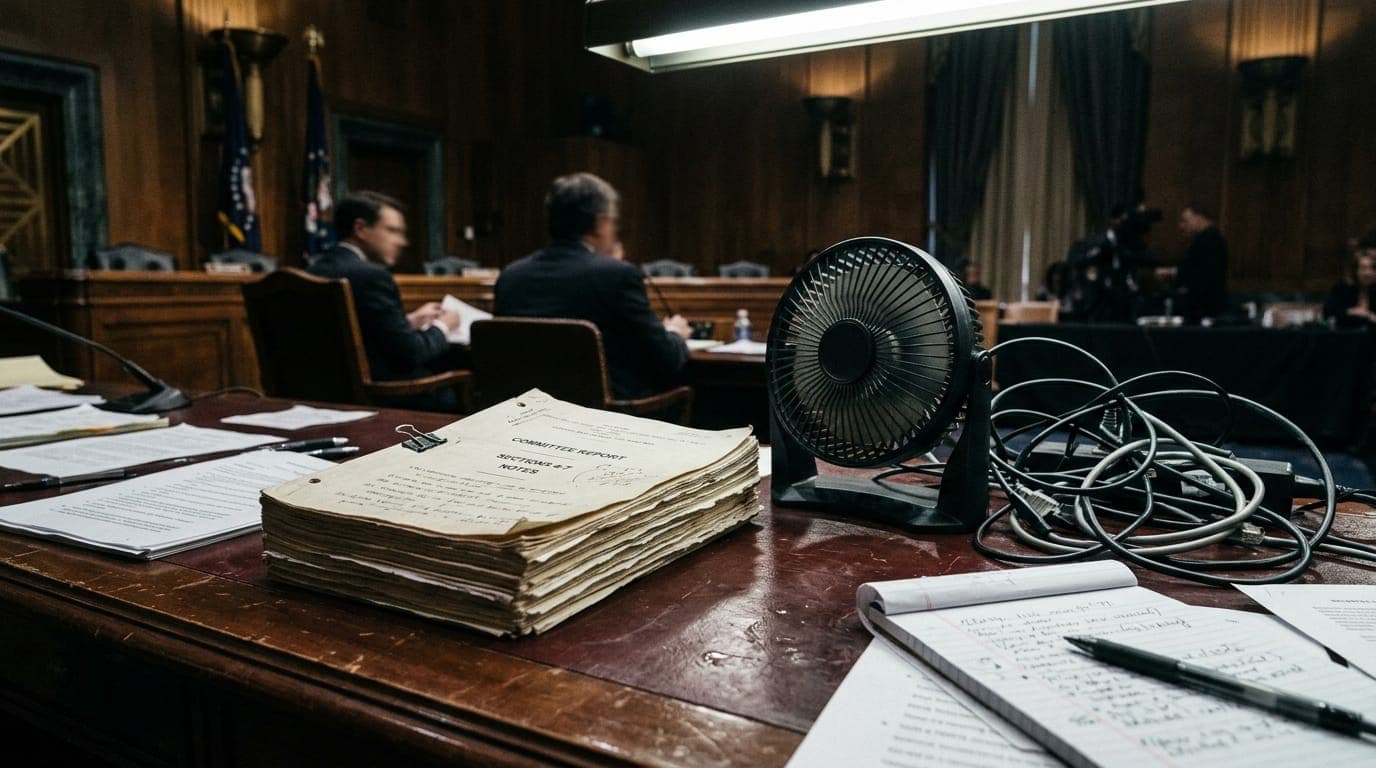
Fed Centers Jackson Hole on Payments for First Time in Symposium's History
The Kansas City Fed opened its 2026 Jackson Hole symposium under the theme 'Financial Innovation: Implications for Payments and Policy,' the first time in the event's history that digital payments and fintech are the organizing center. New Fed Chair Kevin Warsh keynotes Friday.

New Chair Warsh keynotes Friday as 120 central bankers convene around the monetary terrain Bitcoin helped force onto the agenda.
Key takeaways
- The Kansas City Fed opened its 2026 Jackson Hole Economic Policy Symposium on August 27 under the theme "Financial Innovation: Implications for Payments and Policy," the first time in the event's history that digital payments and financial technology are the organizing center, per the KC Fed's official announcement.
- New Fed Chair Kevin Warsh, who took office in May 2026, is scheduled to deliver his first Jackson Hole keynote Friday, August 28. No prepared remarks are public yet.
- Bitcoin is trading above $80,000 heading into the event. The price reaction to Warsh's speech is short-term noise. The theme selection itself is the structural signal.
The Kansas City Fed opened its 2026 Jackson Hole Economic Policy Symposium on August 27 with "Financial Innovation: Implications for Payments and Policy" as the organizing theme, the first time in the event's history that digital payments and financial technology sit at the center, according to the KC Fed. Roughly 120 central bankers, policymakers, and economists are in attendance by invitation. New Fed Chair Kevin Warsh is expected to deliver the chair's address Friday morning.
Jackson Hole themes are not picked casually. The Kansas City Fed commissions papers, curates attendees, and frames the chair's address around whatever structural problem it has decided the central banking world must confront together. The choice of payments and financial innovation in 2026 is an institutional admission that the monetary and settlement landscape has changed fast enough to require a formal collective reckoning.
What the Theme Selection Actually Signals
The wires are running this as a rate story: will Warsh be hawkish or dovish, and what does Bitcoin do off the keynote. That framing is a distraction.
The real signal is the topic itself. A stablecoin market sitting above $230 billion in outstanding supply, programmable money proliferating across public blockchains, and private payment rails absorbing transaction volume that used to flow exclusively through bank-controlled pipes have made this conversation unavoidable. The Fed didn't choose this theme because it wanted to. It chose it because the alternative monetary infrastructure has grown too large to treat as a fringe experiment.
That is a categorically different kind of acknowledgment than a Fed governor mentioning Bitcoin in a speech. This is the institution's annual convocation, built around the problem Bitcoin and its derivatives have forced onto the table.
The sovereign debt context compounds it. A Fed simultaneously managing a fractured FOMC and a dollar-based payment system under structural stress doesn't spend Jackson Hole on payments because things are fine. It does so because the plumbing is cracking and the alternatives are gaining.
Two Ways This Cuts for Bitcoiners
Warsh's background adds texture. His pre-confirmation ethics disclosure listed stakes in more than a dozen blockchain protocols and DeFi ventures, all divested upon taking office. That doesn't make him a Bitcoin ally. It makes him the first Fed chair with direct personal familiarity with the technology, which changes the quality of the containment strategy the establishment will attempt.
And that is the tension worth holding through Friday's keynote: engagement is not capitulation. The Fed studying the problem of private payment rails is also the Fed studying what it wants to do about them. If the symposium papers push CBDC frameworks as the answer, that is the establishment attempting to route around Bitcoin by building surveillance money at scale. JPMorgan's deposit token running on a public blockchain suggests the largest incumbents are already hedging. The Fed's policy response will determine how much room the permissionless layer retains.
The falsifiable version of the structural-capitulation thesis: if Warsh's Friday keynote addresses rate policy exclusively and treats the payments theme as backdrop, with no substantive engagement on how digital assets or alternative settlement rails alter monetary transmission, the thesis collapses. A speech that buries the financial innovation angle means the theme was marketing, not a regime shift. The paper abstracts posted during the conference are the secondary check. If they are purely CBDC-focused with zero engagement on permissionless rails, that weakens the case further.
What to Watch Friday
Warsh's keynote is expected Friday, August 28. The KC Fed will livestream the chair's address and post prepared remarks to its symposium page as delivered. Bitcoin is trading above $80,000 heading in. Paper abstracts published alongside the keynote will tell you more than the price move in the hour after the speech.
Sources
Frequently Asked Questions
What is the Jackson Hole symposium and why does it matter for Bitcoin?
The Kansas City Fed's annual Jackson Hole Economic Policy Symposium brings roughly 120 central bankers, economists, and policymakers together by invitation to discuss long-term structural policy challenges. It matters for Bitcoin because Jackson Hole keynotes have historically signaled major policy pivots, and in 2026, for the first time in the event's history, the entire symposium is organized around financial innovation and payment infrastructure, terrain Bitcoin and stablecoins have forced the central banking world to address.
Who is Kevin Warsh and what is his position on Bitcoin?
Warsh became Fed Chair in May 2026, replacing Jerome Powell. His pre-confirmation ethics disclosure listed stakes in more than a dozen blockchain protocols and DeFi ventures, all divested upon taking office. His actual policy posture on Bitcoin has not been formally stated. Friday's keynote is the first major data point.
Does the Fed's payments theme mean Bitcoin gets legitimized or targeted?
Both outcomes are live. Symposium papers are expected to examine how programmable money and private payment rails alter monetary transmission. That framing can go toward acknowledging Bitcoin as a durable exit from a straining fiat system, or toward CBDC frameworks designed to reassert central bank control over the settlement layer. Warsh's speech and the paper abstracts posted Friday will indicate which direction the establishment is moving.