Existing Home Sales Hit 16-Year Low as Mortgage Rates Crush Demand
NAR's November 12 release shows October existing home sales collapsed 5.5% to a 3.75 million SAAR, the worst reading since August 2010, as mortgage rates near multi-decade highs freeze transaction volume while prices keep climbing.
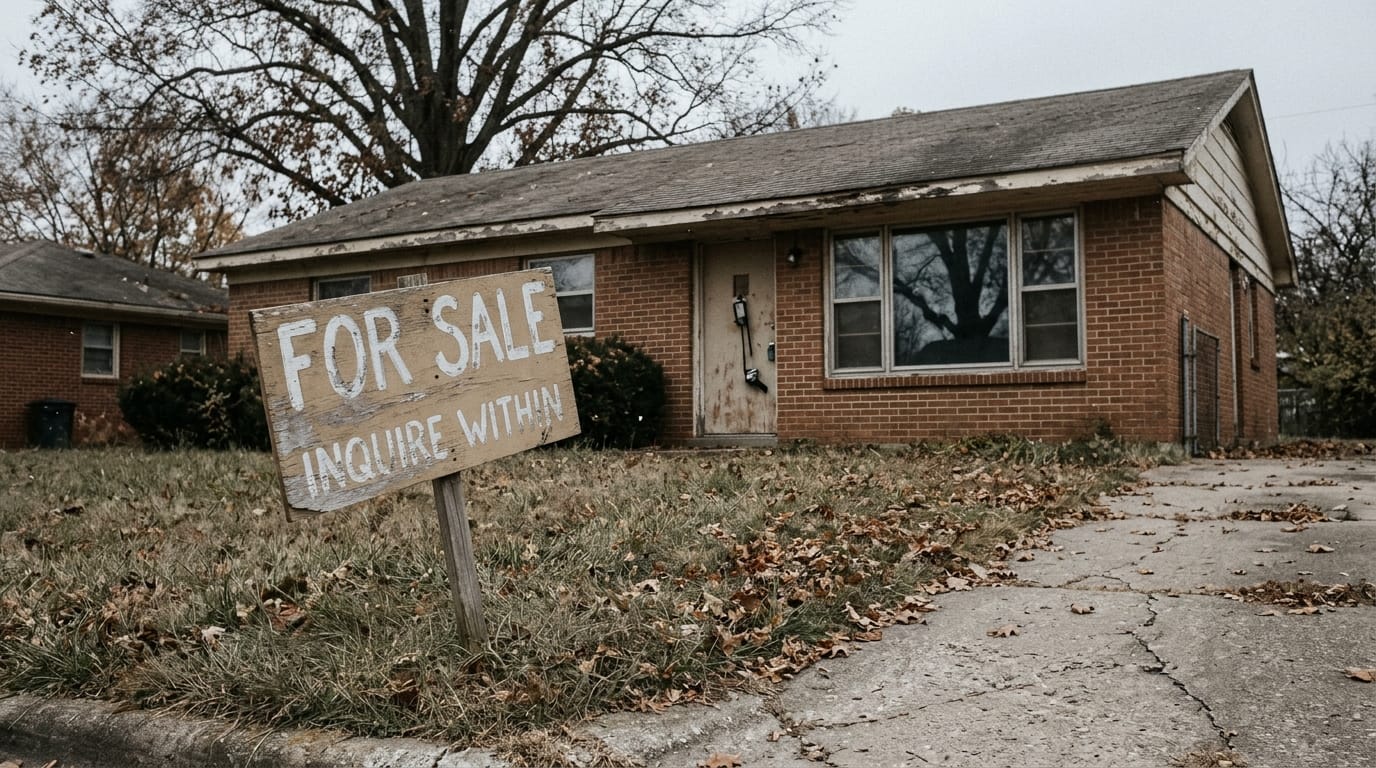
October's NAR data confirms what rate math already predicted: at 7.3% mortgage rates, the marginal buyer has been priced out of the market entirely.
Key takeaways
- October existing home sales fell 5.5% month-over-month to a 3.75 million seasonally adjusted annual rate, the lowest print since August 2010 and well below the 3.86 million consensus, per NAR's November 12 release.
- Prices rose 0.4% year-over-year to $416,700, marking 40 consecutive months of annual gains, while transaction volume cratered, a frozen market propped up by illiquidity, not genuine demand.
- First-time buyers fell to just 29% of sales (down from 32% a year ago) as investors captured 20% of a shrinking pool, reinforcing a two-tier housing market that is becoming structurally locked.
October 2026 existing home sales crashed 5.5% month-over-month to a seasonally adjusted annual rate of 3.75 million units, the lowest reading since August 2010, according to the National Association of Realtors November 12 release. The print blew past the downside, landing well below the Reuters/NAR consensus of 3.86 million, with the prior month's figure also revised down to 3.97 million from 3.99 million.
Year-over-year, sales are down 8.8%. Single-family sales dropped to a 3.41 million SAAR, off 5.8% from September, with declines across the Midwest, South, and West. The Northeast was flat month-over-month but still lower than a year ago.
The Numbers Behind the Freeze
NAR Chief Economist Lawrence Yun stated the situation plainly in the release:
"Home buying is difficult when mortgage rates have climbed to their highest levels since 2000, aside from a single month in 2023. As a result, home sales fell to their lowest level since August 2010."
The 30-year fixed mortgage rate averaged 7.33% in October, the highest level since 2000 outside that one month in 2023. That rate is doing exactly what rate hikes are supposed to do: destroying demand from anyone who needs financing.
Inventory edged up to 1.59 million units, representing a 5.1-month supply. All-cash buyers accounted for 29% of transactions, up from 27% the prior month. Investors and second-home buyers took 20% of sales, up from 16% a year ago. Median days on market stretched to 35 days from 33 in September.
The median price held at $416,700, up 0.4% year-over-year. That is the 40th consecutive month of annual price increases.
A Collateral Base Built on a Fiction
The price-volume divergence is the number that matters most and the one that gets the least attention.
Volume at a 16-year low while prices are still notching their 40th straight monthly gain looks stable on the surface. It is not. When transaction volume collapses, the price discovery mechanism breaks down. Sellers who don't have to sell don't.
The bid stays up because the market is too illiquid to clear. The resulting price is not a signal of demand, it is a signal of paralysis.
Housing is the dominant collateral base of the U.S. consumer credit system. HELOCs, second liens, and consumer debt all sit on top of estimated home equity values. If those values are being maintained by a drought in transactions rather than active demand, the number on paper and the number realizable in a sale are increasingly different things.
The longer volume stays this depressed, the more fragile that equity base becomes. This dynamic connects directly to the sovereign debt spiral that has been building in the bond market.
The policymaker trap runs the same loop. The government is running deficits that require refinancing at high rates, which keeps long rates elevated, which keeps mortgage rates elevated, which kills housing volume, which risks a consumer wealth effect reversal, which risks recession, which widens the deficit further.
The Fed cannot cut without risking reigniting shelter inflation that is already embedded in CPI. It cannot hold without watching transaction volume and credit quality deteriorate. Neither exit is clean.
The falsifiable version of this thesis: if the next two or three monthly readings show sales rebounding materially back above 4.0 million SAAR without a commensurate rate cut, this reads as a temporary shock and not a structural break. That would take pressure off the collateral-stress argument. Until then, the data is pointing one direction.
Australia's housing market offered a preview of this dynamic when the RBA hiked into a collateral crunch earlier this year. The U.S. is tracking a similar pattern on a larger scale.
What to Watch
The next existing home sales print (December, covering November data) is the first real test. A bounce without a corresponding rate drop changes the picture. A continued print below 4.0 million SAAR cements the structural break thesis and puts additional pressure on the Fed's already narrow options. Watch the first-time buyer share closely, at 29%, it is already at multi-year lows, and further compression signals the entry-level market is effectively closed to unlevered buyers.
Sources
Frequently Asked Questions
Why are home prices still rising if sales are at a 16-year low?
When transaction volume collapses, price discovery breaks down. Owners who don't need to sell hold their listings or pull them entirely. The result is a market where the stated price is maintained by an absence of distressed sellers, not by active buyer competition.
It is an illiquidity mirage. Prices in a frozen market are not the same as prices in a clearing market, and the gap between those two things is where credit risk builds.
What would it take for the Fed to cut rates, and what happens to housing if it does?
The Fed's bind is structural. Cutting rates risks reigniting shelter inflation, which is already running above target and feeds directly into CPI. Holding rates keeps mortgage costs near multi-decade highs and suppresses the transaction volume the consumer credit system depends on.
A rate cut would likely bring buyers back into the market quickly. NAR Chief Economist Lawrence Yun stated in the release that "there could be sizable pent-up demand if mortgage rates decline," but it would also re-accelerate the price side of the equation. There is no clean exit from a system that spent a decade pricing assets on near-zero rates and then had to reprice everything at 5%-plus.
Why does a housing slowdown matter beyond real estate?
Housing is the primary collateral layer underneath U.S. consumer debt. When the transaction market seizes, realized equity drops even if paper equity holds. That matters for HELOCs, second-lien products, and any lending tied to home values.
A prolonged volume drought turns a paper-equity number into an unrealizable one, which is when credit stress starts transmitting through the broader system.