Diesel Hits $6.51 Record as Russia and Washington Both Eye Export Bans
The AAA national diesel average hit $6.51/gallon on September 21, 2026, a new all-time record roughly 75% above pre-Iran-war levels, as Russia weighs extending its export ban and US senators push Trump toward an embargo of their own.
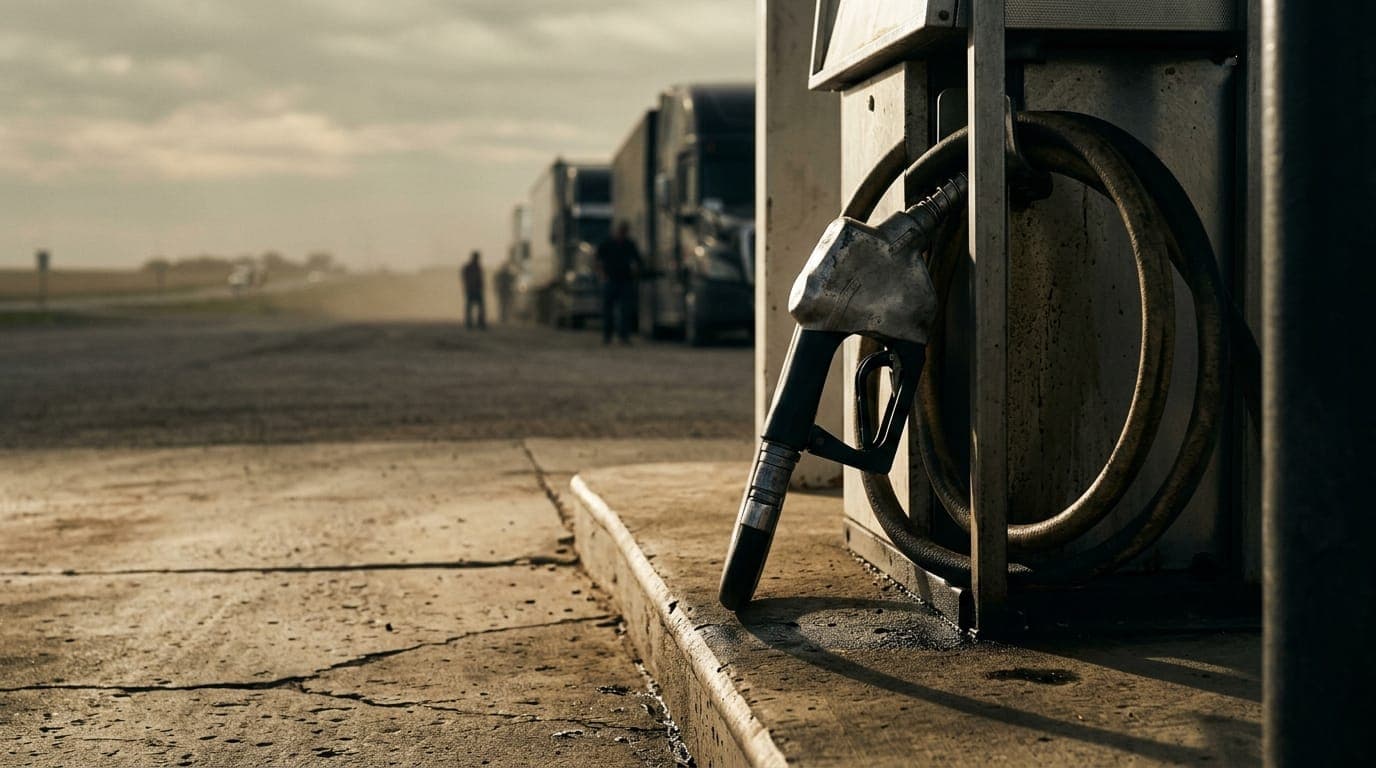
Two of the world's largest diesel suppliers are simultaneously weighing export restrictions, and every truck on every American highway is already feeling it.
Key takeaways
- The AAA national average for diesel reached $6.51/gallon on September 21, 2026, a new all-time record roughly 75% above the pre-Iran-war average of ~$3.70.
- Russia is considering extending its diesel export ban beyond September 30 after Ukrainian drone strikes knocked significant refining capacity offline; the US is one of the world's largest diesel exporters and faces growing congressional pressure to impose its own embargo.
- A US export ban would leave major overseas importers severely exposed and, per Interior Secretary Doug Burgum, could ultimately raise prices rather than lower them, exposing the core problem: state-controlled energy is a geopolitical tool, not a market.
The AAA gas prices dashboard confirmed Monday that the national average for diesel reached $6.51/gallon, blowing past the prior record of $5.82 set in June 2022 during the early days of the Russia-Ukraine war. Gasoline sits at $4.48/gallon nationally, up from $3.18 at the same point last year. The fuel shock traces directly to the US-Iran war that began in late February 2026, with US strikes on February 28 triggering Strait of Hormuz disruptions that have rippled through global petroleum markets for seven months.
Two Export Taps, Both at Risk of Closing
Russia introduced diesel export restrictions beginning July 9, 2026, after Ukrainian drone strikes damaged enough refinery capacity to create a domestic shortage. The ban on producers was extended twice: first via Decree No. 954 on July 30 and again via Decree No. 1097 on August 28. Per Hydrocarbon Processing, citing a September 15 Vedomosti report based on two unnamed sources, Russia discussed extending restrictions through October 31 at a September 14 meeting chaired by Deputy Prime Minister Alexander Novak. That extension has not been confirmed by official decree.
The ban's likely continuation matters because it signals the damage is worse than originally estimated. Russia is producing crude but cannot refine enough of it to supply both the domestic market and export customers. That is a structural problem, not a temporary one.
On the US side, Senator Chuck Grassley posted on X on September 20 calling on President Trump to embargo diesel exports, citing Iowa pump prices at $6.57/gallon:
"W diesel $6.57 in Iowa why doesn't Pres Trump put an embargo on diesel exports like presidents in the 70s put embargoes on ag products bc food prices were inflated. High diesel prices ARE KILLING FARMERS INCOME"
(@ChuckGrassley on X, September 20, 2026)
Senate Majority Leader John Thune said last week he was "open to exploring" an export ban. Representative Tim Burchett filed legislation to prohibit diesel exports through January 2027, per Quartz. Interior Secretary Doug Burgum, speaking to CNBC at the G20 Energy Ministerial, said every idea should be on the table but expressed skepticism that an export ban would lower prices and warned it could actually hurt Americans.
Trump, for his part, posted on Truth Social Monday morning attributing the diesel crisis to the war, per the Washington Times:
"Russia has unfortunately lost control of its Diesel Oil Industry due to its War with Ukraine. A large number of their Diesel refineries have been blown up and are, at least temporarily, out of commission. This ridiculous and never ending War with Ukraine must be ended."
Energy as a Permission-Based System
The US is one of the world's largest diesel and gasoil exporters. If that tap closes even partially, the shortage migrates from Europe to everywhere. Two of the largest diesel suppliers in the world are each, for separate reasons, treating export flows as a policy lever, and the result is more than a price spike.
Russia weaponizes refinery output, or the lack of it. A Republican senator is calling on Washington to copy the play. State-controlled, fiat-priced energy under geopolitical pressure is censorable, seizable, and permission-based, and the same architecture governs both systems: a central authority decides who gets supply and who gets cut off. The US deficit is already running near $2 trillion, interest expense has hit a $1.4 trillion annual record, and now the Fed faces an energy-driven inflation surge it cannot fix by hiking rates alone.
The second-order story deserves attention. Goldman Sachs analysts Yulia Zhestkova Grigsby and Daan Struyven warned in a recent note that refiners switching output from gasoline to diesel are rapidly tightening gasoline markets, where "less elevated price levels leave room for sharp price upside." $6.51 diesel today has a direct path to $5-plus gasoline within weeks, turning a trucking-industry story into a household cost shock.
The Fed raised rates 25 basis points last week. Minneapolis Fed President Neel Kashkari said Sunday that inflation is too high across all sectors of the economy and is much beyond just oil prices. The central bank is now caught in the same trap it has been running from for two years: tighten more and break credit markets, or hold and let energy-driven inflation compound into the goods basket.
Bitcoin, mined on dispatchable energy and settled without counterparty permission, sits at the intersection of both problems. The debt debasement pressure building in the Treasury market and the energy-as-policy-tool dynamic playing out at the pump are not separate stories. They are the same story, told in different denominations.
What to Watch
Republicans will likely resist a full export ban despite the political pressure. The trigger to watch is whether Russia issues a formal decree extending its ban past September 30 and whether the Burchett legislation advances out of committee. If both happen simultaneously, the global diesel supply picture deteriorates sharply and the gasoline squeeze Goldman flagged accelerates. If the Russia ban lifts on schedule and prices correct without further monetary contagion, the urgency fades, but the architecture that made the spike possible stays in place.
Sources
Frequently Asked Questions
The argument is split. Proponents say keeping domestic supply home lowers pump prices. Critics, including Interior Secretary Burgum, argue it could shrink overall refinery throughput, since US refiners built capacity for export-scale economics, and could trigger retaliatory trade restrictions that net out to higher prices.
The 1970s agricultural embargo comparison Grassley used is instructive but imperfect: oil is globally integrated in ways that grain markets were not, and a domestic cap does not produce more barrels, it just redirects them.
Russia produces crude but cannot refine enough of it into diesel. Ukrainian drone strikes have taken a significant share of Russian refining capacity offline over the past 18 months. The country faces a domestic shortage despite sitting on vast reserves of raw crude, which illustrates the distinction between upstream production and downstream refining capacity. Until refineries are repaired, Russia must choose between supplying its own market and exporting, and it is choosing the former.
Diesel prices flow directly into goods transportation costs, which flow into core goods CPI and PCE. If the Fed must stay tighter for longer to fight energy-driven inflation while economic activity slows, the pressure to eventually inflate away the existing debt load intensifies. The US is already paying $1.4 trillion annually in interest expense on its debt. A prolonged energy-driven inflation episode narrows the Fed's options and widens the gap between what sound money offers and what fiat delivers.