China Arms Iran With $60M MANPADS While Xi Assured Trump It Wouldn't
A Reuters investigation published July 29 finds Iran is weeks from receiving up to 400 Chinese-made shoulder-fired missiles through a Hong Kong shell company, directly contradicting Xi Jinping's personal assurance to President Trump that China would not arm Iran.
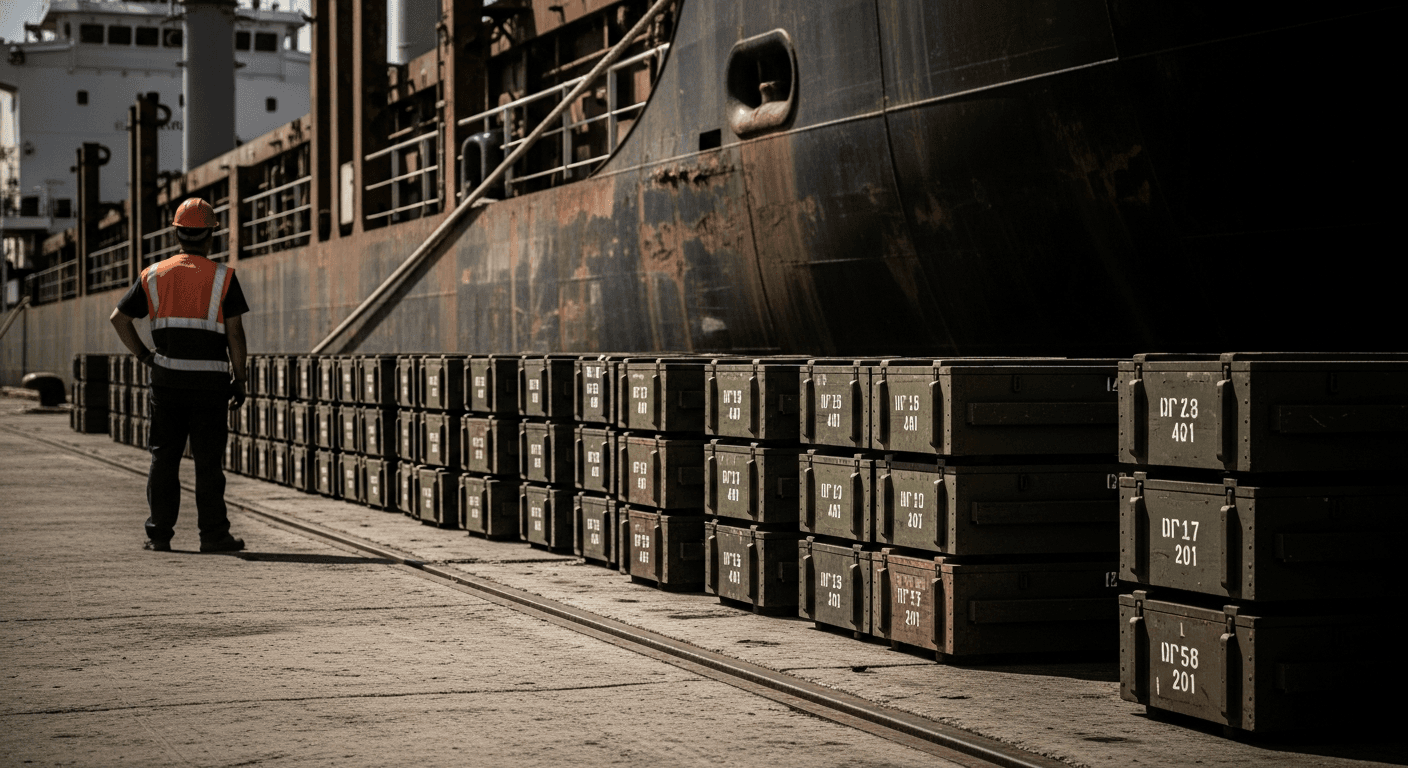
A Reuters investigation blows a hole in the personal assurance Xi gave Trump in Beijing, and in the deterrence logic built on top of it.
Key takeaways
- Reuters reported July 29 that Iran is weeks from receiving a first shipment of up to 400 Chinese-made MANPADS (QW-12 and FN-16 systems) in a $60-70 million deal signed through Zhongqing Baoshang International Investment, a Hong Kong-based intermediary.
- The deal was struck while Xi Jinping personally told Trump at their Beijing meeting that China would not, "under any circumstances," give or sell weapons to Iran, a statement Trump posted to Truth Social on approximately July 24.
- The delivery route runs from Urumqi through Pakistan to Iran; Beijing calls the report "completely groundless"; Pakistan's military PR also denies involvement, and the contract is reportedly already signed.
Reuters, in an investigation bylined by John Irish and Jonathan Saul and published July 29, 2026, reports that Iran is expected to receive within weeks a first shipment of up to 400 Chinese-made shoulder-fired surface-to-air missile systems. The deal is valued at $60-70 million and was signed while Xi Jinping was telling Trump, face to face in Beijing, that China would never arm the Islamic Republic.
The Deal
The contract covers 300 to 400 man-portable air defense systems, specifically Chinese-made QW-12 and FN-16 infrared-guided launchers, per three sources familiar with the agreement cited by Reuters. At $60-70 million for up to 400 units, that works out to roughly $150,000-$233,000 per launcher kit (TFTC's own math, derived from Reuters' reported deal value and unit range).
The deal was signed with Zhongqing Baoshang International Investment, a Hong Kong-registered company Reuters identifies as the intermediary between the Iranian side and the Chinese supplier. A Hong Kong cutout creates jurisdictional distance from the mainland Chinese state, providing Beijing a layer of plausible deniability. According to Reuters' sourcing, Tehran also explored overland routes as a discreet backup logistics option to move Chinese military supplies more discreetly and reduce interdiction risk.
China's Foreign Ministry responded to the reporting with a flat denial: "The relevant reports are completely groundless. China has consistently played a role in promoting peace and ending the conflict." Pakistan's military PR wing also denied involvement in the transit route.
The reported delivery path runs air freight from Urumqi in western China, transiting through Pakistan, into Iran.
On approximately July 24, Trump posted to Truth Social that Xi, at their recent Beijing meeting, told him he would not "under any circumstances, give or sell Weapons to the Islamic Republic of Iran, And that statement included Chinese Companies. Considering our relationship, I take him at his word and, besides, I am doing him very big favors, also." Defense Secretary Pete Hegseth, separately, told the Senate Appropriations Committee on July 21, 2026 that China and Russia are "enabling Iran," a direct contradiction of Trump's public posture. (The Hill)
What the Assurance Actually Bought
Iran's static air defense network took serious damage in the opening phase of the US-Israel conflict. MANPADS fill a specific gap: they are dispersed, mobile, require no radar infrastructure, and are effective against drones and low-flying aircraft. Hundreds of them distributed around nuclear sites, refineries, and military installations meaningfully raise the cost of future air operations. That is what a $60-70 million check buys in this context.
This Reuters report follows earlier coverage noting Iran was negotiating to purchase Chinese CM-302 supersonic anti-ship cruise missiles, and separate reporting that China provided satellite imagery of US military targets around the Gulf, according to Reuters and other reporting. The MANPADS deal is part of a sustained pattern of Chinese military and intelligence support to Iran conducted below the threshold of a direct Beijing-Washington confrontation.
Beijing collected a trade deal, a diplomatic handshake, and a public Truth Social endorsement from Trump. In exchange, Xi offered a verbal assurance with zero enforcement mechanism. The assurance is the asset Beijing extracted. The weapons are the policy Beijing kept running. Verification was never demanded, "I take him at his word" was the stated basis. The arrangement functioned as a credit line, and Washington just found out the collateral was paper.
This connects directly to the Bab el-Mandeb chokepoint dynamic: Iran has been systematically working to contest both key Gulf and Red Sea passages, and Chinese weapons support accelerates that effort. The Strait of Hormuz carries roughly 20% of globally traded oil. Any military development that hardens Iran's ability to contest the Strait raises tail risk on a supply disruption.
An oil shock landing on top of the current US fiscal position, deficit spending, elevated debt service, a Fed with constrained room to maneuver, is an inflation and monetary-disorder accelerant. Turkey is already dumping US Treasuries while deepening Russia ties. The axis consolidation is real and accelerating, and it doesn't require a formal treaty. It requires sustained weapons and intelligence flows. This story confirms that is happening.
The dollar's credibility as the foundation of the Pax Americana security order depends on adversaries believing US deterrence threats are real and enforceable. If the enforcement mechanism can be neutralized by a handshake and a trade concession, the cost of that erosion eventually lands in the bond market. De-dollarization doesn't only happen through central bank gold purchases and BRICS payment rails. It happens in the straits and the deserts first, and the bond market catches up later.
What to Watch
The thesis collapses on two conditions: if Reuters' sourcing is retracted or independently proven fabricated, or if the Trump administration responds with concrete, enforceable secondary sanctions against Zhongqing Baoshang and named Chinese suppliers rather than another Truth Social post. Concrete enforcement action would demonstrate the deterrence mechanism still has teeth and would require revising the "assurance is the asset" framing. Absent that, the pattern holds.
Sources
- Reuters (first reported by John Irish and Jonathan Saul, July 29, 2026)
- Trump Truth Social post, ~July 24, 2026
- Pete Hegseth before the Senate Appropriations Committee, July 21, 2026, via The Hill
Frequently Asked Questions
MANPADS (man-portable air defense systems) are shoulder-fired, infrared-guided surface-to-air missiles effective against low-flying aircraft, helicopters, and drones. Iran's static air defense network sustained significant damage in the opening phase of the 2026 US-Israel conflict. MANPADS offer dispersed, mobile point defense that can be repositioned quickly around nuclear sites, refineries, and military installations without requiring radar infrastructure, making them difficult to target in advance and expensive to neutralize through conventional air campaigns.
A Hong Kong-registered company identified by Reuters as the intermediary between the Iranian side and the Chinese military supplier. Routing the deal through a Hong Kong entity creates legal and jurisdictional distance from the mainland Chinese state, giving Beijing a layer of plausible deniability while the weapons still move. Reuters names the company as the contract signatory; no public comment from the company was obtained.
The Strait of Hormuz handles roughly 20% of globally traded oil. Military developments that strengthen Iran's ability to contest the Strait raise the probability of a sustained supply disruption. That tail risk, intersecting with an already-stressed US fiscal position, is an inflation and monetary-disorder accelerant. Hard assets benefit in that environment. The broader point is structural: the dollar-backed security order erodes not only through reserve diversification but through the hollowing of the enforcement mechanism that backs it. When that credibility is spent, hard money without counterparty risk becomes more valuable, not less.


