Transcript: Sam Lyman: China Is Funding the War on Data Centers
Full speaker-labelled transcript of TFTC episode #793 with Sam Lyman.

Full speaker-labelled transcript of TFTC episode #793 with Sam Lyman. Read the written article: Sam Lyman: China Is Funding the War on Data Centers. Click any timestamp to watch that moment on YouTube. Machine transcription, lightly cleaned, may contain errors.
Sam Lyman [0:07] You've had a dynamic where money's become freer than free. Let me talk about a Fed just gone nuts. All, all the central banks going nuts. So it's all acting like safe haven.
Marty Bent [0:18] I believe that in a world where central bankers are tripping over themselves to devalue their currency, Bitcoin wins. In the world of fiat currencies, Bitcoin is the victor.
Sam Lyman [0:29] I mean, that's part of the bull case for Bitcoin.
Marty Bent [0:31] If you're not paying attention, you probably should be. Probably should be. Probably should be. Sam Lyman, welcome to the show, sir.
Sam Lyman [0:39] Marty, great to be here.
Marty Bent [0:42] Well, appreciate you coming here. It's been a busy week for you testifying on the Hill. You got Clarity Act not making it through cloture. Got a lot of stuff going on in the world of AI, the effective altruism trying to ruin the effective altruists trying to ruin the party. And there's a ton to talk about. How are you feeling? Are you okay? How's your week been?
Sam Lyman [1:03] It's been a whirlwind, definitely. It seems like as the pace of AI development accelerates, so are things at BPI and in Washington. But it's been a wild, fun ride, and we're excited for what's ahead.
Marty Bent [1:16] Yeah, I think for the purposes of this show and our core audience, which are Bitcoiners, Maybe start on clarity, but I think throughout the conversation we'll touch on AI, many facets of it, data center buildout, data center dividends, the propaganda that is being waged against American citizens by foreign actors. And then I think we should touch on the effect of altruists first. But I think starting with clarity, what is the vibe on the Hill based off of this week, the bill not making it? pass the cloture vote? And I guess the reaction from the regulatory agencies, it seems to me that the ball is moving forward despite this bill not getting passed.
Sam Lyman [2:03] Yeah. It's a vibe of general disappointment. I think after August recess, there was optimism that they could get clarity across the finish line. The president and the White House working with Senate Republicans had made a number of concessions along the ethics front, that really answered about 80% of all concerns Democrats had as far as the ethics issues go. However, that wasn't enough at the end of the day. It seems like even though there were some indications that Democrats would support it, the final vote came out pretty much along party lines. And that was disappointing because it seemed like a good bipartisan compromise. I think if this same bill had been presented a couple months ago, it may have passed.
Sam Lyman But because we're so close to the midterm elections now, I think the Democratic caucus was more inclined to vote against it so as not to hand Trump a win so close to the election. But it's disappointing. There's a good draft in place if we ever want to resurrect it, but I don't see any movement happening anytime this year.
Marty Bent [3:08] Yeah. Yeah, I saw— interesting, because there were some Republicans that voted against it. I think I saw Josh Hawley give a an interview, and his argument was that he had a bunch of farmers coming to him, said they were worried that they weren't going to be able to get credit financing from their local community banks because of stablecoins drawing deposits so that users could get the yield. And I was like, is that really the case? And I think this particular stablecoin issue, I'm interested to get your opinion whether or not you think it's a legitimate concern or just some political posturing? Because if you look at what Fidelity did last week or the week before, it looks like they launched their own stablecoin. There's nothing within Clarity or Genius that precludes that banks can't get in this game either, correct? Yeah.
Sam Lyman [4:00] And that's what was frustrating about this last week when we were testifying on the Hill about AI and data centers. Code Pink was in full force. But also in full force were the bank lobbyists on the other side. We were on the House side, and over on the Senate side, the bank lobbyists were going to different offices pushing against clarity. And that stablecoin issue seemed to be a sticking point with a lot of offices. And from my viewpoint, it was a TradFi psyop at the end of the day. In my personal point of view, stablecoins are an opportunity for community banks to get back in the game, to use stablecoins, launch their own stablecoins to innovate in such a way that they're not going up against the bigger banks in the way that they've been trying to compete with bigger banks for the last decade or so.
Sam Lyman When I was at the Treasury Department, there was big emphasis in the building on it being the community bank's turn to really thrive and to really come back. About half of community banks have disappeared since the Great Recession. And something that was very stressed within the building was that we want to put all the regulations in place that community banks will be able to compete on a level playing field, but it's also on the community banks themselves to innovate in any way we can. And my point of view, stablecoins are the opportunity to do just that. I think that stablecoins can actually be to the benefit of community banks if they leverage them themselves.
Sam Lyman And so it's disappointing though that the stablecoins will kill community banks meme ended up being not only false, but also so powerful. I think we've seen a lot of powerful memes lately coming from opposition sources that at the end of the day are also false memes. That's always frustrating to fight against that.
Marty Bent [5:38] Yeah. But to the point of, it seems like agencies like the SEC, CFTC, OCC aren't going to wait for a bill to get passed. I think the SEC came out earlier this morning and said they're going to— what did they announce? A 5-year window, innovation window, where Companies can experiment with on-chain token issuance for stocks and other assets. Obviously, the OCC has been pushing forward with issuing bank charters to Bitcoin and crypto exchanges, and CFTC and SEC are working together to determine what rules they're going to set for different parts of the industry. So at the end of the day, is clarity necessary? Are what these agencies are doing despite the bill not getting enacted into law? Is that a temporary Band-Aid that could leave us open for some exposure after the 2028 election? What's the landscape now that it's not passed?
Sam Lyman [6:40] Yeah, it's definitely encouraging that these executive agencies are putting forward regulations that would effectively act as the Clarity Act. The concern there, of course, is if White House flips in 2028, all that could be rolled back. At that point though, I think that there would be so much opposition from the digital asset industry that that's less likely to happen, but it is a good compromise solution, at least in the near to medium term, that we have regulations going forward that help implement a lot of the same principles of the Clarity Act.
Marty Bent [7:10] Yeah. How important do you think that the bank charters are, that they're issuing more bank charters?
Sam Lyman [7:16] I think it's important. And it definitely legitimizes the space in a way that you didn't see in the previous administration. And it's been heartening just to see how positive the Trump admin has been towards digital assets generally. I think they fulfilled a lot of the promises that they made on the campaign trail, and those promises are being realized now. So I think it's encouraging.
Marty Bent [7:39] All right. Shifting to AI. You made a splash this summer with a report that you wrote highlighting the infiltration of foreign actors and foreign money into propaganda campaigns waged against the AI data center buildout here domestically in the United States. Went pretty viral. You guys made the front page, was it at the Times or the Wall Street Journal? And you were on Capitol Hill. yesterday testifying about what you discovered in your research. So I think let's pretend like most of the audience has no idea about the research that you've done on this particular subject, what you found, and sort of the consequences or the reactions from the government since you released the report. What did you find?
Sam Lyman [8:35] Yeah, well, we're— this is such an interesting topic, and we just scratched the tip of the iceberg earlier this summer. and we've been diving deeper, and there's a real there there in terms of foreign influence and the data center debate here in the United States. So I'll take you back a few years ago though, when I was working at Riot Platforms. Riot Platforms, for those who don't know, is a Bitcoin mining and AI HPC company. And when I was at Riot, we were building a data center in Corsicana, Texas. It's a rural county in Texas, beautiful place, small population. What was interesting was there was general community support for the data center we were building until there wasn't.
Sam Lyman Out of nowhere, there was this large opposition within the community itself to the data center, and we started to trace where that opposition stemmed from. We realized that the bulk of the adversity was coming from a woman who didn't even live in the county. She lived in the county next door. She got on Facebook and she started spreading a lot of FUD, a lot of fear, uncertainty, and doubt about the data center Riot was building. She started to spread a lot of falsehoods about water usage, electricity consumption. And before we knew it, there was significant opposition within the county itself. So what we did was we put our investigative journalism hat on and started asking questions about who funds this particular activist.
Sam Lyman This was about 2023. And Marty, you may remember the— what do they call it? The XRP Army, right? XRP Ripple at that time, just a few years previously. had donated a significant sum of money to Greenpeace to spread a lot of FUD about Bitcoin, especially its electricity consumption. What we realized was this activist had actually partnered with Greenpeace to spread a lot of misinformation about our data center that we were building, Bitcoin mining. We realized in the process that there were people she was working with who obviously were opposed to Bitcoin as a rival cryptocurrency, We were able to shed light on that. That was good.
Sam Lyman We were able to clear up a lot of the misinformation that was being spread in the community, and the data center went forward. But having had that experience earlier this summer, I saw the data center debate really catching fire across the country. And I put on the same investigative journalism hat and I asked, what is going on here? Who is driving this opposition? Because the amount of negative sentiment that data centers have driven has been so disproportionate to the actual impact data data centers have on the ground that I started to ask questions. And China, in many ways, seemed to be an obvious answer. Around the same time that I started to dig into this, you might recall that Senator Sanders hosted a roundtable at the US Capitol building on the existential risk of AI.
Sam Lyman That's what it was titled. And at this roundtable, he invited 2 Chinese AI ambassadors. One of them, Sui Lan, was actually handpicked by the government over there in China to spread the gospel of global cooperation in AI to the United States and to US lawmakers. And during this Capitol Hill event, these Chinese ambassadors essentially made the case that the United States needs to slow its AI buildout. To me, it was such an obvious psyop on every level that if I were a foreign influence agent working back in China, this would be the coup of the year. to see 2 Chinese nationals lecturing US lawmakers about the dangers of artificial intelligence.
Sam Lyman And so that's when I started asking questions, because this was happening concurrently with the data center debate really just blowing up. And so I started investigating who are the specific groups that are pushing against data centers. And I noticed that there was a real trail of evidence with Chinese propaganda in particular, what I realized is that Chinese English-language media has been pushing against the data center buildout in the United States for about a year now. They've been running stories on their YouTube channels and across various digital newspapers talking about how dangerous data centers are for the communities where they're built, how they'll spike electricity prices and consume all the water.
Sam Lyman So it was very clear that from the top down, there was a directive from the CCP to turn American public opinion against data centers. Now, simultaneously, I discovered a network of nonprofits here in the United States that were echoing a lot of that exact same anti-data center messaging in communities across the country. Some nonprofits that our listeners might know of is Code Pink, for example. Code Pink is a nonprofit group of just crazy baby boomer women who wear bright pink t-shirts, and they'll go and they'll disrupt a lot of congressional hearings, for example. But they've also been boots on the ground in a lot of these data center debates across the country.
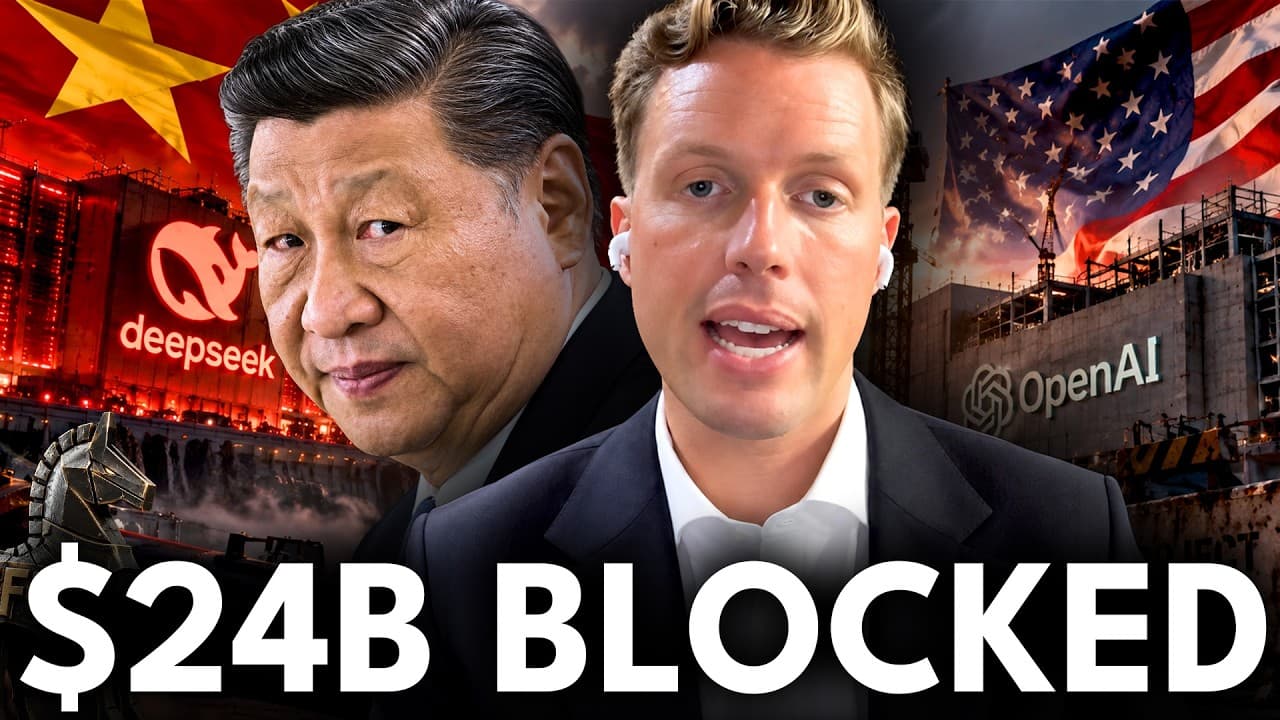
Sam Lyman I started looking at another group called the Party for Socialism and Liberation, which is a Marxist-Leninist party that is explicitly pro-China in so much of its messaging. And they were actually the most, arguably the most effective canvassers in the country in getting data center projects stopped or blocked. So we were actually able to find that with this particular group, the Party for Socialism and Liberation, they had stopped about $24 billion in AI infrastructure investment across the country. And then I asked the question, who is funding all of these groups? And I was able to link back all of the funding for Code Pink, the Party for Socialism and Liberation, People's Forum to one person.
Sam Lyman His name is Neville Roy Singham. Who is Neville Roy Singham? Singham is a Shanghai-based Marxist. He's an American citizen, but he has been a CCP apologist for years. And he first came under FBI suspicion as far back as 1974. He sold his tech company in the 2010s for hundreds of millions of dollars, then devoted about $278 million of that fortune to fund far-left causes here in the United States. Foremost among those causes is stopping the data center buildout. And so here you have a man who The New York Times has identified as being the financier of a, quote, global web of Chinese propaganda pushing against data centers in the United States.
Sam Lyman And I just lay that all out in what we call the schizo chart, where we show the different Chinese propaganda taking place against data centers, the different Singham-funded nonprofits pushing against data centers, and showed how this all converged into one giant national fight about data centers that was so effective that 71% of Americans today, 71%, say they do not want to live in a community that has a data center in it, which notably is an even larger number than the number of people who say they don't want to live next to a nuclear power plant. So that was the foreign psyop that we uncovered and we made it known to the members of Congress.
Sam Lyman And I think it's caught steam because people had an intuition that there was some kind of foreign influence involved and we just put flesh on the bones of that intuition.
Marty Bent [15:30] How did you— how did you connect? Like, what was the reason? What was the, the mechanics of your research like? Like, how easy was it to uncover this or hard?
Sam Lyman [15:41] Yeah, honestly, AI was an incredible tool and I think it was fitting that we had the data centers helping us defend the data centers, 'cause I burned through so many tokens just looking for patterns in China state media, for example. It was actually a very simple query at the end of the day. I just got on my Claude and said, Claude, I have this intuition that Chinese English language media has been pushing against the data center buildout for a while now. Can you help substantiate this? Just like popped out, you know, multiple different stories in a matter of minutes that documented over the years, not just this year, but going back several years, every anti-tech story that the CCP has been pushing out through its Chinese English language media.
Sam Lyman So honestly, with AI, I don't know if it would've been possible. It would've been possible, but it would've taken arguably hundreds of hours. But with AI, it gave us so much leverage to be able to do the research so much more quickly than we would've been able to without it. So shout out data centers.
Marty Bent [16:40] Very ironic.
Sam Lyman [16:41] Definitely.
Marty Bent [16:45] And for any of the people who may be in the 71% of poll respondents who would not want to live next to a data center, who may be listening to this, I think it's important to go over the low-hanging FUD and debunking. Water usage is like— For context, for anybody who's listening to this doesn't know, I sit on the board of a data center company historically. We've done Bitcoin mining in the TVA. We've been in the TVA for 6 years now, 5 or 6 years. And so I know this problem intimately. And funnily enough, as you mentioned with your story at Riot, on the Bitcoin mining front, we've been fighting these battles for many years, but water usage is one.
Marty Bent People are commonly referencing some research report that was done over a decade ago and overexaggerated the water usage of data centers back then by something like 10,000%. And so people are just running with a bad research report and saying it's using so much water. It's closed-loop water systems. It's not using that much water at all. Sound is another one. Yes, Bitcoin mining had its problems, and it's not like these things don't make any sound, but that is a problem that is solvable. And then at the end of the day, are they raising electricity prices? And I can say for certain, at least for the data centers that we operate, we know for sure because the utility companies that we work with have told us and they've gone to public city council meetings and explicitly said this, because we're buying their excess capacity, they've been able to hold rates down for 2 years straight.
Marty Bent because we're there as a buyer of first and last resort. And so the FUD is real, it's loud, but it's obnoxiously wrong in many regards.
Sam Lyman [18:40] That's a good way of putting it. Yeah, it's unfortunate too because it's put the data center industry in a posture of defense. I think for the last several months, data centers have been trying to explain to communities how they won't hurt their communities, Which is a fairly easy case to make. But even after you've made that case, I think data centers need to go a step further in explaining how they can actively help communities too. I think that's another story that's not really being told.
Marty Bent [19:10] No, it's simple things too. I think, yeah, and you've run the numbers. There's plenty of stories that have been coming out. I think it's a bit of a lag effect, but I think the industry or parts of the industry at the very least have been jolted awake. Okay, we need to get better at narrative forming and really telling the story. But if you look at some historical data centers from Microsoft or Amazon in the towns that they've entered, particularly in the Northwest, and they've been there for decades, the turnaround that these towns have had because the data centers are paying property taxes and sales taxes on electricity that have enabled these small towns that were that were hollowed out before a data center came in, you're talking about hundreds of millions of dollars of revenue over many years that allow them to build roads, build schools, build football fields, hospitals, whatever it may be.
Sam Lyman [20:08] Yeah. It's incredible. Quincy, Washington, I think is—
Marty Bent [20:12] That's the one I was referencing, I think.
Sam Lyman [20:14] Yeah. Yeah. That's the ideal scenario where Microsoft and other investments into that community more than quintupled the county budget. And as you said, built sidewalks that didn't exist before, just brought incredible prosperity and success to that community when the community was on the ropes before the data center showed up. And now it's the ideal case for what data centers can do for a rural town.
Marty Bent [20:39] Yeah. And you have this concept of data center dividends. Why don't we walk through that?
Sam Lyman [20:43] Right. So I am so stoked about data center dividends because I think that this is the winning narrative that can really jiu-jitsu public opinion back in favor of data centers. So what are data center dividends? To explain them, I think it's easiest first to look at the state of Alaska. For those who don't know, in the state of Alaska, they have this incredible program called the Alaska Permanent Fund. With the Alaska Permanent Fund, the oil royalties that the state collects are invested into an endowment, And then the investment earnings from that endowment are then paid to every resident of Alaska every year. It's this incredible program where those payments, which average about $1,500 a year for the last decade, go towards not only adults, but towards children as well.
Sam Lyman So if you're a 4-year-old child who lives in Alaska, you are eligible to receive a $1,500 check from the government that comes from the oil industry in the state. It's an incredible benefit. And I started to ask myself, can that particular model be scaled in any way? As it turns out, it can. And that's the math we figured out with Data Center Dividends. So what makes Alaska work is 2 things. Number one, it's a huge landmass with a very small population. Number two, it has this incredible energy resource. When you think about it, America's rural counties have the exact same properties. They have small populations relative to their landmass.
Sam Lyman and an incredible energy resource. Or another way of thinking of it, they have pristine real estate for AI development. So what they've lacked though is some kind of public mechanism that can help turn those earnings into something that benefits everybody in the county. So with data center dividends, we took a look at the amount of tax revenue that a 1-gigawatt data center will generate, which is in the hundred— about $150 million a year. Depending on obviously the county, this is an estimate. So it's not an across-the-board rule, but that's our estimate just based on data we got from Loudoun County, Virginia, the most data center-rich data set in the country.
Sam Lyman So you look at what are the specific needs that these counties have? Well, they have to finance their public safety, their infrastructure, and their schools. But even after doing that, there's still tens of millions of dollars left over in a lot of these rural counties. what we realized is you can take that surplus tax revenue from the data center and you can simply remit it to the households in that rural county. And we ran the math on it. You can remit about $5,000 to $9,000 a year per household in a rural county just from the excess taxes generated by data centers. So imagine you're living in a rural county where the median income is probably around $50,000 a year and you receive about a $10,000 bonus from the local government every year.
Sam Lyman I mean, that's life-changing money for so many families, and it allows families to invest in their children's college education. It allows them to, you know, help pay off the mortgage faster or buy a new car. It offers so much economic opportunity to the families who deserve it the most. I mean, these counties are doing the nation an enormous solid by opening themselves up to data centers and to AI infrastructure. They are the key to winning the AI race against China, and I think they should be compensated accordingly. They make these data centers possible in the first place. And so I think it makes sense with that surplus revenue to reward them for what they've done to make that possible.
Sam Lyman And that's what data center dividends aim to do.
Marty Bent [24:13] What's up, freaks? This script was brought to you by our good friends, the Bitcoin team at Block. Bitcoin at Block. Bitcoin was originally introduced as a peer-to-peer electronic cash system. We all know that. The idea wasn't just to buy and hold, it's to use Bitcoin in many different facets. Holding is one facet. Spending, receiving is another facet. We've been working towards this for 17 years and Block put together a whole ecosystem of companies to really bring about the reality of Bitcoin as everyday money. So with Cash App, you can buy, spend, send, receive, earn, get paid in Bitcoin. When you're trading over $2,000, you're not going to pay any fees on that.
Marty Bent So then there's Square, which is helping bring Bitcoin into real-world commerce. Eligible businesses can accept Bitcoin payments over Lightning with settlement in seconds and 0% processing fees. Customers can pay with Bitcoin or even dollars over Lightning through Cash App and help local businesses keep more of every sale. It's making Bitcoin payments feel as easy as tapping a card. ready to hold Bitcoin, there's BitKey. It's a Bitcoin wallet built for real life. No seed phrases. It's a 2-of-3 multisig, so no single points of failure. It has recovery and inheritance processes and capabilities built in. And the new BitKey device includes a screen, so you can verify important actions directly on the device before approving them, so you know exactly what you're authorizing.
Marty Bent So together, Cash App, Square, and BitKey are helping make Bitcoin easier to earn, save, spend, and secure. It's a simple idea. Bitcoin works when people can actually use it in the way that they want. That's Bitcoin at Block. What's up, freaks? This episode is brought to you by Simple Mining. I'm sure many of you listening to this right now own Bitcoin and own it the same way. You go on an exchange, you buy it, sweep it to the cold storage, maybe keep it on the exchange, and you pay full price. There's a smaller group of business owners, family offices, and investors with sharp CPAs that are quietly getting theirs a different way.
Marty Bent They own the machines that make it. Here's how it works. You buy the miners at Simple Mining. Simple Mining hosts them, runs them at their facilities in Iowa on industrial power rates you can never get on your own. The Bitcoin they mine goes straight from your machine to your wallet. 2 reasons I find this interesting right now. The second one is the one that nobody's talking about. One is the economics, cheap power. This lets you convert your electricity into Bitcoin at a discount to spot. You're acquiring the asset below the sticker price everyone else pays. 2, and listen closely, if you've had a big income year, you're making a lot of money out there.
Marty Bent I know a lot of you freaks are making a lot of money. Miners are classified as computer equipment with a big, beautiful bill. Equipment means depreciation. Qualifying buyers can write off the entire purchase in year one, It's the same playbook real estate investors have run for decades pointed at Bitcoin. Your CPA will want to see this before the end of the year, and with attractive financing available, you can deploy without selling assets to do it. This is not a garage operation. Simple Mining runs over 40,000 machines, which just ranked the fastest growing company in Iowa on the Inc. 5000 chart. They put together a valuable resource called the 2026 Bitcoin Mining Blueprint.
Marty Bent Covers the 5 mistakes investors make when allocating to mining and how to avoid them before deploying capital. io/tftc. io/tftc. Who do you think would be the first to jump at this opportunity? Who's going to have to lead that initiative? Is it going to have to be the data centers or the county trying to lead that?
Sam Lyman [27:07] I think it will have to be the counties. And if you're an enterprising county commissioner, this is waiting for you. the lock and key to massive success for your community. The way I see it, data center companies might be open to it if they're really pressed. Otherwise, they'll just try to get them built. But I think for data center companies who are on the ropes in communities where maybe they've already broken ground, this is a good option to turn to because it's something that will allow what is a burden politically to all of a sudden become a huge benefit politically for the developers and the county commissioners who have supported these projects in the past. But I think the onus mostly falls on the county governments themselves.
Marty Bent [27:52] That's one thing I think the county governments need to realize is they have a ton of leverage right now because obviously the demand for electricity is higher than it's ever been and only going to accelerate from here as demand for tokens increases. And I think continues to go exponential as I think we're just Scratching the surface of the agentic economy. I think it was only a couple of months ago that agent-to-agent token or agent-to-agent prompting that resulted in token output succeeded human-to-model token output. So the agent economy is just budding. We just surpassed the point where agents are using more tokens than humans, which is a crazy thought. And then we have robotics. We have endeavors to go to space, which is probably going to be enabled by some sort of AI agentic system as well. And we don't have enough power. And I think the counties have a ton of leverage here.
Sam Lyman [28:50] Yeah, which is complete inversion of the dynamic from a few years ago where counties were more or less tripping over themselves to get data centers to build. Now the dynamic has flipped in such a way that, like you're saying, Marty, they have all the leverage now. And so they need to use that leverage accordingly. And find a way to make data centers really work for their communities. And I think this is a promising way to do it.
Marty Bent [29:13] Yeah. And I think on the narrative front too, we do need to get the stories like Quincy out there and the Alaskan Permanent Fund, because if you are a rural community, again, I've seen this in Appalachia where we operate, again, the towns that we go into, for Bitcoin mining alone. And I think the taxes that we pay for Bitcoin mining are— I mean, the property taxes we pay, they're material. The rates, the revenue that we provide the utility, it's material. But once you switch that to AI compute, the numbers get even better. And especially if we're trying to reorient the domestic economy and reindustrialize, kickstarting it with this type of activity is important.
Marty Bent And if you think of something like a data center dividend, if it's prosperous enough that you can get local people begin to invest in the economy and aid in the reindustrialization that's necessary outside of the AI data center buildout, I think that's a really positive narrative to run with. It's like, hey, this is the kickstart to re-architecting the Rust Belt that's been hollowed out because of Triffin's dilemma and our neglect of domestic production for 5 decades and our abdication of that to China.
Sam Lyman [30:38] Exactly. And Marty, you hit on such an important point there. The data center buildout is reindustrialization. I think a lot of people interpret reindustrialization to mean bringing all the aluminum smelters back online, bringing all the textile factories back online. That's part of it. But in the economy of the 21st century, increasingly the bedrock will be artificial intelligence. And I think another way of conceiving of a data center is an intelligence factory. These are intelligence factories and they are creating hundreds of thousands of jobs across the country, which is another underappreciated point. 3 million. Which is the highest it's ever been. And you see a lot of these protest groups pushing against data centers, saying they're standing up for the working class.
Sam Lyman BS. They're not standing up for the working class. The working class is benefiting enormously from the data center buildout, so much so that we've been able to track over 40 unions and labor organizations across the country that are in favor of data centers and are pushing against anti-data center regulations. You have plumbers and electricians who are getting paid upwards of $200,000 a year because they're in such high demand right now as these data centers get built out. Blue-collar jobs in particular have experienced a significant boom just from the data center buildout alone. And I think that's another piece of the narrative that's missing right now.
Sam Lyman This is— there's that tweet. What do you think reindustrialization looks like? Vibes, essays? It's the data center buildout.
Marty Bent [32:14] Well, I think I saw you made this point brilliantly on the Hill yesterday. I was trying to figure out who the congressman was that asked you the question, but your response was basically, you know, it's propaganda because in China, like, the media is not pushing this narrative at all. In fact, it's the exact opposite. They're, they're pressing the buildout as hard as possible while they're using—
Sam Lyman [32:39] Exactly.
Marty Bent [32:41] Using funds funneled through Singham to slow us down while they're speeding up.
Sam Lyman [32:47] Yeah, that's the tell right there. The same Chinese state media that is sowing FUD about data centers here in the United States is celebrating AI milestones back in China. And simultaneously, the same Chinese government is subsidizing the use of energy by its AI data centers by up to 50%. So there's no data center protests happening in China because, A, it's probably illegal over there, But B, it also has the full support of the government and industry over in China, and they don't have their free speech to protest it even if they wanted to. So there is a real discrepancy, and you see that play out too in perceptions of AI.
Sam Lyman It couldn't be any more different how people perceive AI in mainland China versus the United States. Edelman did a poll just last year about how optimistic people are about the future of AI. About 80% of Chinese citizens said they're optimistic about their AI future, as opposed to just 17% of American citizens. There's a real psyop against AI, and I think it's pushed in part by Chinese propaganda and people working in favor of the Chinese Communist Party. But let's be honest, it's also been pushed by the AI executives who have arguably done more than anybody else to sow fear, uncertainty, and doubt about artificial intelligence.
Marty Bent [33:58] Freaks, look at me. I'm glowing. I've got like an angel's halo going around me. You know why that is? Is I feel good. I feel taken care of. I feel blessed, healthy, happy. And that is because I'm a CrowdHealth member. My family and I have been CrowdHealth members for 5 years now. Literally this month, 5 years ago, we joined CrowdHealth. We've had 2 babies, we've had multiple health events, and we're never going back to health insurance. CrowdHealth is crowdfunded healthcare. So you sign up for CrowdHealth, you pay a monthly fee, you help out with other people's bills, and it's significantly cheaper than health insurance. We were on COBRA as a family of 3 when I left my last job before I went full-time with CFTC.
Marty Bent Went on CrowdHealth. Now, as a family of 5, we pay, I believe, $700 a month. It's significantly cheaper. They're going to negotiate prices lower for you. They've consistently negotiated healthcare prices as much as 50%, 60%, 80% in many cases. They help out with babies. If you have a pregnancy, you pay the first $3,000 and the crowd covers the rest. If you have a regular health event, you pay $500 and the crowd pays the rest. com, sign up today, use the code TFTC, opt out of health insurance. I'm uninsured, And I love it. com, and you'll get $99 a month for the first 3 months that you're on the CrowdHealth platform in the community.
Marty Bent Bitcoiners, you found sovereign money. Now find sovereign health and sovereign healthcare. All right, freaks. You know I don't take sponsored money from products I wouldn't use myself. So listen up. The Aven Bitcoin Visa card is one of the most interesting things I've seen in the Bitcoin lending space in a long time. Here's the deal. You can get a line of credit up to $1 million backed by your Bitcoin without selling a single sat. No games, no annual fees, no minimum draws, and your Bitcoin is custodied by BitGo, one of the most trusted names in digital asset security. Aven never lends it out. There's no rehypothecation.
Marty Bent You stay in control. You can lock in a fixed rate for up to 10 years. 10 years. That's 10 times longer than most lenders out there, or go interest only for up to 5 years. 99% APR. For a product that lets you keep your stack and still access liquidity, it's hard to beat. On top of this, guess what? You also get 2% unlimited cash back every time you use the card. Spend fiat, keep your Bitcoin. That's the whole game. If you've been stacking for years and you need liquidity without triggering a taxable event, this is worth a serious look. com/bitcoin. com/bitcoin. Check it out. Yeah.
Marty Bent What is up? What is going on? Daria, Sam, uh, Elon even, All three coming out within the last week saying we need to slow down the the narrative coming from the frontier lab providers. I'll say I'll rank Dario the most humorous, Sam number two, Elon the distant third. I was I was actually shocked to see him agree with Dario and Sam that they should slow down. Who knows? Maybe there is something that I'm I'm unaware of, but I don't know. I just use caveman pattern recognition. It's very similar to some of the COVID narratives around lockdown and. I don't think you guys are being very genuine right now.
Marty Bent I think there's definitely an economic component to it. I definitely think there is pressure from the open source, open weight models undercutting price and getting comparable performance, or at least 98% of the way to the public frontier models now. Obviously, there's a lot at stake for companies like Anthropic and OpenAI specifically, considering how much money they've raised, how many promises they've made. And this push to slow down and to implicitly create this regulatory moat and licensing regime is nefarious. I think it's idiotic. And then on top of that, you have the narrative of this thing, this technology that we're building at a very rapid pace is going to kill us all.
Marty Bent It's like, then why are you building it at all?
Sam Lyman [37:54] Yeah. real conflict of interest if that's what they truly believe. Right. Marty, you mentioned caveman pattern recognition, and I feel like I've been experiencing the same thing. You look at COVID, you look at global warming, which became climate change, you look at AI doomerism, it's all the same thing. You present a doomsday prophecy that is more or less non-falsifiable and people get ginned up and afraid of that and they surrender their rights or they surrender their common sense to that cause. And I think that's what we're seeing take place right now with AI safety. Who's heard of global warming or climate change in the last year?
Sam Lyman It's almost as if the global elite en masse completely turned off the narrative on global warming. I think that's in part because as recently as 2020, you had Bernie Sanders telling everybody that we only had 6 years to take action on global warming before there would be irreversible damage done to the world that could destroy all of our ecology. Obviously, that has not panned out. And I think people— it's like a Ponzi scheme. People catch on to what's going on and then they bail and they go to the next narrative Ponzi scheme, the next memeplex that scares the living daylights out of people. And that clearly right now is AI safety.
Sam Lyman It was bizarre with the Jacob Coxon story after he released his announcement. For those who don't know, Jacob Coxon was Low-level Anthropic employee who was there for, I think, all of a few weeks, I think 6 weeks total. And he announced his resignation from Anthropic on Twitter, warning people that what they were building there could truly bring about the end of humanity. He coordinated it, I believe, with a Wall Street Journal op-ed that was released in tandem, and it got over 140 million impressions on Twitter. Just absolutely absurd. Had all the hallmarks of an op. And since that time in Washington, though, it's become the prevailing narrative.
Sam Lyman It has become the issue, the current thing, so to speak, on Capitol Hill. We need to do something about AI regulation. It's like they replaced the global warming microchip with the AI safety microchip. And I think what's different this time, though, is that you have decentralized media in the form of X where people can see and catalog the AI, the psyop playing out in real time. So there's a lot more healthy skepticism about it. But still, it's been really discouraging to see how many people have fallen for the doomerism so quickly and without justification. And I think it's going to be arguably the most salient political issue of the next couple of years here.
Marty Bent [40:26] Yeah. And I think we were discussing before we hit record, but it would be remiss of us not to bring up the impact that the effective altruists are having on this conversation. Specifically, and I think, again, I think we're well suited to address this considering we've seen this up close and personal in our industry with SBF and FTX, who was an acolyte of the school of effective altruism, probably still is. And it's completely insane philosophy and worldview.
Sam Lyman [40:59] Yeah, it's disturbing. And I think it's A group of likely well-intentioned nerds who grew up in a very secular culture, who've never read the classics, who think the idea of God is a meme, and then they discover basic economics and probabilities and they engineer their own religion on top of that. And what's disturbing to me is that in that effort to fill the God-shaped hole in their hearts, with their own secular religion, I don't think they're just left behind with a God-shaped hole. I think that God-shaped hole is a black hole that sucks into it our humanity and any connection we have to the divine.
Sam Lyman I was doing some research a few years ago into Peter Singer, who's essentially the intellectual forefather of the effective altruist movement. And there's clips of him across YouTube where he is making justifications for the most immoral acts, whether it be abortion as a eugenic practice, zoophilia, or infanticide for the severely disabled. I think there's this sense that when you remove God as the anchor of your morality, human beings put themselves in the place of God and end up creating the most twisted morality imaginable. And so behind the veneer of so-called effective altruism is some of the most disturbing ideas and conceptions of morality that I've ever seen.
Sam Lyman It's very disconcerting. And to see it play out again, like you're saying, Marty, I mean, we've seen this movie before with SBF, and now it's playing out on an even larger scale, it seems.
Marty Bent [42:36] Well, and it's, it's funny too that you bring up the divine and God, and there's been research done. If you post-train these models on the Bible, particular verses in the Bible, you find alignment. If you give the, the models the teachings of Jesus Christ, they actually act more moral than if they're being post-trained by the effective altruists who are trying to replace that God. And it is, I think, Bill Gurley had the quote of the year so far. I do think Dario Amodei thinks he is the midwife birthing a god right now.
Sam Lyman [43:08] Yeah. Disturbing, very disturbing stuff. And to your point, Marty, I think we can solve AI alignment in a day if we just instill Christian principles into it. I think Jesus Christ figured this out 2,000 years ago. And the EAs have disregarded that in large part and are trying to engineer their own morality into it, which is why open source models are so important. Because as good of a product as Claude is, for example, it has that morality baked in that doesn't have a foundation at the end of the day. And if that becomes the only game in town, the monopoly over AI, then I think that will twist people's perceptions of the world. It will inform their own conceptions of morality in a way that will be hugely destructive to society over the long Yeah, there was some great green text.
Marty Bent [43:57] There was a green text meme floating around a couple of weeks ago about the Bible. It's like maybe God knew he had to send Jesus down when he did in the long arc of human history because we have 2,000 years of the Bible spreading and it is all over the internet and all in the training of these models.
Sam Lyman [44:17] Very much.
Marty Bent [44:17] But it gets to another point too that is really frustrating about this whole debate is Nobody can— nobody pushing the doomerism meme or line of thinking can give you a step-by-step process of how AI is going to take over the world and destroy humanity. It's sort of hand-wavy. Everybody will reference the paperclip problem, but it's like, okay, let's walk through step by step how this actually happens. They can't do it.
Sam Lyman [44:43] Yeah, they can't do it. So much hand-waving going on. And I think that was exposed this last week There is a researcher named David Bellamy. He had this viral tweet where he pointed out that the idea that AI will engineer a virus that can kill off humanity is without any foundation whatsoever. And he has the unique background of being both an AI researcher and someone who has an extensive background in bioengineering in particular. And he just walked through the logistics of what it would take for a super intelligent AI to somehow engineer its own virus in a lab. And not only the logistical complications of that, but the mathematical difficulty in doing that.
Sam Lyman It really exposed that meme for what it is, which is important. I think that is a killer meme for the safety crowd right now, is this idea that AI will kill us all. It scares the crap out of people. And like we saw with SBF, I think the world of digital assets was so technically difficult for the normie to understand that they ceded their trust to a scammer who is telling them that this is how the world works, this is how crypto works. I think you see that same thing at play with AI, where a lot of normies who don't have a technical background will just cede their trust to, for example, the Anthropic employee who resigned recently, doomsaying on his way out, because they think, well, that's somebody who clearly understands this technology.
Sam Lyman I don't understand this technology. as someone who has that technical background, I should trust what they're saying. When you talk to people who have technical backgrounds on multiple fronts, not only AI, but also biology as well, they'll point out how difficult that truly is to do.
Marty Bent [46:19] Yeah. Not only that, even the big story everybody's been pointing to, and Andrew Yang, he was on CNBC, breaking news to Becky Quick and Andrew Sorkin about what happened with the Hugging Face, and his characterization of it was completely wrong. But there was this anon, I think his name was Lumenscape. I wrote about it in the newsletter last week, but he did this really good postmortem. He did like an individual dissection of the Hugging Face hack, and he made some really good points where the models that were supposed to be sandboxed that OpenAI was training, They were explicitly told that they had access to a synthetic internet and that when the agents ultimately broke out of the sandbox, they didn't think that the internet that they were using was actually real.
Marty Bent They thought it was synthetic. And so, and then he, and then he brought up the point that if you tell the agents in the sandbox that they are going to use the real internet, they will not act in the way that they did. They thought they were using synthetic data when they were attacking. Hugging Face. And so again, to your point about SBF and people not being able to discern what's right and wrong in the world of crypto, I think that's actually an order of magnitude harder in AI when you're talking about linear algebra and matrices and how these things actually work on the back end.
Marty Bent It's even harder to discern. I'm not going to say I know for certain how these things work, but I think I know enough to be dangerous. And just that first principles logic that Lumenscape laid out in the piece that he wrote last week makes a lot— it's like, oh, of course it went haywire. It didn't think it was using the real internet.
Sam Lyman [48:03] Right. Yeah. I'm of the same mind. I think the difficult thing is meeting people who have that technical background who can break things down in understandable terms, because for the normie who doesn't have a technical background, that can be hard to grasp what's going on there. And so it's rare though that you find someone with a technical background who also has the ability to explain things in an accessible way. That's, I think, oftentimes the obstacle we face both in the digital asset industry and in the AI industry.
Marty Bent [48:34] Well, it's a good segue into BPI Summit next week and just BPI's posturing in general. I mean, that's a lot of what you guys do on a daily basis, particularly trying to educate people on the Hill So let's talk about the summit a little bit. What can people expect next week? What are you looking to get out of it? What kind of conversations are you looking to push into the zeitgeist of Washington, DC?
Sam Lyman [49:04] Yeah, we are stoked for our summit next week. On day one, we're going to lay out a philosophy that was pioneered by our resident philosopher, Andrew Bailey. Some of your listeners might know Andrew. He's been a fellow of ours for a long time. He's recently joined BPI full-time. Andrew's going to lay out the idea of cypherpunk humanism, which is similar to the idea of little tech. I think a lot of Americans understandably distrust technology and the industry broadly because they've seen how Facebook has maybe monopolized their time, or they've just had negative experiences with the technology industry for the past 10 years or so. What we are trying to advocate as an organization is technology that empowers the individual, that enables the sovereign individual over the sovereign state.
Sam Lyman Bitcoin, of course, is the perfect example of that. It's an open-source form of money that cannot be stolen. It cannot be hacked. It cannot be printed. And it has empowered millions of individuals across the globe, especially those in countries that have very repressive monetary regimes. So that is what we call a freedom technology. At the BPI Summit next week, we want to look to other freedom technologies that we can champion to help promote this concept of cypherpunk humanism. We believe open-source AI is absolutely critical in that effort. As we were talking at the beginning of the podcast, Marty, we risk right now a duopoly in AI where it's either OpenAI's ChatGPT or Anthropic's Claude, and those are the only 2 games in town.
Sam Lyman Americans will use those products and send all their data back to centralized companies. that could then sell their data to advertisers, companies, and interests that don't have the best interests of their customers in mind all the time. What we think is the best path forward for our country and for people across the world is open-source AI, to run AI using your own compute, where you can keep all that data private, where you don't have to cede any of your personal information over to a corporation, but you can use open-source models to do what you see fit. We think that's another critical freedom technology. We're also going to be discussing decentralized social media like Nostr, decentralized communications apps like BitChat.
Sam Lyman There are so many different freedom technologies emerging right now, and we think that this is a way to earn the trust of the American people when it comes to technologies, to show how technology can be used not to isolate or atomize, but to bring people together and to empower them against corporations and against the state. Bitcoin is really the foundation of all of that. Andrew's going to lay that out for us. Then on day 2, we're going to talk about what does a policy platform for cypherpunk humanism look like. Data Center Dividends is going to be a key part of that. But we're really excited.
Sam Lyman We're going to have Jack Dorsey. He'll be our keynote speaker on day 1. He's going to lay out his vision of an open-source future. He's made a real pivot into focusing on artificial intelligence and believes that it's an extremely consequential technology. We'll also have Michael Saylor there on day 1. We'll have many members of Congress and members of the executive branch there on day 2. But it's going to be a jam-packed 2 days of programming. We're really excited for it, though. And we're excited because I think policies we're pushing truly are one of one here in DC. Bitcoin Policy Institute, when it was first started by David Sell and Graham McCarty, I think a lot of lawmakers didn't consider the policy implications of Bitcoin, but since then, it's become a mainstay in American technology discussions.
Sam Lyman I think we're just going to build on that foundation in the years to come to continue to advocate not only for Bitcoin, but other freedom technologies as well.
Marty Bent [52:55] Yeah, it's extremely important work. Again, even on the open source model side, there's so much work. I think we saw a great example of why this is important this week with Latham& Watkins, a large law firm here in the United States, saying, we're not using OpenAI or Anthropic anymore. We actually bought our own GPUs and we're self-hosting open-source models because we don't want to give that information to Anthropic and OpenAI. And I think that's I think Alex Karp, love him or hate him, I think he's been beating that drum too. And I think it's a good drum to beat because if you think of the implications of having that duopoly take hold and be the predominant way through which people interact with this technology, that is incredibly dystopian Minority Report type of surveillance state that can be erected.
Marty Bent And then people will say, well, somebody's got to host the GPUs. Even if you're running open-source models, somebody can see into that. And it's like, well, it's true to an extent, but there's also technology like trusted execution environments and secure enclaves that can protect you from that. So you can get the best of both worlds where you don't have to have a server sitting in your office and you don't have to be a network engineer to have the certainty that you have privacy. There are secure enclaves and GPUs now that protect your data too. And so I think just beating this particular drum and drawing a line in the sand saying we cannot cede control over this technology to these 2 companies who are staffed with people, many people, I won't say all of the staff of these companies believe in effective altruism, but many of them have this convoluted worldview, at least in my opinion.
Sam Lyman [54:42] Yeah, yeah, I see that at play. I think Claude is And Anthropic is probably the most EA-rich company in the space. I think OpenAI is a little bit better, but the EA is strong over there as well. I'm hopeful that the non-EA forces will win out at OpenAI. But yeah, it's, it's disturbing because if we only have closed models, that's a level of personal invasion that we've never seen before, where with social media, I think companies could discern the kinds of things we liked, what our preferences were. So many queries we make to AI models surrender our very thoughts, and they can see exactly how we think in a way that no other company has been able to see before, which I think underscores the need for that open-source AI.
Sam Lyman We want to keep our thoughts to ourselves. We don't need to sell them to companies. And I think that's the case we need to make to the American people. I think open-source AI is in large part kind of hard for the average American to access right now just because their first interaction with AI typically is ChatGPT, and it's very accessible. It's very user-friendly. In the same way that for years Bitcoiners helped mainstream Bitcoin with normies, helped them adopt Bitcoin, I think we're going to have that same challenge in the next few years of helping our parents and grandparents understand, here's how you use an open-source AI model.
Sam Lyman Here's why it's better for you. Here's why it's also less expensive. And just documenting for them all the benefits of open source versus closed models, I think will be really important.
Marty Bent [56:19] Yeah. And the last question, we'd be remiss if we didn't bring it up because this is a Bitcoin podcast and this is actually the bill I care more about than Clarity. ARMA looks like it had a key checkpoint reached yesterday.
Sam Lyman [56:32] Yeah. Representative Begich is the author of ARMA. He's championing it on the Hill. And I think it's got a good possibility of getting strong bipartisan support at the end of the day. And so we'll see. It's promising though. We're one step closer to a strategic Bitcoin reserve, which is something that we've been working on for years now. And I think this gets us one step closer to that goal.
Marty Bent [56:58] What was the step we took yesterday?
Sam Lyman [57:01] It was— I'm trying to remember. I've been so sucked into the congressional hearing this week. Yeah, you were busy.
Marty Bent [57:11] Yeah.
Sam Lyman [57:12] Ken's been following the ARMA updates a lot more than me, but I think it was introduced, wasn't it?
Marty Bent [57:18] It cleared the House Financial Services Committee.
Sam Lyman [57:20] There we go. Okay. That's a huge hurdle because that tees it up for a vote. So that's really, really promising.
Marty Bent [57:28] Is that further along than Clarity got?
Sam Lyman [57:32] Clarity passed the House and made it to the Senate. And so passing the House means it passed the House Financial Services Committee as well. So as long as it passes the House, it will be essentially tied with where Clarity is at.
Marty Bent [57:45] Okay. I'm still not well versed on the dynamics of— I mean, I did watch Schoolhouse Rock growing up. It's been a while. I don't know how the process is still still a bit convoluted in my mind.
Sam Lyman [57:59] Yeah. I worked in the Senate for about 6 years and there's still matters of parliamentary procedure that are beyond me. It's very complicated over there.
Marty Bent [58:08] Yeah. Well, Sam, thanks for all the work that you do, all the research that you've been doing. I think it's extremely important, incredibly enlightening, and having a positive impact on the discussion around these very important topics. There's a lot at stake here, and it's important that we get good information in the hands of American citizens and the politicians we've decided to allow to make decisions on our behalf. So I think it's really incredible work that you've done and looking forward to seeing you in person next week in D.C.
Sam Lyman [58:40] Yeah, likewise, Marty. Thanks for having me on.
Marty Bent [58:42] All right. Peace and love, freaks. Okay. Thank you for listening to this episode of TFTC. If you've made it this far, I imagine you got some value out of the episode. If so, please share it far and wide with your friends and family. We're looking to get the word out there. Also, wherever you're listening, whether that's YouTube, Apple, Spotify, make sure you like and subscribe to the show. And if you can leave a rating on the podcasting platforms, that goes a long way. Last but not least, if you want to get these episodes a day early and ad-free, make sure you download the Fountain podcasting app. You can go to fountain.fm to find that. $5 a month gets you every episode a day early, ad-free. Helps the show, gives you incredible value. So please consider subscribing via Fountain as well. Thank you for your time, and until next time.