Central Banks Buy Record 289t of Gold in Q2 2026, Buying Into a 16% Price Drop
Central banks purchased a Q2 record 288.9 tonnes of gold, up 62% year-over-year, led by Poland and China buying into a 16% quarterly price drop. The WGC survey shows 74% of reserve managers expect to cut USD exposure over the next five years.
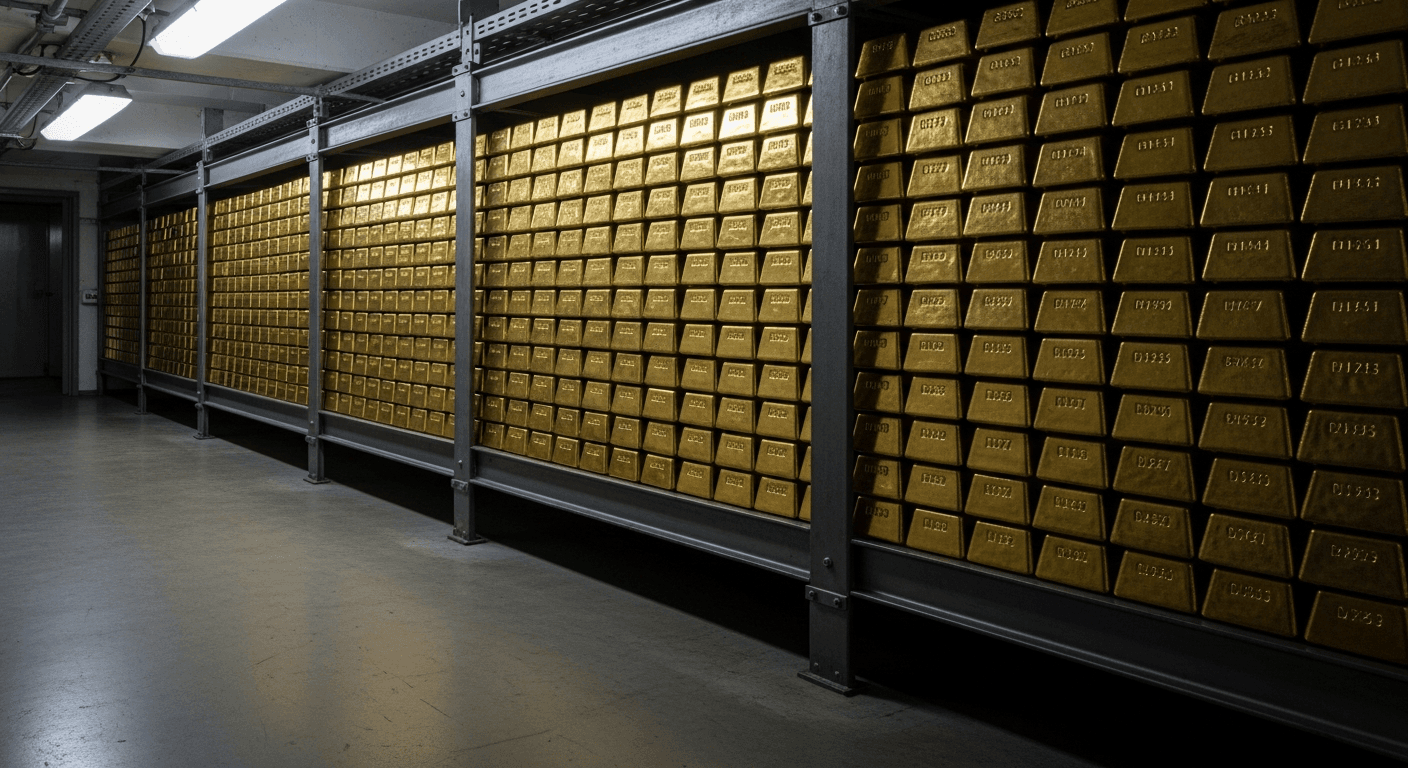
The quarterly numbers confirm what the WGC survey already telegraphed: reserve managers are systematically rotating out of dollars and into gold, price be damned.
Key takeaways
- Central banks netted a Q2 record 288.9 tonnes of gold, up approximately 74% year-over-year, per the World Gold Council's Gold Demand Trends Q2 2026 report.
- Poland (51t) and China (33t) led purchases while Russia sold 22 tonnes to plug a federal budget deficit, illustrating that gold is sound money with friction points Bitcoin doesn't share.
- The WGC's 2026 Central Bank Gold Reserves Survey shows 89% of reserve managers expect global gold holdings to rise in the next 12 months and 74% anticipate lower USD holdings over the next five years.
Central banks purchased a Q2 record 288.9 tonnes of gold in the three months ending June 30, 2026, according to the World Gold Council's Gold Demand Trends Q2 2026 report published July 30. The buying came during a quarter in which gold prices fell approximately 16%, the asset's worst quarterly performance since 2013. Price-inelastic demand at that scale is structural reserve-building.
H1 2026 net purchases totaled 345 tonnes, the lowest since 2022, but the headline understates demand. The drag came entirely from forced sellers: Russia and Turkey liquidating gold to cover budget shortfalls. Strip those out and the underlying buy-side appetite looks like the strongest in years.
Who Bought, Who Sold, and Why It Matters
The National Bank of Poland was the quarter's largest buyer at 51 tonnes, bringing its H1 total to 82 tonnes and pushing reserves to 632 tonnes as it tracks toward a 700-tonne goal. The People's Bank of China added 33 tonnes, its largest quarterly purchase since Q4 2023, with declared reserves now at 2,346 tonnes. The WGC's central bank data also notes elevated undeclared purchases consistent with ongoing accumulation that does not show up in official figures. Uzbekistan (16t), Kazakhstan (15t), Jordan (6t), and the Czech Republic (6t) rounded out the buyer list.
The Bank of Russia was the quarter's largest seller at 22 tonnes, with gold sales in H1 totaling 43.5 tonnes. Russia's federal budget deficit hit nearly 6 trillion rubles in the first half of 2026. That is the tell. Russia spent the better part of a decade building a gold stockpile as explicit sanctions insulation, and is now liquidating it domestically to generate rubles.
The lesson is that gold held in domestic vaults, sold to domestic banks, produces domestic currency, not hard currency. That is a meaningful distinction. Turkey, which led Q1 sales, slowed significantly, selling just 4 tonnes in Q2.
The Dollar Thesis Is Losing Its Reserve Managers
The WGC's 2026 Central Bank Gold Reserves Survey puts numbers to the structural rotation. Eighty-nine percent of reserve managers expect global central bank gold holdings to increase over the next 12 months. A record share plan to add to their own reserves, per the WGC survey. Seventy-four percent anticipate holding less USD over the next five years.
That last figure is a majority institutional verdict that the dollar-centric reserve order is winding down. The 2022 freezing of roughly $300 billion in Russian foreign reserves did the intellectual work here. The message delivered to every sovereign holding USD assets: those reserves are yours until Washington decides otherwise.
Gold held in domestic custody is not subject to that override. Turkey's Treasury dump earlier this year is another data point in the same direction.
China's position sharpens this further. At 2,346 declared tonnes, China holds an estimated 9% of its reserves in gold, well below the 70%-plus ratios common among Western European central banks. The headroom to keep buying is enormous. Every tonne added to PBoC reserves is a deliberate signal that the yuan-gold axis is being constructed as an alternative to the petrodollar system.
What Gold's Limits Reveal About Bitcoin's Case
Russia's situation is instructive beyond the headline numbers. Gold solved the problem of remote asset seizure. It did not solve the problem of frictionless cross-border settlement under fiscal pressure. Physical custody has geography. Moving gold requires counterparties. Selling it in Moscow generates rubles, not dollars or euros.
What Russia's position demonstrates is what sound money without permissionless settlement looks like when a state comes under acute fiscal stress.
Bitcoin's pitch to the non-aligned sovereign world runs through exactly that gap. The same logic driving central banks toward gold (seizure resistance, no counterparty, fixed supply) applies to Bitcoin, with the added properties of borderless settlement, 24/7 liquidity, and no physical custody requirement.
Central banks are not buying Bitcoin yet at scale, but the monetary reasoning that is moving reserve managers toward gold is the same reasoning that eventually points toward a bearer asset with a hard cap and no geography.
What to Watch
The falsifiable test is Q3 2026 WGC data. If net central bank purchases fall back toward or below Q1's figures AND IMF COFER data shows USD reserve share recovering meaningfully, the de-dollarization thesis stalls. A single strong quarter is not a trend. H2 data, combined with any movement on the Russia digital ruble rollout and continued PBoC accumulation reporting, will sharpen or soften the signal considerably.
Sources
Frequently Asked Questions
The 2022 seizure of approximately $300 billion in Russian foreign reserves answered that question for most reserve managers. USD-denominated assets held in Western custodians can be frozen by executive action. Gold held domestically cannot be seized remotely.
The trade-off is yield for counterparty-risk elimination. For sovereigns operating outside the Western alliance structure, that trade is increasingly worth making.
Because gold's sanctions resistance is geographic, not absolute. Russia can sell gold to Russian banks and receive rubles. It cannot easily convert that gold to hard currency at scale without Western counterparties, the same ones enforcing the sanctions.
The domestic sale plugs a ruble-denominated budget gap. It does not provide dollar or euro liquidity. That structural limitation is precisely what Bitcoin's permissionless, global settlement layer addresses.
Gold is the instrument available to reserve managers today: it has millennia of precedent, fits within existing legal frameworks, and requires no new infrastructure. Bitcoin addresses the remaining friction points, physical custody, geographic risk, and settlement speed, but institutional and sovereign adoption is still maturing. The monetary logic driving the gold rotation and the logic that eventually points toward Bitcoin are the same. The timeline differs; the thesis does not.