ERCOT Batch Zero Scoreboard: Galaxy's 4.2 GW and the GW Arms Race
A wave of ERCOT Batch Zero classifications from Galaxy, IREN, CleanSpark, Ionic, and others has turned a Texas grid-study tier into a competitive scoreboard. The gigawatt totals obscure a critical distinction: Base Load and Studied Load carry different levels of certainty, and Governor Abbott's
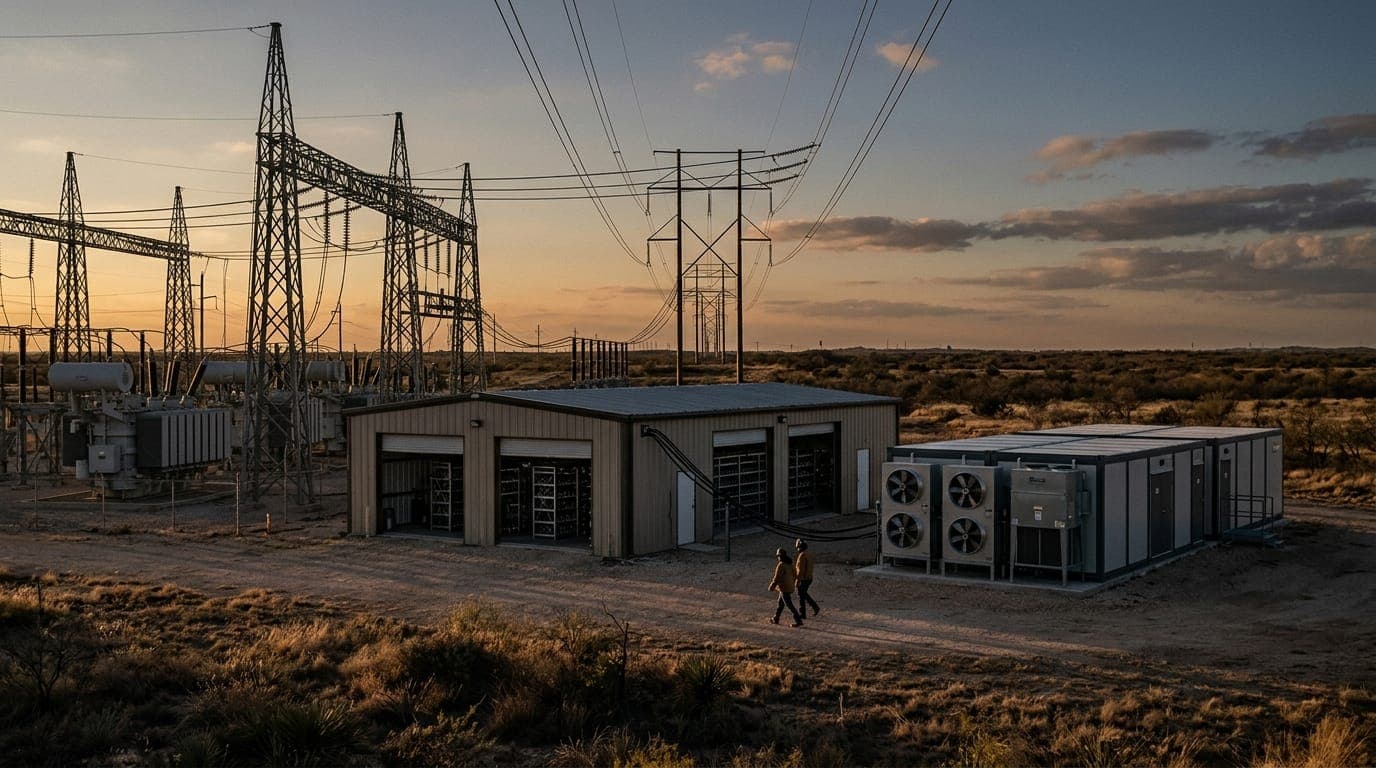
The Texas grid classification process has become competitive theater. Here is what the headline numbers actually mean.
Key takeaways
- Galaxy Digital disclosed conditional Batch Zero classifications covering approximately 4.2 GW across five Texas projects, with 1.63 GW as Base Load and roughly 2.6 GW as Studied Load, two tiers carrying materially different levels of certainty.
- All Batch Zero classifications are provisional, subject to Governor Abbott's August 3 audit mandate; no large computational load can energize until that verification completes, with ERCOT capacity allocations not expected until April 2027.
- The wave of GW announcements mirrors the 2021 mining hashrate arms race: companies are competing on announced future capacity, not secured production, and the market risks making the same analytical mistake.
A flurry of ERCOT Batch Zero classification announcements this week has turned a Texas regulatory grid-study process into a public scoreboard, with Galaxy Digital, IREN, CleanSpark, Ionic Digital, Hut 8, and Soluna all disclosing conditional grid access figures. The headline gigawatts obscure a critical distinction that separates real infrastructure commitments from capacity still awaiting allocation.
Galaxy's September 8 press release is the clearest illustration. Five Texas projects received conditional classifications covering approximately 4.2 GW total. Helios I (800 MW) and Helios II (830 MW) landed as Base Load, totaling 1.63 GW. Caspian (700 MW), Selene (900 MW), and Helios III (1,000 MW) were classified as Studied Load, covering 2.6 GW. One detail buried in the release: Galaxy submitted Caspian as Base Load. ERCOT provisionally classified it as Studied Load. Even within a single company's portfolio, the same headline GW total contains projects at fundamentally different stages of certainty.
What the Tiers Actually Mean
ERCOT's Batch Zero process, formally approved by PUCT and effective July 11, 2026, per Market Notice M-B062326-01, is a one-time transitional framework for evaluating large-load interconnection requests of 75 MW or more on a system-wide basis. The process creates three outcomes: Base Load, Studied Load, and excluded.
Base Load projects enter the study's starting model without undergoing a new capacity allocation. They benefit from prior study work that already established their grid position. Studied Load projects qualify for inclusion but still face evaluation and allocation that could reduce or eliminate their capacity. Projects outside Batch Zero entirely must apply to a future process.
That distinction matters enormously when reading competitive announcements. CleanSpark disclosed Base Load and Studied Load capacity, a split the company described as expected. Ionic Digital disclosed that Texas-New Mexico Power informed it that ERCOT provisionally classified capacity at its Ward County campus as Base Load. IREN highlighted conditional Base Load status for its 2 GW Sweetwater hub. Hut 8 flagged Base Load classification for Beacon Point. Soluna announced Base Load for its full 166 MW Kati campus. For the companies where press release primaries were not confirmed at publication time, the classifications are reported per first reporting by The Energy Mag / Miner Weekly.
None of it is energized. Every single classification is conditional, pending Governor Greg Abbott's August 3 audit directive. Per Abbott's office, Texas had accumulated more than 474 GW of large-load interconnection requests by that date, roughly 90% from data centers and more than five times ERCOT's record peak demand. His directive paused Batch Zero classification activity and required comprehensive verification of all data center projects in the queue before any can proceed to energization. Classifications resumed conditionally under ERCOT Market Notice M-A080326-01.
The 2021 Hashrate Parallel
The competitive dynamic is not new. In December 2021, MARA reported an active fleet producing approximately 3.5 EH/s alongside purchases projected to bring its fleet to 23.3 EH/s by early 2023, a figure the company did not reach until it entered 2024 with approximately 24.7 EH/s energized. The market treated the projected number as a proxy for competitive position. The actual production told a different story for years.
The same analytical mistake is available today. A Batch Zero classification is a milestone toward future power, not power already secured. The phantom load problem in AI data center planning is not new, and the ERCOT queue has its own version of it: 315 projects carrying approximately 274 GW were placed outside Batch Zero entirely for lacking required study documentation, per Electron Economics reporting. The queue measuring 474 GW represents proposed connections, not a forecast of capacity that will materialize.
The companies with genuine structural advantage here are the ones that built operational discipline around dispatchable load, flexible curtailment, and committed grid relationships during years of Bitcoin mining. That is precisely the operational profile ERCOT's tiered process rewards. Base Load status flows from prior study work, meaning the operators who showed up early with real infrastructure commitments, not late with speculative interconnection requests. The AI capex buildout runs through whoever controls cheap, committed electrons. Bitcoin mining trained the operators who know how to compete for that position.
There is also a non-trivial political risk layer sitting above all of this. The Texas Legislature does not reconvene until January 2027, and PUCT is expected to seek expanded statutory authority over data centers. Abbott's directive requires compliance verification before energization, and his language was direct: "Any project that fails to comply with the requirements set forth by the PUCT and ERCOT, and by state law, must be denied connection to the Texas grid." Any company building a Texas AI strategy around pre-audit GW figures is carrying regulatory tail risk the headline announcements do not reflect.
What to Watch
ERCOT expects to communicate MW capacity allocations to Studied Load projects by April 9, 2027, with a final transmission plan targeted for Fall 2027. The April allocation round is the real test: if Studied Load projects receive firm allocations at rates comparable to Base Load, the tier distinction turns out not to matter operationally, and the current scoreboard becomes noise. If the allocation process cuts or eliminates significant Studied Load capacity, the Base Load / Studied Load split will prove to be the signal investors should have been tracking all along. Watch April 2027.
Sources
- Galaxy Digital press release, PR Newswire, September 8, 2026
- ERCOT Large Load Integration hub
- ERCOT Market Notice M-B062326-01, Batch Zero effective date, July 11, 2026
- ERCOT Market Notice M-A080326-01, Abbott directive and pause, August 3, 2026
- Governor Abbott's office, August 3, 2026 directive
- The Energy Mag / Miner Weekly, Batch Zero scoreboard analysis, first reported September 10, 2026
Frequently Asked Questions
Base Load projects enter Batch Zero's study starting model without undergoing a new capacity allocation. Their grid position was established through prior study work. Studied Load projects qualify for inclusion in Batch Zero but still face an allocation process that could reduce or eliminate their assigned capacity. Base Load is the stronger classification; Studied Load carries meaningful uncertainty about how much capacity will actually be confirmed.
Abbott cited the scale of the interconnection queue: more than 474 GW of large-load requests, over 90% from data centers, and more than five times ERCOT's record peak demand. He directed a comprehensive verification and audit of all data center projects, requiring proof of compliance with PUCT and ERCOT requirements and state law before any project can proceed to energization.
ERCOT expects to communicate MW capacity allocations to projects by April 9, 2027. A final transmission plan is targeted for Fall 2027. Until those allocations are issued, all current Batch Zero classifications remain provisional and conditional on the completion of Abbott's audit.


