US Expands Bosaso Base as Gulf of Aden Chokepoints Stack Up
The US signed a deal with Puntland on August 3 to expand its military base in Bosaso, a Gulf of Aden port city, as simultaneous Hormuz and Red Sea disruptions threaten up to 25% of global oil and gas supply.
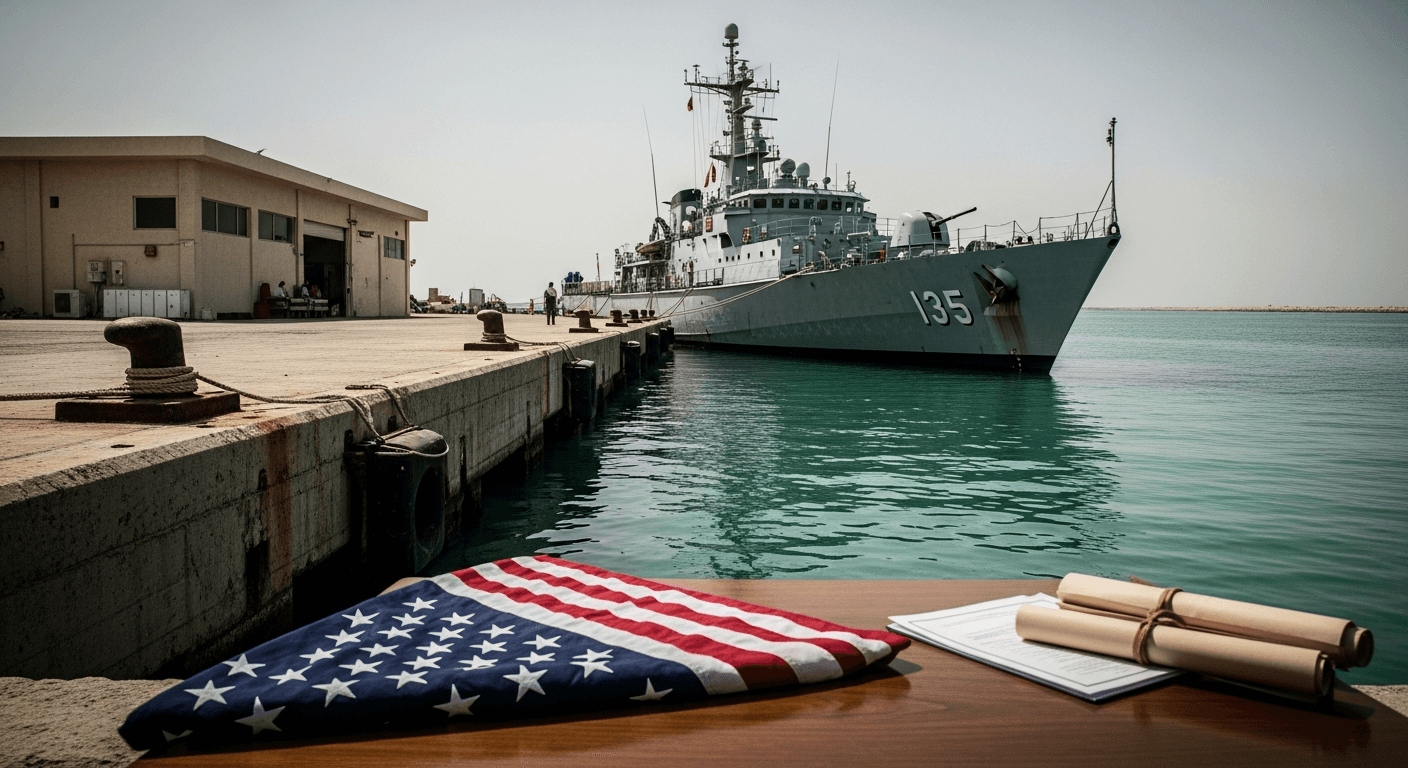
The Pentagon is locking down the southern approach to the Red Sea while Hormuz is disrupted and Houthis tighten a naval blockade on Saudi ports.
Key takeaways
- The US and Puntland signed a deal on August 3 to expand the US military base at Bosaso, a Gulf of Aden port city, with SOCAFRICA commander Maj. Gen. Claude K. Tudor Jr. leading the American delegation. The deal bypassed Somalia's US-backed federal government in Mogadishu.
- The expansion lands as Ansar Allah enforces a naval blockade on Saudi Arabia's Red Sea ports (declared July 20), compounding a Strait of Hormuz disruption that together affect up to 25% of global oil and gas supply, per Al Jazeera.
- The US government has not publicly confirmed the agreement; its scope and timeline remain undisclosed, even as the Trump administration has now launched at least 77 airstrikes in Somalia in 2026 alone.
A US military delegation visited Bosaso on August 3 and signed an agreement to expand the existing US military installation there, a port city sitting directly on the Gulf of Aden, according to a statement from the Puntland government. The deal arrives as the Strait of Hormuz faces active disruption and Ansar Allah squeezes Saudi Arabia's backup Red Sea export routes simultaneously, this is one cascading energy-corridor crisis, not two separate regional brushfires.
The Puntland government confirmed the agreement in a statement, describing the talks as focused on counterterrorism and maritime security. "Puntland and the United States also signed a new agreement to expand their cooperation," the statement read. "Under the agreement, the United States will expand its military base in Bosaso to improve operations against terrorism and to help protect maritime security." The American delegation was led by Maj. Gen. Claude K. Tudor Jr., commander of US Special Operations Command Africa, per Hiiraan Online. The story was first reported in English by Antiwar.com.
A Deal That Cuts Around Mogadishu
The agreement was not negotiated with Somalia's US-backed federal government in Mogadishu. According to the Somali Guardian, the US is running a "dual-track" strategy, engaging both the recognized federal government and breakaway regional administrations. Puntland withdrew from Somalia's federal system in March 2024 following a constitutional dispute, and armed tensions between Puntland security forces and federal government forces have continued since.
Tudor visited Puntland a day after holding separate talks in Somaliland on August 1, meeting with Somaliland President Abdirahman Mohamed Abdullahi in Hargeisa. No deal has been confirmed from that meeting. The US is simultaneously backing Mogadishu with airstrikes against al-Shabaab while funding Puntland forces fighting an ISIS affiliate in the northeast. The Trump administration launched at least 124 airstrikes in Somalia in 2025, a record, and has already conducted at least 77 in 2026, per Antiwar.com. None of this has generated serious domestic coverage.
The US government has issued no public confirmation of the Bosaso agreement. No AFRICOM or DoD release has been published. The scope, timeline, and force posture of the expansion remain undisclosed.
The Chokepoint Math the Wire Services Skip
Bosaso's location is the story. The city sits on the Gulf of Aden directly across from Yemen's coast, roughly 200 miles from the Bab al-Mandeb strait, the narrow chokepoint connecting the Red Sea to the Indian Ocean. An expanded base there puts US drone and special-operations assets within range of Houthi maritime infrastructure threatening the entire Red Sea corridor.
Here's the compounding logic. The Strait of Hormuz is under disruption from the US-Iran conflict. Saudi Arabia responded by rerouting oil exports through Red Sea terminals at Yanbu. On July 20, Ansar Allah declared a naval blockade on Saudi Arabia's Red Sea ports, a direct response to Saudi airstrikes on Sanaa International Airport that reignited a conflict that had been in ceasefire since 2022. Al Jazeera reported that in peacetime the Strait of Hormuz carries roughly 20% of global oil and gas; with combined Hormuz and Red Sea disruptions, as much as 25% of global supply is now affected. Ansar Allah has also signaled plans to impose tolls on Bab al-Mandeb shipping.
The backup route for the backup route is now contested. Bosaso is where the US intends to do something about that.
For a Bitcoiner, the second-order read is straightforward: sustained, simultaneous supply-side energy disruptions mean persistent inflation pressure that fiat central banks cannot tighten against without crashing sovereign debt markets. The petrodollar architecture, which requires stable energy flows through US-secured corridors, is absorbing shocks from multiple directions at once. The system is not managing a crisis; it is managing a structural unraveling, one base lease at a time.
The falsifiable version of that thesis: if a durable US-Iran agreement reopens Hormuz within 90 days, a Saudi-Yemeni ceasefire halts Houthi strikes, and the Bosaso expansion proves to be a narrow ISIS-suppression operation with no Red Sea operational mandate, the monetary-system implication deflates to routine counterterrorism posturing.
What Comes Next
Watch whether Mogadishu responds formally to the Puntland deal and whether AFRICOM eventually confirms the agreement's scope. If the Bab al-Mandeb toll threat materializes into enforced collection, Bosaso's operational tempo will accelerate fast. The US is also running parallel diplomatic tracks in Somaliland, a territory Israel formally recognized as an independent state in December 2025, making it the first UN member state to do so, which adds another layer of pressure on the regional architecture Washington claims to be stabilizing.
Update, September 15, 2026
On September 4, 2026, the U.S. State Department approved a $5.0 billion Foreign Military Sale to Saudi Arabia for 10,004 JDAM-ER guidance kits and matching bomb bodies, along with a concurrent $750 million sale for 60 AGT-1500 tank engines. The State Department's congressional notification covers the full package under DSCA Transmittal #26-35. The arms package substantially increases Saudi Arabia's standoff strike capacity, with wing-kit technology extending baseline unpowered bomb reach to more than 74 kilometers. This is not defensive resupply. Saudi Arabia spent much of 2026 buying defensive hardware, including a reported $9 billion in PAC-3 MSE interceptors and nearly $2 billion in APKWS guided-rocket sections. The JDAM-ER order restores something different: it rebuilds the kingdom's offensive strike inventory drawn down during months of exchanges with Iran and the Houthis.
The scale of the broader transfer is worth pausing on. Announced U.S. arms sales to Gulf Cooperation Council members reportedly reached about $41 billion from January through June 2026, compared with approximately $9 billion throughout all of 2025, with further expansions reportedly adding roughly $17 billion. Washington is flooding the Gulf with munitions at the same moment it is leaning on Puntland and Somaliland to hold the maritime perimeter at Bosaso rather than keeping U.S. forces forward in the theater. The pattern is consistent: the U.S. is offshoring the enforcement role to regional proxies and arming them heavily to do it.
Congress retains a 30-day review window, and quantities, configurations, and final prices may change during negotiations, making published values approval ceilings rather than guaranteed expenditure.
DSCA notifications are a mandatory step under U.S. law, giving Congress a 30-day window to object; absent objection, the parties move to formal contract negotiations. Given the pace of approvals since February, no serious congressional resistance has materialized. The ordnance is moving.
Sources
- Puntland presidency statement on the August 3 meeting, Hiiraan Online
- Somali Guardian, US dual-track strategy, Puntland-federal government context
- First reported in English by Antiwar.com (Dave DeCamp, August 3, 2026)
- Al Jazeera, Houthi naval blockade of Saudi Arabia declared July 20, 2026
- Al Jazeera, Saudi Arabia, Red Sea coalition, Hormuz disruption context
Frequently Asked Questions
Puntland broke from Somalia's federal system in March 2024 amid a constitutional dispute, and armed tensions with federal forces have continued since. The US appears to be pursuing parallel relationships with both Mogadishu and breakaway regional administrations. That dual-track approach may give Washington more operational flexibility in the northeast, but it actively undermines the cohesion of the US-backed federal government it is also funding.
Bosaso sits on the Gulf of Aden roughly 200 miles from the Bab al-Mandeb strait. An expanded base there extends US drone and special-operations range directly toward Houthi maritime assets in Yemen. With the Red Sea corridor under active Ansar Allah blockade and Hormuz disrupted, controlling the southern approach to both chokepoints is the operational priority.
Saudi Arabia rerouted oil exports to Red Sea terminals after Hormuz came under disruption. Ansar Allah then declared a naval blockade on those Saudi Red Sea ports on July 20, cutting off the detour. Al Jazeera reports up to 25% of global oil and gas supply is now affected by the combined disruptions. The Bosaso expansion is part of the US military response to that cascading chokepoint problem.