BLM Approves First AI Data Center on Public Land, Skips Environmental Review
The BLM approved what is believed to be the first-ever AI data center on U.S. public land in Boulder City, Nevada, recycling a 19 MW solar project's environmental review to greenlight a 167 MW power consumer with zero public comment.
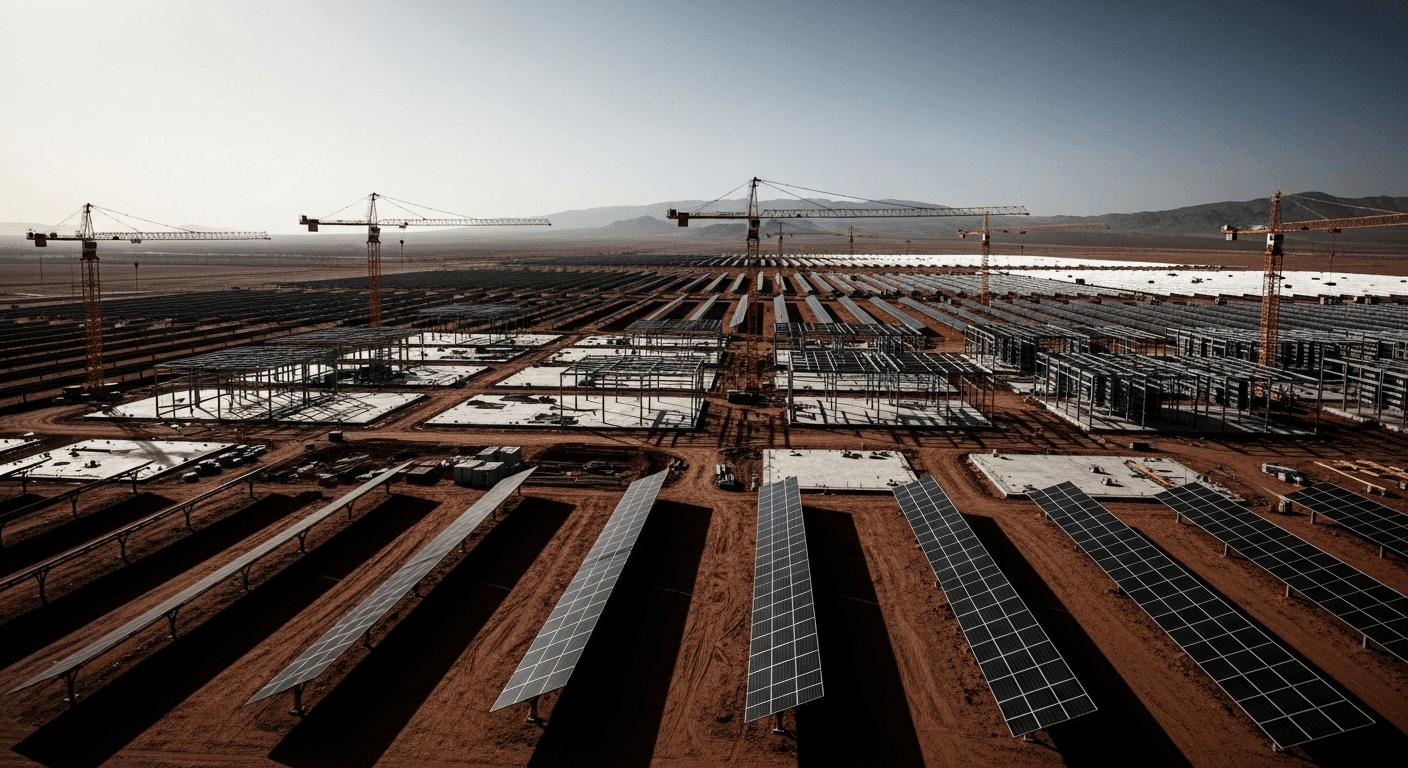
The Trump administration used a solar farm's old permit to greenlight a 167 MW data center on federal Nevada land, no public comment required.
Key takeaways
- The BLM approved what is believed to be the first AI data center on U.S. public land, a 167 MW facility on 88.5 acres in Eldorado Valley near Boulder City, Nevada, by recycling a 2023 environmental review from a 19 MW solar project with no new public comment period.
- The approval was executed under Executive Order 14318 and is explicitly positioned as a replicable template for AI infrastructure on federal land; both Boulder City and two environmental groups have already filed appeals.
- A 167 MW data center consuming power on land originally permitted for a 19 MW generator is an 8.8x load reversal. For Bitcoin miners and energy operators, AI capex now has a regulatory fast lane on public land that mining has never had.
The Bureau of Land Management approved the Townsite Data Center project on June 26, 2026, according to the BLM's official announcement, placing a 167 MW AI data center on 88.5 acres of public land in Eldorado Valley, near Boulder City, Nevada. The mechanism was a "Determination of NEPA Adequacy," meaning the agency transferred an environmental review completed in 2023 for a 19 MW solar farm and 35 MW battery storage project directly onto the new data center application, bypassing a full review and any public comment period.
The developer is Townsite Solar 2, LLC, a Houston-based entity. BLM Las Vegas field office manager Bruce Sillitoe signed off on the approval. The agency cited Executive Order 14318, "Accelerating Federal Permitting of Data Center Infrastructure," as the legal basis for the expedited process.
An 8.8x Load Reversal With No Public Input
The numbers make the problem concrete. The original right-of-way was for a facility that would have produced 19 MW. The approved data center will consume up to 167 MW. Boulder City has a population of roughly 15,000; that 167 MW load would exceed the entire city's power consumption, per Electrek's reporting.
BLM Director Steve Pearce framed the approval in official terms: "The approval supports federal efforts to accelerate permitting for data center infrastructure and is consistent with Executive Order 14318."
Mike Ford, a former BLM official who spent 25 years at the agency and led public lands policy nationally, offered a different read. "It's an extraordinary and liberal interpretation of existing law and regulations," Ford told the Spokesman-Review. "It's unprecedented in my personal experience."
Boulder City Mayor Joe Hardy was blunter about the process. "The BLM approved something in our jurisdiction. We were not contacted by the BLM to be included in that decision," Hardy said at the July 14 city council meeting, per KTNV. The council voted unanimously that same night to appeal.
The Playbook, Not the Anomaly
The administration's framing matters here. This is not a one-off accommodation. EO 14318 exists to build a pipeline of approvals, and the NEPA Adequacy determination is the specific instrument that makes speed possible. It allows a project's environmental footprint to be deemed already-reviewed even when the actual project bears almost no resemblance to the one reviewed. A solar generator and a 167 MW computing load share a parcel boundary. That is roughly where the similarity ends.
The Center for Biological Diversity and the Sierra Club Toiyabe Chapter filed an administrative appeal with the Interior Board of Land Appeals on July 26, 2026. Patrick Donnelly, Great Basin Director at the Center for Biological Diversity, called it "an outrage that the Trump administration is giving away our public lands to hedge funds for data centers."
The White House's 2025 "Winning the Race: America's AI Action Plan" explicitly supports opening federal lands for data center development. This approval is the first concrete execution of that policy at BLM. The DOE's parallel moves on AI infrastructure at Savannah River show the same federal appetite operating across agencies.
For anyone tracking AI data center power demand, the grid math is the through-line. Every megawatt locked behind a data center right-of-way on federal land is a megawatt that tightens power availability for every other buyer, including Bitcoin miners who bid on curtailable and behind-the-meter contracts. Nevada's grid is not an abstraction: the Las Vegas Review-Journal has reported, citing NV Energy projections, that data centers could account for 64% of NV Energy sales by 2046. That trajectory changes the cost basis for any energy-intensive operation in the region.
The protest signals are already building at the national level, but protests have not stopped approvals yet. The regulatory fast lane is open.
What to Watch
The IBLA appeal and any potential federal court challenge are the near-term trip wires. If the Interior Board of Land Appeals vacates the NEPA Adequacy determination and compels a full environmental review, the template breaks. If it holds, and especially if Congress moves to codify a categorical exclusion for data centers in statute through appropriations or an AI bill, this process becomes permanent infrastructure, not executive-order policy that a future administration can reverse. Watch the IBLA ruling timeline and whether EO 14318 gets legislative backing in the next budget cycle.
Sources
Frequently Asked Questions
Under the National Environmental Policy Act, agencies can issue a "Determination of NEPA Adequacy" when a new project is deemed sufficiently similar to one already reviewed. The BLM used that mechanism here to transfer a 2023 review of a 19 MW solar farm onto a 167 MW data center application. Critics, including a former senior BLM official, argue that the two projects are not comparable and that the determination stretches the legal authority of the DNA process beyond its intended scope. The IBLA appeal will test whether that interpretation holds.
AI data centers and Bitcoin miners compete for the same grid electrons, the same land-use rights, and increasingly the same regulatory attention. A 167 MW data center locked onto public land under an expedited permit is 167 MW that tightens regional grid capacity. The larger issue is structural: the Trump administration has created a regulatory fast lane for AI capex on federal land that requires lobbying access and executive-order backing. Bitcoin mining has never had equivalent treatment in federal land-use policy, and AI capex interests are now positioned ahead in the queue at BLM field offices.


