Bitcoin Hashrate Hits 1 ZH/s Seven-Month High as AI Pivot Fails to Ease Mining Competition
Bitcoin's 7-day average hashrate crossed back above 1 ZH/s, its highest since March 3, even as publicly traded miners cut realized hashrate by 23% chasing AI and HPC revenue. Two consecutive difficulty adjustments totaling ~11.4% signal the opposite of relief for remaining miners.
The public miners chased AI revenue. The difficulty chart didn't care.
Key takeaways
- Bitcoin's 7-day average hashrate recovered above 1 ZH/s (1,000 EH/s) as of October 22, its highest level since March 3, per BlocksBridge Consulting's Miner Weekly.
- Mining difficulty rose 5.92% on October 16, with BlocksBridge projecting another 5.16% increase at the next adjustment, totaling roughly 11.4% across two consecutive epochs.
- Public miners cut their realized hashrate by approximately 23% while growing AI and HPC revenue 52% quarterly, yet total network hashrate kept climbing, suggesting smaller and mid-sized operators absorbed the displaced capacity.
Bitcoin's seven-day average hashrate crossed back above 1 zettahash per second on October 22, a seven-month high not seen since March 3, according to BlocksBridge Consulting's Miner Weekly. That recovery happened while publicly traded miners were actively abandoning the network for AI and high-performance computing workloads, which makes the number more significant, not less.
Difficulty Is Squeezing, Not Easing
Mining difficulty increased 5.92% on October 16. BlocksBridge projects another 5.16% increase at the next adjustment. Two consecutive upward swings would put the total rise at roughly 11.4% across back-to-back epochs.
"That's hardly the breathing room remaining miners might have expected from the AI migration," BlocksBridge wrote.
The firm had previously documented a 23% decline in publicly traded miners' realized hashrate alongside a 52% quarterly jump in their AI and HPC revenue (through Q2 2026). It estimated the displaced capacity represents roughly $1.5 billion in mining hardware, using an assumed $20 per terahash purchase price. The actual market value of that hardware depends on current ASIC spot pricing, which has shifted, so treat the dollar figure as an order-of-magnitude estimate rather than a precise mark.
The key point stands regardless: large operators pulled substantial capacity offline, and the network's response was to get tighter, not looser.
The Protocol Is Working as Designed
Here is what the difficulty chart is actually showing. Public miners shed roughly 23% of their realized hashrate. Total network hashrate recovered to a seven-month high, up approximately 45% from its July 2026 low near 726 EH/s, per CryptoQuant data cited by Ki Young Ju, the firm's founder and CEO. That arithmetic only works if the non-public-miner segment absorbed the gap and then some.
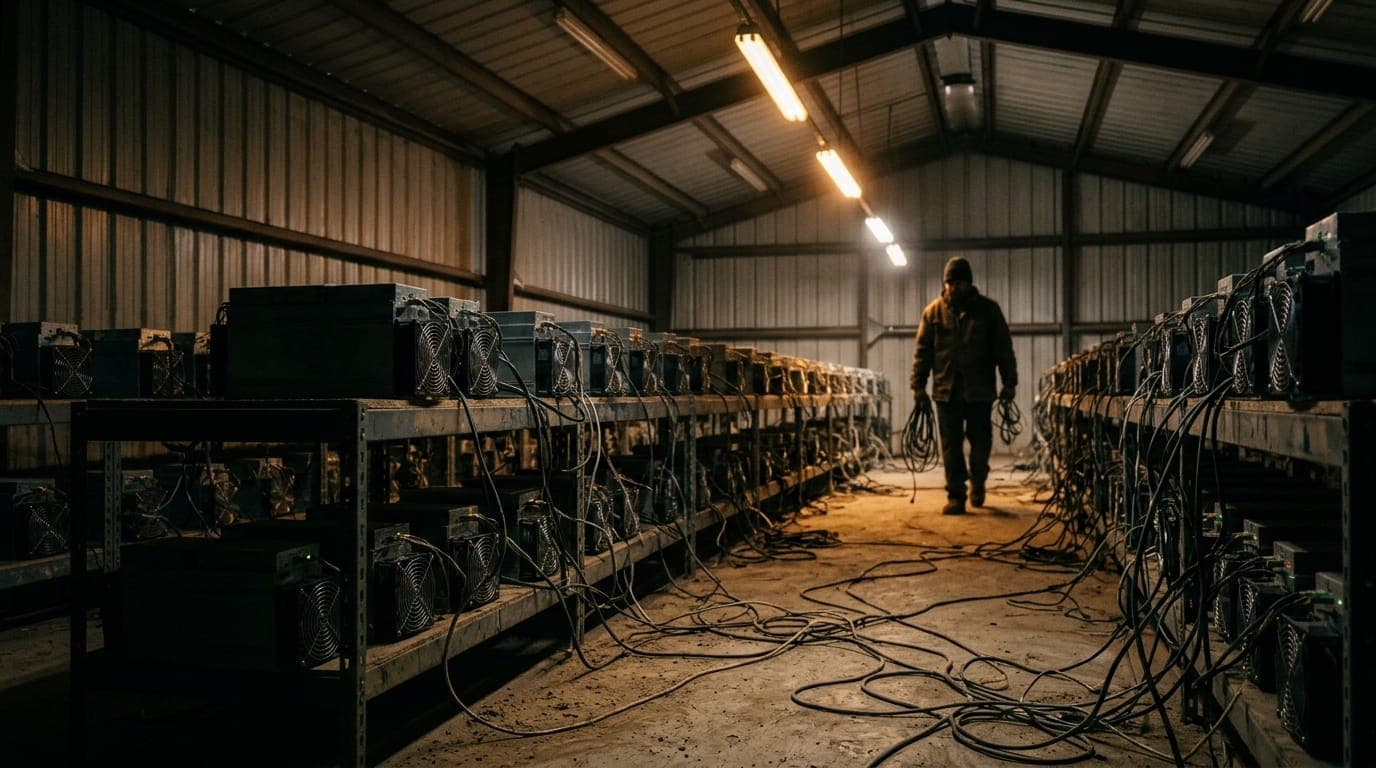
BlocksBridge points to one visible piece of that story: Sazmining advertising secondhand Antminer S21 XP machines deployable through hosting facilities in Paraguay and Texas. Operators with access to cheaper electricity can acquire used machines at a discount and make the economics work where larger balance-sheet miners could not justify the allocation. Whether the specific units being sold originated from publicly traded miners is unclear, BlocksBridge acknowledges, but the directional story holds.
CryptoQuant founder and CEO Ki Young Ju framed the hashrate recovery as a signal in its own right, writing on X that "higher hashrate means stronger security and better fundamentals as a store of value. Public miners are backed by TradFi giants. This is an indirect bullish signal from institutional investors, imo."
The second-order effect is worth pressing on. Large Nasdaq-listed miners rotating into AI are functionally rotating ASIC inventory toward a longer tail of smaller, more geographically distributed operators. Those operators are harder to regulate, harder to pressure, and less correlated to institutional balance sheets than the names everybody tracks. The BlackRock IBIT collateral narrative gets the TradFi angle right, but the mining layer tells a parallel story: the hash is getting more distributed even as the public mining sector consolidates around AI.
Satoshi's difficulty adjustment does not care who is hashing. It calibrates around whoever shows up with cheap power and willing capital. Two consecutive upward adjustments totaling 11.4% is the protocol saying the field is more competitive, not less.
The falsifiable version of that thesis: if the next two difficulty adjustments reverse, and on-chain data shows hashrate retreating back below 900 EH/s while secondary ASIC markets show falling bids and unsold inventory piling up, the smaller-operator absorption story is overstated and the AI migration is creating a genuine hashrate vacuum rather than a decentralization shuffle. That is not what the current data shows.
What to Watch
BlocksBridge is hosting an X Space on October 29 with miners who have remained Bitcoin-focused, which should provide ground-level color on whether the secondary ASIC market absorption is as real as the difficulty chart implies. The next difficulty adjustment, projected at plus 5.16%, will either confirm the tightening trend or be the first data point against it.
Sources
Frequently Asked Questions
Does a rising hashrate mean Bitcoin is more secure?
More total computational power makes a 51% attack more expensive, so yes in a direct sense. The more interesting dimension here is distribution. A longer tail of smaller operators across multiple jurisdictions is harder to coerce or shut down than a handful of publicly traded companies. Both the quantity and the spread of hashrate matter for network security.
Why didn't the AI pivot by large miners reduce competition for the miners that stayed?
Because displaced hashrate does not disappear. It gets sold. Used ASICs flow to buyers with access to cheap power who can make the margins work. The difficulty algorithm responds to total network hashrate regardless of who owns it, so as long as enough capital chases low-cost electricity, competition stays tight. The current data suggests that is exactly what is happening.
What would it take for hashrate to actually drop and stay down?
A sustained combination of falling Bitcoin price (pushing marginal miners below operating costs), rising energy prices (closing the cheap-power arbitrage), and a glut of unsellable ASICs with no secondary-market bid. All three would need to hold across multiple difficulty epochs. Right now, the difficulty chart is signaling the opposite on all three.