Treasury Cuts Egyptian State Bank From Dollar System Over Iran Ties
FinCEN's proposed rule would sever Banque Misr UAE's five branches from dollar correspondent banking over $1.8 billion in suspected Iran-linked transactions. The China exemption tells you everything.
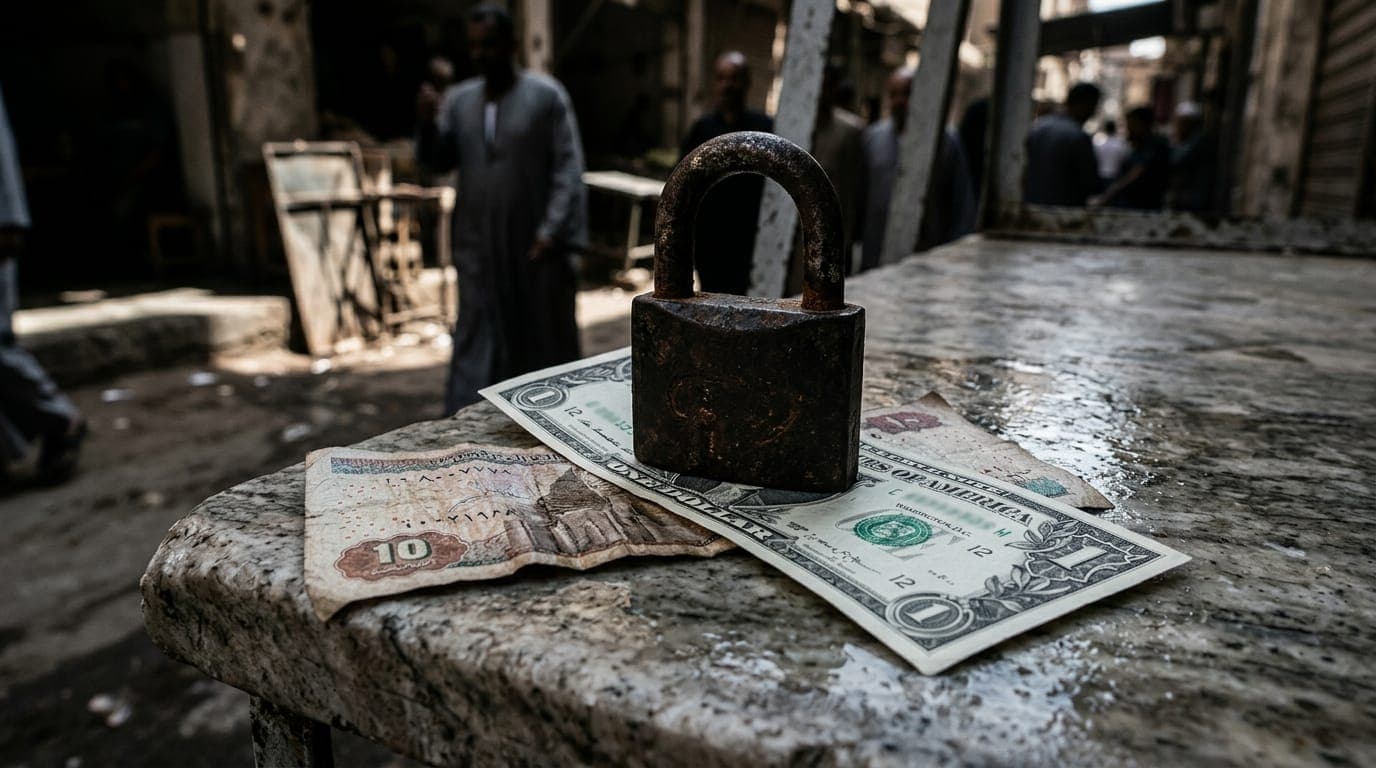
FinCEN's proposed rule targets $1.8 billion in suspected Iran transactions. China, which routes roughly 90% of Iran's oil, remains untouched.
Key takeaways
- FinCEN proposed on August 28 to strip Banque Misr UAE's five branches of U.S. dollar correspondent banking access, citing $1.8 billion in suspected Iran-linked transactions across 103 companies over 2.5 years, the first institution targeted under Operation Economic Outcast.
- Both Egypt and the UAE are formal U.S. allies. China, which Treasury Secretary Scott Bessent has publicly acknowledged routes approximately 90% of Iranian oil exports, has not been targeted.
- This is a proposed rule, not a completed action. A 30-day public comment period must close before it takes effect, but the precedent of deploying Section 311 against an ally-nation bank is now established.
The U.S. Treasury Department proposed on August 28 to revoke dollar correspondent banking access for the five UAE branches of Banque Misr, Egypt's second-largest state-owned bank, citing approximately $1.8 billion in transactions linked to Iranian shadow banking networks across 103 companies from January 2024 through June 2026. The action, issued under Section 311 of the USA PATRIOT Act, is the first correspondent banking target under Operation Economic Outcast, Treasury's escalating economic pressure campaign against Tehran.
Treasury Secretary Scott Bessent put it plainly in his August 28 statement: "Banque Misr UAE decided to find out the hard way, and today, we are taking the first step in holding it accountable for its continued, egregious support of the Iranian regime."
What the Rule Actually Does
The FinCEN NPRM designates Banque Misr UAE's five branches as a "primary money laundering concern." If finalized, U.S. financial institutions would be prohibited from opening or maintaining correspondent accounts for those branches, and required to take reasonable steps to block any transaction routed through a foreign bank's correspondent account that involves them.
This is not a full OFAC Specially Designated National designation. Section 311 is a rulemaking tool, lower friction and more scalable, that severs a target from the dollar rail without the broader legal machinery of an SDN listing. Treasury has now demonstrated it will use it against banks in allied nations.
The OFAC actions page and a parallel State Department release confirmed two additional OFAC designations: Reza Mohammad Taeedi, the regional bank manager of Bank Melli's Dubai branch, and Kameng Trading Limited, a Hong Kong-based entity that allowed a sanctioned Iranian exchange house to use it to launder money for Iran, designated for operating in Iran's financial sector.
The Central Bank of Egypt confirmed the action is limited to the five UAE branches. Banque Misr's Cairo head office and its branches in Paris, Frankfurt, Riyadh, Beirut, and Djibouti retain dollar access.
Of the $1.8 billion in flagged transactions, approximately $520 million occurred in the most recent 12-month period alone, per the NPRM.
The China Exemption Is the Tell
Bessent said publicly on August 24 that "no one is above the reach of U.S. sanctions." He also acknowledged in those same remarks that China purchases approximately 90% of Iranian oil exports. No Chinese financial institution has been targeted under Operation Economic Outcast.
The disparity is not about proportionality. Egypt's Banque Misr UAE processed $1.8 billion in suspected Iran transactions over 2.5 years. Chinese banks are the backbone of Iran's entire oil revenue stream. The enforcement gap is a function of political cost, not legal principle.
That asymmetry reveals something structural about how the dollar system actually works. The Operation Economic Outcast digital-asset sanctions show real enforcement activity at the margins. But the center, Chinese institutions routing Iranian crude, remains untouched because the economic and geopolitical cost of touching it is too high.
Dollar access, in practice, is a revocable political license. It is enforced selectively based on who Treasury can afford to cut. Every bank in a gray-zone ally country, UAE, Turkey, India, any multipolar intermediary positioning, just received a cleaner signal about what that license is actually worth. The incentive to build or quietly adopt non-dollar settlement rails got measurably stronger on August 28.
Bitcoin's settlement layer makes none of these calculations. There is no FinCEN, no NPRM, no correspondent banking access to revoke. This is a live demonstration of the architecture problem, not a hypothetical.
What to Watch
The 30-day public comment period is the immediate gate. If the rule survives comment and is finalized, Section 311 becomes a validated template for severing ally-nation banks at scale. Watch whether Treasury files a comparable action against any Chinese institution within the next 90 days. If it does, the selective-enforcement critique weakens materially. If it does not, the China carve-out is confirmed as a permanent feature, not a sequencing delay. Bessent is scheduled to attend G20 finance ministers meetings the following week to press for multilateral participation in Iran's financial isolation.
Update, August 31, 2026
Speaking to Reuters ahead of the G20 finance ministers meeting in Asheville, North Carolina, Bessent told Reuters that Treasury is likely to unveil weekly new secondary sanctions aimed at increasing economic pressure on Iran, with an initial focus on banks.
He added that the next step may be cutting off an institution entirely from the dollar-based financial system. The cadence is now explicit: this is not a campaign of periodic rounds but a rolling weekly drumbeat.
Bessent said he intends to drive the message home to G20 finance ministers and central bank governors to cut economic ties to Iran, or face secondary sanctions.
"We're starting with the banks, and we're telling the banks it's not okay to have Iranian money and to aid the regime," he said. In a separate interview flagged by the AP via ZeroHedge, Bessent went further, saying "This is going to be financial violence if we have to."
On China, Bessent is holding his position. He disagreed with critics who argue the campaign cannot succeed without targeting Chinese entities, claiming most of China's Iran oil purchases have been curbed by the U.S. blockade of Iranian ports and that the amount of Iranian oil stored in tankers is dwindling , closing with "Problem solved." Whether that claim holds up against observable flows will be the real test of whether the weekly sanctions blitz has teeth or is optimized for optics at Asheville.
Update, September 1, 2026
Bessent made the cadence explicit and on the record at the G20 in Asheville. Speaking to Fox Business host Larry Kudlow at the G20 finance ministers and central bank governors meeting on September 1, Bessent said: "We are probably going to announce a bank sanction this week, and we will announce one the week after." That is no longer a general warning to the financial system. It is a public forward schedule.
Bessent told Kudlow that the U.S. could target "anyone who does business with the IRGC," whether banks or airline leasing companies, adding: "We are tracking down the IRGC's assets." The framing has shifted from defending a sanctions architecture to narrating an active manhunt for balance sheets.
On China, the calendar is doing work that policy isn't. A Trump-Xi meeting is listed for September 24 , which is the cleaner explanation for why the most systemically significant node in Iran's oil revenue chain remains untouched than any argument about Chinese purchase volumes dwindling. Bessent's weekly bank sanction drumbeat will run straight into that summit. Whether the cadence pauses, accelerates, or pivots at that point will tell you more about the real constraints on Operation Economic Outcast than any press conference has so far.
Update, September 5, 2026
On September 4, OFAC designated Istanbul-based Golden Global Yatirim Bankasi Anonim Sirketi (Golden Global Bank) and its two subsidiaries as part of Operation Economic Outcast, accusing them of facilitating tens of millions of dollars in transactions for the IRGC-Quds Force and providing Iran with correspondent banking access to move funds internationally. This is the second financial institution hit under the campaign and the first full OFAC SDN designation of a bank, a harder tool than the Section 311 NPRM used against Banque Misr UAE the week prior.
According to Treasury, Golden Global was purpose-built to enable Iran's rahbar network to transfer oil revenues from China to Turkey, where rahbar money exchangers converted the proceeds into cash and gold. The bank then provided correspondent banking services to Iranian financial institutions through accounts controlled by the IRGC-QF and its proxies, including the network of Turkish businessman Sitki Ayan, already sanctioned by OFAC in 2022 for moving hundreds of millions of dollars in IRGC-linked oil revenue. The architecture is the same China-to-Turkey pipeline Bessent flagged at Asheville, now with a named institution and a paper trail attached to it.
The bank itself is small, with capital Bloomberg estimated near $34 million, but it sits inside a NATO country, and the message is aimed at the broader banking system as much as at this specific institution.
U.S. Ambassador to Turkey Tom Barrack moved quickly to contain the diplomatic fallout, urging Turkish authorities that "it would be a grave error" to read the designation as a judgment on Turkey itself. The weekly cadence Bessent promised at Asheville is now two-for-two: an Egyptian state bank one week, a NATO-country investment bank the next.
Sources
Frequently Asked Questions
What is FinCEN Section 311 and how is it different from a standard OFAC sanction?
Section 311 of the USA PATRIOT Act authorizes FinCEN to designate a foreign financial institution as a "primary money laundering concern" through a rulemaking process, then cut its access to U.S. correspondent banking. It does not require placing the institution on the OFAC Specially Designated Nationals list. The practical effect is similar (severed from the dollar system) but the legal mechanism is a notice-and-comment rulemaking, not a unilateral Treasury strike. That makes it lower friction to execute and easier to apply at scale against multiple institutions.
Why hasn't the U.S. sanctioned Chinese banks for buying Iranian oil?
Bessent acknowledged publicly on August 24 that China routes approximately 90% of Iranian oil exports. No Chinese bank has been targeted. Treasury has offered no public explanation for the omission. The most straightforward read is political cost: sanctioning a major Chinese financial institution risks a serious escalation with Beijing at a moment of significant economic interdependence. The enforcement gap is real and, as of now, unresolved.
Does this action affect Banque Misr's operations in Egypt or elsewhere?
No. The proposed rule applies only to Banque Misr's five UAE branches. Both a Treasury official and the Central Bank of Egypt confirmed the Cairo head office and all other foreign branches, including Paris, Frankfurt, Riyadh, Beirut, and Djibouti, retain their existing dollar correspondent banking access.