The World Needs More Stuff, Not More Financialization
Treasury raises the ceiling on long-bond support as governments race for energy and raw materials. I think bitcoin near $77,000 is an incredible bargain.


TFTC - Truth for the Commoner Bitcoin Brief | |||||||||||||||||||||||||
Sup, freaks. You can manipulate the price of money. You cannot financially engineer your way out of a shortage of energy and raw materials. Treasury is preparing another round of long-bond support while governments compete for the physical inputs they need to build. Looking at that combination, I have a hard time seeing bitcoin near $77,000 as anything other than an incredible bargain. Inside Today
Plus: enterprise AI spending, Cipher's conditional power progress, AI-policy funding, Stakwork's company-brain announcement and Sparrow's hardware-wallet checks. | |||||||||||||||||||||||||
LEAD STORY | |||||||||||||||||||||||||
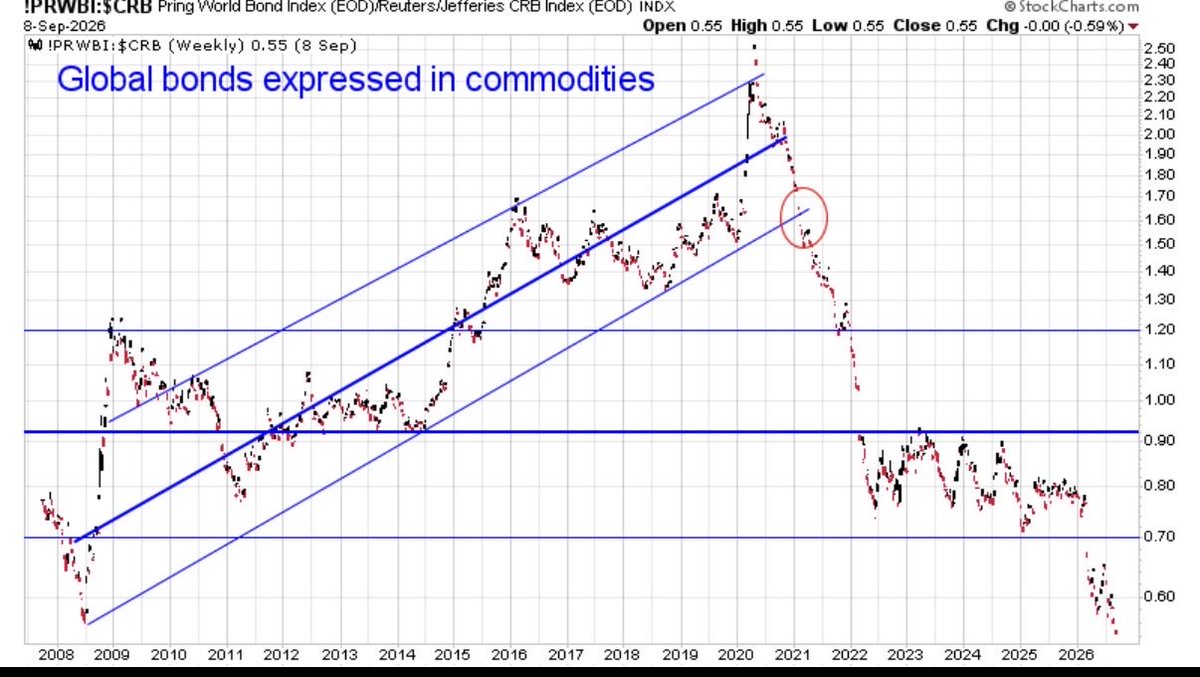
The World Needs More Stuff, Not More FinancializationThe world needs more stuff. More power generation, more transmission, more copper, more factories. We can argue about the appropriate yield on a government bond all day, but none of those things appears because a finance minister found a clever way to rearrange his liabilities. Yesterday, Treasury announced a buyback of up to $6 billion in its 10-to-20-year maturity bucket, scheduled for 1:40-2:00 p.m. ET today. That gives a bigger number to the long-end support policy Bessent's Treasury outlined in August. Treasury is offering to purchase existing securities to improve liquidity in that part of the market. The operation's results will tell us how much of that ceiling it actually uses. We wrote earlier this week about the pressure in government bonds and the danger of assuming a reckoning has to arrive on our preferred schedule. I've spent enough years expecting that reckoning to know governments can postpone it much longer than seems reasonable. I still think it helps to step away from the nominal yield for a moment and ask what those financial claims are worth against the things the world actually needs.
Bonds expressed in commodities: the Pring World Bond Index divided by the Reuters Jefferies CRB index, through September 8, 2026. StockCharts chart shared here. The chart plots an index ratio, not bond yields; the blue lines and red circle are annotations. The ratio has fallen sharply from its 2020 peak. Against this commodity basket, the bond index has been losing ground. Look at that chart and ask yourself which side of the trade you'd rather own as governments compete to rebuild their industrial bases. As Michael Every put it in our conversation last week, “It's stuff that matters.” He was talking about physical constraints, including metals and gas-turbine blades, that cannot be solved by rearranging financial variables. His broader argument was that financialization is giving way to a world in which finance is increasingly directed toward making things. I think he's right. You can see the pressure in the AI buildout here in the United States. One proposed Ohio data-center development comes with plans for 10 gigawatts of new generation. Getting those planned plants built means securing the equipment, fuel, labor and grid connections while everyone else is trying to do the same thing. Europe is trying to catch up at the same time. The European Commission's own energy-policy materials identify high energy costs as an obstacle to growth and set out industrial, grid and energy-affordability initiatives. After years of complacency, I think European leaders are finally being forced to confront how costly neglecting reliable energy and industrial capacity has become. And the infrastructure that already exists is being attacked. Naftogaz says Russian strikes damaged production equipment and put it out of operation last week. CENTCOM says it destroyed five Iranian crude-oil carriers this week. We're trying to build more while wars are destroying energy infrastructure and disrupting its movement around the world. That makes the scramble for what's available even more intense. Of course governments care about bond yields. They have debts to refinance and budgets to manage. But if a government decides it needs domestic energy, compute and manufacturing capacity for national security, is it going to abandon that agenda because financing became uncomfortable? I doubt it. My expectation is that officials will keep looking for ways to get the money and secure the stuff. Last night supplied a pretty remarkable example of how that political sales pitch can begin. At the Republican midterm convention in Dallas, Trump promised a $5,000 dividend to every adult American citizen if Republicans win both the House and Senate. He said the money must be spent in the United States and tied the promise to economic success and tariffs. The pitch seems pretty clear to me: give us the House and Senate so we can get our agenda through, and we'll send you a check. Okay, but where does the money come from? You have to find the money for those $5,000 checks somewhere, on top of everything you want to spend on energy, manufacturing and national security. I think money printing is the easiest political way out, and I'd be surprised if they don't reach for it. If you're willing to promise voters money to win the majorities you need, why would I expect you to get religion on spending once you have the votes? These governments want the factories, the power plants and the compute. They'll keep borrowing to get them, and when servicing that debt becomes too painful, I expect the pressure on central banks to accommodate it to grow. That's how I get to default or debasement. I don't see much appetite for the spending restraint that might spare us that choice, and I certainly don't expect politicians to volunteer for a default. Returning the dollars while quietly eroding what they buy is a much easier sell. You get your check, they get to keep spending, and the money buys less of the stuff everyone needs. Bitcoin gives me a way to own a monetary asset whose supply cannot be expanded by a government or central bank. I can buy it in a liquid market and hold it myself without arranging delivery of a tanker full of oil or a warehouse full of copper. If demand for copper rises, producers have an incentive to bring more supply online. More demand for bitcoin cannot accelerate its issuance schedule or lift the 21 million supply limit. That is why I think bitcoin is extremely undervalued near $77,000. I expect demand for alternatives to government debt to grow as more people question what those promises will buy them. Bitcoin offers a scarce monetary asset that can be held without entrusting its supply policy to the governments competing for all this stuff. Its price will remain volatile. My conviction is that the world taking shape makes that scarcity more valuable, not less. | |||||||||||||||||||||||||
SIGNAL | |||||||||||||||||||||||||
ENERGY & COMMUNITY Build the data centers. Let the towns share the upside.If America needs this infrastructure, the people living next to it should see a durable benefit. The Bitcoin Policy Institute proposes directing existing data-center tax receipts toward household dividends, property or utility credits, services, or community funds. Its model estimates $4,500-$8,900 per household annually for a one-gigawatt campus in a modeled rural county of roughly 9,300 households, distributing 25%-50% of gross equipment-tax receipts. Those are conditional model outputs, not checks anyone is receiving or independently established surplus. Local tax rules, abatements and infrastructure costs determine what is actually available. BPI says operating needs, capital obligations and reserves should come first. I like the effort to make the upside tangible. Protect residents from costs shifted onto their bills, include renters in the benefit design and let communities decide whether cash, lower bills or better services serve them best. Build the infrastructure and give the people hosting it a reason to want it there. | |||||||||||||||||||||||||
SELF-CUSTODY & SECURITY A legitimate sender can still deliver a seed-stealing emailTrezor says a breached third-party email provider sent a fake security alert from a legitimate address. The company says its wallets remain safe. Separately, Emzy reported a BitBox-impersonation email leading to a website that requested seed words. These are not evidence of one shared breach. Never put your seed phrase into a website. Only enter a backup when you have deliberately initiated recovery and independently verified the wallet and its official procedure. For a hardware wallet, follow that device's recovery instructions; an email cannot authorize a new procedure. I generally don't answer unexpected calls or open unfamiliar emails. AI is making convincing impersonation easier, and I expect more of this. If something seems fishy, reach someone you already know through a separate channel or use your web of trust. Do not let an urgent message make you skip verification. A familiar sender address is not enough. | |||||||||||||||||||||||||
AI ECONOMICS Watch what enterprises spend, without calling the cycle on one monthRamp's September AI Index reports that median monthly AI spending per employee among its top 1% of spenders fell 9.7% in August, from $7,976 to $7,205. Its effective token-price index is also down 41% from its March peak. These are observations from Ramp's business-spending framework, not a census of all enterprise AI spending, and paying less does not necessarily mean using fewer tokens. I think enterprise willingness to keep paying is one of the most important things to track when judging how much runway this AI investment cycle has left. But I would not take one reversal during the summer as proof that spending is rolling over permanently. Summer doldrums are real, Ramp flags seasonality, and this small high-spending cohort is volatile and subject to revisions. I want to see the trajectory a quarter from now. Are businesses finding enough value to keep expanding their budgets? One August print cannot answer that. | |||||||||||||||||||||||||
POWER & PERMITTING Cipher moves through the process. Its power remains conditional.Cipher says initial feedback from transmission providers resulted in 3.2 gigawatts of conditional Batch Zero classifications. It is reviewing site-specific designations and expects more detail next week. The base-load versus studied-load split remains undisclosed. Conditional classification does not clear those 3.2 gigawatts to energize. When we covered the Batch Zero intervention in early August, I read part of the political pressure as a desire to reassure Texans before the midterms. That remains my interpretation, not a disclosed motive. Cipher's update suggests there is room for projects to move through review even as officials demand greater accountability. I am glad to see movement, but ERCOT's rules distinguish conditional classification from energization approval. We need to see which sites qualify, under what conditions, and when they can actually receive power. An administrative milestone is useful; operating infrastructure is the goal. | |||||||||||||||||||||||||
AI POLICY & COMPETITION Follow the funding before handing AI incumbents a regulatory moatI distrust this effective-altruist policy network. SFF's records document funding recommendations backed by Jaan Tallinn for AI-policy organizations. Tallinn led Anthropic's 2021 Series A; Dustin Moskovitz participated. Recommendations are not payments or proof anyone scripted researcher Jacob Coxon's resignation from Anthropic. Senator Bernie Sanders and Representative Greg Casar announced forthcoming legislation to ban superintelligence and pause advanced AI development before that resignation. I see a serious risk of regulation entrenching incumbents, although restrictions also apply to them. Meanwhile, DeepSeek released V4.1 Flash today. Its off-peak API rates are 1.2%-1.5% of Fable 5.1's corresponding token prices. An early OpenDesign prototype-generation test scored it slightly above Fable at far lower estimated cost. That preview-era test does not establish final-release parity across tasks. It does make me very wary of letting a federally controlled gate decide who gets to compete. | |||||||||||||||||||||||||
SOVEREIGN AI Stakwork wants your company to own its intelligenceStakwork announced Stadeum, an enterprise intelligence platform built around its Glimmer graph agents. The team describes a system that stores code, tools, workflows and lessons from previous work in a knowledge graph. Agents retrieve the relevant instructions and context when they need them, then feed what they learn back into the graph. I like where this is headed. A company's hard-won knowledge should accumulate somewhere the company controls, where it can keep getting more useful. Think about all the decisions, fixes and practical experience that disappear into chat histories and forgotten documents. Giving agents a way to find and build on that knowledge could make a real difference to how a business operates. Stakwork has linked the code for Stakgraph, Strut and Hive so teams can inspect it and build on it themselves. | |||||||||||||||||||||||||
ETF FLOW CHECK | |||||||||||||||||||||||||
TFTC's ETF tracker reports approximately $120.2 million of net outflows on September 9. September remains approximately $603.3 million positive through that session. These flows do not establish what caused a move in bitcoin's price. | |||||||||||||||||||||||||
| |||||||||||||||||||||||||
| |||||||||||||||||||||||||
⚡ FREEDOM TECH CORNER | |||||||||||||||||||||||||
Sparrow tightens hardware-wallet checksSparrow 2.5.4 tightens several hardware-wallet checks. It requires anti-klepto on BitBox02 with firmware 9.4.0 or newer, retries wallet-policy registration when a Ledger rejects a stored registration, and serializes USB access so periodic device enumeration cannot interrupt an operation in progress. Follow Sparrow's official download and verification instructions before updating. When your setup supports it, compare the receiving address on your hardware wallet with the address you are about to use. Never enter your hardware-wallet seed into an email-linked website. | |||||||||||||||||||||||||
DATA SNAPSHOT | |||||||||||||||||||||||||
As of September 10, 2026, approximately 9:20 a.m. ET; Bitcoin Lab daily observations dated September 9 UTC | |||||||||||||||||||||||||
| |||||||||||||||||||||||||
Sources: Coinbase for spot price; mempool.space for network data; Bitcoin Lab for the five daily on-chain valuation and spending metrics. On-chain observations are not live spot readings. | |||||||||||||||||||||||||
| |||||||||||||||||||||||||
| |||||||||||||||||||||||||
If you found this useful, forward it to a friend who wants to understand what is happening in bitcoin and why it matters. Onward, Marty | |||||||||||||||||||||||||
YouTube: https://www.youtube.com/@TFTC podcast: https://www.tftc.io/tag/podcasts/ |