VanEck's Sigel Sets $500k BTC Target Using Gold Market Cap Math
VanEck's Matthew Sigel frames $500k Bitcoin as a gold market cap sizing exercise, not a hype number, and argues miners with decade-long power contracts hold the scarcest asset in the AI economy.
Half of gold's total market cap is the number. Bitcoin miners' power contracts are the trade underneath it.
Key takeaways
- VanEck's Matthew Sigel uses half of gold's market capitalization as his "north star" for Bitcoin, implying roughly $500,000 per BTC, achievable this cycle or the next.
- Sigel argues Bitcoin miners holding 10-to-20-year investment-grade power contracts now sit on the scarcest asset in the AI economy: contracted, dispatchable electricity.
- The BTC-to-gold ratio has fallen from a prior peak of roughly 40x to around 16-17x. Sigel says that gap alone implies room to double Bitcoin against gold before reaching any unprecedented relative valuation.
Matthew Sigel, Head of Digital Assets Research at VanEck, laid out a $500,000 medium-term Bitcoin price target in a video interview published October 5, 2026, framing it as a market-sizing exercise tied to gold rather than a cycle-high guess. His sharper point, buried beneath the headline number, is that Bitcoin miners holding long-term power contracts have been structurally re-priced by AI capex demand, and most market participants haven't caught up.
The Gold Math and Why It's Not a Price Prediction
Sigel's methodology is straightforward: Bitcoin capturing half of gold's total market capitalization produces a BTC price in the $500,000 range. His words from the interview: "You could theoretically double Bitcoin versus gold."
The BTC-to-gold ratio context makes the math actionable without requiring any unprecedented leap. The ratio peaked at roughly 40x, then fell to around 16-17x over the summer. A reversion to the prior peak ratio alone, at current gold prices, would more than double Bitcoin. That number doesn't require a new institutional narrative or a monetary system overhaul. It requires BTC reclaiming ground it already held.
Sigel frames $500k as a "north star" for institutional allocators, meaning it's a sizing benchmark, how large could this asset class get, not a near-term price target. That distinction matters. Sovereign wealth funds, pension allocators, and endowments are being pitched on the addressable market, not the next 12 months.
The long-duration scenario Sigel mentions, $3 million BTC by 2050 if Bitcoin captures a significant share of global energy trade, is a separate bull case, not the base framing.
Miners Are No Longer Just a Leveraged BTC Play
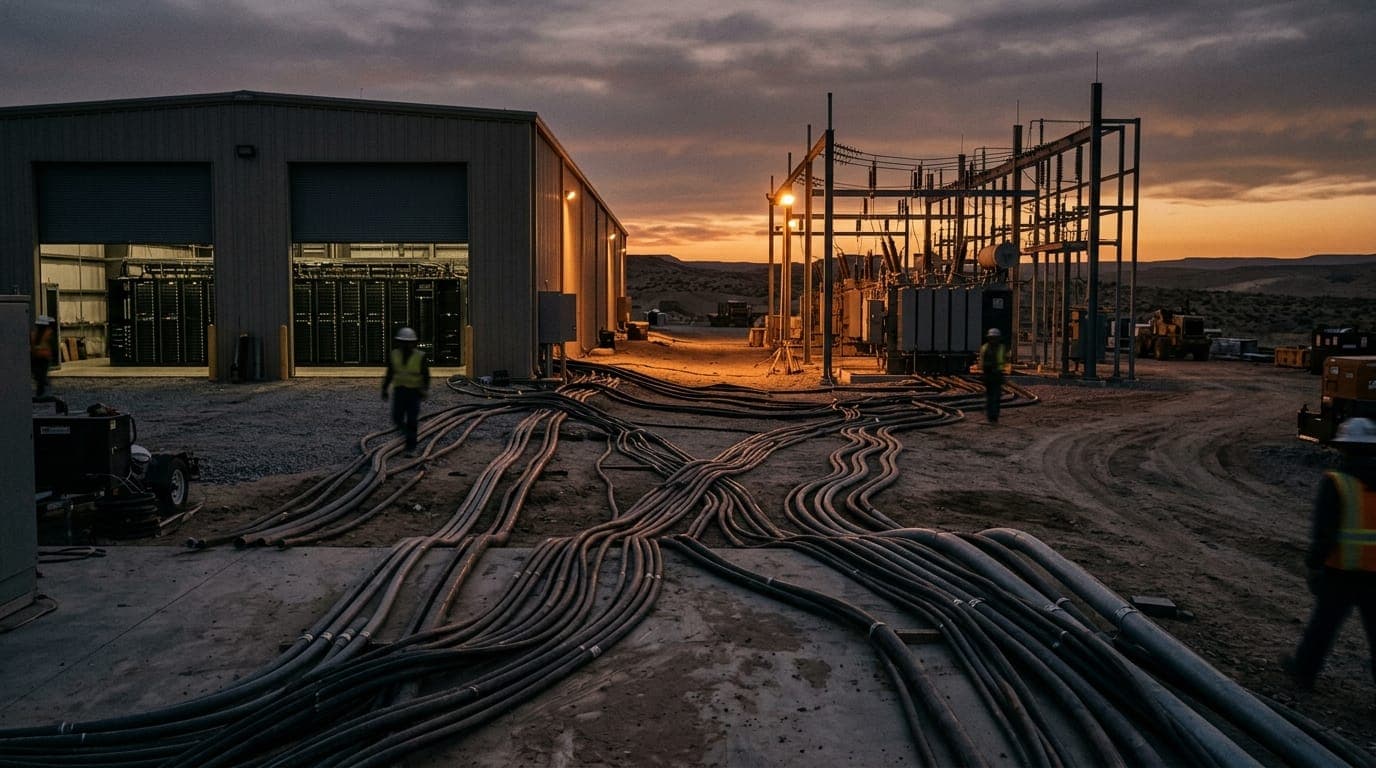
The more consequential argument in the interview concerns Bitcoin miners. Sigel describes miners holding 10-to-20-year electricity lease agreements with investment-grade counterparties as possessing "underappreciated optionality." The reason: the rapid AI buildout has made contracted, dispatchable power the scarcest input in the data-center economy.
VanEck's own research, published in its mid-May 2026 Bitcoin ChainCheck, found that gross valuation per megawatt of AI capacity grew roughly 3x since summer 2025. That repricing is the engine behind Sigel's miner thesis.
The implication for investors is not subtle. If a miner's 10-to-20-year power lease is being valued by AI capex cycles rather than BTC spot price, that miner is no longer purely a leveraged Bitcoin trade. It's an energy infrastructure trade. The correlation to BTC spot weakens; the correlation to hyperscaler data-center demand strengthens. That changes the risk profile of miner equity exposure in a Bitcoin portfolio. Less BTC beta, more energy and data-center beta. AI capex fragility and power constraints are real variables in that equation, not background noise.
Sigel's characterization of those leases as investment-grade is his claim, attributed to the interview. Independent verification of specific miner contracts and counterparties is not publicly available.
The Macro Bear Case Sigel Buries
Sigel flagged that high Treasury yields could "break something" and that a hard AI capex landing is the macro tail risk. His read on what happens next is the interesting part: if AI capex gets hit, capital could counterintuitively flow back into Bitcoin.
That's the fiscal dominance argument in different clothes. The thing that should hurt Bitcoin, a risk-off selloff in AI equities triggered by yield pressure, accelerates Bitcoin's monetary role precisely because it signals the fiat system straining under its own debt load. Nuclear power and alternative energy sources remain adjacent pressure valves, but the monetary bid for Bitcoin doesn't require AI to keep running hot.
The falsifiable thesis is clear: if AI hyperscaler demand for contracted power plateaus or reverses, or if overbuilding of power generation erases scarcity, the miner optionality story collapses. The $500k target doesn't disappear, but it loses its structural underpinning and falls back on the monetary thesis alone. Watch data-center buildout spending and power procurement contracts from hyperscalers as the leading indicators.
What to Watch
VanEck holds roughly 2% in digital-asset strategies and roughly 13% in gold and gold miners, per the interview. That allocation delta is the tell: gold still dominates their book, which means the Bitcoin-to-gold convergence trade Sigel is describing has room to run inside their own portfolio before it saturates institutional positioning broadly. The BTC-to-gold ratio and AI power procurement trends are the two metrics worth tracking against this thesis.
Sources
Frequently Asked Questions
What is VanEck's $500,000 Bitcoin price target based on?
Sigel's target is a market-cap sizing exercise, not a cycle-high forecast. If Bitcoin captures half of gold's total market capitalization, the implied price per BTC lands around $500,000. It's the framing VanEck uses when pitching institutional allocators on the addressable market size. Sigel describes it as achievable this cycle or the next.
Why do Bitcoin miners' power contracts matter for the AI economy?
The scarcest input for AI data-center buildout is contracted, dispatchable electricity. Bitcoin miners holding 10-to-20-year leases with investment-grade counterparties control exactly that. As hyperscalers compete for power, those contracts carry value independent of BTC spot price. VanEck's own research found gross valuation per megawatt of AI capacity grew roughly 3x since summer 2025.
What would stop Bitcoin from reaching $500,000?
A hard landing in AI capex that collapses demand for contracted power would undermine the miner optionality thesis. A sustained yield shock that breaks risk assets broadly is the second lever. If dispatchable power becomes abundant and cheap through overbuilding, the scarcity premium on miner leases evaporates. The monetary thesis for Bitcoin survives any of those scenarios, but the structural re-rating Sigel describes does not.