UAE Freezes Iran Trade as Hormuz Crisis Sends Yields to 19-Year High
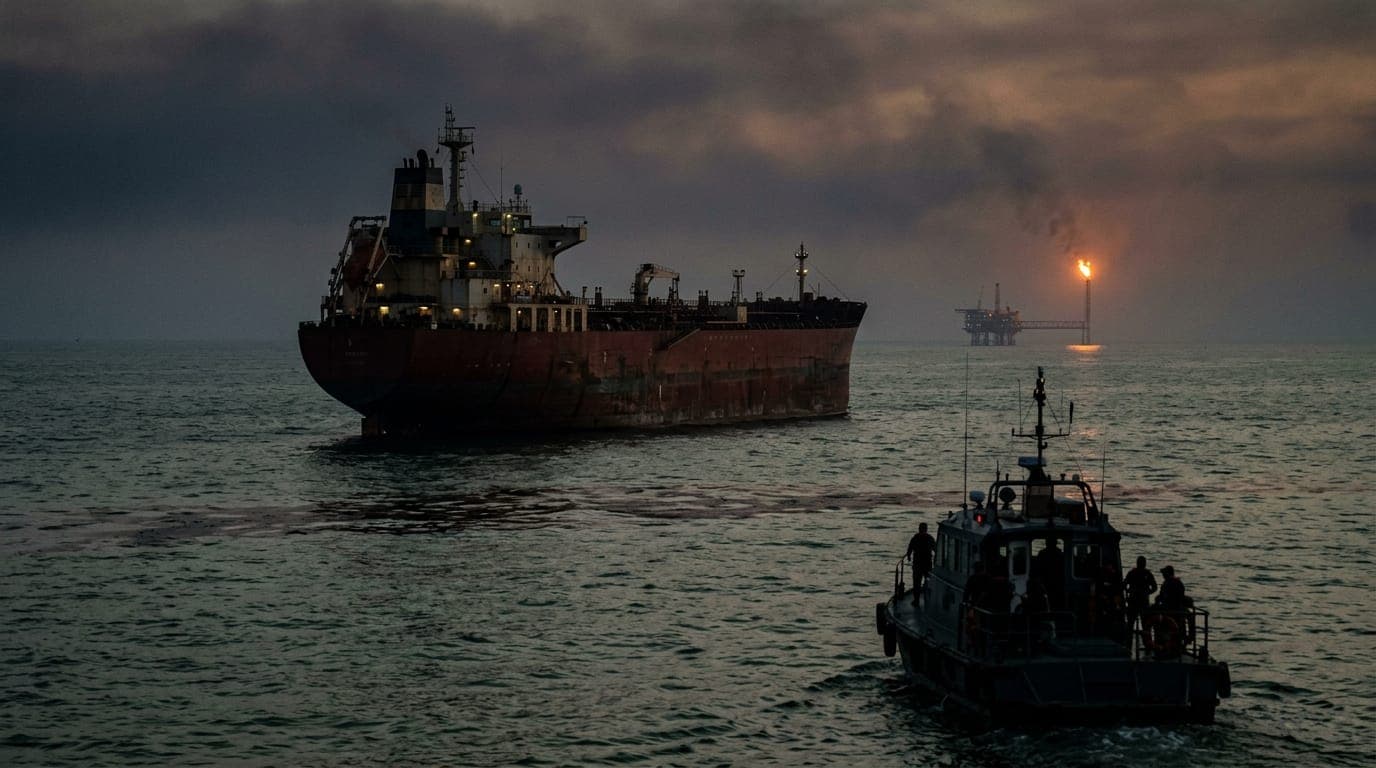
Abu Dhabi suspended all trade and financial transactions with Iran on Aug. 19 after detecting two ballistic missiles over Gulf waters. The 30-year Treasury yield touched 5.32%, semiconductor stocks dropped 5%, and the Hormuz chokepoint kept roughly 25% of global seaborne oil supply under pressure.
The Gulf escalation that markets were hoping would stay contained just got a diplomatic confirmation: Abu Dhabi has cut Tehran off, and the bond market noticed first.
Key takeaways
- The UAE suspended all trade, commercial exchanges, and financial transactions with Iran on Aug. 19, 2026, citing "regional escalations that undermine regional and international peace and security," hours after its air defenses detected two Iranian ballistic missiles targeting maritime navigation in the Gulf.
- The 30-year U.S. Treasury yield touched 5.32% on Aug. 18, its highest level since 2007, as sticky energy inflation and relentless deficit spending forced the long end to reprice in real time.
- The PHLX Semiconductor Index fell roughly 5% in a single session, with memory and chip names dropping 7%-9%, as higher long-dated yields forced investors to mark down the crowded AI trade.
The UAE Ministry of Foreign Affairs announced on Aug. 19, 2026, that all trade, commercial exchanges, and financial transactions with Iran had been suspended "until further notice," per the official MoFA statement. Afra Al Hameli, Director of Strategic Communications, attributed the move to "regional escalations that undermine regional and international peace and security." The announcement followed the UAE Ministry of Defense reporting that two ballistic missiles launched from Iran on Aug. 18 targeted maritime navigation and fell into the sea, one within and one outside UAE territorial waters (@modgovae, Aug. 18, 2026). Iran's Foreign Ministry denied the launches entirely, via Xinhua.
The Bond Market Is Doing the Math Washington Won't
The 30-year Treasury yield touched 5.32% on Aug. 18, its highest reading since 2007, per CNBC's market coverage. The 10-year traded around 4.74%. Shorter-term yields, which track Fed expectations, barely moved.
That gap is the signal. The Fed controls the short end. It controls nothing on the long end when oil keeps energy-inflation elevated, the federal deficit keeps the supply of new Treasury issuance relentless, and the market has already absorbed too much. Japan's 10-year bond yield hit its highest level in three decades on the same day. Germany's 30-year hit its highest since 2011. France's 30-year hit its highest since 2008.
This is not a U.S.-specific data point; it is a global repricing of sovereign credit risk under structural fiscal deterioration. The Fed's pause changed nothing at the long end. The 30-year yield keeps making new cycle highs anyway.
The fiat doom loop runs like this: energy shocks feed inflation, inflation prevents monetary relief, the debt load grows regardless, and bond investors demand more yield to absorb the supply. No rate cut fixes that sequence. Bitcoin is the only asset in the stack where no counterparty can issue more to paper over the gap.
Semiconductor Stocks Take the Yield Hit Directly
The PHLX Semiconductor Index fell roughly 5% on Aug. 18. Western Digital dropped 7%, Sandisk fell 9%, Marvell Technology shed approximately 8%, and Seagate fell more than 9%, per CNBC. The S&P 500 closed at 7,691.76, down 0.69%, its third consecutive losing session.
The Nasdaq Composite fell 1.33% to 26,289.71. The Dow shed 0.22% to 53,343.40.
The AI capex trade has been the most crowded position in equities for most of 2026. Long-duration yield spikes do what they always do to long-duration cash-flow stories: they force the math. If Hormuz keeps oil elevated and oil keeps inflation elevated and inflation keeps the Fed pinned, the infrastructure buildout that AI requires, which runs on cheap power and cheap credit, faces a genuine squeeze from both directions simultaneously. The AI generational trade thesis gets stress-tested every time a yield curve move this size happens in a single session.
The UAE Cut Is Financial Warfare in Plain Sight
Abu Dhabi's suspension of Iran trade is not a symbolic diplomatic protest. The UAE has historically served as one of Iran's most significant informal trade partners and a key conduit for hard currency and re-export access to the global financial system, even under existing sanctions. Cutting that channel removes a meaningful hard-currency and import lifeline.
Every government watching from Beijing, Moscow, Delhi, and Ankara gets one more data point: proximity to the dollar-denominated financial system means proximity to a political trigger that can be pulled with a press release. The OFAC sanctions on Iran's Hormuz insurance operations earlier in this crisis already demonstrated the reach of dollar-system weaponization. The UAE freeze extends that logic to a physical trade hub.
The Strait of Hormuz carries roughly 25% of the world's seaborne oil trade and approximately 19%-20% of global LNG, per Congressional Research Service data. Tanker traffic has plunged roughly 90% since the crisis began in late February. The IEA cut its 2026 global oil demand forecast by 1.6 million barrels per day in its August 12 report, citing the disruption. Natural gas exports through Hormuz dropped 95% from pre-crisis levels, per UN News and ITC data.
What to Watch
The falsifiable case here is straightforward: a durable U.S.-Iran agreement that reopens the Strait, normalizes tanker traffic within 30 days, and pulls the 30-year yield back below 5% would mean this escalation was a geopolitical blip rather than a regime signal. The UAE-Iran freeze complicates that path considerably. The 60-day U.S.-Iran shipping memorandum of understanding expired on Aug. 17 without a durable deal in place. Until a credible diplomatic off-ramp materializes, energy inflation stays sticky, the long end stays under pressure, and every asset that depends on cheap credit and stable supply chains stays exposed.
Sources
- UAE Ministry of Foreign Affairs official statement, Aug. 19, 2026
- UN News / ITC Hormuz trade impact analysis, Aug. 4, 2026
- Congressional Research Service, Strait of Hormuz report
- CNBC, U.S. markets coverage, Aug. 18, 2026
- Reuters / Investing.com, SOX and market data, Aug. 18, 2026
- IEA oil demand forecast cut, via CNBC, Aug. 12, 2026
Frequently Asked Questions
Why does a Middle East conflict push U.S. Treasury yields higher?
The causal chain runs through inflation. Oil supply disruptions raise energy costs, which keep consumer prices elevated, which keeps the Federal Reserve from cutting rates. With rates staying high and the federal government running large deficits, Treasury must keep issuing long-dated debt into a market already holding substantial supply.
Investors demand higher yields to absorb that supply, especially when inflation erodes the real return on fixed-income holdings. The result is a self-reinforcing dynamic: geopolitical shock, energy inflation, fiscal pressure, and yield rise feed each other.
What does the UAE trade freeze actually mean for Iran's economy?
The UAE has functioned as one of Iran's most important informal economic lifelines, providing access to hard currency, imported goods, and global trade networks that formal sanctions were meant to block. Suspending that channel denies Tehran a significant re-export corridor and complicates its ability to convert oil revenues into usable foreign exchange. The practical effect amplifies existing sanctions pressure at a moment when Iran is already under military and diplomatic stress from the broader Hormuz crisis.
Does Bitcoin actually benefit from geopolitical crises like this one?
Not necessarily in the short run. Bitcoin has sold off alongside risk assets during acute Hormuz escalations this year. The structural argument concerns the long-term repricing of sovereign risk and monetary reliability. When states weaponize financial systems against each other, when bond markets force long-end yields to 19-year highs because fiscal arithmetic is broken, and when shipping chokepoints expose how fragile dollar-denominated energy supply chains are, the case for a neutral, permissionless, fixed-supply asset as long-term insurance strengthens. The thesis is asymmetric optionality over years, not a hedge that triggers in a single session.