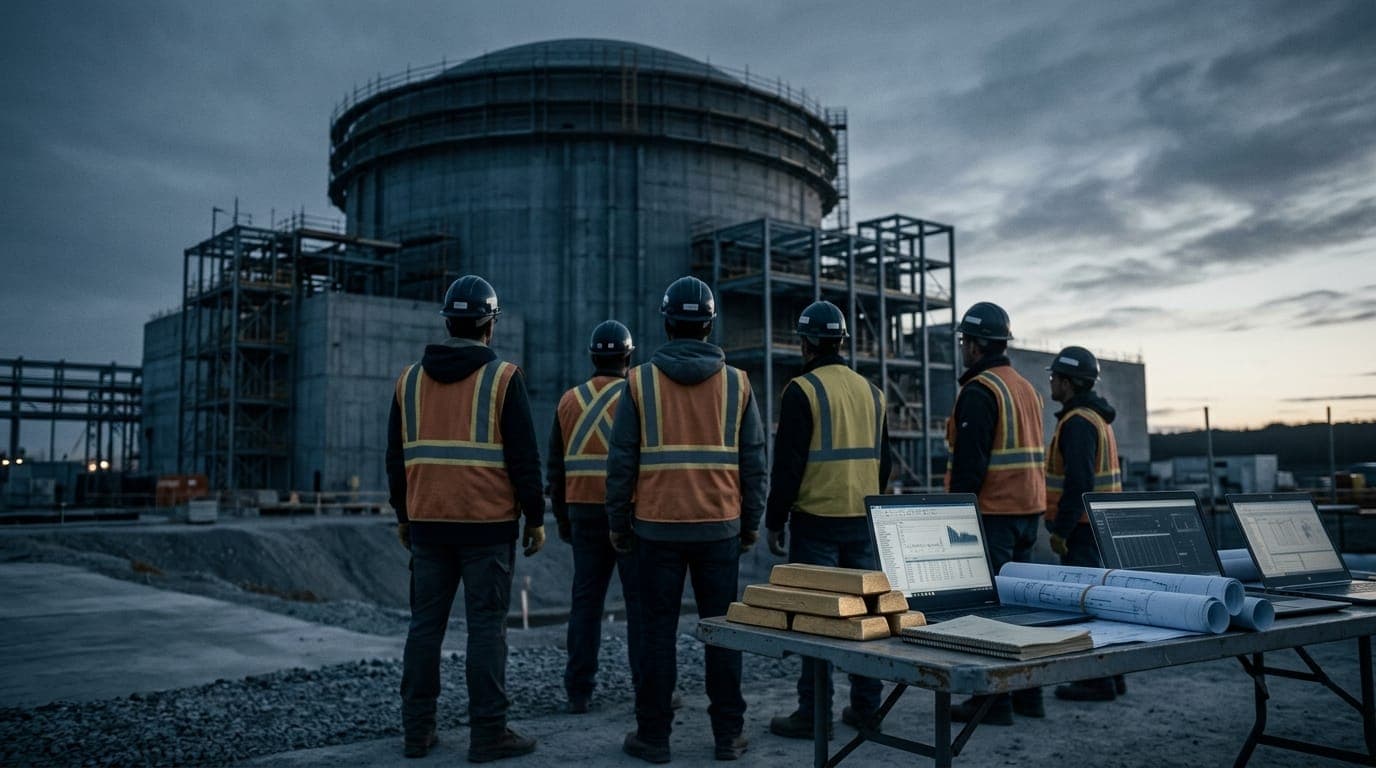
TeraWulf Signs $19B Anthropic Lease, Reordering Grid Competition
TeraWulf signed a 20-year, ~$19 billion lease with Anthropic for its 401 MW Justified Data campus in Hawesville, Kentucky. The implied ~$950M/year contracted rate sets a new benchmark for what AI tenants will pay for dedicated power infrastructure, and it comes directly at the expense of Bitcoin
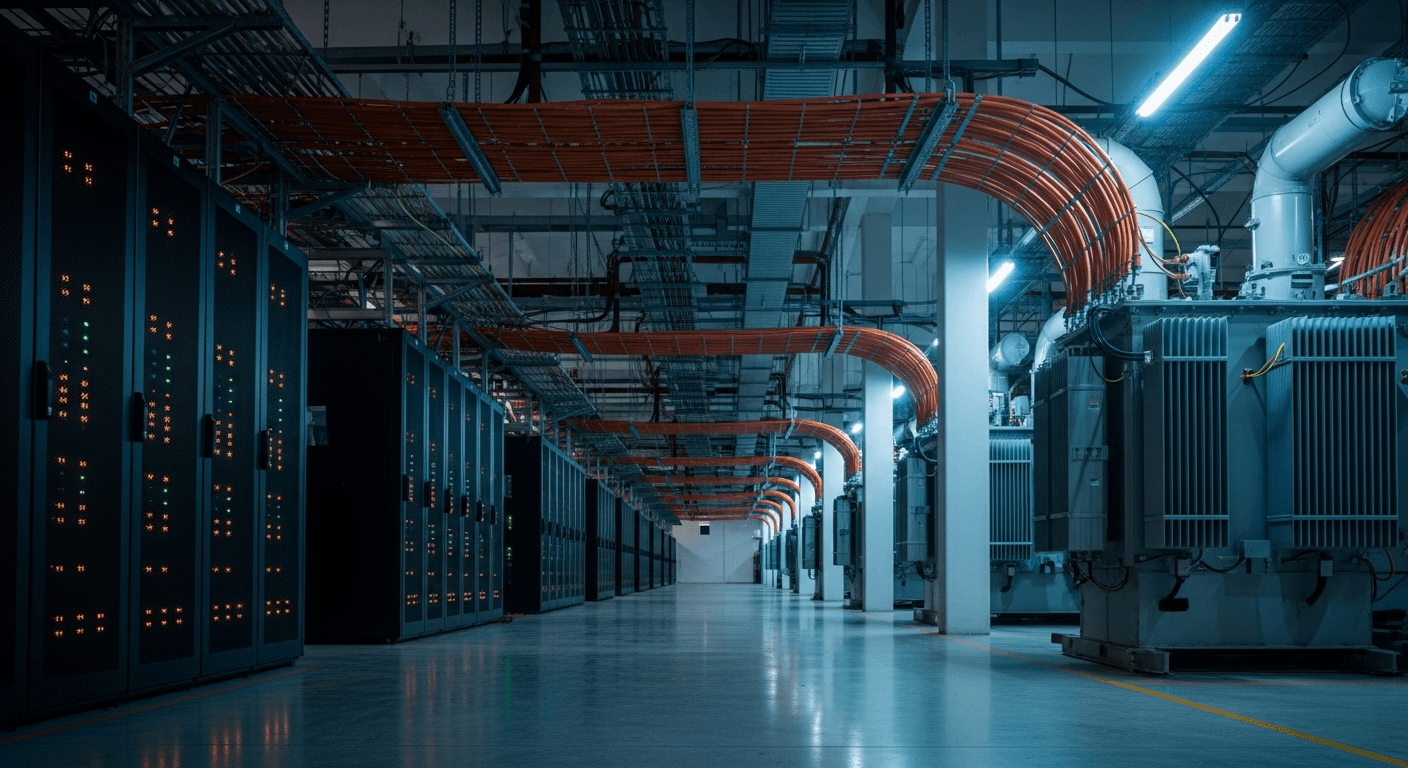
A former Bitcoin miner just handed 401 MW of Kentucky grid capacity to an AI hyperscaler for 20 years. The energy competition is no longer theoretical.
Key takeaways
- TeraWulf (Nasdaq: WULF) executed a 20-year lease with Anthropic for its 401 MW Justified Data campus in Hawesville, Kentucky, with expected contracted revenue of approximately $19 billion (a forward-looking projection), per a SEC Form 8-K filed July 6, 2026.
- The implied rate of roughly $950 million per year for 401 MW sets a hard benchmark for what AI hyperscalers will pay for dedicated infrastructure, directly repricing the grid inputs Bitcoin miners compete for.
- TeraWulf simultaneously sold its 50.1% stake in the 168 MW Abernathy Joint Venture to Fluidstack for approximately $530 million on roughly $450 million invested, demonstrating a new premium exit path that will pull more capital toward AI infrastructure and away from hashrate.
TeraWulf Inc. announced on July 6, 2026 that its subsidiary Raylan Data LLC signed a 20-year lease agreement with Anthropic PBC for the full 401 MW "Justified Data" campus in Hawesville, Kentucky, with expected contracted revenue of approximately $19 billion over the initial term, per the company's SEC Form 8-K. Anthropic holds two successive five-year renewal options, extending the potential relationship to 30 years. WULF shares rose sharply premarket on the news.
Delivery is phased: first capacity comes online in late 2027, with full 401 MW operational by early 2028. The lease obligations are expected to be supported by an investment-grade credit, per the 8-K, though the specific guarantor entity has not been publicly named.
"The Anthropic lease validates our strategy and establishes a long-duration revenue stream with one of the world's leading AI companies," said Paul Prager, Chairman and Chief Executive Officer of TeraWulf, in the company's press release.
The Energy Math Bitcoin Miners Cannot Ignore
The $19 billion figure is characterized as expected revenue in the 8-K, so treat it as a forward-looking projection. But even as a projection, the implied economics are significant: $19 billion over 20 years is roughly $950 million per year for 401 MW of critical IT load. That works out to approximately $2.37 million per MW per year. At full utilization, the implied rate approaches $271 per MWh, a premium colocation figure consistent with GPU-dense HPC workloads but well above what Bitcoin miners have historically paid for the same underlying grid access.
TeraWulf started as a Bitcoin mining company. It still operates a Digital Asset Mining segment. The Justified Data campus is now committed to Anthropic's compute, not SHA-256. That capital allocation decision reflects something straightforward: $19 billion in contracted AI revenue over 20 years competes with probabilistic block-reward economics in a way that requires no sophisticated modeling to understand.
The region matters. Kentucky's historically cheap, coal-backed baseload power made it attractive to miners for the same reasons it now attracts hyperscaler infrastructure deals. Every megawatt committed to Anthropic is a megawatt that cannot be allocated to mining. Grid capacity in regions like Kentucky is under mounting pressure as AI infrastructure build-outs accelerate. TeraWulf just locked in the other side of that stress for two decades.
The thesis here is falsifiable. If Anthropic's inference demand plateaus before the 2027 delivery date, or if Justified Data draws on dedicated new generation rather than pulling from existing grid capacity shared with miners, the competitive displacement pressure eases. If Bitcoin mining hardware efficiency improves fast enough that miners can outbid AI tenants on a per-MW basis, the economics shift back. Watch those variables.
The Abernathy Sale and What It Signals for Capital Flows
Simultaneously, TeraWulf announced the sale of its 50.1% stake in the Abernathy Joint Venture, a 168 MW campus in Abernathy, Texas, to an investor group led by Fluidstack CS I Inc. for approximately $530 million. TeraWulf had invested roughly $450 million in Abernathy. The payment structure runs in three tranches: $250 million within 14 days of signing, $150 million by December 31, 2026, and approximately $130 million by a subsequent date, per the 8-K.
An $80 million premium over invested capital on a Bitcoin mining-originated asset sold to an AI infrastructure operator is a template. It will be replicated. The miner-to-AI pivot is no longer just a theoretical capital allocation question; it's a demonstrated exit path with real return figures attached. Other mining-adjacent operators sitting on cheap power agreements and existing substation infrastructure are reading this deal today.
That exit path concentrates infrastructure capital around AI build-outs and away from hashrate. It's a marginal headwind for mining network decentralization, not a catastrophic one, but it is directional. The pattern is consistent across the sector.
What to Watch
The first delivery milestone in late 2027 is the operational confirmation point. Between now and then, watch whether Anthropic issues its own public statement (none existed as of the filing), whether the credit backstop entity gets named publicly, and whether competing AI tenants begin moving on other mining-adjacent power sites in the Ohio Valley and Appalachian corridors. The AI capex driving these commitments has shown no sign of decelerating. If anything, 20-year lease terms suggest hyperscalers are betting it won't.
Update, August 6, 2026
The financing architecture sitting behind the TeraWulf/Anthropic deal just came into sharper focus. Blackstone has been sounding out investors on a potential second major debt financing tied to Anthropic's consumption of Google chips, with one initial proposal set at $36 billion -- which would surpass the $35 billion deal Apollo and Blackstone completed roughly two months ago.
Together, the two deals would represent approximately $71 billion in private chip financing for a single company, a total that has no precedent in private credit history.
The structural plumbing matters. The first deal was structured around a special-purpose vehicle that acquires Google's custom tensor processing units and leases them back to Anthropic, keeping the associated debt off Anthropic's own balance sheet.
A key feature is Broadcom providing a "residual value support" agreement, meaning that if Anthropic fails to make lease payments for a certain period, the SPV will sell the chips to repay debt investors. The debt is not Anthropic's on paper, but the lease obligations are real, and the structure keeps that debt off Anthropic's balance sheet while chips purchased through the SPV still must be delivered, installed, networked, and integrated before they serve a single request -- a deployment timeline measured in months, not days.
This is the financing layer underneath the Hawesville lease. Anthropic is simultaneously committing to 401 MW of Kentucky grid capacity via TeraWulf and stacking tens of billions in chip-lease debt through SPVs to fill that facility with compute. The new financing proposal arrives as Anthropic has filed confidentially for an initial public offering in the United States. Anyone pricing WULF's $19 billion revenue projection should understand that Anthropic's ability to honor 20 years of lease payments is backstopped by a credit structure that, by design, obscures the full scope of its compute obligations from any future public balance sheet.
Sources
Frequently Asked Questions
What is TeraWulf and why does its Bitcoin mining history matter here?
TeraWulf was founded as a Bitcoin mining company and built its early infrastructure on access to cheap baseload power, the same input AI hyperscalers now need at scale. It still operates a Digital Asset Mining segment but has pivoted its flagship campus to HPC and AI colocation. The mining origin is relevant because it illustrates the direct competition: the same power sites, permitting corridors, and grid interconnections that miners relied on are now the target of long-term AI infrastructure leases.
How does a $19 billion AI data center lease affect Bitcoin mining economics?
The deal sets a price signal. At roughly $950 million per year for 401 MW, it shows what AI tenants will pay for purpose-built dedicated infrastructure. That benchmark filters into energy markets, land acquisition costs, and substation permitting timelines in regions where miners and hyperscalers compete for the same capacity. It doesn't immediately raise mining costs, but it establishes the competing bid that new mining operations must clear when they go looking for grid access in the same corridors.
When will Anthropic's Kentucky data center be operational?
Per TeraWulf's SEC filing, delivery is phased. The first capacity comes online in the second half of 2027, with the full 401 MW of critical IT load at the Justified Data campus in Hawesville, Kentucky reaching operational status by early 2028.