Susan Kokinda: The Economic Revolution Is Already Here
Susan Kokinda returns to lay out the case: the economic revolution is real, it's in the BLS data, and Republicans are catastrophically under-messaging it heading into midterms. Plus Iran, China, Canada's MAiD program, and the Augustine quote that's been sitting with me.

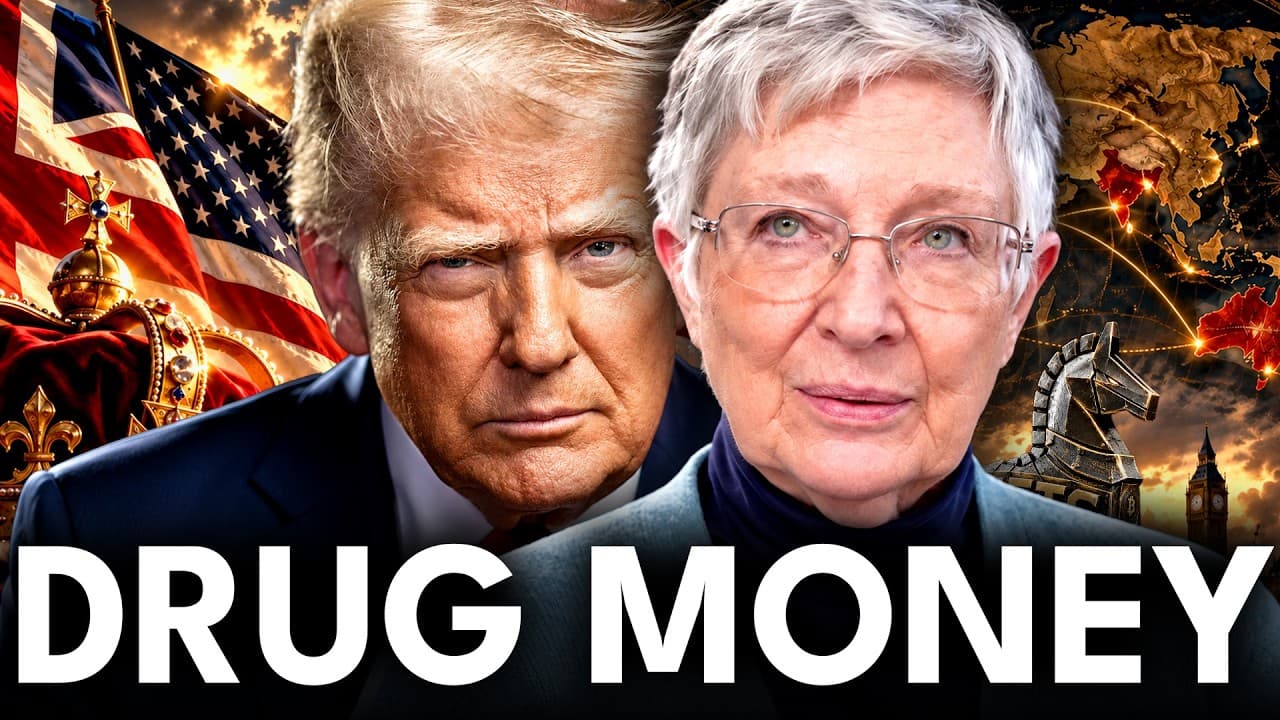
↓ Jump to the video and timestamps
Susan Kokinda came back on the show about ten months after her first appearance, and she opened by making the case I think most people around me aren't making loudly enough: the reindustrialization of the United States is not a talking point, it's in the data, and the Republicans are squandering it with weak messaging heading into the most consequential midterms of my lifetime.
Last time Susan was here, she called it. She said the tangible effects of the tariff regime and the broader economic restructuring would start showing up in Q2 and Q3. She was right. Manufacturing employment has been growing steadily since December. Childhood poverty and Hispanic poverty, per Susan citing BLS figures, are at all-time recorded lows.
Steel, shipbuilding, aerospace, these aren't ribbon-cutting photo ops, they're permanent jobs that change what it means to raise a family in this country. And yet heading into November, too many people are reacting to the price of diesel instead of seeing what's actually being built underneath them.
Susan's analytical frame, which she's been developing at Promethean Action, is that every single global flashpoint right now, from France to Canada to Iran to China, is turbulence from one cause: the first serious attempt in 125 years to dismantle the architecture of British imperial policy. That's a big frame. I think she's right.
Key takeaways
- The reindustrialization is real and measurable. Manufacturing employment has been growing since December, poverty metrics are at recorded lows, and the job creation is only plateauing temporarily around the Iran conflict before resuming upward, but Republicans have catastrophically under-messaged it.
- Every global flashpoint is the same story. France, Canada, Iran, Russia-Ukraine, China, Susan's read is that all of it is predictable turbulence from a single cause: dismantling 125 years of British imperial policy architecture for the first time.
- Iran is an economic strangulation play, not just a Middle East conflict. The kinetic and blockade phases are over. Operation Economic Outcast, targeting the sectors of the Iranian economy that the IRGC directly ran, is what Susan calls the killer blow. The IRGC is hanging on hoping Democrats win the midterms.
- The mainstream US-China frame is the wrong frame. Susan's argument is that the "permanent enemy" construct is a British Great Game artifact designed to keep superpowers at each other's throats. Trump and Xi are doing something different: nation-to-nation, mutual sovereignty, each fighting for their own country's interests rather than playing pieces on an imperial chessboard.
- Europe and Canada are extractive colonial economies with almost no arrows left in the quiver. Their leaders, Carney especially, are deliberately trying to damage Trump politically because their economies can't compete on the merits. That desperation is real and shouldn't be underestimated.
- The midterm choice is between a productive-republic identity and managed decline. Bessent's framing says it plainly: the Democratic strategy is to make you a loser and then compensate you. Augustine had the answer to the alternative: "We are the times. Let us live well and times shall be good."
The Economic Revolution That's Actually Happening
The headline jobs number everyone should be talking about is this: manufacturing employment started climbing in December and has been going up since, with only a brief plateau when the Iran conflict intensified, before resuming upward again. That's the BLS series.
Susan also pointed to childhood poverty and Hispanic poverty sitting at all-time recorded lows. A new steel mill in Iowa is bringing 6,000 construction jobs and 1,700 permanent positions. Vance was in Texas talking about a shipbuilding facility that will employ 10,000 people.
Stellantis, Bayer, and aerospace in Ohio. These aren't announcements, they're done deals happening right now.
The problem, and I've been saying this too, is the messaging. Trump actually said it himself: Republicans have done a bad job communicating that this revolution is underway. I agree with him.
If you look at PMI and labor wage growth, it's up and to the right, slower than people want, less widespread than it needs to be, but the trajectory is there. And with 30 days left before midterms, squandering that narrative is the biggest unforced error the GOP has made.
The pain at the pump is real. But Susan's argument is that it's being deployed deliberately. The barrels of crude are getting back to pre-war flow levels. The refinery capacity problem is the hangover from a decade of the Democrats' war on domestic energy infrastructure.
Zelensky bombing Russian refineries has hit diesel. These aren't acts of God, they're policy consequences. And the people hoping voters won't see past those short-term prices to the durable restructuring happening underneath are betting against the American public's ability to think forward.
JD Vance put it well when he was in Texas. He said those 10,000 jobs mean 10,000 boys and girls who are going to look at their parents and see them living a productive life. That's the message that cuts through.
125 Years of British Imperial Policy, and Why Trump Is the Disruption
Susan dates the marker to 1901. McKinley's assassination. The last American system president. From that point forward, her argument is that the United States was progressively captured by British imperial policy, through institutions like the Round Table and Chatham House that emerged post-WWI, through the deliberate erasure of the independent American economic tradition from policy debate and public consciousness, and through a foreign policy framework that turned the US into what she calls the "dumb giant" enforcing someone else's imperial interests.
The American system she's describing is the Hamilton-Lincoln tradition: production rules, not money. Sovereign credit deployed toward national development. Infrastructure, manufacturing, industry, the things that actually raise a population's living standard. The British system inverts that: money rules, extraction is the model, and the population gets looted while the financial elite skims off the top.
Her read is that Trump's second term is the first serious attempt to reverse that in 125 years, and that the turbulence we're seeing globally is what it looks like when you pull out the load-bearing walls of a 125-year structure all at once.
One of the details she mentioned that I thought was striking: the nationalist election wins cascading across South America since USAID was dismantled. Bolsonaro leading in Brazil heading toward a runoff, nationalist governments gaining ground throughout the region. Susan's colleague Barbara Boyd made the point that this isn't coincidental, when you remove the machinery that goes in and intervenes on behalf of the globalist system, the actual preferences of sovereign populations start expressing themselves.
Sun Yat-sen's connection to all this, per Susan's framing, is worth understanding. His three principles of the people were rooted in Lincoln's "by, for, and of the people", the Gettysburg Address as the foundation of modern China's founding political philosophy. That's a tradition that predates the CCP by decades and doesn't just disappear. She attributes this lineage to her read of the history, but I find it a useful corrective to the flat "China bad, permanent enemy" frame that dominates both Fox and MSNBC.
Iran, Oil, and the Economic Strangulation Endgame
The phase model Susan laid out is the clearest framework I've heard for what's actually happening with Iran. Three phases: kinetic, then blockade, now economic strangulation. Operation Economic Outcast, that's the current phase, and Susan's argument is it's the killer blow.
The IRGC wasn't just a military force. It ran, by Susan's account, roughly 60% of the Iranian economy directly. That's the precise target set that Bessent and Treasury are going after. Strangling those sectors, in her read, is something the regime simply cannot survive.
I've been covering this on my Monday show with John Arnold, and the Iran-China-oil nexus is the piece I keep coming back to. Iran is a pressure point in the China negotiation, specifically around oil flows and getting Beijing to the table. The crude flows are getting back toward pre-war levels on some metrics, but the refined products situation is still constrained, and that's the refinery capacity problem, not an Iran problem.
The IRGC letter to the American people that came out recently tells you everything. Susan actually read it, unlike most people who just saw the headline. Her takeaway: it completely rewrites the history of the US-Iran relationship. It blames the US for the Mosaddegh overthrow while never once mentioning Britain, never mentions that Mosaddegh had nationalized the Anglo-Iranian Oil Company, which was British Petroleum, and that this was British policy with the Dulles brothers brought along for the ride.
A 25-page document about the entire postwar relationship with the United States that doesn't mention Britain once. Susan's question was whether someone in Tehran wrote it or someone at Chatham House did. I thought that was the right question to ask.
Trump has said repeatedly this ends after the midterms. Not because he has some 30-day military strategy, but because he knows the IRGC is hanging on hoping the Democrats win.
That letter was the tell. "You have the chance to change things." They're banking on the political calendar. Whether Bessent's economic operation finishes them before November is the real question.
The China Misconception, Nation-to-Nation vs. the Great Game
The mainstream frame on US-China is that it's an existential race, to AGI, to superintelligence, to whatever the superpower prize of the decade is. One wins, one loses, civilization bends accordingly. I've heard that frame more times than I can count in the last few months since the AGI press conference.
Susan's pushback is that this entire frame is a British Great Game construct. The point of the Great Game isn't that there are permanent enemies, it's that there are permanent enemies manufactured by the people sitting on top who need the superpowers at each other's throats to maintain control. Keeping the US and China locked in existential conflict is good for the imperial financial elite regardless of which side nominally "wins."
Her historical corrective: China's relationship with the United States isn't naturally adversarial. Sun Yat-sen was a follower of the American system, deeply influenced by Lincoln. China was one of the great victims of British imperial policy, the Opium Wars are living history there in a way they aren't here. The CCP is, in her framing, a relatively recent overlay on a much older tradition.
The Trump-Xi dynamic, in her read, is something different: two leaders saying they'll do what's right for their own country and working from there, rather than playing pieces on someone else's board. She draws the Russia parallel: people are still carrying over the "Russia bad" frame from the Soviet era onto a country that grew out of communism, is no longer communist, and by some measures is more overtly Christian than the US right now. Her point isn't to be naive about the CCP. Her point is that the permanent-enemy frame has a hidden author, and we should ask who benefits from it.
Europe and Canada, Empires That Ate Their Own Populations
The desperation in Europe and Canada right now is real. Susan's framing is that imperial economic systems, extraction, financialization, parasitism, eventually run out of places to loot and turn on their own populations. That's where Europe and Canada are.
Canada is the clearest case. Carney walking out of trade negotiations made no economic sense. It only made sense if his mandate is to damage Trump politically heading into midterms. His industry minister, Mélanie Joly, apparently came right out and said it: they're targeting tariffs politically against specific US states.
Susan described this directly from what she heard Joly say publicly. The result? One of their big Ontario steel plants announced layoffs of 500 to 900 workers. For all the "Canada Strong" posturing, the economy underneath it is a raw-materials extraction operation that ships everything out and leaves the population hollowed out.
France is blowing up for related reasons. The spread between French OATs and German Bunds has been widening to levels that are alarming for anyone tracking European sovereign credit. Student riots in France, AfD now the leading party in parts of Germany, Marine Le Pen's party on a trajectory to win the next French elections despite the judicial moves against her.
These aren't isolated protest cycles. They're populations that have been looted by the globalist policy framework and are starting to demand something different.
The Canada MAiD conversation is where this gets darkest. Susan noted that roughly 1 in 20 Canadian deaths are now assisted suicide, and that some of those are people who are not terminally ill, people whose stated reason is loneliness. The parliament apparently conducted a cost-benefit study on money saved from people who chose assisted suicide.
My own read: the DSA is filled with people who have bloodlust for certain archetypes of Americans, and Canada's MAiD system is a preview of the destination that trajectory leads to, not the endpoint. The managed-decline model, taken to its conclusion, is a government that decides who gets to live and who gets to die. Canada is already there in meaningful ways.
The European desperation also feeds the Russia escalation risk. Susan's point is bleak but worth sitting with: a defense mobilization might be the only thing that can save European economies at this point, which means the people running those economies have a structural incentive toward war with Russia. Putin, in her read, understands this dynamic and understands what Trump is doing, which is the main mitigating factor against escalation. But she's not dismissing the risk.
The Judy Shelton Appointment and the Sound Money Signal
Judy Shelton being appointed to Treasury was a genuine surprise to me. I'll be honest. As a sound money advocate, I was happy to see it. Judy is one of the most serious advocates for a gold standard in serious policy circles, and more than that, she's someone who understands the actual architecture of Bretton Woods, how it was supposed to work, what was lost when it was dismantled, and what a saner international monetary system could look like.
Bessent laid out the vision publicly at the Manhattan Institute in July of 2024, he said he wanted to be part of the global economic reordering. That framing, combined with the Hamilton revival happening inside Treasury right now (Susan posted on X about a new Treasury official being welcomed under a portrait of Alexander Hamilton, the official noting that was "the right way to get sworn in"), tells you something about where the institutional orientation is heading.
In my world, the Clarity Act not passing matters less than it might seem. The executive has given the SEC, the CFTC, and the OCC the go-ahead to rulemake around digital assets, and it looks like stablecoins have a role in the broader monetary reordering that's underway. I'm not going to overstate this, it's early and I'm watching it closely rather than declaring victory, but the direction is clear enough to track.
The deeper question Susan raised is the right one: what does the Hamilton-Lincoln national banking tradition actually look like in the 21st century? You can't just copy-paste it. The world has AI, global capital flows, digital settlement rails.
The principle, sovereign credit deployed toward productive national development, with the government caring about future consequences rather than just today's money, that translates. The specific mechanism has to be figured out. She thinks the people in this administration, Bessent, Vance, Shelton, have probably thought about this more than anyone else currently in the policy conversation. I'm inclined to agree.
The Midterm Stakes, Productive Republic or Managed Decline
Gen Z is the toughest nut here and Susan laid out exactly why. Their grandparents lost their jobs to NAFTA. Their parents lost the house in 2008 and watched JP Morgan get bailed out. They were just getting a foothold when COVID hit.
They have literally never lived in a society that works. Every exit they've been offered has been a trap: college debt they'll carry to their graves, gig work that can't support a family, a housing market that priced them out before they got started.
The alternative Susan is pointing to, skilled trades, manufacturing, the CNC operator path, is real and it's opening up. The idea that you can build a serious economic life without a four-year degree, that the reindustrialization creates pathways that didn't exist five years ago, that's the message that has to reach that generation.
She frames it as a productive identity vs. a perpetual-loser identity. Bessent put the contrast sharply: the Democratic strategy is to make you a loser and then compensate you. Welfare, drugs, gambling apps, keep you pacified. The alternative is telling people they actually have a shot at a productive life, and meaning it because the underlying economic restructuring is real.
The polls I've been seeing I don't trust. I learned that lesson. What I'm watching instead is the ground game, the administration's messaging push, and whether they can get the structural story out past the price of diesel. Susan believes they can win both chambers if they spend every remaining day painting the picture of what this country is becoming rather than just responding to the pain narrative.
The Augustine quote that came up at the end of this conversation has been sitting with me since I saw it over the weekend. "Bad times, hard times, this is what people keep saying. Let us live well and times shall be good. We are the times." The doom algorithm is real. It will consume you if you let it.
But choosing to be productive, choosing to build, choosing to engage, is the political fight. We are the times.
About Susan Kokinda
Susan Kokinda is a writer, analyst, and organizer with Promethean Action, where she publishes work on American System economics, geopolitical strategy, and the historical roots of the current policy battles in the United States. Her analysis draws on the Hamilton-Lincoln economic tradition and applies it to contemporary questions of reindustrialization, monetary order, and national sovereignty. She has been a recurring guest on TFTC, with her prior appearance in December 2025 laying out the policy framework she returned to evaluate in this conversation.
Sources mentioned
- BLS manufacturing employment data (BLS.gov): the series Susan cites for steady manufacturing job growth since December
- Promethean Action: Susan Kokinda's organization and publishing platform
- Promethean Updates (YouTube): Susan's video channel where she covers the IRGC letter and related topics
- Rabobank: The Post-WWII Order Is Gone and Central Banks Can't Fix It (TFTC): the broader sovereign and geopolitical restructuring Susan's frame sits inside
- Trump Is Telling You to Own Bitcoin (TFTC): the monetary reordering angle Marty connects to Shelton and Bessent
- The Oil Is Still Moving (TFTC): the crude flow data behind Marty's read that raw supply is recovering while refined products lag
Watch the conversation
Timestamps
- 0:07 - Intro / Central banks gone nuts
- 0:36 - Welcome back / checking the Q2-Q3 calls
- 2:10 - Reindustrialization data, manufacturing employment, poverty lows, steel and shipbuilding
- 6:47 - Messaging failure and the Republican unforced error
- 9:30 - 125 years of British imperial policy, McKinley to Trump
- 16:00 - China: nation-to-nation vs. the Great Game
- 21:42 - Iran: kinetic to blockade to Operation Economic Outcast
- 29:16 - Europe and Canada, extractive empires eating their own
- 36:00 - Russia escalation risk and European desperation
- 41:08 - Midterm polling, Gen Z disenfranchisement, and the ground game
- 45:19 - The alternative to a Republican midterm win, managed decline and Canada's MAiD
- 50:00 - Hamilton revival in Treasury, Judy Shelton, and stablecoins
- 57:08 - Bessent's "compensate the loser" frame and the closing choice
- 59:56 - Augustine: "We are the times"
Sponsors
- Cash App: For a limited time, new customers can get $21 added to their balance. Just use code TFTC10 when you sign up, and send at least $5 to a friend in the first two weeks. cash.app/app/TFTC
- Square: For up to $200 off eligible Square hardware. square.com/go/tftc
- Bitkey: Use code TFTC10 for 10% off the new Bitkey. bitkey.world
- Aven: aven.com/bitcoin
- CrowdHealth: joincrowdhealth.com/tftc
- Simple Mining: simplemining.io/tftc
- Salt of the Earth: drinksote.com/tftc
Frequently Asked Questions
What is the "American System" of economics that Susan Kokinda says the Trump administration is reviving?
The American System is the Hamilton-Lincoln tradition of economics: productive national development over financial extraction, sovereign credit deployed toward industry and infrastructure, and the principle that a nation's wealth comes from what it produces rather than what it borrows or loots. Susan distinguishes it sharply from the British imperial model, which she characterizes as money-rule rather than production-rule. She argues it was effectively written out of mainstream policy debate after McKinley's assassination in 1901 and is now returning through Bessent, Vance, and the broader Trump economic team.
What is Operation Economic Outcast and what is it targeting in Iran?
Operation Economic Outcast, as Susan describes it, is the third phase of the US approach to Iran, following the kinetic military phase and a blockade phase. It's an economic strangulation campaign targeting the sectors of the Iranian economy that the IRGC directly controlled. Susan characterizes the IRGC as having run a dominant share of the Iranian economy, making those economic sectors the precise target for Treasury's sanctions and financial pressure campaign under Bessent. Her read is that this phase, not the military one, is what the regime cannot survive.
Why does Susan Kokinda argue the US-China conflict is being framed wrong by mainstream media?
Susan's argument is that the "existential enemy" frame for US-China relations is a British Great Game construct, a lens designed to keep major powers permanently at each other's throats for the benefit of a financial elite that sits above both. She points to the Sun Yat-sen tradition in China as evidence of a historical affinity between Chinese and American political economics that predates and runs counter to the CCP framing. Her read of Trump-Xi is that it's a nation-to-nation dynamic where each leader is pursuing his country's genuine interests rather than playing a proxy role in someone else's imperial architecture.
What is Canada's MAiD program and why does Marty see it as a warning sign?
MAiD, Medical Assistance in Dying, is Canada's assisted suicide program. Susan notes that approximately 1 in 20 Canadian deaths are now assisted suicides, and that eligibility has expanded beyond terminal illness in some cases. The Canadian parliament, per Susan's account, has conducted a cost-benefit study on money saved as a result of the program. My view is that this is a preview of the endpoint of the managed-decline trajectory, a government that positions itself as the arbiter of who gets to live and who doesn't, starting with the suffering and expanding from there.
Why is the Judy Shelton Treasury appointment significant for sound money advocates?
Shelton is one of the most serious gold standard advocates in American policy circles. Her appointment signals, at minimum, that the question of what a saner international monetary architecture looks like is at least on the table inside Treasury. Combined with Bessent's "global economic reordering" framing and the broader Hamilton revival happening in the department, it suggests the administration is thinking structurally about monetary order rather than just tactically about the dollar's current position.
What does Susan Kokinda's historical frame say about why nationalist governments are winning across South America?
Susan and her colleague Barbara Boyd draw a direct connection between USAID's dismantlement and the wave of nationalist election wins across South America, including Bolsonaro's position heading into a Brazilian runoff. Their argument is that USAID functioned as an intervention mechanism for the globalist system, funding and organizing opposition to nationalist governments. When that machinery was removed, the actual preferences of sovereign populations started expressing themselves at the ballot box. It's a pattern worth watching.
What is Promethean Action and where can you find Susan Kokinda's work?
Promethean Action is the organization where Susan Kokinda publishes her analysis, focused on American System economics, geopolitics, and the historical context behind current policy battles. Her video content is on the Promethean Updates YouTube channel. If the historical framing in this conversation interests you, that's where to go for the depth, Barbara Boyd's recent work on the origins of communism and its relationship to the American System is particularly relevant to what we discussed here.