Stop Taxing Inflation as a Capital Gain
July CPI remained elevated. The government should stop taxing inflation-created nominal gains as real wealth.


TFTC - Truth for the Commoner Bitcoin Brief | |||||||||||||||||||||
Sup, freaks. The July CPI report is out. Headline inflation remains above 2%. The Fed failed to restore price stability. The tax code should not compound that failure by treating inflation-created nominal gains as real wealth. Let's get into it. | |||||||||||||||||||||
LEAD STORY | |||||||||||||||||||||
Stop Taxing Inflation as a Capital GainThe Bureau of Labor Statistics reported that consumer prices rose 0.1% in July and 3.4% over the last year. Core CPI, excluding food and energy, rose 0.2% for the month and 2.5% over the year. Shelter increased 0.1% and accounted for roughly two-thirds of the monthly headline increase. Energy fell 1.5% in July, which helped hold down the top-line print. The monthly number was mild. The longer record is not. Charlie Bilello's chart labels the period from March 2021 through July 2026 as 65 consecutive calendar months with headline CPI above 2%. One data caveat matters: BLS did not publish an October 2025 CPI observation because of the lapse in appropriations. The official series therefore contains 64 published above-2% observations across that 65-month span.
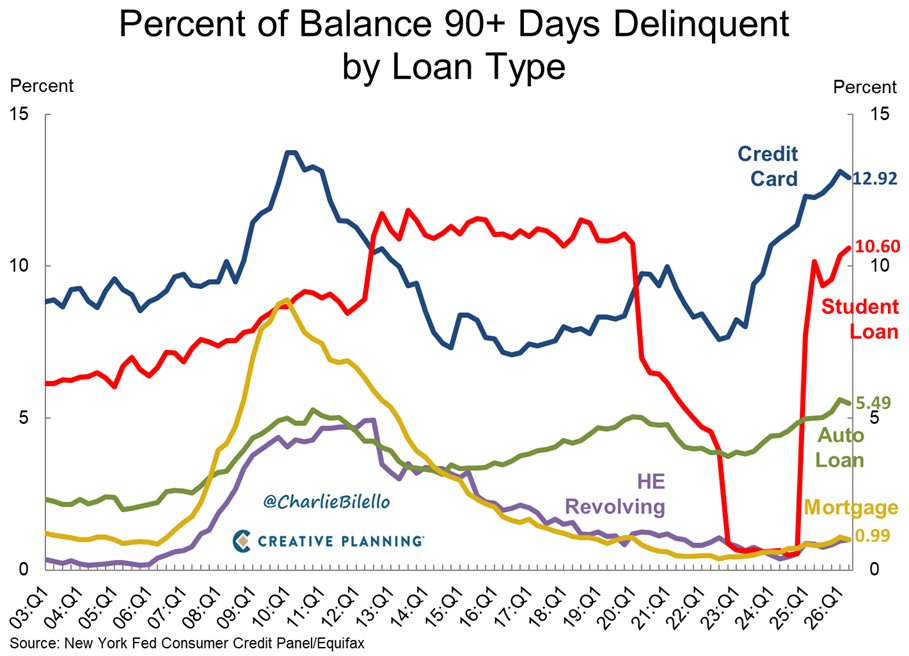
Chart: Charlie Bilello, using YCharts data. The Federal Open Market Committee judges that inflation at the rate of 2% over the longer run, as measured by the annual change in the price index for personal consumption expenditures, is most consistent with its maximum-employment and price-stability mandate. It does not require every monthly CPI reading to land precisely at 2%. That distinction matters for monetary-policy mechanics. It does not rescue the outcome experienced by households. Using the unadjusted CPI-U index, the all-items price level is now approximately 27% higher than it was in February 2021, the month before the period highlighted by Bilello began. A dollar from then buys roughly 21% less against the same CPI basket today. Inflation is a rate of change, but the price-level increase is cumulative. A lower inflation print does not reverse the prior increase. It merely means the loss of purchasing power is continuing at a slower rate. Charlie Bilello highlighted another side of the household squeeze in the New York Fed's Q1 2026 Household Debt and Credit data. 12.92% of credit-card balances were 90 or more days delinquent, near the highest level since 2011. The comparable shares were 10.60% for student-loan balances, the highest since 2020, and 5.49% for auto-loan balances, just off the record high. These are shares of outstanding balances, not shares of borrowers. Mortgage balances were far less stressed at 0.99%. The chart does not establish that inflation alone caused these delinquencies. It does show an uneven household squeeze: a cumulative loss of purchasing power alongside serious stress in consumer credit, while mortgages remain comparatively insulated.
Chart: Charlie Bilello, using New York Fed Consumer Credit Panel/Equifax data. The capital-gains tax debate matters because this cumulative loss is real. I do not believe capital-gains tax should exist. It is a tax on savings, and government has shown repeatedly that it cannot allocate capital effectively. Policy should move away from onerous taxation that punishes people for preserving and building wealth. President Trump is reportedly considering indexing capital gains to inflation. The administration has not released operative text, so the inflation index, eligible assets, acquisition dates, loss treatment and implementation mechanism remain unknown. The idea remains a reported policy discussion, not an enacted rule or formal crypto proposal. The principle is still right. If an asset rises only because the dollar lost purchasing power, the holder has not become richer in real terms. Yet taxable gain is generally the amount realized on a sale minus the asset's adjusted basis, both measured in nominal dollars, and basis is not generally indexed for inflation. The state allows the currency to lose value, watches the nominal price rise, and then taxes the resulting number as though the owner created real wealth. I see two taxes in that sequence: debasement first, followed by a levy on the paper gain the debasement created. Bitcoin makes the distortion obvious because the IRS treats it as property. A long-term holder can preserve purchasing power, owe capital-gains tax on the nominal appreciation, and be taxed on a portion of the return that merely offsets the dollar's decline. The same problem can affect taxable gains on equities, homes, businesses, farmland and other capital assets priced in a weakening unit of account. A properly designed inflation adjustment to basis would separate the inflation component from the real return and tax only the real gain. That would be more honest accounting and an incremental improvement over the current policy. It still falls well short of what I believe we should do: abolish capital-gains tax entirely. The Fed has had more than five years to bring inflation back under control. It failed. Americans should not receive a second bill for that failure when they sell an asset. Stop taxing inflation as a capital gain. | |||||||||||||||||||||
SIGNAL | |||||||||||||||||||||
AI GOVERNANCE Anthropic's Invisible Watermark Has a Due-Process ProblemAnthropic says supported Claude models now embed an imperceptible signal in generated text. The company has not publicly released the algorithm, detector, thresholds, benchmark results or a detection API. A positive result means text may have been processed by Claude. It does not prove Claude originated every word or idea. Bill Gurley's objection is directionally right: Anthropic currently creates the hidden signal and controls its authoritative interpretation while an accused student, employee or writer cannot independently reproduce the result. The anti-fraud goal is legitimate. The due-process architecture is not. Anthropic says third-party detection is coming, and the voluntary EU Code it signed calls for imperceptible marking of long free-form text. Institutions should not treat a proprietary detector as a verdict until the method is portable, error rates are public and the accused has a real appeal path. | |||||||||||||||||||||
OPENAI The Screenshots Prove Less Than the Juxtaposition ImpliesThree OpenAI departures are real but different. The Financial Times reported ethics lead Chloé Bakalar left in July. WIRED reported Safety Systems head Johannes Heidecke was leaving amid a reorganization. Joshua Achiam, former Mission Alignment head, said there was "not a specific reason" for his departure. OpenAI appointed former NSA chief Paul Nakasone to its board in 2024. A 2020 NSA email in a White House-released package says a pending PDB was "deliberately massaged" to avoid direct election links, but does not name Nakasone. A separate FBI chat contains "nakasone prep" and Nikki Floris saying she was "basically running a shadow government," without identifying the briefing. "Answered to Adam Schiff" confuses congressional oversight with command. These records do not establish that Nakasone caused the departures or that intelligence services control OpenAI. Still, it is weird that a former NSA chief sits on OpenAI's board while ethics, safety and alignment figures depart and these records circulate. Where there is smoke, there may be fire. This deserves deeper investigation. | |||||||||||||||||||||
BANKING Credit Is Growing. So Are the Stress-Management Tools.Bill Moreland's privately distributed August 11 review of Q2 call-report data shows broad credit growth alongside funding and modification trends worth watching. According to his analysis at BankRegData, net loans and leases grew $243.83 billion, while Federal Home Loan Bank advances rose $68.70 billion, or 14.82%. Capital One reported $1.53 billion of modified auto loans, with $331 million already in early-stage delinquency. Moreland's Monday cutoff excluded two Washington community banks that had not filed. These figures do not prove banks are concealing losses or nearing collapse. They show that credit, wholesale funding and the mechanisms used to manage stressed loans are expanding together. | |||||||||||||||||||||
FINANCIAL PRIVACY FinCEN Is Deleting Identifiable Exempt CTA DataTreasury has finalized the domestic rollback of the Corporate Transparency Act's reporting regime. At this Brief's cutoff, the final rule remained in prepublication form and will take effect upon publication in the Federal Register. U.S.-formed companies and U.S. persons remain exempt from FinCEN beneficial-ownership reporting, and FinCEN says it will conduct a one-time deletion sweep for exempt domestic-company and U.S.-person information it can identify. TFTC warned in 2023 that the mandate would turn millions of ordinary business owners into entries in a federal database of names, addresses, birth dates and identification documents. The policy moved from the original reporting mandate, through litigation and the March 2025 interim retreat, to a permanent domestic exemption. It amounts to a real civil-liberties victory, but not complete repeal. Foreign entities registered in the United States and non-U.S. beneficial owners remain in scope. Bank customer-due-diligence rules remain. FinCEN gives no fixed completion date or individual deletion confirmation. The surveillance architecture has been narrowed. It has not disappeared. | |||||||||||||||||||||
BITCOIN BANKING Washington Reopens the Door to Digital-Asset BanksThe Office of the Comptroller of the Currency says firms conducting legally permissible activities, including digital assets and novel technologies, should have a path to a national-bank charter. The agency reports receiving 40 de novo applications over the last 18 months and says many complete applications have received decisions within 120 days. It also says a full-service national bank received final approval and opened for the first time in five years. I see this as a meaningful shift from the exclusionary regulatory posture lawful bitcoin companies faced in prior years. An open application process is not blanket approval. The 40 applications are not all digital-asset firms, FDIC insurance is separate, and chartered institutions still face capital, prudential, anti-money-laundering and Bank Secrecy Act obligations. The win is simpler: lawful financial competition is being allowed back through the front door. | |||||||||||||||||||||
| |||||||||||||||||||||
| |||||||||||||||||||||
⚡ FREEDOM TECH CORNER | |||||||||||||||||||||
Minibits Changed the Engine Without Losing the EcashMinibits announced an outage window for a planned migration of its Cashu mint from Nutshell to CDK. It said the database would remain unchanged and described a fallback to the old implementation if post-migration tests failed. The team later confirmed completion with the message: "We are migrated and alive." The important part is not a flashy wallet interface. It is implementation portability. Cashu defines an ecash protocol while separate open-source projects build compatible mints and wallets around it. Minibits could replace the mint engine without asking users to surrender the ecash model or migrate to a proprietary payment network. Some third-party wallets may need to refresh mint settings or keysets. Minibits says its own wallet, Cashu wallet and Macadamia should handle the keyset rotation. Users still trust Minibits to custody reserves, issue ecash, maintain the spent-proof state, remain available and honor redemptions. The migration demonstrates implementation portability, not user-controlled exit or trustlessness. Open standards make that trust easier to inspect and the software easier to replace. | |||||||||||||||||||||
DATA SNAPSHOT | |||||||||||||||||||||
As of August 12, 2026, approximately 10:44 a.m. ET | |||||||||||||||||||||
| |||||||||||||||||||||
Sources: Kraken for spot price; mempool.space for block, fee, hashrate and difficulty data; TFTC Bitcoin ETF Flows for ETF data through Aug. 11. | |||||||||||||||||||||
| |||||||||||||||||||||
| |||||||||||||||||||||
See you tomorrow. Nothing here is investment advice. Do your own research. | |||||||||||||||||||||
YouTube: https://www.youtube.com/@TFTC podcast: https://www.tftc.io/tag/podcasts/ |