Square's Bitcoin Payments Have a $13 Median
Block’s payment data shows small purchases, repeat customers and open-wallet use. Congress should remove the tax paperwork standing in the way.


TFTC - Truth for the Commoner The Commoner | |||||||||||||||||||||||||||
Friday, November 20, 2026 | |||||||||||||||||||||||||||
Sup, freaks. Today we're looking at the bitcoin payments people are actually making through Square, and why Congress should get the tax paperwork out of their way. | |||||||||||||||||||||||||||
WHAT TO EXPECT IN THIS NEWSLETTER
| |||||||||||||||||||||||||||
Marty's Bent | |||||||||||||||||||||||||||
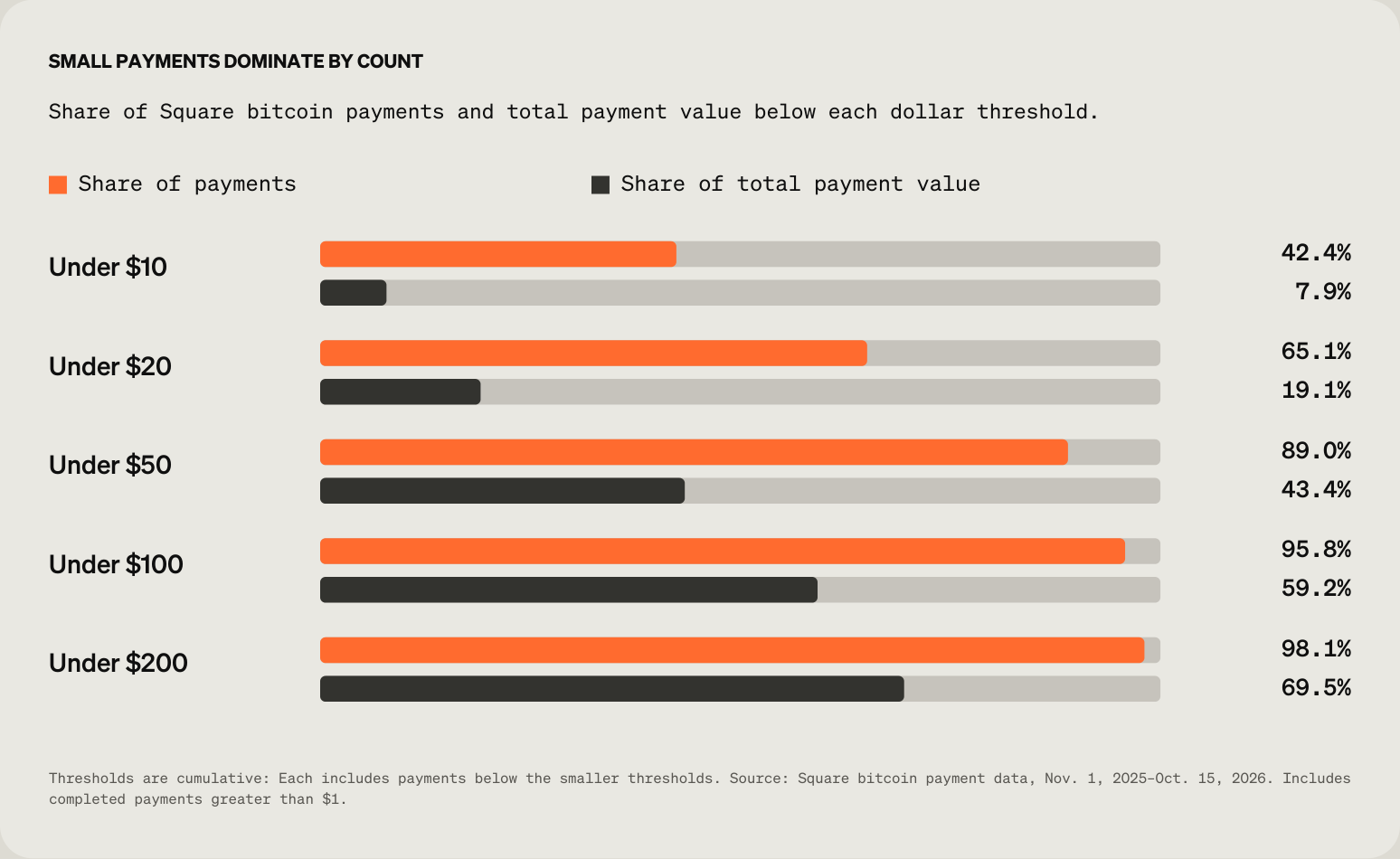
Square's Bitcoin Payments Have a $13 MedianThe median bitcoin payment through Square was about $13. The average was about $29. Block put a payments product into the market and published data on how people actually use it. This is the kind of work I want more companies doing. More than 42% of payments were under $10, and 65.1% were under $20. These are the small payments Congress should have in mind when considering a de minimis exemption. Disclosure: Block sponsors TFTC. This is an editorial discussion of its report.
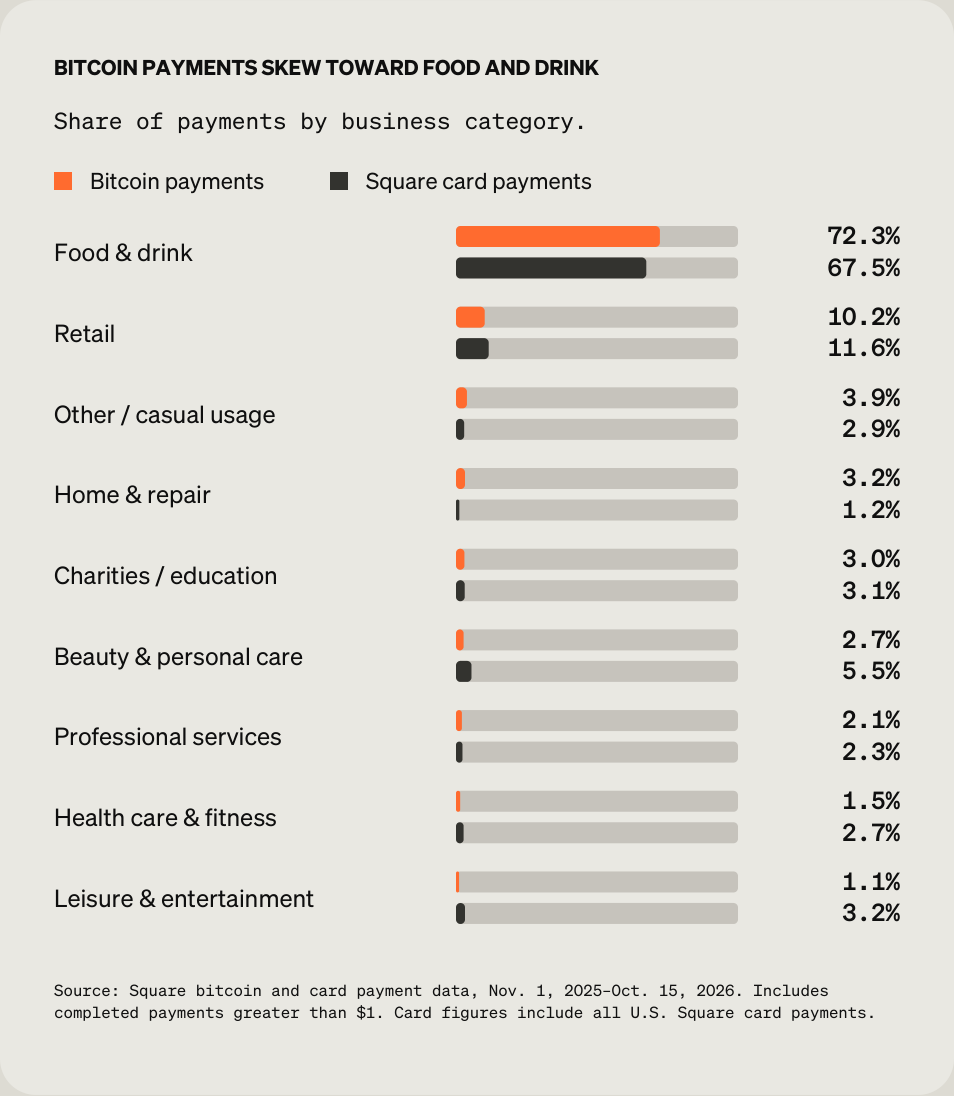
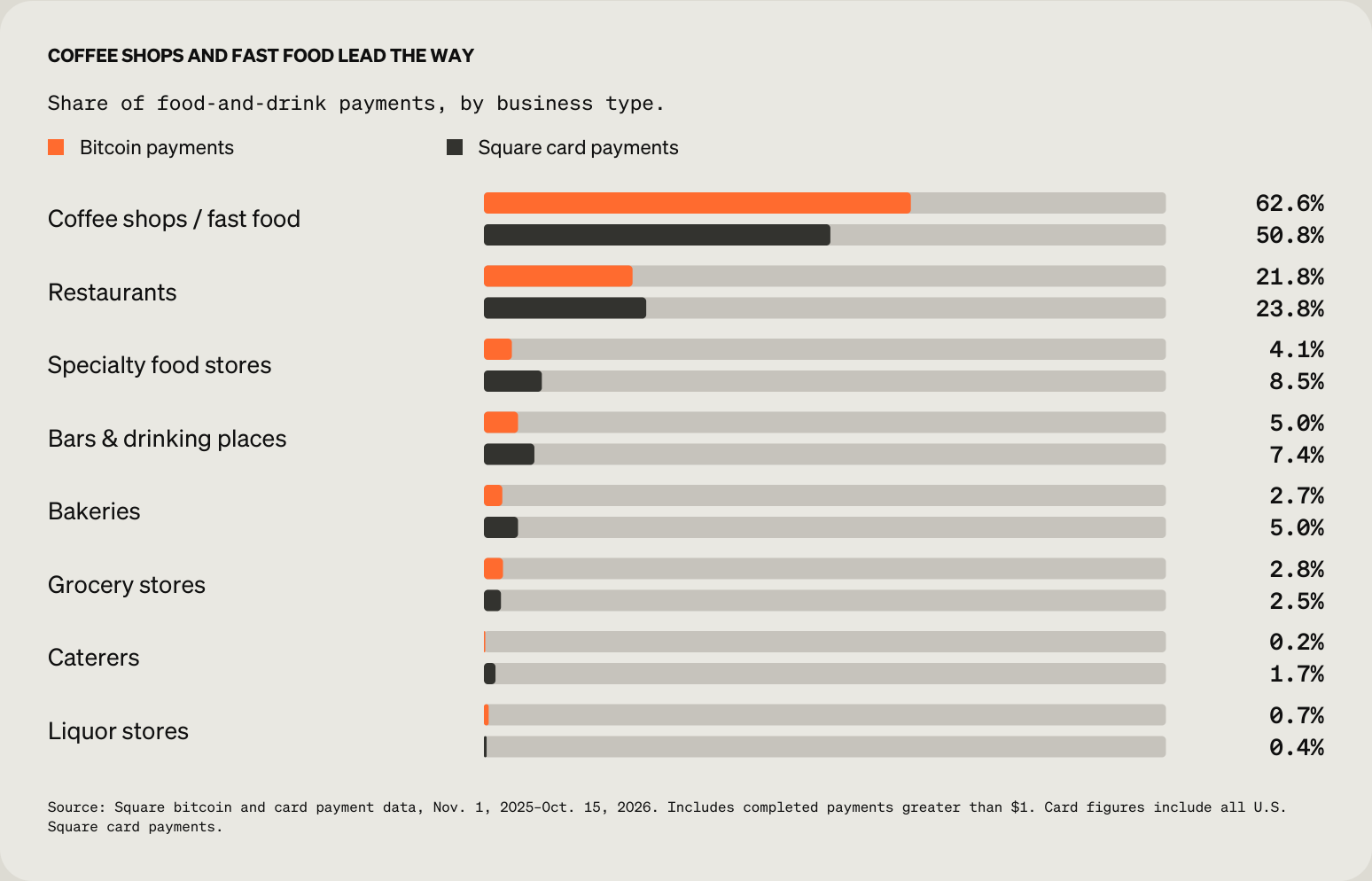
Source: Block bitcoin payments report, page 7. Payment amounts. Completed payments over $1 at US Square sellers, November 1, 2025 through October 15, 2026. Test payments and Block internal sellers excluded; amounts include tax and tip, without refunds netted. Food and drink businesses accounted for 72.3% of the payments. Within that category, coffee shops and fast-food businesses accounted for 62.6%, with a median payment of $9.10. The report identifies the type of business, not the item someone bought, but it gives us a clearer picture of the businesses where these payments are happening.
Source: Block bitcoin payments report, page 5. Business categories receiving payments.
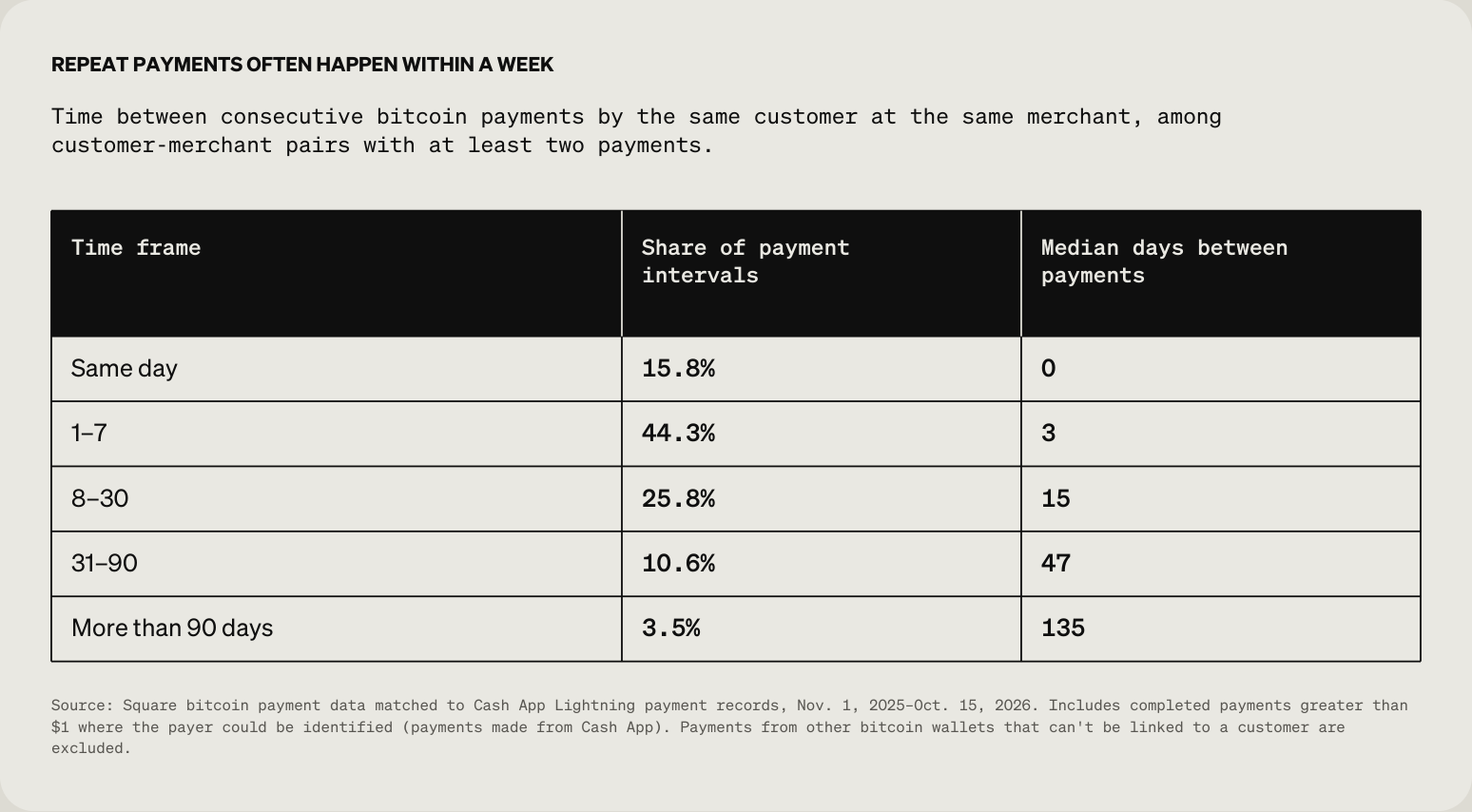
Source: Block bitcoin payments report, page 6. Food and drink business categories. People are also coming back. Among the payments Block could associate with Cash App customers, 44% were repeat payments at the same merchant. About 86% of the intervals between repeat purchases were within 30 days. Block can't make that same customer-level measurement for payments coming from external wallets, so we shouldn't extend those numbers to everyone. What it can see is encouraging: there are people using bitcoin more than once at the businesses they visit.
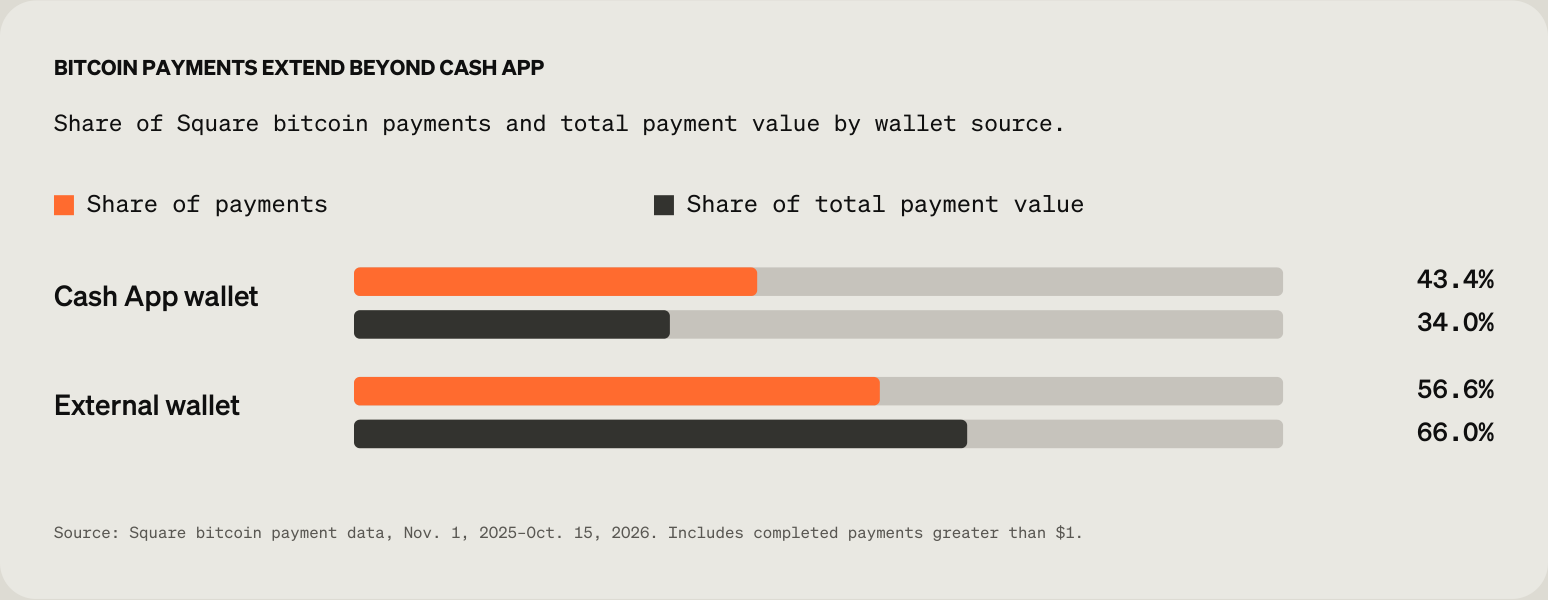
Source: Block bitcoin payments report, page 8. Repeat-payment timing among identifiable Cash App customers only. More than half of the payments, 56.6%, came from Lightning wallets outside Cash App. Those payments represented 66% of the value. Square can bring merchants into the network without requiring every customer to download an app owned by the same company. A merchant gets a familiar checkout experience and customers can arrive with other compatible wallets. That's the benefit of building on an open monetary network.
Source: Block bitcoin payments report, page 9. Cash App and external Lightning wallets. Now consider what the tax code asks of the American making a purchase at that $9.10 median. The IRS treats bitcoin as property, and spending it means disposing of it. The customer has to account for the difference between the value of the bitcoin when it was acquired and when it was spent. A small everyday payment comes with a cost-basis calculation and potentially a capital gain. Even when the tax owed is tiny, the recordkeeping remains. This is why we need a de minimis exemption for small bitcoin purchases. These are precisely the transactions where the accounting burden can overwhelm the usefulness of the payment. A sensible exemption would let someone use bitcoin for an ordinary purchase without turning it into a little tax project. The report doesn't tell us how much spending would increase if Congress fixed this. It gives lawmakers actual small-payment data to work with. Block has a commercial interest here. These are its own figures about its own payments product, and it is advocating a tax change that would help that product. It also says payment activity remains modest and withholds aggregate volume, payment count and the number of participating sellers. We can't use this report to claim bitcoin is taking over retail payments. We can use it to examine the spending that is happening and identify a completely unnecessary obstacle. Block has given lawmakers concrete examples of the payments a de minimis exemption would cover. More companies should publish this kind of data. Congress should get the tax paperwork out of the way. | |||||||||||||||||||||||||||
| |||||||||||||||||||||||||||
SIGNAL | |||||||||||||||||||||||||||
AI & Markets Cheap AI Stocks Can Still Get CheaperGoldman's Rich Privorotsky was leaning against the fear in Wednesday's trading-desk commentary, covered by ZeroHedge. AI spending remained substantial, valuations had compressed, and investors were paying up for defensive stocks. He favored front-end bonds alongside equities, with persistent commodity declines potentially providing a disinflationary tailwind. He also included the qualification that matters: low multiples can reflect doubts about future earnings, and cheap stocks can get cheaper. By Friday, ZeroHedge's follow-up described his assessment as outright liquidation rather than rotation. A stock can look attractive on a spreadsheet and still be sold by someone who needs cash. Real demand for useful computing does not guarantee that every financing structure or earnings forecast built around it survives. You can believe the technology matters without pretending the market has finished repricing the businesses selling it. | |||||||||||||||||||||||||||
Compute & Control Washington Wants to Follow the Compute OverseasThe escalation I flagged reaches beyond selling hardware to China. A BIS rule effective yesterday imposes licensing requirements tied to overseas data centers supplying large amounts of advanced compute to covered Chinese entities. Thresholds, exceptions and a transition for existing providers matter. This is not a ban on every Chinese cloud customer. Still, Washington is reaching into arrangements between foreign companies over machines that may already be in another country. A legal purchase does not settle the subsequent end-use restrictions. How do the US government and its partners police that access across cloud providers, intermediaries and jurisdictions? The paperwork can describe a customer. Establishing who ultimately benefits from the compute is another matter. Reuters reports the restrictions are among several pressures weighing on Chinese technology shares. This is a pretty aggressive escalation. Expect the enforcement to get messy. | |||||||||||||||||||||||||||
Freedom of Conscience Keep Your Opinion at Home?Murray Allan has resurfaced the video he recorded at his Scottish school in 2019. A teacher tells him his opinion on gender is not acceptable at school and belongs at home. Allan describes what followed as expulsion. Contemporary reporting recorded the council denying permanent exclusion and attributing suspension to recording the teacher. We shouldn't turn that disputed history into a new incident. The exchange itself is still worth watching. What kind of education teaches a child that authority settles an argument? Teachers can demand decent behavior without demanding agreement. A school should teach a student to question a claim, defend his reasoning and hear a response. Telling him his opinion belongs only inside his house is Orwellian. Parents should push back when inclusion becomes an excuse to police conscience. You do not owe an institution an affirmation you believe is false. Live not by lies. | |||||||||||||||||||||||||||
SURVEILLANCE AT&T Owns the Records ICE WantsAn ICE contracting document disclosed by 404 Media explains why the agency wanted AT&T without a competitive bidding process: AT&T owns the raw data and won't let another vendor analyze it. ICE sought access to those records and the company's analysts for investigations, subject to appropriate legal demand documents. The document describes older contracting work, newly reported yesterday. Its explanation is revealing. The same exclusive control that keeps competitors out makes AT&T indispensable to the investigators buying its services. People generate records while using a telecommunications network; the company can then sell the government the work of making those records useful for investigations. | |||||||||||||||||||||||||||
BUILD Alby Makes Connected Apps Easier to FindAlby Hub v1.24.8, released yesterday, improves how its app search matches names. The three-commit comparison shows a fix that matches a search anywhere in an app name, alongside adding Podtunes to the app store and updating the underlying Lightning node library. These are small changes, not a new payments protocol. They are still the sort of maintenance that makes software less frustrating to use. Someone looking for an app should not have to guess which part of its name the search box accepts. Bitcoin needs people building the big pieces, and people returning to the little usability problems that remain after launch. | |||||||||||||||||||||||||||
| |||||||||||||||||||||||||||
⚡ FREEDOM TECH CORNER | |||||||||||||||||||||||||||
Arkade Makes Connection Failures Easier to HandleArkade SDK 0.5.8, released November 18, backs off watcher reconnections and passes along Esplora's HTTP status information. The release also improves the explanation when a passkey doesn't supply a PRF key. Developers integrating Arkade wallets get more specific information about what went wrong instead of having to infer it from a failed operation. These are SDK release changes, not a claim that every wallet has upgraded. If you build with the SDK, read the changelog and test the new version in your integration. We haven't independently tested the release. | |||||||||||||||||||||||||||
DATA SNAPSHOT | |||||||||||||||||||||||||||
Spot quote and block height retrieved November 20, 2026, 9:27:19 AM EST (14:27:19 UTC). Bitcoin Lab daily observations, including hashrate and fees: November 19, 2026 (source timestamp 00:00 UTC), retrieved November 20 during the 9:26 AM EST refresh. ETF flows: November 19, 2026, latest completed session reported by Farside at retrieval November 20, 9:26 AM EST. November 20 flows are not yet reported. | |||||||||||||||||||||||||||
| |||||||||||||||||||||||||||
Kraken spot quote, mempool.space block height, Bitcoin Lab, Farside Investors ETF flows. | |||||||||||||||||||||||||||
| |||||||||||||||||||||||||||
| |||||||||||||||||||||||||||
| |||||||||||||||||||||||||||
| |||||||||||||||||||||||||||
Have a great weekend, freaks. If you found this issue useful, forward it to a friend and encourage them to subscribe to The Commoner. | |||||||||||||||||||||||||||
Marty Bent · TFTC · Nostr |