SpaceX Seeks $40B in Debt to Buy Nvidia Chips as Iran Escalates Hormuz Attacks
SpaceX is in talks to borrow $40 billion to purchase Nvidia chips as Iran steps up tanker attacks in the Strait of Hormuz. Energy scarcity and monetary expansion are compounding at the same time.
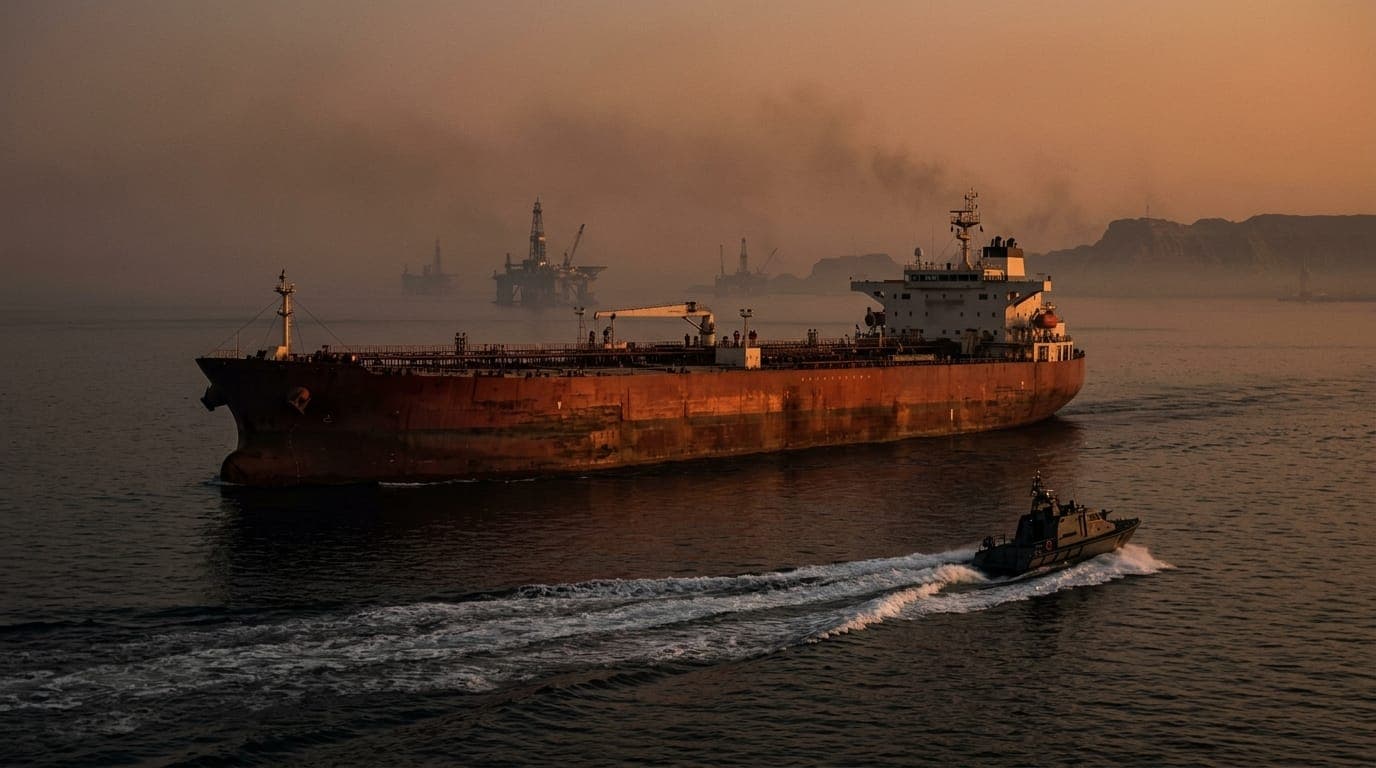
Two pressure fronts converging on the same scarce resource: energy.
Key takeaways
- SpaceX is in early-stage talks to raise $40 billion in debt financing, structured as roughly $10 billion in bank loans and $30 billion in investment-grade bonds, led by Apollo Global Management, to purchase Nvidia chips for its AI buildout.
- Iran has sharply intensified tanker attacks in the Strait of Hormuz, with nine incidents reported in the first days of October 2026 alone, roughly half the total reported for all of September, sending Brent crude near $102.60 and tanker rates to extraordinary levels.
- A contested energy chokepoint and a $40 billion AI-chip debt binge are not separate stories. Together they signal that energy scarcity and credit expansion are compounding simultaneously, the exact pressure environment Bitcoin's fixed supply and mining economics are positioned to benefit from.
SpaceX is seeking to borrow $40 billion to purchase Nvidia chips for its AI infrastructure, first reported by the Financial Times, as Iran simultaneously ramps up attacks on oil tankers transiting the Strait of Hormuz. Apollo Global Management is leading the financing effort, with PIMCO among the institutional lenders in early discussions. The deal is structured as approximately $10 billion in bank loans and $30 billion in investment-grade debt, with a close expected in 2027. Talks are at an early stage and could end without a deal, per people familiar cited by Bloomberg.
On the energy front, Bloomberg reported nine tanker incidents in the Strait of Hormuz and Persian Gulf in just the first days of October, per UK Maritime Trade Operations (UKMTO). Named vessels disabled or struck include the LIPSI, an LR2 tanker left adrift after an engine room strike on October 4; the KAZIMAH III, a Kuwait-flagged VLCC struck October 1 with crew evacuated; and the UHUD, an oil products tanker struck October 2 with fire and blackout reported. Brent crude was trading near $102.60 as of October 5. Iran's parliament speaker has stated publicly that the strait will not fully reopen until Iran's seven conditions under the June 2026 Islamabad Memorandum are met.
A $40 Billion Bet the AI Revenue Comes Before the Bill Does
SpaceX, which went public on Nasdaq in June 2026, is in full-scale AI infrastructure buildout mode following its February 2026 acquisition of xAI, now operating as SpaceXAI. Musk has said SpaceX will use Nvidia hardware exclusively across its data centers. The Colossus 2 facility was described as potentially more than doubling its Nvidia chip count by December.
The financing structure mirrors how major infrastructure projects get capitalized, not how technology companies typically raise. Apollo is already one of six firms, alongside BlackRock, Blackstone, Brookfield, Goldman Sachs, and KKR, participating in Nvidia-linked financing platforms targeting AI infrastructure buildout. The AI capex fragility embedded in these structures is real: the debt works only if AI revenue materializes at scale before refinancing pressure arrives.
The credit expansion dimension is the part that gets skipped. A $40 billion debt issuance placed with Apollo and PIMCO is money that does not exist yet, conjured into existence to buy chips. Multiply that by every hyperscaler and sovereign AI program running the same playbook. PwC projects $31.6 trillion in AI data center capex through 2050.
That $31.6 trillion is credit, not investment from saved capital, and credit at scale dilutes the units it is denominated in. Lyn Alden's framing applies directly: AI may produce deflationary outputs while the financing behind it produces monetary inflation. Bitcoin's 21 million cap cannot be debt-financed into existence.
What Hormuz Makes Clear About the Energy Calculus
The Hormuz situation has been building since U.S.-Israeli strikes on Iran beginning February 28, 2026. The October acceleration is a policy, not a spike. Iran has structured the chokepoint as a pressure mechanism, and the Islamabad Memorandum has not changed the incentive. The Congressional Research Service estimates the strait carries roughly 20% of global oil consumption. U.S. Energy Secretary Chris Wright cited approximately 13 million barrels per day transiting Hormuz currently, down from pre-war levels of roughly 20 million barrels per day.
The same barrel of oil that cannot move without a U.S. Navy escort is now being competed for by AI datacenters that require massive, reliable power at scale. These are not separate markets.
Grid electricity prices are set at the margin by natural gas. Natural gas trades with oil. Oil prices are now partly set by Iranian foreign policy and U.S. carrier deployment schedules.
Bitcoin miners with secured access to stranded, flared, or off-grid power are insulated from this dynamic and actively benefit from it. When grid electricity costs rise, marginal miners exit. Hash rate supply compresses. Well-capitalized miners with low-cost dispatchable power hold a widening advantage that no debt deal and no tanker attack can reach.
What to Watch
The SpaceX deal closing hinges on whether Apollo can place $30 billion in investment-grade debt with institutions comfortable underwriting AI revenue projections years out. If credit conditions tighten, or AI revenue timelines slip, the deal stalls.
On Hormuz, watch whether Iran's seven conditions become a negotiating framework or a permanent blockade rationale. A clean resolution of the strait, with full pre-war flow resuming and insurance markets normalizing, would ease the energy scarcity pressure that underpins this entire analysis. Neither outcome looks imminent.
Sources
Frequently Asked Questions
What is Iran's stated condition for reopening the Strait of Hormuz?
Iran's parliament speaker has said publicly that the strait will not fully reopen until Iran's seven conditions under the June 2026 Islamabad Memorandum are met. The specific conditions remain under negotiation and are separate from any broader ceasefire status.
Why is SpaceX borrowing $40 billion rather than using equity or cash?
Debt at investment-grade terms lets SpaceX preserve its IPO capital while locking in chip supply now. The structure places the bet that AI-driven revenue will service the debt before it comes due. Apollo's role as lead places this squarely in the infrastructure financing playbook, where large upfront capital costs are matched against long-duration revenue projections.
How does a Hormuz disruption affect Bitcoin mining economics?
Bitcoin mining competes on energy cost at the margin. When oil and natural gas prices rise due to geopolitical disruption, grid electricity costs follow. Miners on conventional grid power face margin compression. Miners with stranded or off-grid power sources are insulated from that transmission and benefit competitively as higher-cost operations exit and hash rate supply tightens.