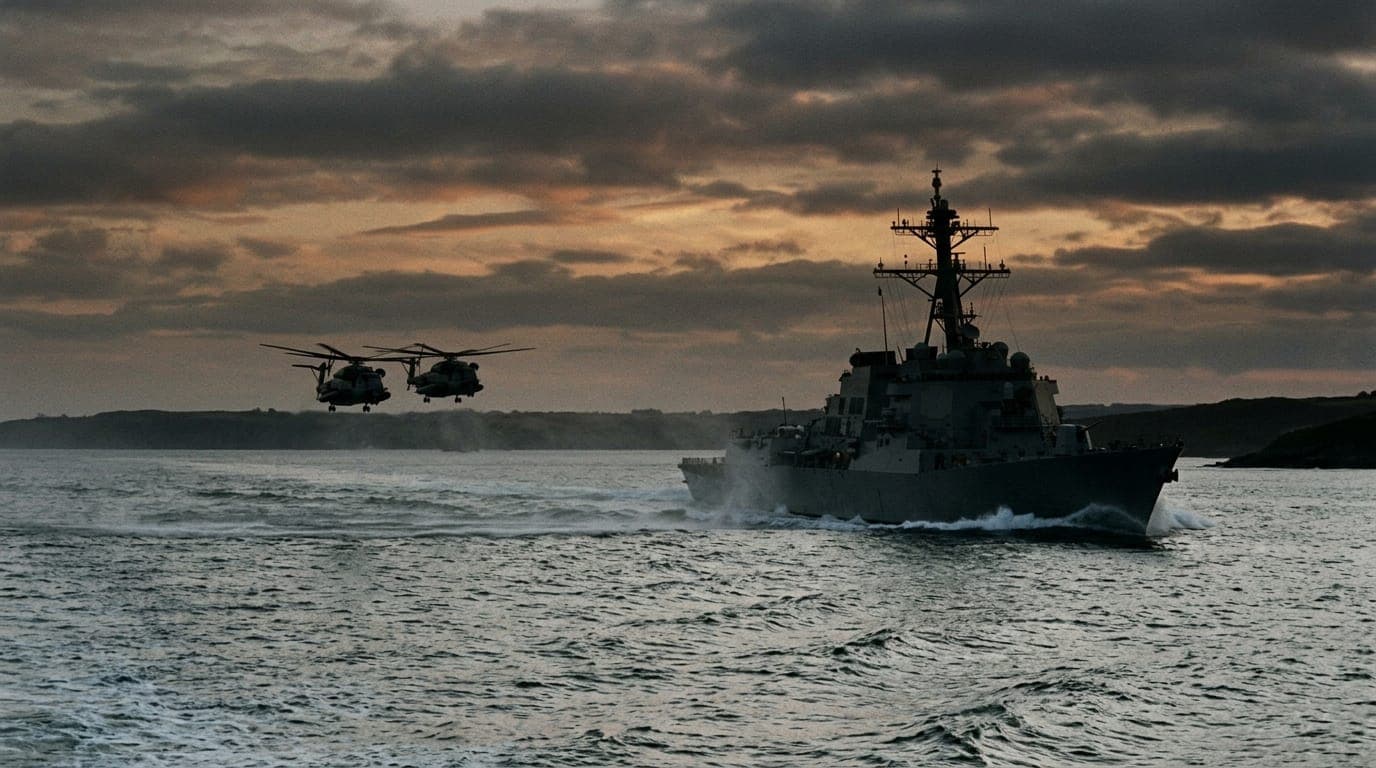
Saudi Arabia's Uninvited Tehran Envoy Signals Gulf Petrodollar Hedge
Saudi Deputy FM Waleed El Khereiji arrived in Tehran for Khamenei's state funeral despite not appearing on Iran's official guest list, a quiet diplomatic signal that Gulf states are repositioning before Washington locks in the post-war terms.
Riyadh showed up in Tehran without an invitation. That is not a courtesy call.
Key takeaways
- Saudi Deputy Foreign Minister Waleed El Khereiji arrived in Tehran for Khamenei's state funeral on July 3 despite Saudi Arabia not appearing on Iran's official guest list, first reported by Reuters.
- Iran's military command renewed Hormuz enforcement warnings on July 2, threatening a "forceful response" against vessels that deviate from IRGC-designated routes, even as U.S.-Iran peace talks continue in Qatar and Switzerland.
- Hormuz traffic has recovered to only roughly 22 ships per day versus 120-plus pre-war, two competing transit corridors currently operate simultaneously, and the U.S.-Iran MoU expires August 21.
State funeral ceremonies for Supreme Leader Ali Khamenei, killed on February 28 during the opening of U.S.-Israeli military operations, began July 3 at the Imam Khomeini Grand Mosalla in Tehran. Iranian authorities expect more than 20 million mourners across ceremonies running through July 9, with burial at the Imam Reza Shrine in Mashhad. Delegations from more than 100 countries arrived. European governments were not invited.
The headline development: Saudi Deputy Foreign Minister Waleed El Khereiji and his delegation paid respects in Tehran even though Saudi Arabia was not on the official Iranian guest list, per Iranian state publications. Oman and Qatar were listed; Saudi Arabia was not.
[@IranObserver0 on X first flagged the Saudi delegation's arrival as breaking news on July 3.]
The Hormuz Variable Is Not Resolved
One day before the funeral opened, Iran's Khatam al-Anbiya Central Headquarters issued a direct warning to international shipping: "Any failure to comply, deviation from the designated route, or disregard for the navigation protocols of the Islamic Republic of Iran in the Strait of Hormuz will be met with an immediate and forceful response from the armed forces, endangering the security of the violating vessels," per The Washington Times.
Two transit corridors now operate simultaneously. Iran's IRGC designates one route; Oman and the IMO announced a southern alternative. A container ship ran aground on July 1 using the Oman corridor. Neither route has settled authority.
The strait carries roughly one-fifth of global oil and LNG exports. Pre-war, it handled 120-plus vessel transits per day. Since the U.S.-Iran MoU signed in mid-June, traffic has recovered to only about 22 ships per day, per Kpler data. The energy risk premium embedded in that 80-plus percent traffic deficit has not fully transmitted to markets. The energy shock is structural, not a spike.
At the Tehran memorial, Major-General Amir Hatami put it plainly: "With a firmer resolve we declare to the enemies of the Iranian nation, America and the criminal Zionist regime, that we will avenge the blood of the martyred leader." Iran's UN representative warned separately that any U.S. violation of the MoU would trigger an Iranian response.
What Riyadh's Presence Actually Means
Saudi Arabia showing up uninvited in Tehran is a signal worth parsing. The extended ceasefire took effect around April 8; the 14-point U.S.-Iran MoU was signed in mid-June. Peace talks are ongoing in Qatar and Switzerland. Trump has stated that Iran has "almost agreed" to U.S. demands, though the exact statement and its source have not been independently confirmed.
Against that backdrop, Riyadh is running a multi-track hedge. Gulf states watched the war play out, watched the ceasefire hold, and are now quietly probing what a post-war regional order looks like before Washington locks in the terms. Sending a deputy foreign minister to a funeral where Saudi Arabia was not on the list is a low-cost, high-signal move.
The falsifiable version: if Saudi Arabia publicly reaffirms dollar-denominated oil pricing, expels Houthi-aligned diplomats, and formally backs the U.S.-Iran MoU framework within 30 days, the Tehran gesture was protocol. If none of those happen, Riyadh is hedging toward Tehran in ways that pressure the petrodollar architecture more than the MoU talks suggest.
Mojtaba Khamenei was elected Supreme Leader on March 8, but the IRGC, which retains operational control of Hormuz enforcement under the new leadership, is still running its own enforcement track. Brigadier General Ahmad Vahidi, the IRGC commander-in-chief, made his first public appearance since the start of the war at the Tehran memorial, per state broadcaster IRIB. The factions that emerge ascendant from this week's political consolidation will determine whether the MoU survives past August 21.
For a Bitcoiner, the second-order read is straightforward. Central banks that have been accumulating gold and diversifying away from Treasuries accelerate that behavior in instability windows exactly like this one. Saudi Arabia hedging toward Tehran, a contested strait where two route authorities operate simultaneously, and an MoU with a hard expiration date: these are not separate stories. They are the same pressure on the same system. Bitcoin's fixed supply does not require trusting any of the parties in that room.
What to Watch Before August 21
The MoU expiration on August 21 is the clock. Before that date: whether Saudi Arabia takes any formal step that signals dollar-oil commitment or the opposite; whether the IRGC backs down from the July 2 Hormuz enforcement warning or acts on it; and whether Hormuz daily transits recover toward pre-war levels or stall at current figures. Dmitry Medvedev's presence in Tehran, given a warm red-carpet welcome, confirms Russia is consolidating its post-war positioning simultaneously. The diplomatic traffic at this funeral is doing real work.
Sources
- Al Jazeera: Mourners pay respects as Iran's slain leader Ali Khamenei laid in state
- The Washington Times: Iran warns oil tankers to use approved routes in Strait of Hormuz
- France24 live blog: Iran prepares to say final goodbye to Supreme Leader Khamenei
- Saudi delegation arrival first reported by Reuters; @IranObserver0 on X
Frequently Asked Questions
Who is the new Supreme Leader of Iran after Khamenei's death?
Mojtaba Khamenei, son of the late Ayatollah Ali Khamenei, was elected Supreme Leader on March 8, 2026, roughly one week after his father was killed during the opening of U.S.-Israeli military operations. His relationship with IRGC hardliners who control Hormuz enforcement is the key succession variable, not the formal title itself.
Why does the Strait of Hormuz matter for oil prices and Bitcoin?
The strait is the transit point for roughly one-fifth of global oil and LNG exports. Pre-war traffic ran at 120-plus vessels per day; it sits at around 22 per day now. When that chokepoint is politically controlled and two competing route authorities operate simultaneously, the energy shock does not resolve cleanly. A sustained supply squeeze, combined with Gulf states hedging away from dollar-denominated oil pricing, puts direct pressure on the petrodollar system. Bitcoin's fixed-supply, politically neutral property becomes a harder argument to dismiss in that environment.
What is the U.S.-Iran MoU and when does it expire?
The U.S.-Iran Memorandum of Understanding is a 14-point agreement signed June 17, 2026, that established the framework for ongoing peace negotiations currently taking place in Qatar and Switzerland. It expires August 21, 2026. A separate U.S. sanctions waiver on Iranian oil sales, OFAC General License X, issued June 22, 2026, by the U.S. Department of the Treasury, also runs to August 21, per A&O Shearman's analysis of the OFAC filing.