MIT Study: AI Data Centers Caused ~650 Premature Deaths in 2023
A peer-reviewed MIT study estimates U.S. data center electricity demand produced roughly 650 modeled premature deaths in 2023, with the highest per-capita mortality in Iowa, Nevada, South Dakota, and Kansas, far from the data center hubs that drove the demand.
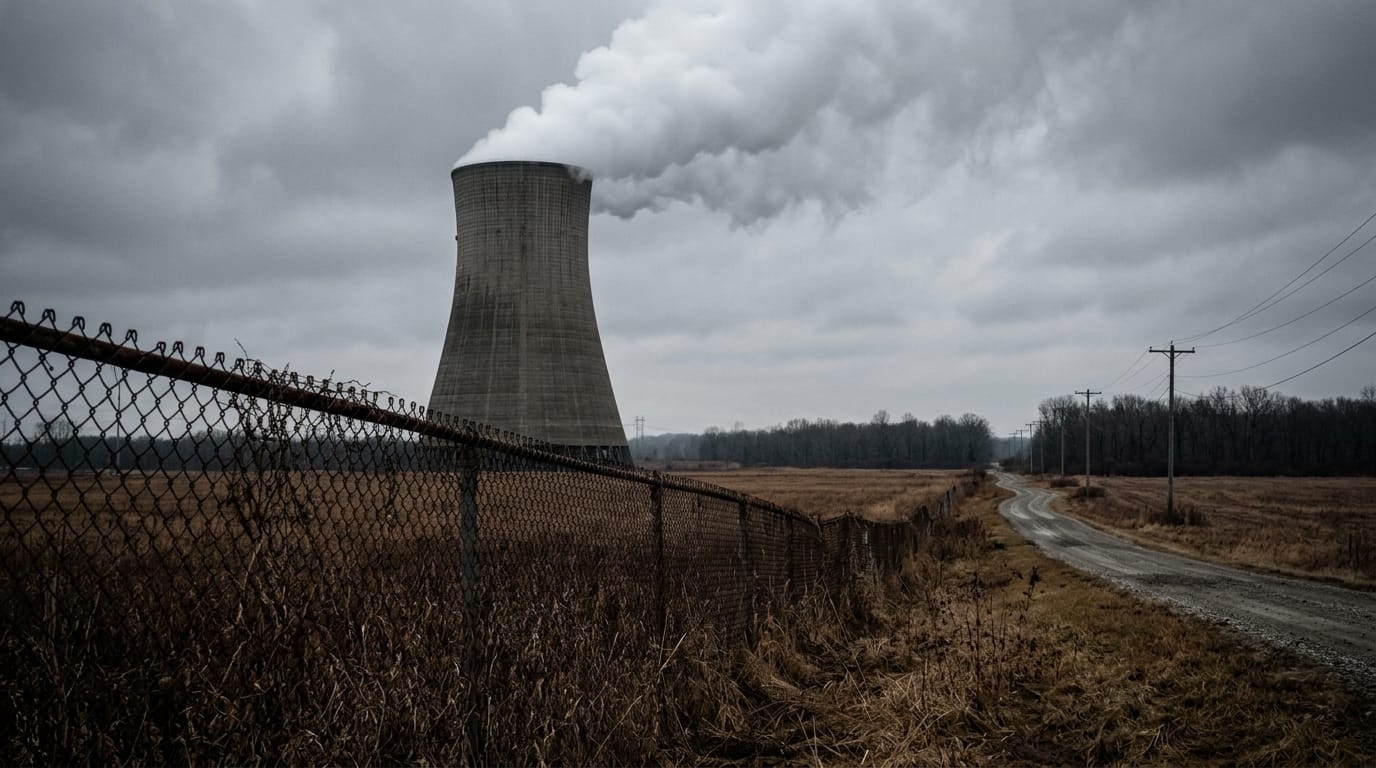
A peer-reviewed model finds the air-quality costs of the AI buildout are landing on rural Midwesterners who get none of the economic upside.
Key takeaways
- An MIT-led study published November 19 in Environmental Research Letters estimates that U.S. data center electricity demand caused roughly 650 modeled premature deaths in 2023, representing about 5.3% of all U.S. electricity-related mortality.
- The highest per-capita death rates appear in Iowa, Nevada, South Dakota, and Kansas, not in the northern Virginia and Texas corridors where the data centers actually sit, because demand pulls power from older coal and gas plants in the Ohio Valley, with agricultural ammonia downwind amplifying PM2.5 formation.
- The 650 figure is a modeled estimate with a 95% confidence interval of 559 to 740, not a confirmed death count, but the geographic mismatch it describes raises a pointed question about who bears the cost of centralized AI capital deployment.
A study published November 19 in Environmental Research Letters by researchers at MIT, UC Irvine, and Yale University estimates that electricity consumed by U.S. data centers caused approximately 650 premature deaths in 2023 through air pollution. That figure represents roughly 5.3% of all U.S. electricity-related mortality, per the peer-reviewed paper.
The breakdown: 513 deaths attributed to fine particulate matter (PM2.5) and 137 to ground-level ozone. Lead author Yuang (Albert) Chen is an MIT graduate student; senior author Noelle Selin is a professor in MIT's Institute for Data, Systems, and Society and Department of Earth, Atmospheric and Planetary Sciences, and director of the Center for Sustainability Science and Strategy.
The Geography of the Problem
Data center electricity demand is concentrated in northern Virginia and Texas. The premature deaths are not.
The study finds the highest per-capita mortality rates in Iowa, Nevada, South Dakota, and Kansas. The mechanism: Virginia's data centers pull power from the broader grid, which dispatches older coal and gas plants in the Ohio Valley to meet the load. Atmospheric transport carries the resulting pollution downwind. Agricultural ammonia in the rural Midwest reacts with that pollution to amplify PM2.5 formation.
Selin put it plainly in the MIT press release: "While it is not surprising that any additional source of air pollution will result in mortalities, with data centers, when and where these deaths are occurring are different than you might expect."
Her second observation is harder to dismiss: "Even if you don't think you are affected because there is not a data center near you, think again."
Chen noted in the MIT press release: "When people are thinking about data center siting and operations, it is important to consider more than just things like land and energy prices." The rural populations living downwind had no seat at the table when those siting decisions were made.
Externalized Costs, Concentrated Gains
The pattern here is not subtle. Hyperscalers build in northern Virginia, capture the economic returns, and purchase renewable energy certificates that look good in ESG disclosures. The marginal generator that actually answers the demand call at 2 a.m. is a coal plant in Ohio. The people breathing the result live in Iowa. They didn't vote on the data center. They don't hold Nvidia equity. They get the pollution.
This is the same externalization logic Bitcoiners recognize in monetary policy: costs get socialized onto people who didn't authorize them, while gains accrue to whoever sits closest to the source. The AI capex surge is running on subsidized cost of capital and political access, not honest price signals that would force the full cost of grid draw onto the balance sheet of the company pulling the power.
The MIT study is careful about what it is. The 650 figure is a modeled estimate using epidemiological conversion factors, not a confirmed count of identified deaths. The 95% confidence interval runs from 559 to 740. The paper does not attribute causation to any individual facility or company. What it does establish is a method for linking grid-level demand to downstream air-quality mortality, and that method now has a peer-reviewed home.
For Bitcoiners watching the EIA's record demand projections through 2027, one related dynamic is worth tracking. Bitcoin miners draw from the same grid and face the same marginal-generator problem, but they have a structural advantage: they can shut off. Miners are dispatchable. AI inference clusters are not. Interrupting a training run or a live inference workload is not an option in the way curtailing a miner is. That flexibility matters enormously if regulators start targeting "wasteful" grid load in response to studies like this one, and miners will be the politically easier first target even though the load profile is different in kind.
The falsifiable thesis: if the AI buildout actually drives rapid deployment of dispatchable, firm clean generation (not REC purchases, but real new capacity behind the meter), and the PM2.5 burden in Iowa and Kansas measurably falls, then this externalization is temporary and the market is correcting. The MIT team plans follow-on work on flexible data center operations that shift load to cleaner grid windows. Watch whether that research finds a willing audience among hyperscalers, or whether they keep relying on legacy dispatch and accounting offsets.
What to Watch
Norway has already frozen grid access for new data centers after a 26,000 MW demand surge. Scotland is tracking toward becoming its biggest polluter by 2030. The MIT paper gives U.S. regulators and state attorneys general a quantified, peer-reviewed hook to hang demand restrictions on. Whether that pressure lands on AI data centers, Bitcoin miners, or both depends entirely on who has better lobbyists, not on who is actually drawing the dirtier power.
Sources
Frequently Asked Questions
How does a data center in Virginia cause deaths in Iowa?
The U.S. grid is interconnected. When northern Virginia data centers increase demand, the grid dispatches whatever generators are available to meet it, often older coal and gas plants in the Ohio Valley. The resulting air pollution travels atmospherically downwind into the rural Midwest, where agricultural ammonia reacts with the particulates to increase PM2.5 concentrations. People in Iowa and Kansas breathe the result. The data center is in Virginia; the pollution is not.
Is Bitcoin mining responsible for similar effects?
The MIT study covers all grid-supplied data center electricity demand regardless of workload. The relevant variable is what marginal generator answers the demand, not what computation is running. Bitcoin miners have one meaningful structural difference: they are dispatchable. Miners can curtail load on short notice, locate at stranded or wasted energy sources, and absorb grid instability in ways that 24/7 AI inference clusters cannot. That does not make mining pollution-free, but the load profile is fundamentally different from an always-on GPU cluster that cannot be interrupted.
Are the 650 deaths a confirmed count?
No. The study uses epidemiological modeling to convert estimated pollution exposure into projected premature deaths. The 95% confidence interval runs from 559 to 740. These are not identified individuals; they are a statistical estimate of excess mortality attributable to the pollution burden. The methodology is standard in environmental health research, but the number should be read as a modeled range, not a body count.