Judge Voids Pentagon's AI Blacklist of Anthropic as Unconstitutional Retaliation
U.S. District Judge Rita Lin issued a 59-page ruling on August 27 voiding the Pentagon's supply chain risk designation of Anthropic, finding it violated the First and Fifth Amendments after the company refused to allow Claude to be used for mass domestic surveillance or autonomous weapons.
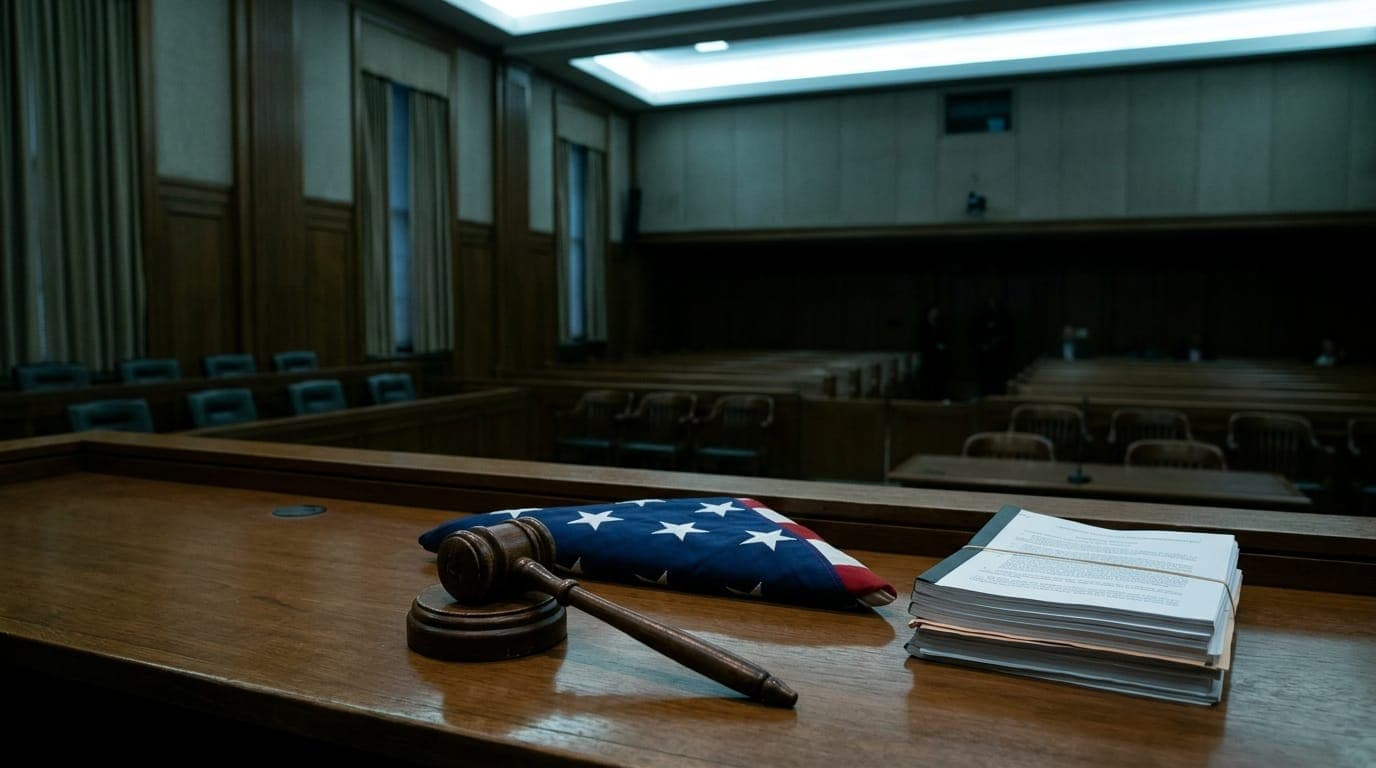
A federal judge ruled the Department of War's supply chain risk designation of Anthropic violated the First and Fifth Amendments, but the company remains partially blacklisted while a parallel case in D.C. runs its course.
Key takeaways
- U.S. District Judge Rita Lin issued a 59-page summary-judgment order on August 27, 2026, voiding the Pentagon's supply chain risk designation of Anthropic, ruling it was unconstitutional First Amendment retaliation and a Fifth Amendment due-process violation.
- The designation, which required Amazon, Microsoft, Palantir, and other defense contractors to certify they do not use Claude in Pentagon-related work, originated after Anthropic refused to allow its AI to be used for mass domestic surveillance of U.S. persons or fully autonomous weapons systems.
- The ruling is a partial win: Anthropic remains designated a supply chain risk under a separate statutory authority (41 U.S.C. § 4713) being litigated in the D.C. Circuit, and the government is expected to appeal the California ruling.
U.S. District Judge Rita Lin ruled on August 27, 2026 that the Department of War unlawfully retaliated against Anthropic by branding it a national security supply chain risk, a designation historically reserved for foreign adversaries. The ruling hands Anthropic a significant constitutional win, and sets a precedent that the executive branch cannot weaponize procurement designations to punish companies for their public positions on how their technology gets used.
The full case docket is public at CourtListener, Case No. 3:26-cv-01996-RFL (N.D. Cal.). The ruling was first reported by CNBC.
How the Pentagon Built Its Blacklist
The dispute traces to July 2025, when the DOD awarded Anthropic a $200 million contract, making Claude the first frontier AI model cleared for classified military use. Negotiations broke down by early 2026 when the Pentagon demanded Anthropic accept "all lawful uses" of Claude with no carve-outs. Anthropic refused, drawing a hard line against mass surveillance of Americans and fully autonomous weapons systems.
The response was the supply chain risk designation, formally issued in early March 2026 under 10 U.S.C. § 3252, with the Department of War's letters to Anthropic dated March 3, 2026, per Mayer Brown's legal update, making Anthropic the first American company ever publicly given that label. President Trump separately directed all federal agencies to stop using Anthropic products. Defense contractors including Amazon, Microsoft, and Palantir were required to certify non-use of Claude in any Pentagon-adjacent work. Anthropic CFO Krishna Rao stated in a court filing that the actions could reduce 2026 revenue by "multiple billions of dollars."
Anthropic filed suit on March 9, 2026. Judge Lin issued a preliminary injunction blocking enforcement on March 26. The August 27 final order went further, granting summary judgment in Anthropic's favor on constitutional grounds.
Judge Lin's language in the ruling was direct. "The undisputed record shows that the challenged actions constituted unlawful retaliation in violation of the First Amendment and that Anthropic was denied the pre-deprivation process required under the Fifth Amendment." On the government's national security framing, she was equally blunt: "The empty invocation of national security is not a blank check to punish and retaliate against government critics." The court also found the Pentagon acted "based on a desire to make a public example" out of Anthropic.
The "All Lawful Uses" Clause Is the Real Story
The constitutional question here matters well beyond Anthropic's balance sheet. The DOD demanded total compliance: accept every lawful use of your technology inside the government's procurement framework, or lose access to the entire federal contracting system. Anthropic said no, and got blacklisted. A federal court said that blacklisting was unconstitutional.
That framing should read as familiar to anyone tracking state pressure on open-source developers and privacy-preserving tools. The "all lawful uses" demand is the same lever regulators have tried to apply to Bitcoin mixing services, privacy wallets, and peer-to-peer infrastructure. No carve-outs, no limits, or you are out of the system. Anthropic litigated it and won a round. Most builders in the freedom-tech stack do not have Anthropic's legal budget.
The EFF, which filed multiple amicus briefs in the California case, praised the ruling but flagged the structural problem plainly: Congress has passed no statutory safeguards against AI-enabled domestic surveillance. As EFF's Matthew Guariglia wrote on September 1, praising the court for "slapping down such an obvious act of illegal and unconstitutional retribution by the Pentagon," the ruling is a court win, not a legislative fix. The next developer who can't afford a protracted federal lawsuit will face the same playbook with no backstop.
Meanwhile, Anthropic is not fully clear. A parallel lawsuit in the D.C. Circuit challenges the company's designation under 41 U.S.C. § 4713, a separate statutory authority the California ruling did not touch. Anthropic remains technically blacklisted under that channel until the D.C. case resolves. The government is expected to appeal the California ruling.
The falsifiable thesis: if the D.C. Circuit upholds the Title 41 designation, or if a higher court rules that supply chain risk authority gives the executive enough discretion to override First Amendment concerns in AI procurement, the California ruling becomes a one-round win rather than durable precedent. Congress legislating an explicit "all lawful uses" mandate with no opt-out would also collapse the holding entirely.
What to Watch
The D.C. Circuit case is the next live pressure point. A formal government appeal of the California ruling would follow. The broader question, whether a company's public position on acceptable uses of its technology qualifies as protected speech in its own right, was left open by Judge Lin and remains unresolved. That question has direct downstream consequences for any developer drawing lines around how their tools get used, at any scale.
Sources
Frequently Asked Questions
What is a "supply chain risk" designation and why does it matter?
The supply chain risk label, issued under federal procurement statutes, allows the government to bar a company's products from use across the entire defense contracting ecosystem. It's a mechanism historically applied to foreign entities suspected of espionage or sabotage (Huawei's treatment is a reference point, as seen in surveillance infrastructure deals abroad). Applying it to an American company for refusing to enable domestic surveillance is, as Judge Lin found, a different category of action entirely.
Can the Pentagon re-engage Anthropic now?
The California ruling removes the 10 U.S.C. § 3252 designation, which is what required defense contractors to certify non-use of Claude. But Anthropic remains designated under the Title 41 authority until the D.C. case resolves. Practically, the situation is ambiguous: the blanket contractor prohibition is lifted by the California order, but full normalization of the relationship depends on the D.C. outcome and any government appeal.
Does this ruling protect smaller AI developers or open-source builders who refuse government demands?
Not directly. The ruling protects the specific First Amendment right not to be retaliated against for a public position on acceptable uses of technology. But it offers no structural protection to a company or developer that cannot sustain multi-year federal litigation. The precedent matters, but the protection it provides scales with the plaintiff's ability to fight. Congress closing that gap with actual legislation is a separate, still-unfinished problem.