Iraq Devalues Dinar 13% to Make Payroll as Hormuz War Drains Reserves
Iraq's central bank raised the public dollar rate to 1,520 dinars on October 7, a 13% devaluation, making it the first Gulf Arab state to break its peg since the US-Iran war closed the Strait of Hormuz.
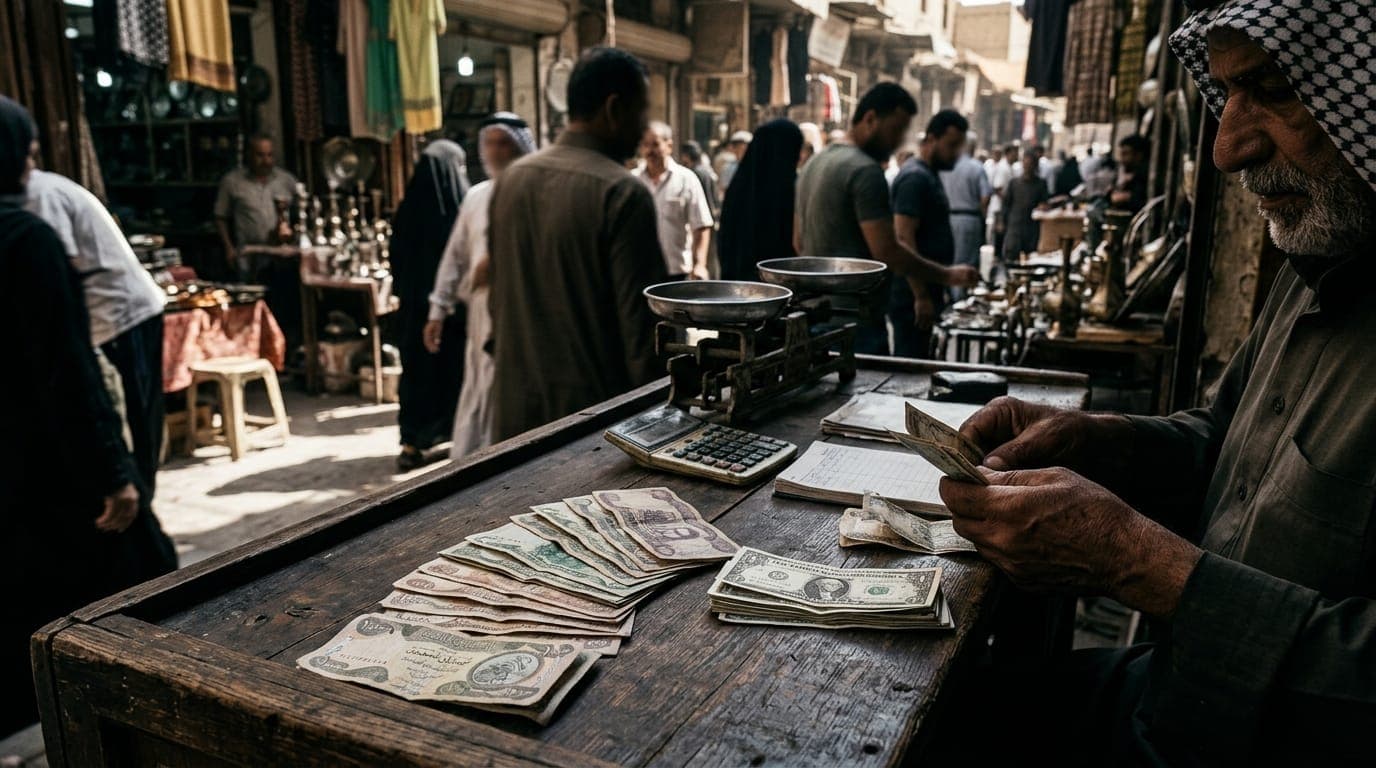
Baghdad chose salaries over the peg, handing every public-sector worker a silent pay cut and becoming the first Gulf Arab state to break its dollar rate since the US-Israel war on Iran began.
Key takeaways
- Iraq's central bank raised the public dollar-selling rate from ~1,320 to 1,520 dinars on October 7, per Cabinet Resolution No. 544, a 13% devaluation that Bloomberg called the first by a Gulf Arab state since the US-Israel war on Iran began in late February 2026.
- Baghdad was burning through roughly $5 billion a month in public-sector salaries, per Bloomberg chief emerging-markets economist Ziad Daoud, with oil export volumes running well below pre-war levels; the devaluation saves the government an estimated $650-700 million a month in dollar outflows, by back-of-envelope reckoning, without announcing a single pay cut.
- The parallel market isn't buying it: Baghdad street traders were already pricing the dinar at roughly 1,685 per dollar after the announcement, about 11% weaker than the new official floor, signaling the fiscal gap exceeds what a rate change alone can close.
Iraq's central bank, acting on Cabinet Resolution No. 544 adopted October 6, devalued the dinar by 13% effective Wednesday, October 7, raising the public retail dollar rate from approximately 1,320 to 1,520 dinars, according to reporting by The National from a document seen directly and confirmed independently by AP. The tiered structure now runs Finance Ministry to CBI at 1,500, CBI to banks at 1,510, and banks to the public at 1,520. Iraq is the first Gulf Arab state to break its dollar peg since the Hormuz crisis began, per Bloomberg's Khalid Al-Ansary and Omar Tamo.
The CBI's official statement called the move a response to "current economic and financial conditions, based on the recommendation of the cabinet," and pledged reserves are "sufficient to finance external trade, settle overseas bank-card transactions and provide cash to travelers," per Shafaq News. Reserves were sufficient enough, apparently, that each dollar now costs 15% more.
The Fiscal Math Behind the Peg Break
Iraq's economy generates roughly 90% of government revenue from oil, and nearly all of that oil moves through the Strait of Hormuz. Since the war began in late February 2026, export volumes have collapsed from more than 3 million barrels per day to roughly 2.6 million as of September, per Bloomberg data, with August running even lower at approximately 2.26 million barrels per day according to Al Jazeera's reporting on SOMO figures.
Bloomberg chief emerging-markets economist Ziad Daoud framed the choice plainly: "Baghdad had to choose between paying its public-sector salaries and defending the dinar's value, it picked the former," per Bloomberg. The arithmetic is not complicated. At the old rate of 1,320, public-sector salaries alone cost about $5 billion a month, Daoud said. At 1,520, the same dinar payroll costs roughly $4.3 billion. That works out, by back-of-envelope reckoning, to roughly $650-700 million a month saved, or close to $8 billion annualized, with zero press releases about wage cuts.
Iraqi analyst Mohammed al-Saffar, quoted by Reuters, called it "essentially a fiscal response to the shock to Iraq's oil revenues from the Iran war and disrupted exports" that "gives the government more dinars for each dollar of oil revenue, but raises import costs and reduces households' purchasing power." That is the fiat mechanic in its cleanest form: the state solves an accounting problem by diluting everyone else's purchasing power. The Roman currency debasement playbook updated for the petrodollar era.
The Black Market Already Priced This In
Devaluations rarely happen to markets. They happen after them. According to Shafaq News, the dollar hit six parallel-market highs in Baghdad this year alone, climbing from 150,400 dinars per $100 in January to roughly 168,000 per $100 by the time the announcement landed. Post-announcement, street traders pushed it to approximately 168,500 per $100, or roughly 1,685 dinars per dollar.
That puts the parallel rate about 11% weaker than the fresh official floor of 1,520. Market reports have the next watch level around 180,000 per $100. The black market is the honest ledger. The official rate is a fiction maintained for government accounting purposes; the real price is set by people who need dollars right now. That 11% gap is the market's verdict on whether a decree closes a fiscal hole.
This is the second currency in the Hormuz corridor to buckle under war pressure, following the Iranian rial's collapse past 2 million per dollar. The Strait of Hormuz drone incident that accelerated the conflict's early phase now has a second fiat casualty to its ledger. Petrodollar-dependent sovereigns have no margin for sustained supply shock. When oil revenue drops, the math on payroll versus currency defense becomes impossible, and governments always pick payroll.
One additional data point worth noting: CBI Governor Nizar Nasir has previously announced plans to launch a central bank digital currency. A government that just devalued 13% to cover payroll and is now pursuing programmable money presents a combination, debasement capability plus programmable control, that should register clearly for anyone tracking the dollar debasement trajectory.
What to Watch
The thesis that this is the first crack in a series, rather than a one-time corrective, gets falsified if Iraq's parallel market converges toward the 1,520 official rate within 60 days and FX reserves stabilize as Hormuz export volumes recover toward pre-war levels above 3 million barrels per day sustained. September export data showing partial recovery toward 2.6 million barrels per day is the bull case for dinar stability. If the parallel rate pushes past 180,000 per $100 or a second Gulf sovereign adjusts its peg, the corrective reading collapses.
Sources
- The National, Iraq devalues currency, document seen by The National
- AP via Chronicle Online, Iraq devalues its currency
- IraqiNews.com, Cabinet Resolution No. 544, CBI directive to banks
- Shafaq News, CBI pledges dollar supply after devaluation
- Al Jazeera, Iraq oil export alternatives, August SOMO data
- Rigzone (republishing Bloomberg, Al-Ansary / Tamo), first Gulf Arab state to devalue
Frequently Asked Questions
Why did Iraq devalue now rather than earlier in the war?
Reserves provided a buffer through the acute phase of the Hormuz closure. The cumulative six-month revenue shortfall, with exports running 30-40% below pre-war levels for an extended period, finally crossed the threshold where defending the peg meant an accelerating drawdown of FX reserves faster than the government could reduce spending. The devaluation was the point at which reserve defense became fiscally untenable relative to the payroll obligation.
Does the Iraqi dinar devaluation affect global oil supply?
Not materially on its own. The devaluation is a fiscal accounting response to a revenue hole that is already partially closing as September export data showed partial recovery. It does not represent a new supply disruption. The oil supply variable to watch remains Hormuz export throughput, not the dinar rate.
What is the gap between Iraq's official dinar rate and the parallel market rate?
The new official public rate is 1,520 dinars per dollar. Baghdad's parallel market was trading at approximately 1,685 per dollar after the announcement, a spread of roughly 11%. That gap is the market's real-time assessment of how much further adjustment the currency needs beyond what the government decreed.