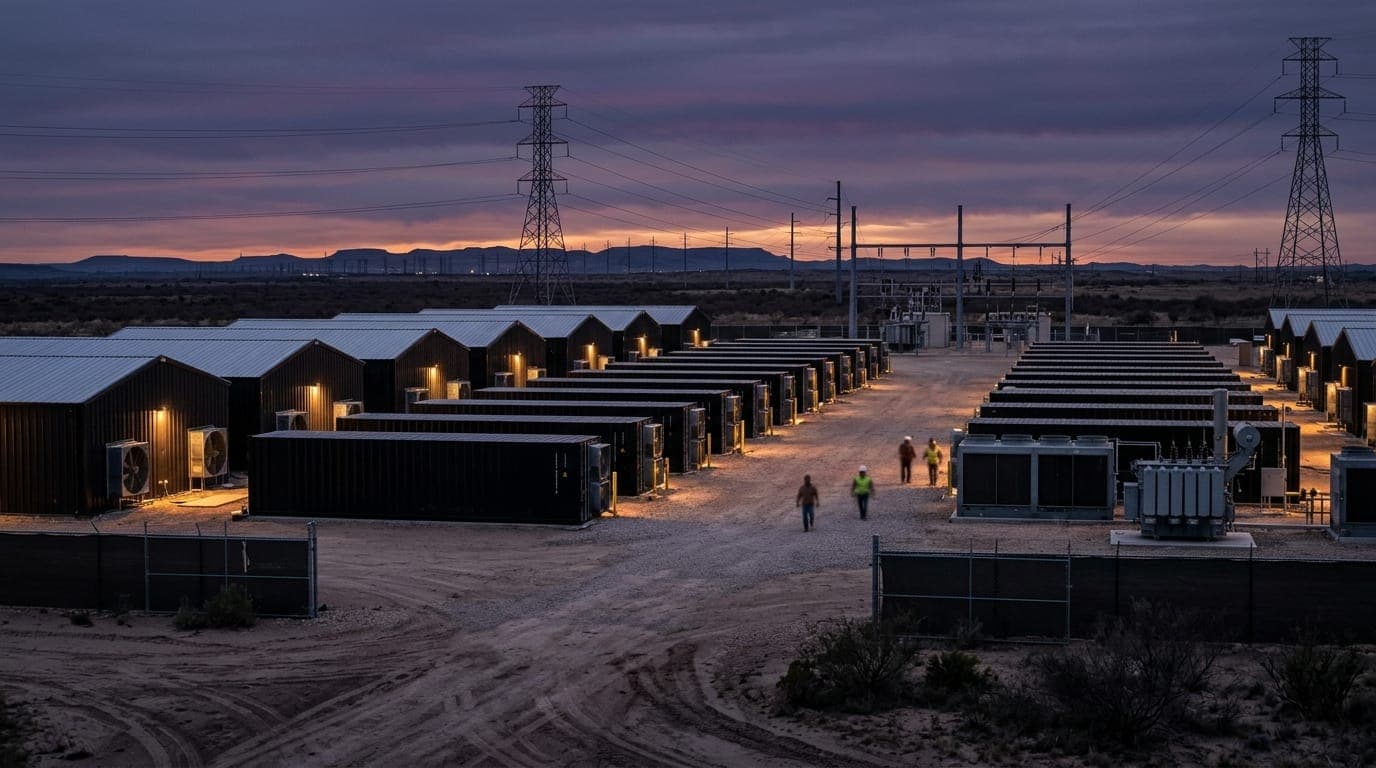
Iran's Central Bank Normalizes Bitcoin and USDT as Trade Settlement Rails
Iran's central bank has quietly dropped the requirement for exporters to route foreign earnings through its official FX platform, allowing cross-border trade to settle via domestic crypto exchanges in USDT and Bitcoin, first reported by the Financial Times.
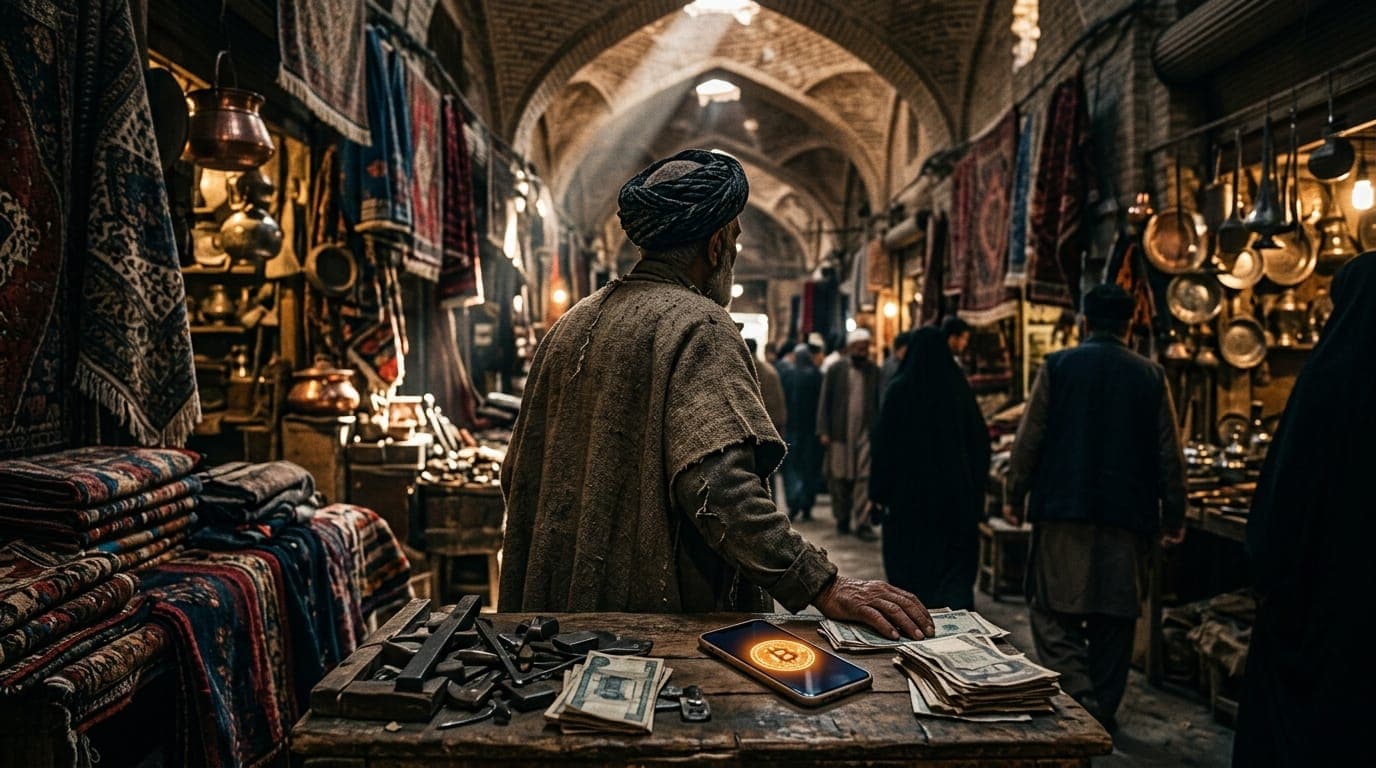
Iran's quiet FX policy shift turns domestic crypto exchanges into the country's de facto cross-border settlement layer, but the dominant tool has a kill switch built in.
Key takeaways
- Iran's central bank has dropped its requirement for exporters to repatriate foreign earnings through the official FX platform, allowing cross-border trade to settle directly via domestic crypto exchanges using USDT and Bitcoin, first reported by the Financial Times.
- The shift is an enforcement change, not a published law. No formal central bank directive exists, meaning the policy can reverse without notice and businesses using it have no legal certainty.
- USDT is the dominant settlement asset, and Tether has already frozen hundreds of millions of dollars in Iranian wallets under OFAC pressure, exposing the core fragility in using a permissioned stablecoin to escape a permissioned financial system.
Iran's central bank has quietly normalized crypto as a cross-border trade settlement layer, allowing exporters to repatriate overseas earnings through domestic crypto exchanges in USDT and Bitcoin and use those proceeds to fund imports directly, bypassing the country's official foreign-exchange platform entirely, first reported by the Financial Times. The practical effect: a state whose exporters were previously forced to surrender foreign earnings at below-market official rates now has a parallel settlement rail running on-chain.
An executive at a government-linked Iranian company told the FT that "receiving export payments in crypto has now become completely normalized." Alireza Bozorgmehri of the Iran Digital Transformation Association acknowledged that central bank scrutiny of crypto exchanges had loosened, while noting that current exchange volumes may not be sufficient to meet Iran's full trade needs. Tehran political economist Saeed Laylaz told the FT that the further the economy goes underground, the greater the demand for crypto. Eitan Danon, Chainalysis strategic national security adviser and former U.S. Treasury official, described adoption as a response to structural geopolitical reality rather than novelty.
The Numbers Behind the Normalization
TRM Labs attributed approximately $9.9 billion in cryptocurrency volume to Iran during 2025, per its 2026 crypto crime report measuring both incoming and outgoing transactions linked to Iranian services and entities.
On June 2, 2026, OFAC sanctioned Nobitex, Wallex, Bitpin, and Ramzinex, placing a major part of Iran's crypto exchange infrastructure under U.S. sanctions; Treasury described Nobitex as Iran's largest digital asset exchange, responsible for more than 50% of all Iranian digital asset inflows in 2025.
TRM estimated that the four exchanges handled about $7.7 billion, or 78%, of Iran's attributed cryptocurrency volume during 2025.
In July 2026, the U.S. Treasury added four wallets linked to Iran's central bank to its sanctions list, leading Tether to freeze $131 million in USDT across TRON-based addresses that previously held over $165 million. In August 2026, the U.S. broadened its crackdown on Iran to cover crypto, gold, shipping, and technology simultaneously.
Iran's first official crypto-settled import order was $10 million back in 2022. TRM observed approximately $10 billion in total crypto activity in Iran in 2025, including both inbound and outbound flows. That is not pocket change, but it is still a fraction of Iran's total trade obligations.
One structural fact cuts through all of it: this is an enforcement shift, not codified law. No formal central bank directive has been published. Businesses operating on this rail have no legal certainty and no recourse if the policy reverses overnight.
The Stablecoin Choke Point
USDT is the dominant channel here, not Bitcoin. USDT is dollar-denominated, price-stable, and practical for invoice settlement, but it comes with a corporate issuer that responds to OFAC. Tether has now frozen almost $475 million from wallet addresses identified by OFAC as belonging to the Central Bank of Iran, rendering nearly half a billion dollars in value inaccessible to the Iranian regime. Iran is, in effect, attempting to route around a permissioned financial system using a permissioned stablecoin.
The stablecoin-as-petrodollar thesis is useful context here: stablecoins extend dollar reach into jurisdictions the legacy system cannot touch, but they also extend dollar enforcement into those same jurisdictions the moment Washington calls. The kill switch travels with the asset.
Bitcoin has no issuer to compel and no freeze function at the protocol level. U.S. enforcement can target exchanges, on-ramps, and counterparties, but it cannot touch Bitcoin held in self-custody. That is the operational gap that sanctions pressure keeps widening. The Geyser-Cuba episode illustrated the same point from the other direction: even non-custodial infrastructure can comply when a corporate layer exists somewhere in the stack. Where there is no corporate layer, there is no compliance handle.
Iran's experience is a live field test of this hierarchy. USDT works until Tether freezes it. Bitcoin works until there is no Bitcoin left in the stack, which is a different problem entirely.
What to Watch
The falsifiable question is whether Iran's trading partners, primarily Turkey, China, the UAE, and Iraq, accept crypto settlement at volumes sufficient to matter against Iran's full trade balance. If they do, the proof of concept scales and every other country sitting under the threat of dollar exclusion has a working template to study.
If Tether continues freezing Iranian wallets fast enough to make USDT unreliable as a settlement layer, the stablecoin leg of this experiment breaks on its own, and the pressure shifts entirely onto Bitcoin. The DeepSeek-Huawei episode showed that sanctions can accelerate the adversary's resourcefulness rather than degrade it. The same dynamic is running here in the monetary layer.
Sources
- First reported by the Financial Times, September 9, 2026
Frequently Asked Questions
Why is Iran using USDT instead of Bitcoin for most trade settlement?
USDT is dollar-denominated and price-stable, which makes real-time invoice pricing and settlement straightforward without FX risk on the trade leg. Bitcoin's volatility creates hedging complexity for exporters pricing physical goods. The tradeoff: USDT's stability comes from Tether, a corporate issuer that freezes wallets on OFAC demand. Iran is accepting counterparty risk on the stablecoin in exchange for operational convenience.
Can U.S. sanctions stop Iran from using Bitcoin specifically?
Bitcoin has no issuer to compel and no freeze function at the protocol level. U.S. enforcement can sanction exchanges, blacklist addresses, and pressure on-ramps, but it cannot freeze Bitcoin held in self-custody. That is the structural difference between Bitcoin and every stablecoin in this toolkit. The enforcement surface exists at the edges of the network, not at the protocol itself.
How much of Iran's total trade does $9.9 billion in crypto volume actually represent?
Bozorgmehri of the Iran Digital Transformation Association acknowledged that exchange volumes have risen but may not be sufficient to meet Iran's full trade requirements. The $9.9 billion TRM figure for 2025 is real volume, but Iranian trade obligations run considerably higher. Crypto settlement is a meaningful and growing channel, not yet a complete replacement for conventional trade finance.