Google Targets 15 Million TPUs by 2028, Rivaling Nvidia's GPU Volume
A Fubon Research channel check puts Google's 2028 TPU target at 12-15 million units, a volume that rivals Nvidia's entire data-center GPU shipment forecast. The energy math is the part no one is printing.
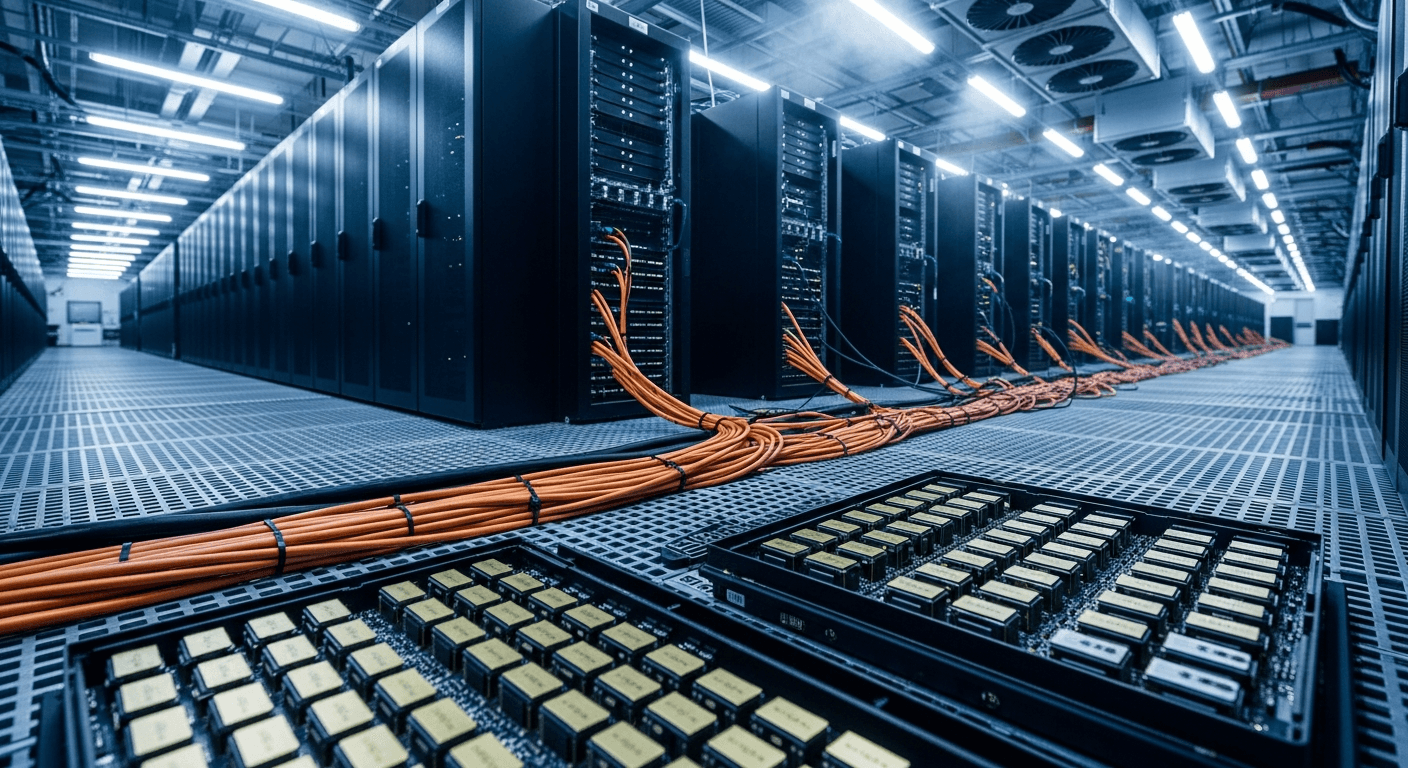
A Fubon Research channel check says Google's next-gen chip ambitions could match or exceed Nvidia's total data-center GPU shipments, with consequences that extend well beyond the chip industry.
Key takeaways
- Fubon Research, in an analyst channel-check note surfaced by Tom's Hardware, says Google is targeting 12-15 million 9th-generation (V9) TPUs for 2028, a figure Google has not publicly confirmed.
- TSMC alone cannot fill that order. Google has already placed a 3+ million TPU order with Intel's foundry for 2028 production, per The Information, signaling that advanced-packaging capacity is the binding constraint on the entire AI buildout.
- Anthropic has committed to approximately 3.5 GW of power capacity tied to Google TPUs starting 2027, per a Broadcom SEC filing, a single commitment that illustrates the scale of grid resources hyperscalers are pulling away from every other power consumer, including Bitcoin miners.
According to a Fubon Research channel-check note reported by Tom's Hardware, Google is targeting production of 12-15 million 9th-generation TPUs in 2028. Fubon estimates Nvidia will ship 12.4 million data-center AI GPUs that same year, also an analyst estimate. If the Fubon figures hold, Google's custom silicon fleet would match or exceed Nvidia's volume in a single year. This is a resource story, not a chip story.
The Numbers and What They Actually Mean
The 12-15 million figure comes from a Fubon Research analyst channel check, not a Google filing or press release. Google has not confirmed the target publicly. The range itself, a 20% spread, reflects how uncertain these supply-chain reads are. The consensus among Morgan Stanley, Wolfe Research, and Mizuho prior models sits closer to 7 million Google TPUs by 2028, making Fubon's upper end nearly twice the mainstream forecast.
One data point that is confirmed: Google ordered 3+ million TPUs from Intel's foundry (18A process, EMIB packaging) for 2028 production, first reported by The Information, citing four people familiar with the matter. Fubon's note addresses why directly: "Although we do not have the detailed allocation yet, we think it is difficult to reach Google's target with TSMC alone, and Intel's supply is a must by 2028." TSMC's CoWoS advanced-packaging capacity is effectively sold out through 2027. Intel's foundry is not a backup option. At Google's stated scale, it is a requirement.
The V9 generation compounds the capacity problem. Fubon notes each V9 unit carries four compute dies, meaning "capacity consumption will more than double" versus 2027 chips. More dies per unit means more packaging steps and more TSMC or Intel fab time per chip, and greater aggregate power load per rack once deployed at scale.
Morgan Stanley separately projects that each incremental 500,000 TPUs Google sells externally could generate approximately $13 billion in revenue and add roughly $0.40 to Alphabet EPS in 2027, per a note cited by Yahoo Finance; the note date has not been independently confirmed and the figure may have been updated since. That figure explains why, per CNBC's reporting on Google's Q1 2026 earnings, Google announced it would begin selling TPUs directly to external customers' data centers, turning the company from a cloud provider into a chip vendor. Anthropic has committed to deploying up to 1 million TPUs with Google starting 2027, and separately secured approximately 3.5 GW of TPU-based compute capacity starting 2027 per a Broadcom SEC filing. Meta signed a multiyear TPU access agreement in February 2026, first reported by The Information.
The Capex Arms Race Has a Power Bill
The chip volume is the headline. The power draw is the consequence.
Anthropic's commitment alone covers approximately 3.5 GW of power capacity tied to Google TPUs, per Broadcom's April 2026 SEC filing. For context, large Bitcoin mining operations are typically measured in hundreds of megawatts. A single hyperscaler customer relationship is consuming gigawatts.
When V9 TPUs, each unit carrying four compute dies with packaging capacity consumption more than doubling versus the prior generation, fill out a 12-15 million unit fleet, the aggregate load is in a different weight class than anything the grid has absorbed before.
This matters directly for Bitcoin miners. Hyperscaler data centers and Bitcoin mining operations compete in the same markets: Texas, Virginia, and every deregulated grid where interconnection queue positions and long-term power purchase agreements determine who gets cheap electrons and who gets priced out.
Every gigawatt Google, Microsoft, or Amazon locks into a 15-year PPA is a gigawatt Bitcoin miners have to outbid or forfeit. The AI capex buildout is already straining transmission infrastructure and triggering community resistance in markets across the country. The chip ambitions Fubon is describing would accelerate both.
The vertical integration angle matters too. Google's stated architecture goal is full-stack control: custom silicon, proprietary software, model training, and the customer relationship in a single closed system. SemiAnalysis rates Google's TPUs competitive with Nvidia for both training and inference, per its analysis of TPU utilization economics. That capability inside a proprietary stack, unavailable to permissionless builders, is the opposite architecture from Bitcoin's. The AI capex debt problem is not unique to Google, but Google's ambition to become both the chip supplier and the model provider to its own competitors takes it further than most.
There is also a math problem worth flagging. Analysts forecast combined ASIC shipments from all hyperscalers, Google, Amazon, Microsoft, and Meta combined, in the range of roughly 15 million total in 2028.
Fubon's note puts Google alone at 12-15 million. One of these reads is badly wrong. Either the consensus is drastically underestimating the buildout, or the channel-check figures are aspirational. Either way, the capital being committed against these projections is real, and it is flowing now.
What to Watch
The Intel foundry relationship is the near-term signal. Intel's 18A process has faced yield and delay questions throughout its development.
If Intel cannot deliver on the 3+ million TPU order at volume and schedule, Google's 2028 production target compresses toward the Morgan Stanley consensus of 7 million, not the Fubon ceiling of 15 million. Watch Intel's foundry utilization disclosures and any Google supplier commentary through the back half of 2026.
The TSMC CoWoS allocation picture for 2027 will also clarify by Q4 2026. If TSMC capacity opens up, the Intel dependency weakens. If it stays constrained, Fubon's thesis about Intel being a "must" supplier gets stronger. Bitcoin miners and energy developers watching PPA markets should treat the Anthropic 3.5 GW commitment as a floor, not a ceiling, on what hyperscalers are prepared to absorb.
Sources
- Tom's Hardware: Fubon Research channel-check note on Google 12-15M TPUs
- Tom's Hardware: Google-Intel 3M+ TPU foundry order
- Tom's Hardware: Broadcom 3.5 GW Anthropic TPU deal (Broadcom SEC filing, April 2026)
- Yahoo Finance: Morgan Stanley TPU revenue and EPS estimates
- CNBC: Google TPU external sales announcement, Q1 2026
- The Information: Google-Intel 3M+ TPU order (first reported by The Information, citing four people familiar with the matter; paywalled)
- The Information: Meta multiyear TPU agreement (first reported by The Information, February 26, 2026; paywalled)
Frequently Asked Questions
SemiAnalysis rates Google's TPUs competitive with Nvidia for both training and inference tasks. Nvidia's GPUs are available to any buyer with a purchase order, while Google's TPUs are accessed through Google Cloud or, increasingly, direct deployment agreements with select partners like Anthropic and Meta. The hardware performance may be comparable. The distribution model is not.
The bottleneck is advanced packaging, not fab capacity in the traditional sense. TSMC's CoWoS-L process, required for the multi-die chiplets in Google's V9 TPUs, is sold out through at least 2027. CoWoS tools take years to install and qualify. No amount of urgency from Google or any other hyperscaler accelerates that timeline. Intel's EMIB packaging technology is the alternative Google has turned to, which is why the 3+ million unit Intel foundry order exists.
Directly and competitively. Hyperscaler data centers and Bitcoin mining facilities compete for interconnection queue positions, substation capacity, and long-term power purchase agreements in the same deregulated electricity markets.
When Anthropic commits to 3.5 GW tied to Google TPUs, that capacity is no longer available to other industrial power consumers. As the V9 fleet scales, the aggregate load grows. Bitcoin miners who have not already locked in long-term power agreements face a tightening market where hyperscalers, with longer contract terms and larger balance sheets, hold structural advantages in procurement.