DeepSeek Orders 160,000 Huawei Chips, Proving U.S. Sanctions Backfired
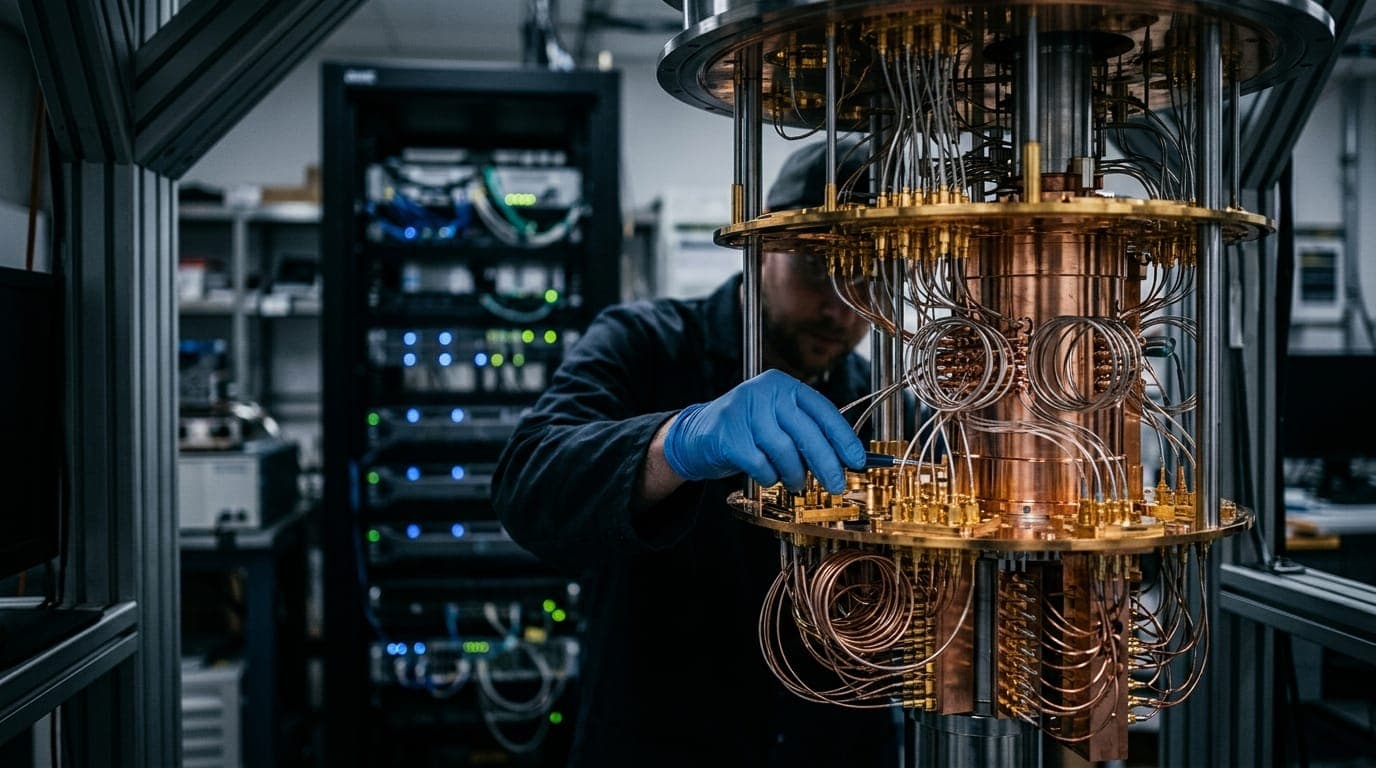
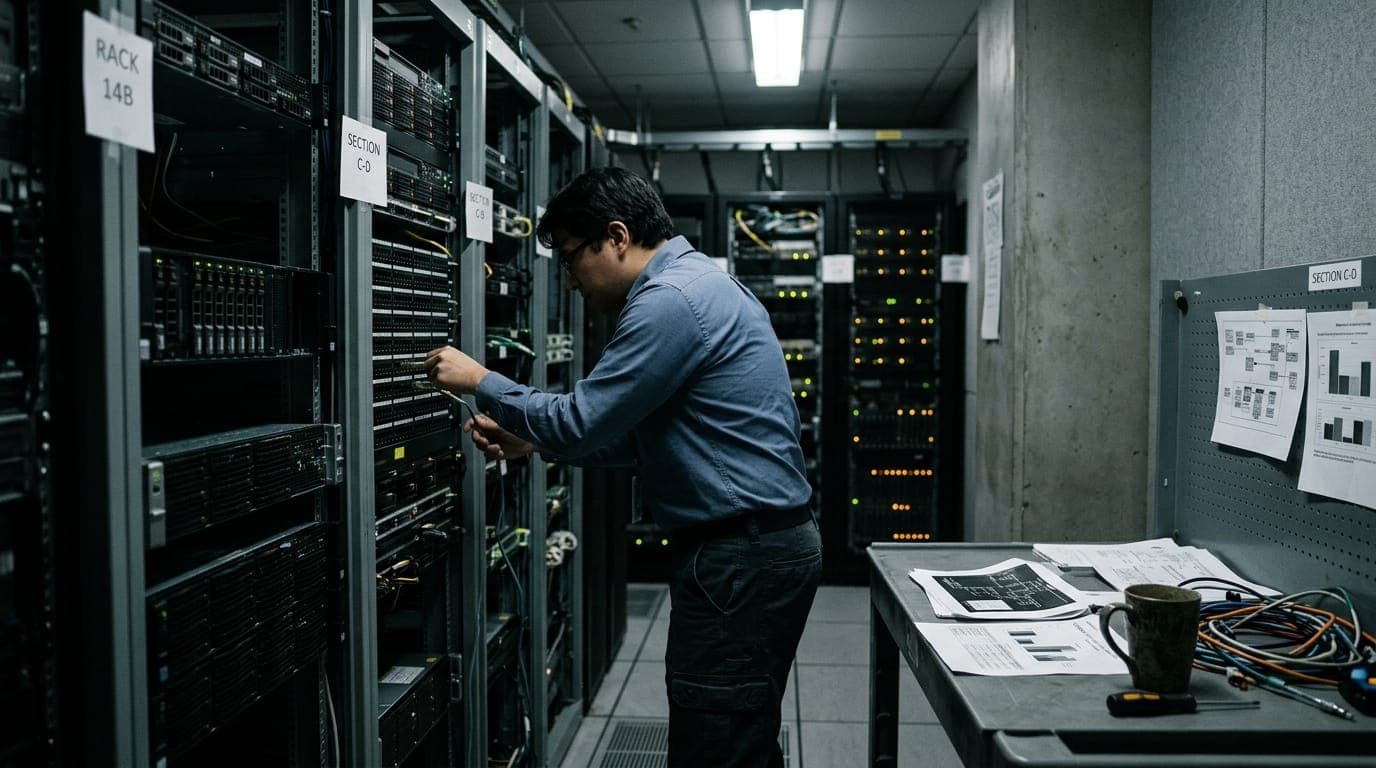
DeepSeek is ordering at least 160,000 Huawei Ascend 950DT chips for a gigawatt-scale data center in Inner Mongolia, per Bloomberg. NVIDIA's China AI share is forecast to crater from ~40% to ~8% in 2026. The sanctions strategy didn't stop Chinese AI. It funded its independence.
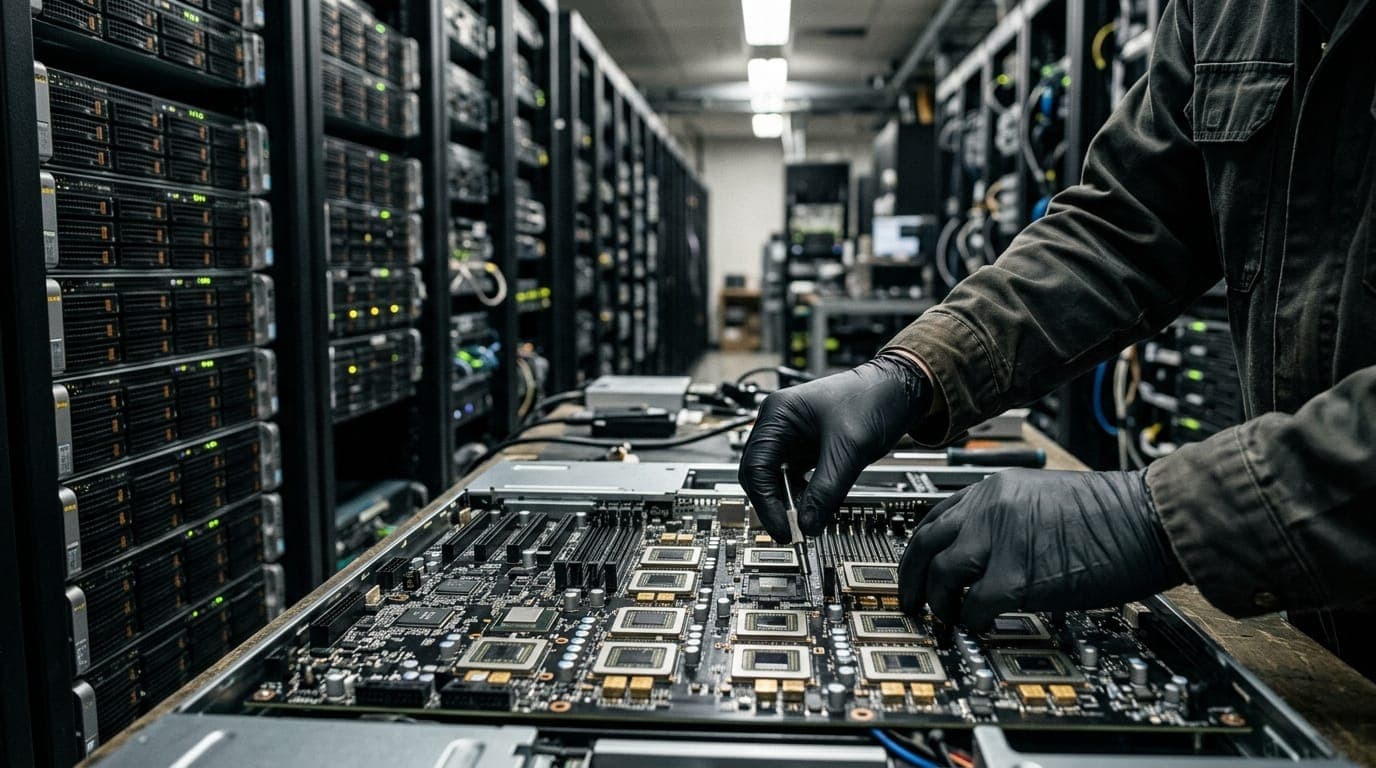
The inference stack is going sovereign. NVIDIA's China chapter is effectively over.
Key takeaways
- DeepSeek plans to deploy at least 160,000 Huawei Ascend 950DT chips at a gigawatt-scale data center in Ulanqab, Inner Mongolia, per Bloomberg, making it one of the largest known clusters of domestically manufactured Chinese AI accelerators.
- NVIDIA's China AI chip market share is forecast to fall from roughly 40% in 2025 to approximately 8% in 2026, per Bernstein Research via the Associated Press. Jensen Huang has publicly acknowledged NVIDIA has "largely conceded" that market to Huawei.
- DeepSeek is still training models on NVIDIA hardware. The inference stack is going sovereign; the training dependency has not closed yet. Whether it does in the next 18 months is the signal to watch.
DeepSeek is ordering at least 160,000 Huawei Ascend 950DT chips to power a gigawatt-scale data center in Ulanqab, Inner Mongolia, Bloomberg reported on September 4, 2026. The facility, planned at 1 GW of capacity at full buildout, would run the chips for inference only. DeepSeek is still training on NVIDIA hardware, a distinction that matters, but the production-facing layer of its AI stack is moving off American silicon entirely.
The Ascend 950DT carries 144 GB of HBM memory and 4.0 TB/s of memory bandwidth. At roughly 111,000 yuan (approximately $16,000) per chip at current street prices, the order represents one of the largest single commitments to domestically produced Chinese AI accelerators ever reported. Huawei's production capacity for the 950DT is constrained by high-end memory shortages, limiting output to the low hundreds of thousands of units per year. Bloomberg reports fulfillment could take more than a year, and DeepSeek has asked Beijing to pressure Huawei to prioritize its allocation.
The Market Share Collapse NVIDIA Already Acknowledged
Jensen Huang told CNBC on May 21, 2026 that NVIDIA has "largely conceded" China's AI chip market to Huawei. "Huawei is very, very strong," he said. That was not a concession anyone would have expected two years ago when the U.S. export control regime was being tightened specifically to prevent this outcome.
Bernstein Research, per the Associated Press, puts numbers to Huang's admission: NVIDIA's China AI chip share falls from roughly 40% in 2025 to roughly 8% in 2026. Huawei is projected to reach approximately 50% share over the same period. Steven Glinert, CEO of Sphere Semi, posted on X (@StevenGlinert) on September 4 that the Chinese domestic market is seen as a lost cause vs Huawei, and that NVIDIA is not as committed to being able to sell there.
Huawei's AI chip revenue ran $7.5 billion in 2025 and is projected to reach approximately $12 billion in 2026. Huawei is a domestic industry at scale, not a niche supplier filling gaps.
The non-Nvidia AI chip market has been moving faster than the official consensus allowed. DeepSeek's order is the infrastructure confirmation of a trend that was already visible in enterprise evaluation data.
Sanctions as Accelerant
The U.S. chip export control strategy rested on a falsifiable premise: that denying China access to advanced American semiconductors would keep Chinese AI labs dependent on American silicon, slowing frontier AI development. DeepSeek's order is direct evidence the premise was wrong, and the causal arrow may actually run the other direction.
Bloomberg confirms DeepSeek previously attempted to train models on Huawei chips and reverted to NVIDIA for training because the Huawei software stack and interconnect architecture were not ready for distributed training at scale. The move to Huawei inference at 160,000-chip scale means China is now building and operating production AI infrastructure without American hardware at the serving layer, the layer end users actually touch, even as the training dependency remains.
The training dependency is the remaining fault line. If a Chinese lab closes it, the decoupling thesis is confirmed. If no Chinese lab reaches frontier training capability on domestic silicon within 18 months, the thesis is incomplete.
Huawei's Ascend chip deployments are already reaching military and government clients internationally. The domestic inference build-out at DeepSeek's scale is a different order of magnitude.
What This Means for Energy and Compute Globally
A bifurcated AI hardware world, NVIDIA in the West and Huawei Ascend in China, does not mean less AI infrastructure buildout. It means two independent infrastructure build-outs running simultaneously. That is more capex and more power demand globally, not less.
The Ulanqab site is sited specifically for cheap renewable power and cold-climate cooling. The region's low average temperatures reduce cooling costs significantly, and proximity to Inner Mongolia's wind and solar generation reduces power costs. Bitcoin miners in similar geographies compete for the same dispatchable power and real estate. A 1 GW AI facility in that corridor is not an abstract concern for energy markets in the region.
The AI capex machine has been modeled largely on a NVIDIA-centric architecture. DeepSeek's open-weights efficiency work rattled NVIDIA's stock in January 2025 by demonstrating more inference performance per chip than the market expected. This order is the physical infrastructure expression of the same dynamic: more output per dollar of hardware, using sovereign chips, at gigawatt scale.
What to Watch
Supply is the binding constraint right now. Huawei cannot produce 160,000 Ascend 950DT units quickly, and DeepSeek is lobbying Beijing to intervene on its allocation. Watch whether Beijing treats this as a strategic priority, which would signal state-directed acceleration of the domestic AI chip supply chain, and watch whether DeepSeek's next model release is trained on Huawei hardware. That would close the last gap in the decoupling thesis.
Update, October 20, 2026
The relationship between DeepSeek and Huawei has moved well past a procurement arrangement. The Information reported that DeepSeek is working closely with Huawei to shape the design of future AI chips, in a collaboration that could help China build frontier AI models without Nvidia's technology.
DeepSeek is shaping core design choices in Huawei's next chips, including how computation is split up and how data moves between processors, with Huawei engineers working from DeepSeek's offices.
DeepSeek plans to begin using Huawei's Ascend 950DT chips for model training as soon as the end of 2026, and Huawei plans to prioritize DeepSeek for most of its next-generation Ascend 960DT chips, expected in Q1 2027. That directly closes the training dependency the original story flagged as the remaining fault line.
The software layer is moving too. On September 30, DeepSeek open-sourced an Ascend port of TileLang along with Ascend versions of its DeepGEMM and DeepEP libraries, explicitly crediting Huawei and touting a jointly optimized 128-chip Ascend 950 supernode.
DeepSeek is using TileLang to help developers adapt AI software across chip architectures, reducing reliance on Nvidia's CUDA ecosystem. Nvidia spent two decades building its moat by tuning hardware and software in lockstep with its biggest customers. China is now running the same playbook with the lab and the chipmaker sharing office space.
On the U.S. side, the bifurcation is being codified in law. DHS Exclusion and Removal Order #2026-01, signed July 24 and filed publicly October 19, orders all U.S. civilian agencies to immediately remove DeepSeek products and any third-party software built on DeepSeek implementations from their IT systems.
The order invokes the Federal Acquisition Supply Chain Act and a Federal Acquisition Security Council review, citing multiple threat vectors including possible transfer of sensitive data to the PRC, intelligence gathering on U.S. persons, and malware risks inside the models themselves. Two stacks, two regulatory perimeters, shrinking overlap.
Sources
- Bloomberg, "DeepSeek Plans Big Huawei AI Chip Order to Power New Data Center," September 4, 2026
- CNBC, Jensen Huang on China AI chip market, May 21, 2026
- Bernstein Research, China AI chip market share forecast, per the Associated Press
Frequently Asked Questions
Why is DeepSeek using Huawei chips for inference but still using NVIDIA chips for training?
Training is computationally more demanding and less tolerant of inconsistencies in chip-to-chip communication. Huawei's interconnect and software stack are still maturing for distributed training at the scale frontier labs require. The inference/training split is a pragmatic workaround while Huawei's ecosystem catches up, not an endorsement of permanent dual-vendor dependence.
Does DeepSeek's Huawei order prove U.S. chip sanctions have failed?
The sanctions blocked advanced chip exports and forced substitution. Huawei's Ascend 950DT is slower per chip than NVIDIA's current products, but cluster-scale economics and sovereign supply reliability are changing the calculus for Chinese labs. NVIDIA's projected China share of roughly 8% in 2026 versus roughly 40% in 2025 is not a policy success by any reasonable definition of the original objective.
What does a 1 GW AI data center in Inner Mongolia mean for energy markets?
A 1 GW facility at full buildout draws power comparable to roughly 750,000 homes. Sited in a region with cheap wind, solar, and cold-climate cooling, it competes directly for the same energy resources that attract Bitcoin mining operations and other power-intensive compute workloads. Two independent AI infrastructure build-outs, rather than one, means total global AI power demand rises, not falls.