The Cash App Backdoor: How 59 Million Americans Can Now Pay With Bitcoin Without Knowing It
Block turned its dollar wallet into a Lightning payment rail. The businesses cashing in first are the ones Visa and Mastercard treat as second-class.
Block turned its dollar wallet into a Lightning payment rail. The businesses cashing in first are the ones Visa and Mastercard treat as second-class.
Key takeaways
- Any eligible Cash App user can scan a Lightning invoice and pay it straight from their US dollar balance, with no bitcoin knowledge, no wallet setup, and no exposure to price.
- Block has enabled bitcoin payments for more than a million Square merchants, with zero processing fees until 2027 and a flat 1% after that.
- The first businesses to benefit are the "high-risk" merchants the card networks punish with 5% to 8% fees and rolling reserves. One US peptide company, Peerless Peptides, skipped cards entirely and now takes about half its orders over Bitcoin, Lightning, or Cash App.
For years the hardest part of accepting bitcoin was never the merchant. It was the customer standing at checkout who had no idea how to send it.
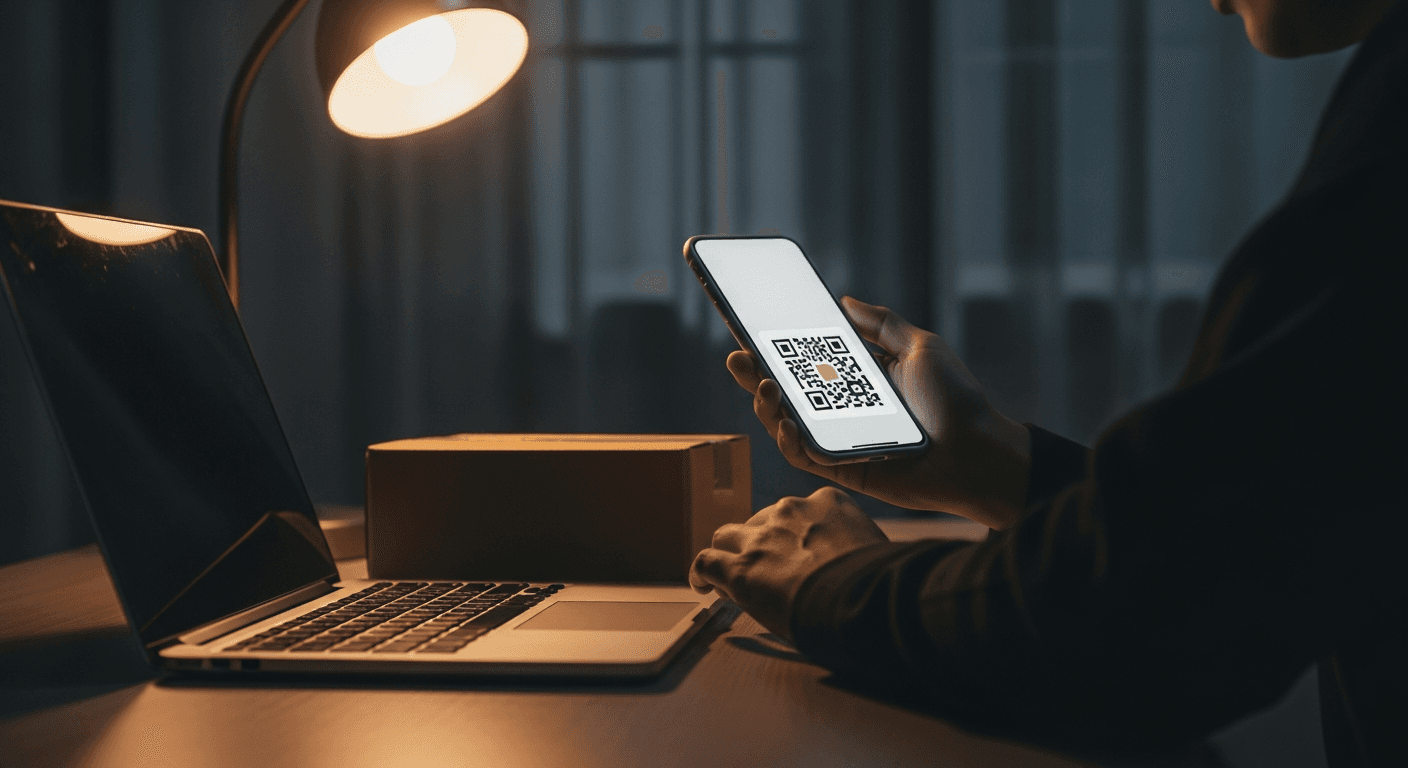
That problem quietly died this year. Cash App, the dollar wallet that roughly 59 million people open every month, now lets any user scan a Lightning invoice and pay it directly from their cash balance (Block's FY2025 filing puts monthly transacting actives at 59 million). The person paying does not need to own a single sat, download a wallet, or understand what the Lightning Network is. They point their phone at a QR code and the dollars leave their account. On the other side, the merchant receives an instant, final, permissionless bitcoin payment.
The customer was always the bottleneck
Walk through the old flow. To pay a merchant in bitcoin, a customer first had to buy some, figure out how to custody it, and then work out how to send it over an unfamiliar network. Most people never got past step one. So "we accept bitcoin" was a bumper sticker, not a checkout button.
Cash App collapses all three steps into a camera. Its users already have dollars loaded and a QR scanner one tap away. Eligible customers can select US dollars after scanning a Lightning invoice and pay from their cash balance without ever holding bitcoin, up to $999 every seven days, and the payment clears in seconds. The buyer pays in bitcoin and never knows it. They think they just used Cash App.
Block is building the other end of the rail at the same time. Bitcoin payments are rolling out across Square, the point-of-sale network that runs millions of American small businesses. Block has now crossed a million bitcoin-enabled merchants, with zero processing fees until 2027 and a 1% flat fee after that, well under standard card rates. Merchants settle in dollars by default, so volatility never touches the books. Lightning invoicing on the merchant side, Cash App on the consumer side, and Block owns both.
This is the part the price charts miss. The rails for everyday bitcoin spending got built while everyone was arguing about the exchange rate.
Bitcoin's first customers are the ones the card networks punish
The businesses that move first are not doing it for the orange pill. They are doing it because the legacy system treats their entire industry as a liability.
Card networks sort merchants into risk buckets by category code. Supplements, nutraceuticals, and research chemicals get swept into the "high-risk" pile automatically, and the algorithm does not care whether you run an accredited lab or a scam. High-risk processors routinely charge 5% to 8% per transaction, hold 10% rolling reserves for months, tack on chargeback fees, and reserve the right to freeze or terminate the account with little warning.
That is soft financial censorship. A handful of intermediaries decide which legal businesses are allowed to transact, then tax them for the privilege. Approval is hard to win and easy to lose, withheld funds are common, and plenty of peptide sellers do not take cards at all. Bitcoin routes around the entire arrangement. No chargebacks to insure against, no reserve held against future sales, no processor that can cut you off on a Tuesday. Fix the money, and the middleman who held your revenue as collateral simply disappears.
Peerless Peptides skipped the card networks entirely
Peerless Peptides is a US-based research-chemical company. It sells laboratory-grade peptides labeled for research use only, mixed and bottled in the States, with third-party ISO-accredited lab testing and a certificate of analysis for every batch. It also sits squarely in one of the categories the card networks treat as radioactive.
Peerless does not accept credit cards at all. Around half of its orders are now paid over Bitcoin, Lightning, or Cash App, the company says.
Its answer was to accept bitcoin over Lightning using Strike's API to generate the invoice, and to give customers three ways to pay at checkout: Bitcoin, Cash App, or Lightning. Then it does something the typical Square merchant does not. Peerless keeps the bitcoin it takes in rather than converting it back to dollars, because the people running the company have held bitcoin for more than a decade and treat it as the company's savings.
For the customer, none of this feels like bitcoin. They pick Cash App, scan the QR code, and pay from the dollar balance already in the app, and most will never realize what rail carried the payment. For the business, it means an instant bitcoin payment that cannot be charged back, and none of the high-risk fees or withheld reserves that come with taking cards in this industry.
There is a logic to a company this obsessed with purity choosing the hardest money ever made. Fiat is the story of quality quietly degrading, with shrinkflation, hidden fees, and a dollar that buys less every year. Bitcoin is the opposite, a fixed supply that cannot be inflated.
"We refuse to cut corners on the product, so we had little reason to be paid in a currency built on cutting them," said Michael, a co-founder of Peerless Peptides.
That is the entire thesis compressed into one storefront. A company with every fiat reason to want an exit found one its customers can actually use, without asking a single person to become a Bitcoiner first.
What to watch
The claim here is simple and falsifiable. Bitcoin payments scale through familiar interfaces and merchants who have no better option, not through speculation and not through evangelism. Cash App supplies the familiar interface. High-risk verticals supply the motivated merchants.
The trigger that would break the thesis is Block itself. If regulatory pressure forces it to wall off the dollar-funded Lightning send, or the $999 weekly cap stays low enough to keep this a novelty, the wedge closes. So watch two things: whether that cap rises as the rollout matures, and whether more high-risk categories quietly migrate to Lightning the way peptides did. If both hold, this stops being a curiosity and starts being infrastructure.
The freaks have been paying each other over Lightning for years. The shift worth noticing is that now anyone with a Cash App balance can too, and most of them will never know that is what they did.
Sources
Frequently Asked Questions
Can you actually pay with Bitcoin using Cash App?
Yes. A Cash App user can scan a Lightning invoice QR code and pay it from their bitcoin balance, or, if eligible, directly from their US dollar balance, up to $999 every seven days. Payments settle in seconds.
Do customers need to own bitcoin to pay a Lightning invoice on Cash App?
No. Eligible Cash App users can select US dollars after scanning the QR code and pay from their cash balance without holding any bitcoin. The merchant still receives a bitcoin payment.
Why do peptide companies and other high-risk businesses accept bitcoin?
Card networks classify them as high-risk and charge 5% to 8% per transaction plus rolling reserves, with a standing threat of account termination. Bitcoin over Lightning settles instantly, cannot be charged back, and costs a fraction as much.