Bulgaria Defies Iran's Warning, Approves 8 KC-135 Tankers at Bezmer Air Base
Bulgaria's parliament voted 136-13 on July 22 to host 8 US KC-135 refueling tankers and 250 troops at Bezmer Air Base through October 1, defying an Iranian warning that Sofia would become complicit in aggression and war crimes.
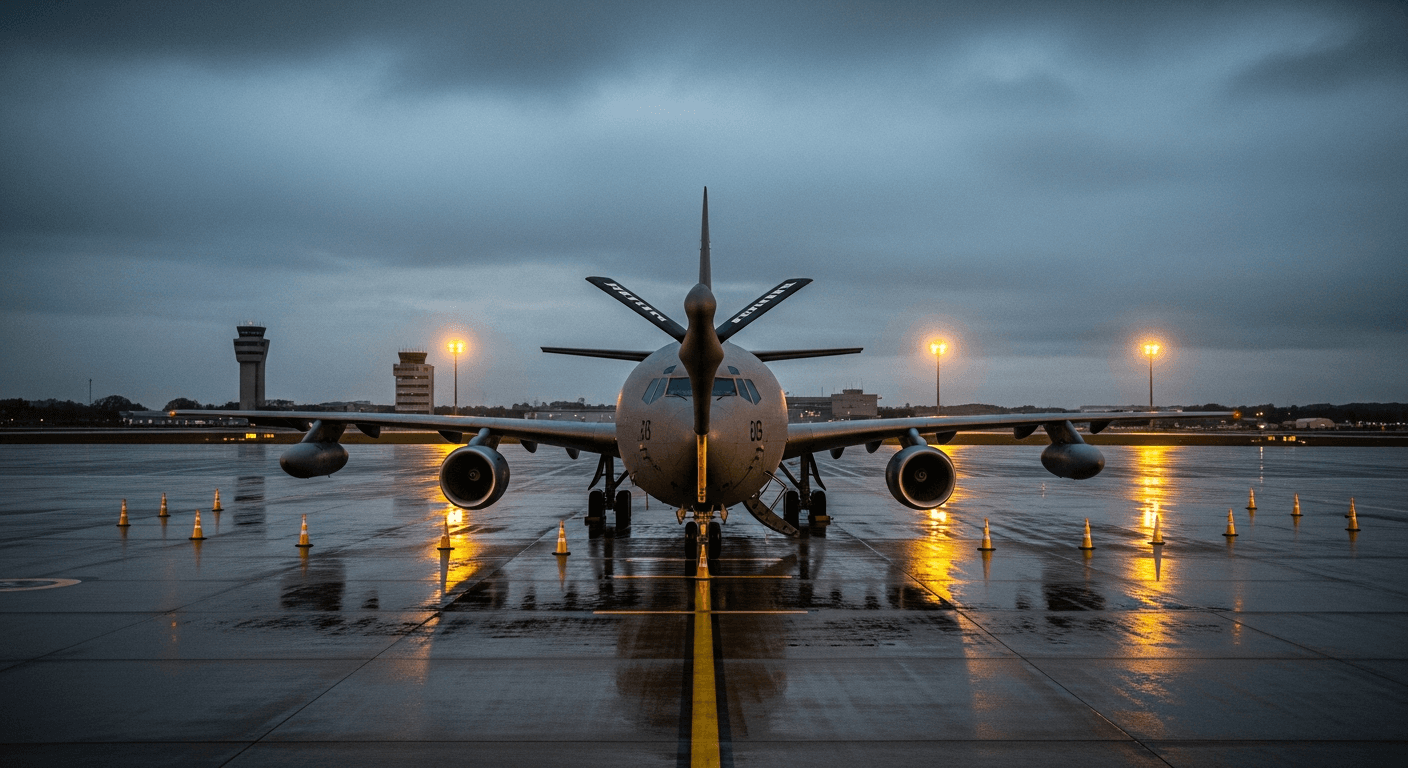
Iran called it complicity in war crimes. Bulgaria voted yes anyway, handing Washington a forward logistics node as the Strait of Hormuz burns.
Key takeaways
- Bulgaria's parliament voted 136-13 on July 22 to authorize up to 8 US KC-135 refueling tankers and 250 troops at Bezmer Air Base from July 24 through October 1, 2026.
- Iran's Foreign Ministry publicly warned Sofia it would be complicit in "aggression and war crimes," a rare direct deterrence threat against a NATO member, issued before the vote and ignored.
- The KC-135 deployment extends US strike radius at a moment when the Strait of Hormuz, the chokepoint for roughly 20% of global oil, has already been attacked and the June 17 ceasefire has collapsed.
Bulgaria's National Assembly voted 136-13, with two abstentions, on July 22 to authorize up to 8 US KC-135 Stratotanker aircraft and up to 250 military personnel at Bezmer Air Base in the country's southeast, per Defense News and the Sofia Globe. The deployment window runs July 24 through October 1, 2026. Iranian Foreign Ministry spokesman Esmaeil Baghaei had already warned publicly that any such participation would amount to "complicity in the crimes of aggression and war crimes," urging Bulgaria not to become "an accomplice of aggressors and lawbreakers," per Defense News and Iranian state media PressTV. Sofia voted yes anyway.
Bulgarian Prime Minister Rumen Radev framed the deployment narrowly, per the Associated Press: the tankers are for "logistical missions involving in-flight refueling outside Bulgarian airspace," and combat operations against Iran from Bulgarian soil are "categorically ruled out." Defense Minister Dimitar Stoyanov told the Sofia Globe that a military intelligence assessment found "risks, but no direct threat to national security." The US request was submitted via the US Embassy in Sofia under the 2006 US-Bulgaria Defense Cooperation Agreement. Bezmer is a joint-use facility with established US operational access, per Novinite.
What KC-135s Actually Change
A KC-135 Stratotanker's job is to extend range. Without aerial refueling, US strike aircraft operating from European NATO bases face sharp distance limits over Iranian territory. With tanker support at Bezmer, roughly 260 km southeast of Sofia, those same platforms can sustain operations at ranges they could not otherwise reach from non-Gulf basing. Tehran understands the geometry. That is why the Iranian warning was explicit and public, not delivered through quiet diplomatic channels.
The operational context is critical. Operation Epic Fury launched February 28, 2026, striking more than 1,700 Iranian targets in its first 72 hours, per CENTCOM reporting cited by Fox News. The June 17 memorandum of understanding brokered by Pakistan to end hostilities has since collapsed. CNN and CNBC confirmed fresh US-Iran exchanges of strikes as recently as July 11. On July 21, Iran attacked a tanker in the Strait of Hormuz, per CNBC. The ceasefire is functionally dead, and the Bezmer vote landed into that environment.
Several EU allies have already blocked USAF aircraft engaged in Operation Epic Fury, per AP reporting, which noted "certain other countries in the European Union" have refused access. Bulgaria's approval makes it a holdout in the other direction, extending the US logistics chain at a moment when the chain is under strain.
The Hormuz Pressure Point
The Strait of Hormuz carries roughly 20% of global oil supply. Iran attacked a tanker there on July 21. The Bab el-Mandeb chokepoint is simultaneously under Houthi pressure: Yemen's Houthis declared a maritime embargo against Saudi Arabia and completed preparations to attack shipping transiting the strait, per the Joint Maritime Information Center cited by CNBC. Both corridors are contested simultaneously.
The falsifiable thesis: Iran's public naming of Bulgaria as a co-aggressor is deterrence signaling, not diplomatic boilerplate. Tehran is identifying the logistics backbone of Operation Epic Fury as a legitimate escalation target, and warning third-party NATO members directly that hosting that backbone carries consequences. If the KC-135s operate through October 1 without incident and a new ceasefire stabilizes Hormuz shipping before that date, this is a footnote. If Iran responds, militarily or through covert pressure on Bulgarian infrastructure, NATO's Article 5 conversation begins, Hormuz disruption deepens, and the oil shock risk the market is not fully pricing gets a hard catalyst.
For a Bitcoiner, the chain runs like this: sustained Hormuz disruption feeds an oil supply shock, which re-accelerates inflation, which pressures real rates on sovereign debt already running at the edge. Fiscal dominance doesn't get resolved in a supply shock; it gets compounded. Sound money demand rises in that environment, not falls. Every tick toward a prolonged strait closure tightens the conditions that make the monetary-insurance case for Bitcoin sharper, not softer. Watch the 10-day ceasefire proposal that CNBC reported was on the table as of July 21. If that goes nowhere, the escalation ladder has more rungs to climb.
What Comes Next
Mayors of five municipalities surrounding Bezmer have raised public security concerns, per Voice of Emirates reporting, and Bulgarian Defense Minister Stoyanov announced he would meet with Yambol district mayors on July 24, the first day of the deployment window, per the Sofia Globe. The domestic political resistance is real, even if the parliamentary vote was decisive. Iran has not historically treated non-US NATO members as immune from covert or diplomatic pressure. Whether Tehran moves beyond statements is the variable that determines whether this deployment is a logistics footnote or a threshold event.
Sources
- Defense News, Iran warning (July 21, 2026)
- Defense News, post-vote analysis (July 22, 2026)
- Sofia Globe, parliamentary vote (July 22, 2026)
- Novinite, Bulgarian parliamentary detail
- PressTV, Iranian FM Baghaei statement (Iranian state media)
- Fox News, CENTCOM Operation Epic Fury fact sheet
- CNBC, Houthi Bab el-Mandeb threat (July 22, 2026)
Frequently Asked Questions
What does a KC-135 tanker do, and why does Iran specifically care about Bezmer?
A KC-135 Stratotanker transfers fuel to strike aircraft in flight, extending their operational range by hundreds of miles. Without tanker support, US aircraft flying from European NATO bases cannot sustain strike tempo over distant targets. Bezmer's location in southeastern Bulgaria reduces the distance penalty significantly. Iran's objection is not symbolic; the tankers are the operational multiplier that makes sustained US strike campaigns viable from European soil.
Is the US-Iran ceasefire still in effect?
No. The June 17, 2026, memorandum of understanding brokered by Pakistan has effectively collapsed. CNN reported fresh US-Iran strikes as of July 11. CNBC confirmed Iran attacked a tanker in the Strait of Hormuz on July 21. A new 10-day ceasefire proposal was reportedly being discussed as of that date, but no agreement has been confirmed.
Could Iran actually retaliate against Bulgaria, a NATO member?
NATO's Article 5 mutual-defense clause is a formal deterrent, but Iran has a documented track record of striking US-aligned facilities, including non-NATO partners in Jordan, Bahrain, and Kuwait. Iran has not historically treated non-US NATO members as fully off-limits for covert pressure, diplomatic retaliation, or proxy action. Article 5 raises the cost of direct military action substantially. Whether Tehran uses other levers, cyber, proxy, or economic, is the open question.