Bessent Calls China's $1.2T Surplus Unsustainable at G20 Asheville
Treasury Secretary Bessent used the Asheville G20 meeting to demand coordinated trade pressure on China's $1.2 trillion surplus, while simultaneously conceding the world's only debt exit is growth, a framing that says more about the monetary endgame than the trade war.
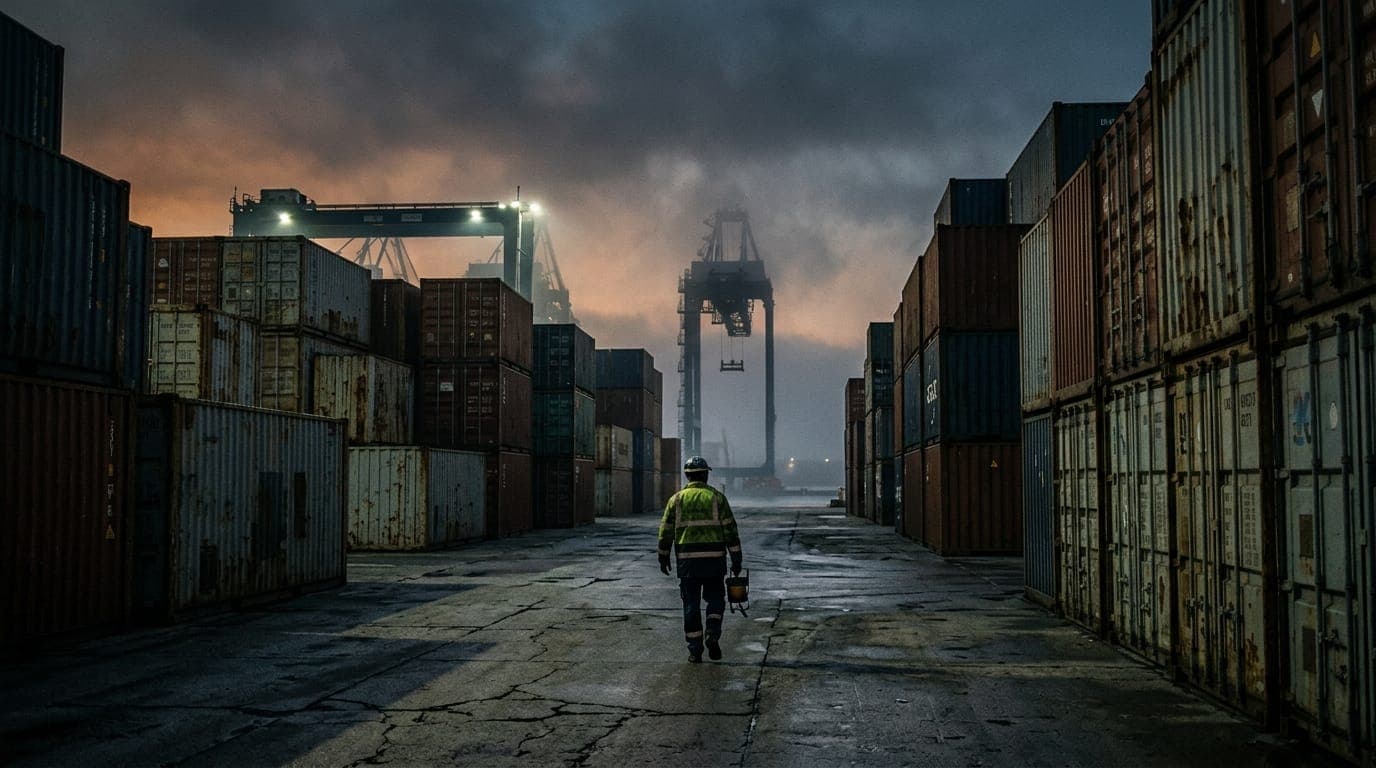
Treasury Secretary's coordinated squeeze on Chinese trade is accelerating deglobalization, and his "growth solves debt" framing is the monetary tell Bitcoiners should not miss.
Key takeaways
- Treasury Secretary Scott Bessent told G20 Finance Ministers in Asheville on August 31 that "the world cannot have a China with a $1.2 trillion trade surplus," pushing every member nation to re-examine its trade terms with Beijing.
- Bessent opened the summit declaring "the only way out of this debt is to grow our way out", an implicit admission that there is no clean fiscal or monetary off-ramp for the world's sovereign debt pile.
- Operation Economic Outcast, launched August 24, is already severing China's access to cheap Iranian oil, layering energy cost pressure onto the G20 trade-barrier push and accelerating structural inflation risk globally.
Treasury Secretary Scott Bessent convened G20 Finance Ministers and Central Bank Governors in Asheville, North Carolina on August 31 through September 1, 2026, and used the platform to demand coordinated trade barriers against China, per Reuters. The subtext is hard to miss: a global debt system that cannot be repaired through fiscal discipline is now being held together with trade walls and energy sanctions.
The Squeeze Takes Shape
Bessent was direct with Reuters ahead of the summit: "The world cannot have a China with a $1.2 trillion trade surplus. The rest of the world is going to have to examine their terms of trade with China." He added that China is "trying to export its way out of" weak domestic demand, pointing to a surplus equivalent to roughly 1% of global GDP as an inherently destabilizing force.
The bilateral numbers confirm the pressure is already having some effect. The U.S.-China trade deficit narrowed roughly one-third in the first half of 2026 versus the same period in 2025, falling to $73.9 billion (U.S. imports of approximately $129.3 billion against exports of $55.5 billion), per U.S. Census Bureau data cited by Reuters.
But the more aggressive lever is Operation Economic Outcast, launched August 24 by Treasury. The operation targets five Iranian economic lifelines, digital assets, technology, gold, aviation, and shipping, with a secondary-sanctions framework explicitly aimed at drying up China's access to cut-price Iranian crude. Bessent's stated objective: "to sever every economic lifeline that sustains this tyrannical regime until Tehran stands alone," per the Treasury press release. The G20 Finance Track agenda formalizes the diplomatic wrapper around what is already an active economic campaign.
The Debt Admission Hidden in the Framing
Bessent's opening line at Asheville cuts through the trade-war framing: "The world is awash in debt, and the only way for us to get out of this is to grow our way out of this," per CNBC's live blog of the summit.
That sentence is doing a lot of work. "Growth" is the only exit he named. Not restructuring, not austerity, not default. In a world of fragmented trade, rising tariff walls, and sovereign yields testing multi-year highs across major economies, "growth" is code for financial repression dressed in optimistic language.
The sovereign debt math is the problem the G20 cannot talk its way around. Coordinated deglobalization does not lower prices, it raises them. Every tariff wall the G20 erects against Chinese goods is a structurally inflationary move that compounds the fiscal stress it is supposed to relieve. Governments squeezed between higher borrowing costs and slower real growth face exactly one politically viable option: monetize the debt.
The "growth" framing is what you say when that's the plan but you can't say so publicly.
There is also a currency problem underneath the trade problem. IMF analysis points to significant yuan undervaluation, and every tariff barrier the G20 builds is fighting a monetary distortion with a trade tool. Beijing cannot voluntarily allow a significant yuan appreciation without imploding domestic real estate and its banking system. The situation is a structural monetary standoff that no G20 communique can fix.
The debasement trade thesis that has been building across sovereign bond markets reflects exactly this logic: when governments cannot grow or cut their way out, they print. Bitcoin's fixed supply and permissionless settlement are not incidental to that dynamic, they are the direct response to it.
What to Watch
The falsifiable version of Bessent's thesis is simple: if G20 coordination produces a binding multilateral framework that durably rebalances China's surplus, AND global sovereign debt-to-GDP ratios stabilize over the next 24 months without financial repression, then the growth-solves-debt argument holds and the urgency of non-sovereign money weakens. Watch bond yields and the debt trajectory. Falling yields with stable or declining debt loads is the signal the thesis is wrong. That is not what the data shows today, and Bessent's own language at Asheville suggests he knows it.
Sources
Frequently Asked Questions
What is China's current global trade surplus and why is Bessent calling it unsustainable?
Bessent cited China's surplus as equivalent to approximately 1% of global GDP, stating publicly it is a figure the world cannot absorb. China ran a record global goods surplus of $1.189 trillion in 2025, per data released by China's General Administration of Customs. The surplus reflects weak Chinese domestic demand being exported as deflationary pressure onto other economies, which those economies are now moving to block with tariffs, creating stagflationary conditions globally.
What is Operation Economic Outcast and how does it connect to the G20 trade push?
Operation Economic Outcast, announced by Treasury on August 24, 2026, targets five Iranian economic lifelines, digital assets, technology, gold, aviation, and shipping, via a secondary-sanctions framework. The China link is direct: China has been Iran's largest oil buyer, and that cheap crude gave Chinese industry a cost advantage. Severing it is part of the same coordinated squeeze Bessent is orchestrating at the G20 level.
Why does deglobalization create conditions that favor Bitcoin?
Deglobalization raises structural inflation, fragments the reserve-currency recycling flows that have kept sovereign borrowing costs suppressed, and puts governments under pressure to monetize debt they cannot service through taxation or real growth. Bitcoin, fixed supply, no issuer, no counterparty, is a neutral monetary asset in an environment where every fiat currency is managed by a government with a direct conflict of interest in its own fiscal survival.