A Beginner's Guide to the Bitcoin Mempool
Learn the basics of the Bitcoin mempool and it's role in processing transactions.


The mempool, short for memory pool, functions as a waiting area for Bitcoin transactions that have not yet been confirmed in a block by a miner. Each node in the Bitcoin network maintains its own mempool, leading to multiple mempools rather than a single, unified one.
Transaction Broadcasting and Validation
When a Bitcoin transaction is signed and broadcasted, it propagates through the network from node to node. Each node adds the transaction to its mempool after verifying its validity, ensuring it adheres to the network's consensus rules, such as preventing double spending.
Confirmation Process and Block Inclusion
Once included in a new block, the transaction is removed from every node's mempool. A transaction's confirmation is dependent on its inclusion in a mined block, with one confirmation equating to its presence in one block. For significant transactions, it is advisable to wait for at least six confirmations, or roughly 60 minutes, to ensure security.
Mempool Capacity and Transaction Fees
The standard mempool size is 300 megabytes. Nodes can opt to increase this capacity to store more transactions. When a mempool reaches its capacity, it starts purging transactions offering the lowest fees. Miners prioritize transactions with higher fees to maximize their profit, leading to a competitive fee market.
Analyzing Mempool Data
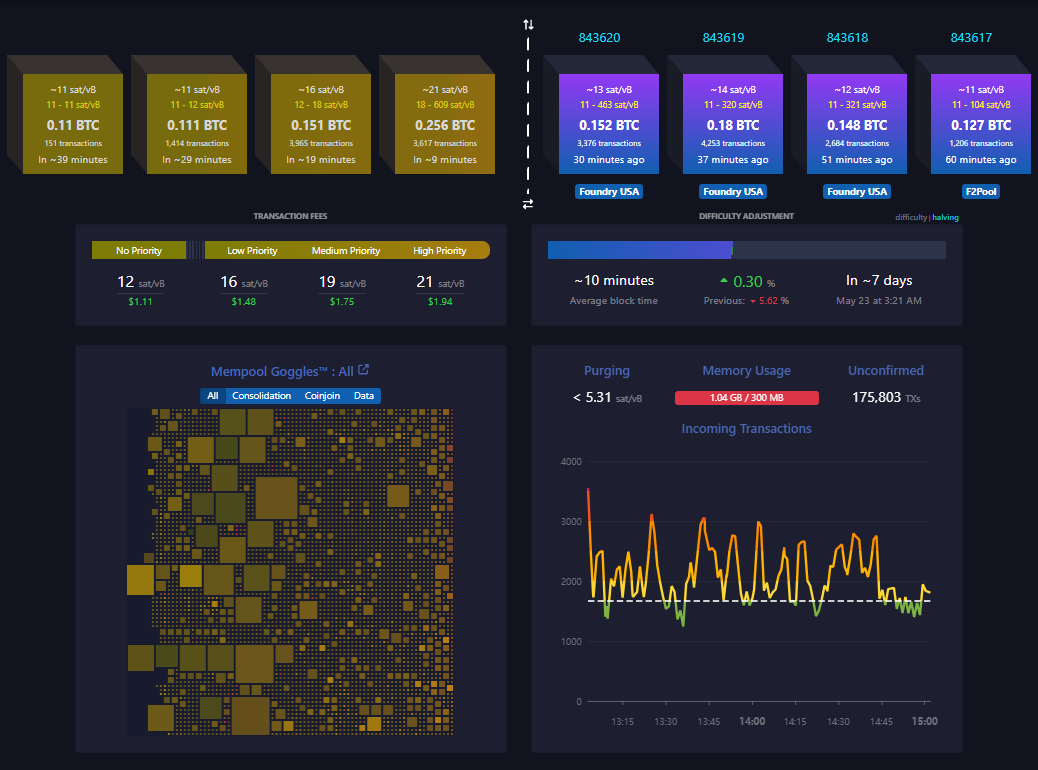
Tools like Mempool.space provide a visual representation of the mempool and blockchain. Users can observe mined blocks, transaction counts, and average fee rates. The platform also displays unconfirmed transactions, current memory usage, and suggested transaction fees based on priority levels.
Transaction Fee Dynamics
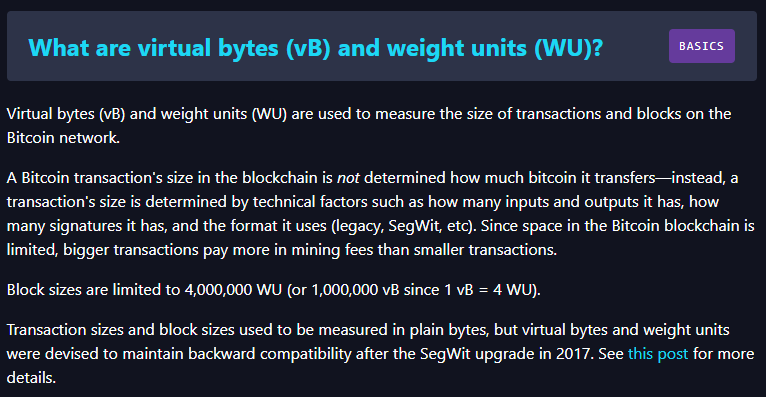
Transaction fees are not based on the monetary value of the transaction but on the block space it occupies. The total fee is calculated by multiplying the transaction's size in virtual bytes (vbytes) by the fee rate the user is willing to pay. Fee rates fluctuate based on network demand, with users bidding higher fees to expedite confirmation during busy times.
Importance of Fee Rates
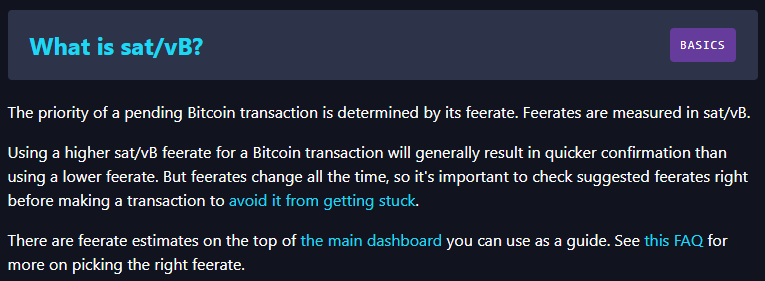
Setting an appropriate fee rate is crucial for timely transaction confirmation. Transactions with too low a fee may never confirm and could be purged from mempools. Users should monitor fee rates and adjust their transactions accordingly.
Replace-By-Fee (RBF) Feature
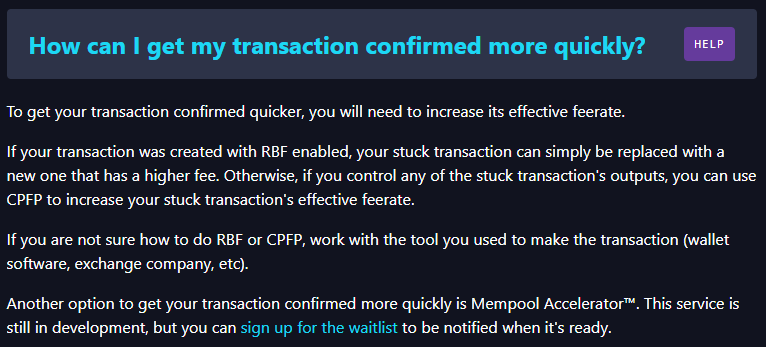
To address the issue of underbidding on transaction fees, wallets with Replace-By-Fee (RBF) functionality allow users to increase the fee on an already broadcasted transaction. This feature prevents transactions from becoming stuck due to an unexpectedly low fee rate.
Data Size Estimation
Users can estimate the size of their transaction using various online calculators. The size depends on the number of required signatures and the script type used in the transaction.
Fee Rate Trends
Historical data shows that fee rates can vary significantly over time. High-profile events, such as the recent interest in ordinal inscriptions or Bitcoin Improvement Proposal (BIP) activity, can drive up fees due to increased competition for block space.
Privacy Considerations
When using public block explorers, users should be cautious not to compromise their privacy by associating their Bitcoin addresses with their IP addresses. Running a personal instance of a block explorer, like Mempool.space through a full node setup, can help maintain privacy.
Conclusion
Understanding the mempool and transaction fees is essential for anyone engaging with the Bitcoin network. By utilizing tools like Mempool.space, users can make informed decisions on transaction fees and avoid delays in confirmations. The use of RBF can further enhance the user experience by allowing for fee adjustments as needed.