Transcript: Mel Mattison: Banks Are Fleecing You
Full speaker-labelled transcript of TFTC episode #802 with Mel Mattison.

Full speaker-labelled transcript of TFTC episode #802 with Mel Mattison. Read the written article: Mel Mattison: Banks Are Fleecing You. Click any timestamp to watch that moment on YouTube. Machine transcription, lightly cleaned, may contain errors.
Unidentified speaker [0:07] You've had a dynamic where money's become freer than free. Let me talk about a Fed just gone nuts, all, all the central banks going nuts. So it's all acting like safe haven. I believe that in a world where central bankers are tripping over themselves to devalue their currency, Bitcoin wins. In the world of fiat currencies, Bitcoin is the victor. I mean, that's part of the bull case for Bitcoin. If you're not paying attention, you probably should be. Probably should be.
Marty Bent [0:34] Probably should be. Mel, as you were just saying, we we seem to gather here during times of market tumult. What the heck is going on?
Mel Mattison [0:44] And we've definitely had a lot of it this year, and I think that's important to to keep in mind when these things happen because it's like. We were talking about, we did one at the end of the first quarter in the throes of the Iran war sell-off. And literally within weeks, we were basically back to flat on the year and then moving to all-time highs within basically 6 or 7 weeks in one of the most impressive bull runs in probably equity market history. So These things turn around very quickly. And I think we're in the middle of another one of those emotional kind of— I think it's kind of a time of indecision because there's just so many moving pieces on the chessboard right now that investors are having a little paralysis and saying, well, where do we put money?
Mel Mattison [0:44] And in the last couple of days, that's been bonds and gold basically, and sell everything else. But we've got midterm elections coming up. We've got an Iran war in flux. We've got a bunch of turmoil still in Europe with the Ukraine war. We've got turmoil in Europe with their fiscal situation. We've got a front-runner in the French presidential campaign. You got Marine Le Pen on the right, and you've got this other guy, Mélenchon, on the left that literally wants to imprison the head of the French Central Bank and declare all French debt void held by the French Central Bank. You've got— and that's just to name a few.
Mel Mattison [0:44] I mean, we could go on, and I haven't even mentioned what's happening in the AI world, which of course is what's also dominating this recent sell-off. So when you put that whole mix together, and then earnings are on the horizon The big ones start next week with Meta and Netflix. So when you put all of this on the horizon, it's not surprising that people are kind of like, well, maybe I should take some profits. Maybe these yields look good in bonds. Maybe I should invest in an asset like gold that's basically been doing nothing but going down all year since it peaked in January. So, I think we're seeing a little bit of a flux, and that's just the short-term tactical.
Mel Mattison [0:44] But I think strategically, the main drivers of what's been driving this market are still in effect, and that's AI, that's semiconductors, that's the NASDAQ, and increasingly, that's Bitcoin and crypto being merged with the AI trade, which I think is why you've seen Bitcoin so often the last few days, is it's getting very tightly correlated with that now. And so all of this is going on. We can unpack a lot of it, but there's definitely a lot on the horizon. But I think this is setting up to be one of those opportunities, probably the best buying opportunity of the year since the Iran War sell-off at the end of March.
Marty Bent [3:54] Yeah. Let's start with yields because in the Bitcoin space, and this is something I've tried to become more nuanced around this year, particularly shout out to John Arnold from 1031. We do our Monday show and he's really been on top of this. And yields have been drifting higher, obviously. And I think 2 weeks ago they hit a point where people are like, okay, this is the great debt spiral coming. But it doesn't seem like that is the case. And I had a conversation with Tom Luongo last week in which we basically walked through yields, particularly on a relative basis to other government debt around the world. And even though yields are drifting higher, looks like they want to go into a structural bear market, everything seems to be relatively okay. If you were to tell me 3 years ago that yields would be at 5.5%, 10-year, 30-year, 10-year above 5%, I would've been like, okay, we're in a cataclysmic But it seems like despite that, the economy is chugging forward.
Mel Mattison [4:58] Yeah. I think with yields, it was a couple weeks ago, I basically said, I think we're topping here, at least in the medium term. And TLT was looking good to me. I was buying some TLT calls out for spring expirations. They went down. Now, they're positive. The thing about yields is while we did break out to new highs, so we were in basically a range, right? 03 on the 10-year. And when we broke above that, we basically went up a quarter of a percent. 30, we basically touched a couple of times and came back off of. And I think there is a point in the broad spectrum of asset classes where these yields just become very attractive for certain entities, especially firms that are matching liabilities like insurance companies, life insurance companies, pension funds, different endowments and places that have been really overallocated to things like private equity and alternatives.
Mel Mattison [4:58] and saying, hey, we can go into bonds here. 5%, and they're going to start to do that. And what really stopped it, and I think put it over the edge a little bit to break to new highs, was just a little bit of the competition of all of this issuance coming from the tech sector, from the AI space. But at the end of the day, I think there's a cap on these yields because people understand that the governments simply cannot afford this type of interest rate expense. And it's not just the United States, it's actually more so in Europe than anywhere else. And they have the added dilemma of not being able to print their own currency and having different EU and ECB caps on deficits and so on and so forth.
Mel Mattison [4:58] And so I think central bankers are really realizing that part of their job is they can't let the governments fail. And I think Kevin Warsh, he's getting a little bit of cold water thrown in his face. I think he really made a mistake kind of coming out and saying inflation is a choice. and we're going to be hawkish. He's backed himself into a corner here because the ability to raise rates— yes, he can raise rates, but as many people have pointed out, you raise those rates, what are you really doing? You're raising mortgage rates, you're raising credit card rates, you're raising auto loan rates. Meanwhile, Microsoft or Amazon or Google has to pay an extra 35 or 50 basis points on their debt, and they're still willing do that.
Mel Mattison [4:58] So, you're not slowing down the AI-driven inflation. You're not slowing down the energy-driven inflation from the war. And so, you're actually just making matters worse. And we saw, I think, a shift with John Williams, who's the president of the New York Fed. And the New York Fed is by far the most important Federal Reserve Bank branch. It's the one that does all the monetary operations. It's basically like a governor role, but also being a bank president. For those that don't know, the FOMC has voting members. There's always the 7 members of the FOMC board. And then there's a number of presidents, but there's only one president that's always there.
Mel Mattison [4:58] It's the New York Fed president. You know, the other presidents, the Chicago Fed, the Richmond Fed, the San— they all rotate through on a different schedule. Sometimes they get to vote, sometimes they don't. And John Williams basically came out and said, look, you know, we maybe do one more this year and that could be it. Something that probably nobody looks at was earlier this week, there was like an 85%, 90% built-in expectation that the Central Bank of Singapore was going to hike rates, and they didn't. And I think these central bankers, they get together every 2 months in Basel, Switzerland at the Bank for International Settlements.
Mel Mattison [4:58] Actually, Warsh referenced it in his last press conference. He didn't mention Bank for International Settlements. He just said, I met with my colleagues in Basel. But I think what they're getting on board with and they're starting to understand the reality of the situation, is that the governments for which they are there, they're created by, they don't want them raising rates. And what's happening to Warsh is exactly what happened to Bessent, where when he's in the private sector, he talks about how Yellen shouldn't be issuing a bunch of bills and we need to be doing more longer-term, medium-term debt, and she's basically doing QE light with this.
Mel Mattison [4:58] And then he gets gets into the Treasury and he double-downs on it and adds Treasury buybacks to the regime. And so, when these people get into these positions, they come in with these theories of what's supposed to happen, and then the reality smacks them in the face. And I think what Warsh is going to realize and these bankers are going to realize, they can't keep raising rates, letting yields go to 6%, and essentially turning the interest expense of the government into a $2 trillion a year expense line, which is where they're heading if they keep on this track. And so at the end of the day, I think what the bond market is starting to pick up on is that from comments from Williams this week and Jefferson, another influential member, and Warsh is going to speak later today.
Mel Mattison [4:58] We're recording this Thursday morning. We'll see what he says. But I just don't think that the Fed has much room. I think we are in a fiscal dominant situation and that these yields on the long end ultimately reflect what the short-end rate is. It's 2 things really that drive what the longer-end rate should be. It's inflation and real growth. In other words, nominal GDP. And that's one component of it. That's what they should be in a theoretical perfect world. But on the other hand, they're also at the very same time, they're just a basically stepped-out scenario of what the short-term rate is going to be day after day, month after month.
Mel Mattison [4:58] And once the bond market begins to believe and recognize that the central banks around the world, whether it's Japan, ECB, the United States, the Bank of England, they just can't hike rates to such a degree that they essentially bankrupt the governments they're there to serve. And furthermore, doing so, as some central bank members have said, although it's hard for them to say it because it essentially admits their impotence, is hiking rates isn't really addressing the inflationary concerns. And so, despite all this tough talk, and that's what's really confused the market, is Warsh has just constantly talked like he's the Clint Eastwood of central bankers, and he's just not going to take any of this, and he's just going to hike rates until inflation comes down.
Mel Mattison [4:58] He just can't do it. And my hope is that we can avoid him doing it, making huge policy mistakes, causing a couple of banks and hedge funds doing the basis trade to fail, and then all of a sudden, we've got some sort of a financial crisis on our hands. Hopefully, these bankers recognize it, but one way or another, we're just not going to have a 6% Fed funds rate. It's just not possible with the amount of bill issuance we do. I'll pause here, but tomorrow we get the final monthly Treasury statement for fiscal year 2026, and interest expense is going to be the highest it's ever been.
Mel Mattison [4:58] We're over $40 trillion in debt. We're going to quickly hit $50 trillion. 7% cost of living adjustment for it. So all of these things combine to this situation where you just cannot do what Warsh has been basically kind of telegraphing he's prepared to do.
Marty Bent [14:10] Yeah. And again, to your point about raising rates not lowering inflation, we saw that print yesterday. Inflation above expectations, marginally, but still above expectations. And I guess that gets to the private sector. And I think the Trump administration has been very vocal about this. And I think between Last time we recorded and today, I mean, you had that Wall Street Journal headline of Trump saying, don't worry about inflation, we're going to grow our way out of this. And that's something that we've been keeping track of this year is the state of the real economy and the GDP growth being driven heavily by this AI trade. What is the state of that in your mind?
Mel Mattison [15:00] Yeah. I mean, growing your way out of it, the amount of growth we would need is just ridiculous. It's not going to happen. It's really inflation as the only path forward to get us out of this with a firm— a form of at least yield curve control light. It's the only solution that doesn't crash the economy and throw us into a depression. But the thing with The AI trade, really, I think a lot of this— one of the things I've been saying for a while is that for quite some time, the market has been pricing in that OpenAI is not going to be the best thing since sliced bread.
Mel Mattison [15:00] And I think you have to take a step back and just like there's that saying, the market is not the economy. I think you have to realize that the AI trade is not AI. And so what do I mean by that? I mean, AI, I think, is going to march forward. Compute demand is going to be off the charts. Companies are going to institute their own systems where they want to own the data, own the chips, own the stack. That doesn't say good things for OpenAI and Anthropic. And I think the market's been pricing in that OpenAI is not great. And I think the best tell on that is really just looking at Oracle, which a lot of that run-up in Oracle to over $300 a share was really all about their agreements with OpenAI.
Mel Mattison [15:00] And quickly the market basically priced all of that out. Oracle, last I checked, was around $120s, $130. I think $114 was its 2021 high. It's kind of post-COVID high there. We had that run-up before the '22 bear market. So basically for 5 years, Oracle has done nothing. And I think that's because people just are not anticipating that OpenAI is going to have the chops, the revenue, the profits to do half of the stuff they've said. That said, they thought Anthropic was kind of dominating enterprise. And they basically, that was based off of their extreme jump in revenue earlier in the year because of the agentic phenomenon and because of enterprises token maxing.
Mel Mattison [15:00] And last night, Anthropic announced that their quarterly revenue was less than $17 billion, which was very disappointing and only gets you to an annual run rate of around $70 billion. And a lot of people are hoping that they were gonna be at $100, $110 billion by the end of the year. And I think that's kind of in jeopardy right now. And so I think what the shockwaves going through the market right now are the market, which is, in my opinion, already priced in OpenAI not being that unbelievable, But now they're starting to price in that Anthropic as well. And if you think about this and you are an OpenAI or an Anthropic investor right now, and you're saying, okay, I'm a little worried about the IPO.
Mel Mattison [15:00] I want to hedge this, but there's no put options in Anthropic you can go out and buy. But you know what you can buy? You can buy CoreWeave 5-year Credit default swaps. And I think what we're seeing in the market right now is a lot of private investors in OpenAI and Anthropic going out into the market and hedging those positions by buying credit default swaps in some of these neo-clouds or buying puts or selling short some of the very hyper-AI correlated trades. And so we've got these market mechanics going on that are completely different from the fundamentals, where you just had TSMC report just amazing blockbuster earnings, and the stock is obviously in essentially a bear market downtrend.
Mel Mattison [15:00] And so you look at Micron, you look at these companies. So this broader thesis is basically to take a look at what is really going to benefit from a compute buildout and think about where that's going to produce returns and to get yourself a little bit away from the models, the Geminis, the OpenAIs, the Anthropics, and realize that models are becoming commoditized. And we don't know. We don't know if Anthropic's going to somehow start their bio lab and come up with cancer cures and be the most valuable company in the world. It certainly could. It also could become just a commoditized type of an entity that is a serious, important company, but it's not on the path to being the first $10 trillion company or something of that nature.
Marty Bent [20:17] Yeah, I think that's the big question right now. And we saw it yesterday with all the Neo clouds trading down, CoreWeave, which popped up. Nebius, Iron. And that's one thing—
Mel Mattison [20:28] That was a big part of this is CoreWeave has debt expiring in 2032. And people are looking at rates rising and they're looking at the nervousness and they're saying, if CoreWeave's going to need to refinance this, we're talking mid to high teens potential for interest rate they're going to have to pay. And the thing is, I actually think CoreWeave is probably setting up for an opportunity here because I do think the owners of compute are the ones that are going to be— the owners of compute and the people that make the things go into building compute are really the ones that I think have an advantageous position going forward.
Mel Mattison [20:28] And you have to take a look and you have to say, There's so many things. We started off the show saying there's so many questions right now, but what do I feel fairly confident about? And one of the things I feel fairly confident about is that in the next 5 years, there's going to be huge, huge demand for AI compute. I don't know exactly how that compute is going to be executed from a software perspective. I don't know if it's going to be OpenAI, Anthropic, an open model, You know, xAI is going to somehow leapfrog everybody because, you know, they get data centers in space and they have, you know, just these massive scaling opportunities with terafab.
Mel Mattison [20:28] I don't know how that whole situation is going to work itself out, but I do feel comfortable that compute is going to be in demand. And there are certain companies at the center of that. TSMC, I mentioned. Micron, SK Hynix, some of these other large semi providers, you look at Broadcom. And when you look at those massive providers, like the pillars of the infrastructure build-out and the way that they are being sold off right now, I think you're getting a little bit of baby with the bathwater type situation here in semis. And throughout this bull market, there's been a clear trend. It's like The market does the best when the SOX is leading, when SOX relative to Q's is positive, and it does best when Q's relative to SPY is positive.
Mel Mattison [20:28] And right now we're getting the opposite, and we're in one of these moments. And I don't know if it's going to end next week when earnings from the big names start coming out, or if it's going to end in November post-midterms. Maybe there's some sort of Iran war resolution. But I do feel confident that sometime in the next 4 to 8 weeks, let's call it by the end of November, we're going to be well through this situation. And we're going to be— people are going to be looking at the earnings of some of these companies that are trading at 4 times earnings like SK Hynix or something and realize that they want to own these names again.
Mel Mattison [20:28] And we're going to get that dynamic, which is a very bullish dynamic of stocks out Stocks over Q's, Q's over SPY. And I think what you wanna watch for is when does that dynamic start to show up in the charts? And that's gonna be your time to jump back in here. And that's really what I'm keeping an eye on. I'm also keeping an eye on Oracle. It hit a low of, I think, $114 earlier this year. I would like to see it kind of double bottom and get down there and bounce again. I think if we could get an Anthropic IPO out of the way, midterms out of the way, a lot of these things will just become like clearing events.
Mel Mattison [20:28] And then we have the potential for good news surprises, like some sort of a resolution to the Iran war, perhaps inflation coming down. The CPI report this week, what was really driving it was shelter. But yet, if you listen to everybody, it's like the housing market is collapsing, rents are collapsing. I mean, the way some of these numbers get calculated, they make no sense. And so, I don't think that the underlying inflation in the economy is really that bad. I think it's energy that's really driving PPI, CPI, which is going to feed into the core PCE coming out later this month ahead of the Fed.
Mel Mattison [20:28] And that's if we get the Iran war under control, and that's a big if, but I am hopeful about that. And I have a little bit of a theory on what's going to happen with the Iran war as well.
Marty Bent [25:11] Well, a lot to digest there. I'll start towards the end, add a bit of color to one of the things, and then we'll get to Iran. But I mean, yeah, the inflation print, I think what was surprising to me, because at the beginning of this year with the Iran war, particularly with the natural gas refineries in Qatar and Oman getting hit, there was a lot of fearmongering about ammonia and fertilizer, and we're going to see increased food prices in the fall because of all that. And one of the components of CPI that was released yesterday showed that food prices actually came down month on month and year on year, which is a bit surprising to me, a pleasant surprise.
Marty Bent [25:11] Second comment, additional to the AI trade, again, we're in the midst of some volatility, but what do you believe in the long term? And I was looking for this chart. I'm sure you saw me a bit distracted, but a16z put this out a few weeks ago and it's just basically trying to measure AI adoption. 2% of US households have adopted AI in any capacity, mostly just using ChatGPT as a better Google search, and the spend is at $30 a month. And I believe the top 1% of AI users are spending upwards of $500 a month. And so to your point, what do you believe in the long term?
Marty Bent [25:11] Are those adoption numbers going to go up? I think undoubtedly yes.
Mel Mattison [26:40] Undoubtedly they are. I think it's tough to pick the the longer-term or even medium-term winners and losers though in it. And that's why I go back to my belief in demand for compute. So at the end of last year, I had written about what I expected for this year and I said a volatile year. If you look at the final year or 2 of the dot-com run-up, you had numerous 10% pullbacks because people just get scared and people have big profits and people they worry about what's happening. And the other thing is that things change so quickly. It's like, well, this company is going to be the best internet search engine, or no, it's going to be not AOL, it's Netscape or whatever browser you get.
Mel Mattison [26:40] And I think that's what's going on in AI. At the end of last year, it was like everybody was so on the Google train and Meta sucks and they're— Meta was just the laughingstock of AI, and then all of a sudden they come out with Muse and the stock goes up like 30%. A trillion-dollar stock goes from like $500-some a share to over $700 a share in a matter of weeks. And so trying to pick the winners and losers has been very difficult with individual names that are in my opinion, not part of the bricks-and-mortar build-out of AI. And I think it's more of like a fashion trend.
Mel Mattison [26:40] Like, it's OpenAI. No, it's actually Anthropic because they've got the enterprise. No, it's Meta because they've got agents. And who knows, maybe in a year Elon will launch his first satellites into space and people will say, this is just going to become— he's going to have TeraFab, eventually he's going to be insurmountable in the amount of compute and he'll catch up and pass all these guys. Or Gemini. Well, you know what? Google finally comes out with an agent and they already have the enterprise customers and they have the consumer customers and everybody already shares their Gmail and their data and they're comfortable with Google and they're going to And now Meta's going to roll over and Google's going to shoot up 30% in 6 weeks.
Mel Mattison [26:40] I mean, who knows what's going to happen? I mean, I think all of those things are very possible, but all of those scenarios, they still involve semiconductors. And I mean, everybody is using TSMC. And then you look at memory. One of the big stories lately is Chinese competition for memory. And it's like AI is national security. I mean, look at what we've just gone through with rare earths. Do you honestly think that we're going to let the American AI companies build out their stacks with Chinese-made memory? I mean, it's not going to happen. And you're going to have to use Micron. You're going to have to use SK Hynix.
Mel Mattison [26:40] And you're going to have to use Samsung. And preferably, you're going to use Micron headquartered in Idaho. And so these are things that are just going to come into effect, in my opinion, inevitably. And what you're getting is you're getting a narrative to fit the price action. And a lot of this price action, I think, is due to geopolitical uncertainties, election fears, temporary spikes in inflation, people hedging their OpenAI and Anthropic by shorting publicly traded names and buying CDSs in CoreWeave and all of these mechanical things. Who knows, maybe Leo's getting liquidated again with his hedge fund. I mean, we don't know what's going on right now causing this.
Mel Mattison [26:40] I think it's very possible. The guy, he seems to have this vision, but when he tries to carry it out in the marketplace, he's a swing-for-the-fences type guy. I mean, makes billions, loses billions. He could be losing billions this week, probably is. And so the point is, don't get lost for the forest for the trees. We came out here in the beginning of the year, S&P was around 7,000, looked like a disaster, but my price target's been around that 8,000 level by the end of the year. Next year, I think we could hit 10,000. I think next year could be the crescendo of this bubble.
Mel Mattison [26:40] But we basically hit 7,800 around the end of this quarter. I think we'll be around 8,000 by the end of the year. And then I think things could start to kick into high gear if we get— and I think this is a big if, but I think it's possible, we get a resolution to both of the wars. Energy— I mean, just imagine if both those wars end, energy starts flowing again, and the Federal Reserve people start pricing in cuts again. And if we have that situation materialize, and that's basically my base case, that's why I'm foreseeing that Qs are actually going to pass SPYs as far as price And they're both going to be over $850 a share sometime in the first half of next year, because I think we're going to get resolution on those issues, and we're going to get cooperative central banks around the world, because one, inflation is coming down, and two, they need to, because interest expense globally is getting out of control.
Marty Bent [32:35] What's up, freaks? This was brought to you by our good friends, the Bitcoin team at Block. Bitcoin at Block. Bitcoin was originally introduced as a peer-to-peer electronic cash system. We all know that. The idea wasn't just to buy and hold, it's to use Bitcoin in many different facets. Holding is one facet, spending, receiving is another facet. We've been working towards this for 17 years and Block has put together a whole ecosystem of companies to really bring about the reality of Bitcoin as everyday money. So with Cash App, you can buy, spend, send, receive, earn, get paid in Bitcoin. When you're trading over $2,000, you're not going to pay any fees on that.
Marty Bent [32:35] So then there's Square, which is helping bring Bitcoin into real-world commerce. Eligible businesses can accept Bitcoin payments over Lightning, with settlement in seconds and 0% processing fees. Customers can pay with Bitcoin or even dollars over Lightning through Cash App and help local businesses keep more of every sale. It's making Bitcoin payments feel as easy as tapping a card. And when you're ready to hold Bitcoin, there's BitKey. It's a Bitcoin wallet built for real life. No seed phrases. It's a 2-of-3 multisig, so no single points of failure. It has recovery and inheritance processes and capabilities built in. And the new BitKey device includes a screen, so you can verify important actions directly on the device before approving them, so you know exactly what you're authorizing.
Marty Bent [32:35] So together, Cash App, Square, and BitKey are helping make Bitcoin easier to earn, save, spend and secure. It's a simple idea. Bitcoin works when people can actually use it in the way that they want. That's Bitcoin at Block. Freaks, look at me. I'm glowing. I've got like an angel's halo going around me. You know why that is? Is I feel good. I feel taken care of. I feel blessed, healthy, happy. And that is because I'm a CrowdHealth member. My family and I have been CrowdHealth members for 5 years now. Literally this month, 5 years ago, we joined CrowdHealth. We've had 2 babies, we've had multiple health events, and we're never going back to health insurance.
Marty Bent [32:35] CrowdHealth is crowdfunded healthcare. So you sign up for CrowdHealth, you pay a monthly fee, you help out with other people's bills. And it's significantly cheaper than health insurance. We were on COBRA as a family of 3 when I left my last job before I went full-time with CFTC, went on The Crowd Health. Now as a family of 5, we pay, I believe, $700 a month. It's significantly cheaper. They're going to negotiate prices lower for you. They've consistently negotiated healthcare prices as much as 50%, 60%, 80% in many cases. They help out with babies. If you have a pregnancy, you pay the first $3,000 and The Crowd covers the rest.
Marty Bent [32:35] If you have a regular health event, you pay $500 and the crowd pays the rest. com, sign up today, use the code TFTC, opt out of health insurance. I'm uninsured, baby, and I love it. com and you'll get $99 a month for the first 3 months that you're on the CrowdHealth platform in the community. Bitcoiners, you found sovereign money. Now find sovereign health and sovereign healthcare. All right. Can you hear me?
Mel Mattison [35:15] Yes.
Marty Bent [35:15] All right. Yeah, we've had some technical difficulties. Getting back to it, shifting gears to focus on Iran, big story of the year. I think the war is going on much longer than I would like, that many American citizens would like, and I even think the Trump administration would have liked. It seems like the blockade, the economic blockade is starting to have an effect. It seems like the IRGC is getting desperate. At least we're being led to believe that is the case. What is your take on the current state of the Iran war and how it may come to a resolution?
Mel Mattison [35:50] I think really what's going on here is I think Trump wants both of these wars over. We're starting to see some fraying with Ukraine, Starshield, which is the military version of Starlink, was allegedly being throttled by the Trump administration. This is what Ukraine uses for targeting enemy positions and uses for their drones and different weaponry. He's basically said Ukraine needs a new president. And I think on the Iran side, I honestly think what we might be seeing and why he has for weeks now been saying this is gonna end after the midterms is he's prepared to make concessions and end this thing. He doesn't wanna do it ahead of the midterms because that would put Republican members of Congress in the position of either agreeing with Trump or agreeing with AIPAC and the Israel lobby.
Mel Mattison [35:50] And so I think it was very clear when he did the MOU that the hawks, the Ted Cruz-type people that have been essentially funded and backed by the Israel lobby since they were starting out in politics, came out and were very forcefully against the deal and didn't want that to happen. And so he was essentially forced back into the war footing with, as you mentioned, economic fury and the blockade. And that just isn't working. And the idea that this is something that I literally think he was on a high after Venezuela, And he just thought this could be quick, and this is going to get his face on Mount Rushmore.
Mel Mattison [35:50] He's going to go in there; he's going to topple the regime. He saw those riots on the street, which were obviously CIA and Mossad, you know, instigated. But nonetheless, there is a popular, you know, that there is an element, or at least there was an element of Iranian society that that wanted a change, and he thought he could go in there. And I think his hand was forced as well. as mentioned by Marco Rubio immediately after the attack, where he said, look, we had ships in the position. Israel said they were going to attack, and we felt if we didn't join them, it was going to be worse for our exposed position.
Mel Mattison [35:50] So we were essentially forced to do it to protect our sailors. I mean, I think that's how we got into this. And they, of course, they've completely always tried to spin it as this is part of a plan, this is a strategy. And no, it's not. It's a disaster. that they were forced into by the Israelis. And everybody, you know, that's followed this can see it. And Marco Rubio basically said as much. And then you never heard another word about it really since that happened. But, you know, it was a, it was a mistake. He knew it when he said it and he's never really talked about it.
Mel Mattison [35:50] But the truth of the matter is the US didn't want this thing to start the way it did. And Israel forced the hand. And we got on this path dependency type of a A situation. And I think Trump realized that there was a lot of blowback when he did the MOU, and he restarted it. And I think he's got it in his mind that he's going to end this thing one way or the other after the midterms. Does that mean he's going to do a bombing spurt so he can look powerful and say that last 3 days of bombing really put him in there and then go right back to an MOU?
Mel Mattison [35:50] I mean, possibly. And I think, you know, there is an element in Iran who also really wants this war to end. They don't want to see more innocent people get killed. They don't want to see their economy, which is in tatters, get destroyed even more. But that said, they're not going to compromise. They're willing to do it. I mean, they do see it as an existential war, as everybody has said. And when you have that situation, I mean, really, we haven't done anything to them. in that type of a situation. Look at the United States, where I live in North Carolina in the South, what it took to get the South to surrender was essentially like 25% of the fighting age population of white males killed.
Mel Mattison [35:50] Sherman had to march through Atlanta and essentially burn down every single thing in the South. They had to send in an invading army And still Lee didn't want to surrender. It wasn't until his men were literally starving to death in the hills of Virginia, and he's basically like, if we try to fight one more battle, it's just going to be a suicide and every single one of us is going to die. Finally, he's like, okay, I guess I better surrender. And I don't think there's any reason to think that it would take anything less than that to get Iran to surrender. And you look at internal strife when people in the North didn't want to be drafted.
Mel Mattison [35:50] And there were those draft riots in New York that they actually graphically display at the end of the movie Gangs of New York. Those were real riots that happened. You know, Lincoln ordered the bombing, the shelling of New York City because people weren't, you know, succumbing to the draft. And, you know, internal dissension will be quelled. Whether they've got to kill thousands of Iranians to do it or not, they've proven they're willing to do that. And as far as willing to surrender, taking out their useless navy and bombing the same 500 military targets which have been hit, I mean, and I don't think Trump is willing to, one, nuclear bomb, use nukes.
Mel Mattison [35:50] or send in ground forces. Now, would Israel perhaps be willing to use nukes? Maybe. But I, I just think that's a less likely situation. I wouldn't say it's an impossible situation that if we do a deal that somehow Israel doesn't try to confabulate a reason to restart this thing and then, and then, you know, use a nuclear weapon. I mean, these are like worst-case scenarios. I think you got to entertain that they're possible. But again, for me, the base case is that he recognizes he needs to get out of this, or his entire second term is going to be even more than a disaster that it's already turning out to be, because he has just shot himself in the foot so many times.
Mel Mattison [35:50] I was so optimistic about what could happen this year at the beginning of the year. The Supreme Court was going to roll off tariffs. We were going to get— companies were getting tariff refunds. We had all of this stimulus from the one big beautiful bill. We had the AI build-out. I mean, I honestly think if this Iran war had not happened, we could be at 8,500 on the S&P, maybe even pushing near 9,000 by the end of this year. But because of the Iran war, it just caused all these jitters. It has caused interest rates to spike. It's caused inflation to spike, which has basically compressed multiples.
Mel Mattison [35:50] It's put a damper on sentiment. All of these negative things. And I think he can be obtuse about certain things, but I think instinctually he's kind of understanding that this war is just a noose around his neck and he needs to get rid of it. And if he doesn't get rid of it, it could get worse. And I think it's not improper to say if you're doing a scenario analysis, like, okay, Mel, you just laid out a pretty optimistic base case that this thing's going to end in the next 3 months. But what's possible is, yes, that it escalates. And there's a danger of that.
Mel Mattison [35:50] And there's a danger of escalation in Europe. And this is one of the walls of worry that the markets are climbing. I'm hopeful that that doesn't happen, but I'm not naive enough to think peace in the Middle East and peace in Russia-Ukraine is a given. It's not. But wars do come to an end. And even Iraq is over, Afghanistan is over, Vietnam is over, the Civil War is over, World War II is over. Wars don't typically just go on forever. And I think that these wars, everybody wants them to end, including Russia and Iran.
Marty Bent [44:31] Yeah. I hope they come to an end because again, like you said, there's so much potential when we get this distraction and this side quest. resolved. I'm an anti-war guy at heart. And it's just like, to your point about innocent civilians sitting in the middle of these warring factions, it's senseless to a certain degree in my mind. And there's so much potential energy built up in a positive direction in the economy right now. Going back to the AI conversation, I think, again, to your point, who knows exactly who's going to be the horse to win a decade from now? But one thing is certainly clear, the productivity gains are real.
Marty Bent [44:31] The ability to reverse engineer software right now, it's been happening over the last month, has been awe-inspiring. It does beg a lot of questions like, what are these SaaS companies going to do if somebody can just replicate their software and forego paying a monthly subscription service. But I think undeniably, the end result is going to be more productive capacity in the hands of individuals. And there's a lot of positive energy that can come from that. And that's what we need to get focused on. And if we can come to a resolution of the wars in Iran and between Russia and Ukraine, I can only imagine
Mel Mattison [46:09] Yeah, it would be incredible. But I think you brought up a good point with the impact of AI on some of these companies. And I think financial services, to bring this into Bitcoin and into crypto and what's happening and what's going to happen, that's one area that I think Jordy Vissar called it a bankpocalypse. And I think that's a little bit of an underestimation of what could happen with tokenization. I think a lot of people, when Trump was elected, felt like maybe the fight for legitimization of tokenization and digital assets had been won, but I don't think it really was. I think there's still a big fight going on because these banks, and this is why Clarity didn't get passed, this is why when the Genesis Act did get passed, it didn't allow stablecoins to pay interest, is that there is this trillion-dollar financial services industry that is basically dependent upon holding your money and not paying you interest.
Mel Mattison [46:09] My first job out of college was sales for ADP, Automatic Data Processing, the payroll company. And one of the first things they taught us is basically we make money on the float. We're able to sell our payroll services essentially for free or at cost. And then our profit just comes from the fact that Billions and billions of dollars get sent to us. We hold it for 3 or 4 days, and then we finally pay it out into people's paychecks. And they constantly have this float of hundreds of billions of dollars of people's paychecks that they collect interest on. And that's how the payroll industry makes money.
Mel Mattison [46:09] And if you look at like Bank of America, you know, they, they had their earnings call yesterday. They, and, you know, they, they list their cost for deposits, their cost for deposits, like that's their marketing and everything that they have to do to get that money. It's basically like 140 basis points. And we know what Fed funds rate is right now, right? We know what the 2-year yield is right now. And that's essentially like, you know, they're minting money off of people and people are starting to realize that. And what the industry pushback is, 2 things that I think are complete bullshit. I mean, number one, they're like, well, the average balance is very small in most accounts.
Mel Mattison [46:09] Well, averages can be very misleading. There's a lot of guys that are living paycheck to paycheck. They keep $200 in their checking account if they're lucky. And then there are all these other people that have $100,000, $50,000, $80,000. They have all this money in their checking accounts. And a lot of that is because they have money in motion. They have things happening. But why do they need that money in there? Because there's not instant settlement. Imagine when we get agents talking to agents. So that I can say, you know what, I've got $25,000 in a money market account, in a T-bill, whatever it is, that can be settled, atomic settlement, instantaneous.
Mel Mattison [46:09] And let's say that the power company needs $200 from me. Right now, I need to have that $200 sitting in a checking account so that they can come in and ACH it out and it gets transferred. Well, what's going to happen when the power company has an agent that contacts my agent and says, Mel's agent, you owe $250, and the agent says, okay, and it could be at 2:32 in the morning on a Sunday, because it's 24/7 tokenization atomic settlement. And my agent says, okay, wait 25 milliseconds, goes in, atomically settles a money market fund, a tokenized T-bill, whatever it is in the 24/7 marketplace, turns it into $250 USD and sends it, or just sends that stablecoin or tokenized asset directly to the power company and they take ownership of it.
Mel Mattison [46:09] So that there's no need for this money to be— there's not gonna be— nobody's gonna have a checking account 10 years from now in the way that we think about checking accounts. There's just not going to be any reason to hold cash. in a non-interest-bearing account because there's going to be 24/7 instant settlement at essentially zero cost. And that's going to wipe out— I mean, it's going to wipe out Visa, it's going to wipe out MasterCard, it's going to wipe out banks. I'm not saying these companies are going away, but their business models are going to have to do massive pivots. And to me, this is bigger than the SaaSpocalypse in many ways.
Marty Bent [51:01] All right, freaks. You know I don't take sponsor money from products I wouldn't use myself. So listen up. The Aven Bitcoin Visa card is one of the most interesting things I've seen in the Bitcoin lending space in a long time. Here's the deal. You can get a line of credit up to a million dollars backed by your Bitcoin without selling a single sat. No games, no annual fees, no minimum draws, and your Bitcoin is custody by Bitco, one of the most trusted names in digital asset security. Aven never lends it out. There's no rehypothecation. You stay in control. You can lock. in a fixed rate for up to 10 years.
Marty Bent [51:01] 10 years. That's 10 times longer than most lenders out there. Or go interest only for up to 5 years. 99% APR. For a product that lets you keep your stack and still access liquidity, it's hard to beat. On top of this, guess what? You also get 2% unlimited cash back every time you use the card. Spend fiat, keep your Bitcoin. That's the whole game. If you've been stacking for years and you need liquidity without triggering a taxable event, this is worth a serious look. com/bitcoin. com/bitcoin. Check it out. What's up, freaks? This episode was brought to you by Simple Mining. I'm sure many of you listening to this
Marty Bent [52:07] right now own Bitcoin and own it the same way. You go on an exchange, you buy it, sweep it to the cold storage, maybe you keep it on the exchange and you pay full price. There's a smaller group of business owners, family offices, and investors with sharp CPAs that are quietly getting theirs a different way. They own the machines that make it. Here's how it works. You buy the miners at Simple Mining. Simple Mining hosts them, runs them at their facilities in Iowa on industrial power rates you can never get on your own. The Bitcoin they mine goes straight from your machine to your wallet.
Marty Bent [52:07] 2 reasons I find this interesting right now. The second one is the one that nobody's talking about. One is the economics, cheap power. This lets you convert your electricity into Bitcoin at a discount to spot. You're acquiring the asset below the sticker price everyone else pays. 2, and listen closely, if you've had a big income year, making a lot of money out there, I know a lot of you freaks are making a lot of money. Miners are classified as computer equipment, with the big beautiful bill. Equipment means depreciation. Qualifying buyers can write off the entire purchase in year one. It's the same playbook real estate investors have run for decades pointed at Bitcoin.
Marty Bent [52:07] Your CPA
Marty Bent [53:02] will want to see this before the end of the year. And with attractive financing available, you can deploy without selling assets to do it. This is not a garage operation. Simple Mining runs over 40,000 machines. It was just ranked the fastest growing company in Iowa on the Inc. 5000 chart. We put together a valuable resource called the 2026 Bitcoin Mining Blueprint. Covers the 5 mistakes investors make when allocating to mining and how to avoid them before deploying capital. You can access it for free at simplemining.io/tftc. That's simplemining.io/tftc. Well, imagine that's the negative consequences for those businesses who are becoming Luddites and refusing to adapt with the times. But imagine the wealth effect when people have the ability to seamlessly go in and out of these assets to actually have their money working for them and participating in the yield that's generated from the different assets, the short-term liquid assets that their money sits in. Yeah,
Mel Mattison [53:57] it's huge. I mean, it's truly— there's trillions of dollars of Americans' money just sitting around basically making money for the Bank of America, Citibanks, Visas, ADPs of the world. And once that gets unlocked, individual— it's essentially like a real cost of living adjustment. It's essentially free money to people from the perspective of this is something they never had before and now they have it. And this is the thing. And the other side effect of that is where's that money likely to be held? It's likely to be held in T-bills. And where is all the issuance of the US government right now? It is basically in T-bills.
Mel Mattison [53:57] And so it helps to ameliorate this issue of the the debt, which I think there are ways to finesse our ways through this without the collapse that some people predict as being necessary. Growth is a component. Earlier, I laughed like that's not going to be the solution, but that's part of the solution. Then you're going to have this expansion of T-bills, like this desire for people to hold T-bills, not just in the United States, but around the world. Is going to explode and stablecoins are going to enable this. But all of these financial services companies are just fighting tooth and nail because they know this is an existential war for them.
Mel Mattison [53:57] And it's not easy and it's not quick. And it's not, like I said, the battle for digital assets and tokenization and what that can do was not won in November of 2024 when Trump was elected. And in many ways, it just got started. But I do think that we're still in this phase and that the best is yet to come for all of these assets. And I think the cornerstone of this digital asset infrastructure is, of course, going to be Bitcoin. And so you've got higher beta right now and things like ETH that were shooting up. 5%. I'm not sure what they're at since we started talking, but these are the high-beta names and the favored instrument for operational control.
Mel Mattison [53:57] Right now, it could be ETH, maybe it'll be SOL, maybe something else will come up. But when you look at what's the cornerstone asset behind all of that, I think that is Bitcoin in the way that gold has served as a cornerstone in the currency world. And so, I'm still extremely bullish on gold and Bitcoin. I think that the AI infrastructure build-out is going to roll on once we get through some of the concerns that the market's working through right now, which I've mentioned are mechanical, I think, in many ways, and babies are getting thrown out with the bathwater. And all of this stuff's going to ramble on, and that just spells volatility.
Mel Mattison [53:57] It spells the changing of the guard. There are going to be corpses on the field, whether that's in software or financial services. And so it's a time of a lot of change and a lot of volatility. But I think to your point about productivity, the general thrust of this is going to be a more productive society that uses its resources more efficiently. And that also kind of starts to more and more cut out the middlemen in our society, which is really what we need to do. We have— we need to have less people moving bits and more people moving atoms right now. And we've just been way too bloated with white-collar workers in this country for way too long.
Mel Mattison [53:57] And we need to get, you know, things moving again and not just, you know, some company with 6 levels of middle management Heading off to corporate picnics.
Marty Bent [57:57] Yeah. So Bitcoin, when we first started recording, it dropped below $80,000, taps high $79,000s. Now it's back towards $82,000. So a quick rebound. So it looks like $80,000 is being defended right now. But to your point about Bank of America, Bank of America too, in the headlines this week for their money laundering on behalf of terrorists and— Oh no, but that's all Bitcoin's good for.
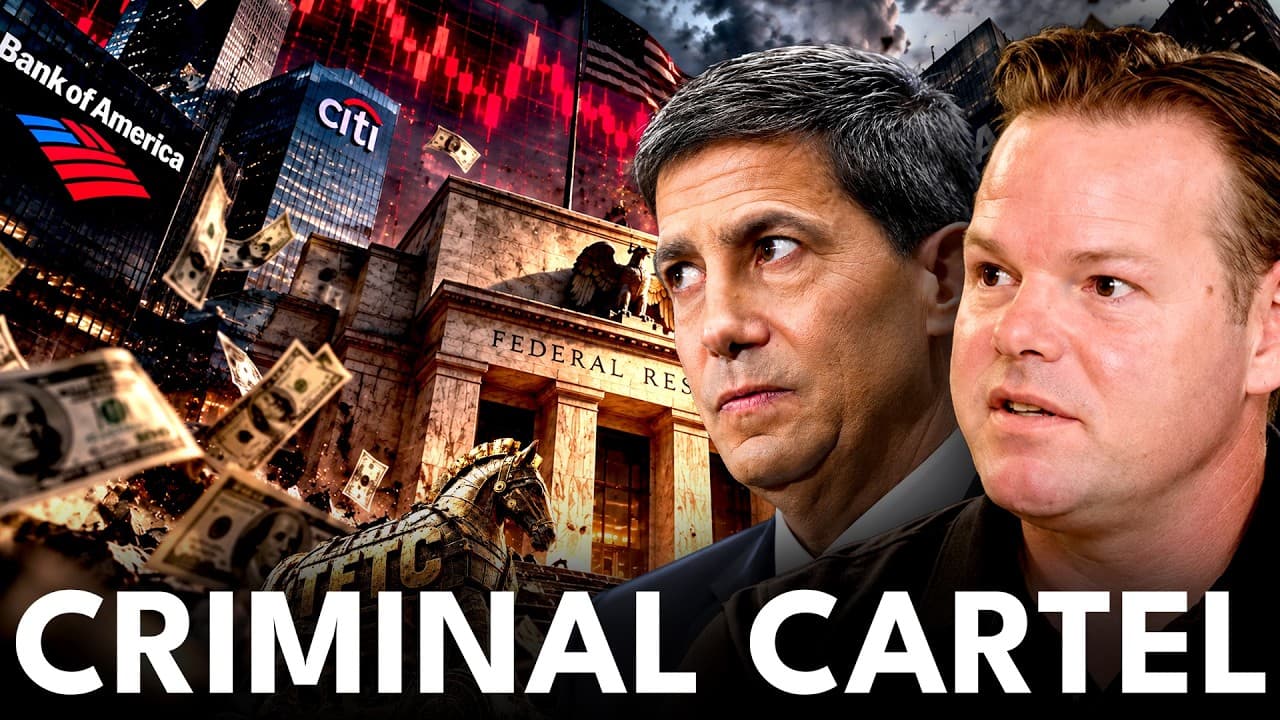
Mel Mattison [58:22] Didn't you— Elizabeth Warren said, no, that's the— it's only the crypto industry. The crypto industry doesn't conceal shit compared to the traditional financial services. I mean, guys in Central America, South America, you know, it's Citibank, the private wealth, the private banks, the bank. I mean, this is all part and parcel of their business model. It's screwing people over just like it is the way that they own the Federal Reserve Bank branches. This is why the left leader in France wants to get rid of the central bank. He wants to imprison, you know, the head of the central bank. This is a cartel. This is a criminal cartel that's fleecing society, that's fleecing America.
Mel Mattison [58:22] There is no reason that we even have a Federal Reserve. It's the dumbest institution that's ever been created. It's there to protect the banks. It makes absolutely no sense that the US government cannot issue zero-interest-bearing debt, but the Federal Reserve can. You look at a Federal Reserve note, it's a Federal Reserve note. Well, it's a note, it's a bond, it's paper. What's the interest they're paying on it? Zero. They get to create dollars out of nothing, pay no interest. Meanwhile, the US Treasury has to go to the market and pay interest. It makes no sense.
Marty Bent [59:45] No. And Bank of America, $1.2 billion fine, but because yields are where they are and they have so much cash and they're not sharing the yield with their customers, it's like the cost of doing business. They did something like $8.1 billion in profit in the last quarter, and they had to pay this $1.2 billion fine that comes around maybe once every 5 years. And it's like, ah, okay. Meanwhile, you have open-source developers like Kian Rodriguez and Bill Hill, who basically created non-custodial software to help people transacting in Bitcoin do so in a private fashion, they're sitting in jail for money laundering, and they weren't even money service businesses, money transmitters. And it's completely insane. It's a two-tier society. But staying on this tip, despite the fact the Clarity Act did not pass, it seems like the Trump administration sort of recognizes this. And I think the Treasury fining Bank of America may have been retaliation of the American Banking Association lobby sort of killing Clarity Act at the last minute.
Marty Bent [1:00:50] The Trump administration is basically saying, SEC, CFTC, OCC, who cares if Clarity didn't pass? Go rulemake. We're going to start integrating this, which is the executive stepping in and saying, okay, if we can't get this through Congress because the banking lobbyists are going to squash it out, we're going to move ahead. for the last 2 years of this administration. Hopefully the rulemaking enables infrastructure to get built out. It'll be so ingrained it's impossible to basically rip out if Democrats take over in 2028.
Mel Mattison [1:01:17] Yeah, I think it's inevitable. It's just going to take a little longer than maybe the hopes were last year because of the amount of pushback that is going to come from the industry and the the way they have their claws in these lawmakers and were able to basically squash interest-yielding stablecoins as well as the Clarity Act. Because, you know, I mean, Cynthia Loomis, you know, after Trump was elected, she put together a very simple 3-part plan, and it was Genius Act, Clarity Act, sovereign wealth fund. Strategic reserve, strategic Bitcoin reserve. 75 was completed, which was a watered-down genius act. And to your point, what's happening now is the Trump administration is doing what they can with their executive authority.
Mel Mattison [1:01:17] And you're right, if Democrats take over in '29, that they'd be able to reverse those. But if they can get themselves ingrained in the system, if they can get consumers used to some of the benefits that could come from this, if they can get, you know, an ecosystem of companies making profits of it that can afford their own lobbyists to fight the bank lobbyists, um, then I, then I think we, we can, we can get it ingrained enough. Because it's a little bit like, um, you know, Schwab had their earnings today and they are selling off hard. And it's like Schwab, these big companies, they laughed at the Robinhoods of the world when they came out and said, we're going to do zero commissions.
Mel Mattison [1:01:17] And eventually, they had to do it and they had to pivot their business models. And now, Schwab is selling off because people are realizing that they can get higher interest in other accounts in certain ways. And people are withdrawing funds. And I mean, I did that myself. I mean, I was a big TD Ameritrade guy before they got bought by Schwab. I really was used to and like Thinkorswim, their interface for trading. But it just got to a point where— and I still have some accounts with them, but for a lot of my very fast trading, I'm like, I'm just going to move money into Robinhood.
Mel Mattison [1:01:17] They're giving me like a 3% match. They've got Robinhood Legend, which is an okay platform. It's not as good as Thinkorswim. And there's just zero cost. There's zero fees. And it's like, yeah, stocks at Schwab are zero commission, but options aren't zero commission. And if you're doing a bunch of contracts, I mean, that stuff adds up. So all of these things, they're kind of inevitable. And I think that these business models are going to collapse. But they're not going to go down without a fight, and they're not going to go down overnight. And really, we don't want them to go down overnight. You wouldn't want these banks to just completely fall out of bed overnight because their tentacles are so integrated into every area of society that it would be problematic for the economy as a whole.
Mel Mattison [1:01:17] And so it's going to be a phase-out, and it's going to be margins compressed, and it's going to be The same thing with the software companies and Adobe and people decompiling Photoshop and putting— all of these moats that once existed are being broken down. And this bank charter moat and the fact that banks get to hold this interest is really something that I think is inevitably going to crumble, but it's not going to happen in the next 12 to 24 months. It's going to take years, but eventually— It's going to be, like I said, like my agent talking to some company's agent, atomic settlement, here's the cash, and there's not going to be any money sitting in a checking account idle so Bank of America can pay for, I don't know, money laundering classes or something.
Marty Bent [1:05:23] Yeah. And I think the demographics are going to play into this too. Now that you got the juices flowing here, I think it's going to be harder for the boomers to break from their consumer tendencies and the brokers and platforms that they use. And obviously they have most of the wealth, but as these competing products become available, particularly for millennials, Gen Z, and eventually Generation Alpha, they're going to say, well, tech forward, I'm tech native, and Bank of America, it sucks going to a branch. I hate going to an ATM. I can use Robinhood, I can use stablecoins, by the way, I'm not making that much money.
Marty Bent [1:05:23] However, I'll take the 4% on the yield share with these protocols over the banking system. And to your point about a gradual transition, I think that's how it could happen, where you just have the boomers who are not only laggards, they're probably never going to adopt the tech because they're not tech native and are set in their ways. And so that's how I can see the generational boomer retirement sort of morbidly die out. Yeah, exactly. So you can see a gradual transition. And then just nooks and crannies on recapitalizing the credit stack. I've been bullish on this for years and still am. Actually, the mortgage on my house is dual collateralized with the house and Bitcoin.
Marty Bent [1:05:23] I think you're going to see that as more tech-native millennials particularly, and some Gen Z have some of their wealth in Bitcoin, they're able to get houses and cars and other things by dual collateralizing with Bitcoin instead of putting cash down. And that's happening slowly but surely as well.
Mel Mattison [1:07:08] Yeah. I mean, and right now, I mean, they had the exposé I saw circling around, I think it was from the Federal Reserve, about changes in wealth basically since the pandemic by age group. And you could just see like 75+, like Their wealth is up like 30%. I mean, they have all the wealth right now, and they're still intertwined in the legacy systems. They don't want to use Robinhood. They don't want to use crypto. They trust the big banks still. They still think of JPMorgan as, you know, and Bank of America as like upstanding corporate citizens that are, you know, providing valuable services. And that is going to fade away.
Mel Mattison [1:07:08] I mean, this geritocracy this theft of younger generations by the older generations, it is going to come to an end. And, you know, I mean, the situation with these 80-year-old presidents and, you know, these Social Security increases, and you have this situation which is just— it really is insanity where you have all the wealth in these people, 75 and older, And you, at the same time, have essentially all of the tax revenue being transferred from the younger generations to these people in the form of Medicare and Social Security payments, as well as interest on the debt, which is who is the owner of bonds? It's these boomers in their target date accounts or their balanced portfolios where they own bonds because younger people don't own bonds.
Mel Mattison [1:07:08] So, I mean, this is really an insane situation that we're in and people just really need to recognize it. And I think what's going to cause this— and a lot of people do recognize it, but what's going to make this, I think, a national conversation is going to be in the 2028 presidential campaign, the fact that you're going to have to talk about Social Security. Social Security is going to have to be amended. It has to be because we're running out of money in the trust fund. And if I could take just a quick minute on Social Security, because I think it's very misunderstood. of how Social Security works.
Mel Mattison [1:07:08] I think people don't realize that there's no cash that the government has in some trust fund somewhere that covers the shortfall in Social Security. So Social Security takes in money on payroll checks. It's maybe 80% of what's needed. And then the other 20% is paid for by the US government going out to the debt markets and raising new debt and paying for it, but it gets masked. And the way it's masked is because there are these special Treasury securities. They're intergovernmental Treasury securities that only governmental agencies can own. Social Security Trust Fund owns over $1 trillion of these Treasury securities right now. And what happens is, Is when the government, the Treasury goes to pay Social Security checks every month, it basically just does an accounting trick where it says, okay, we need $100 billion to make up the Social Security shortfall.
Mel Mattison [1:07:08] So we're going to cancel $100 billion in these intergovernmental agencies, but the government doesn't have the $100 billion. So what it has to do is it has to borrow the $100 billion, has to issue T-bills or whatever to get the $100 billion in order to cancel out the Social Security debt. And so, what people misunderstand is they think that when the Social Security trust fund runs out, then all of a sudden, the US government is going to have to start borrowing a bunch more money in order to make up the shortfall. And they're really not. What's happening right now is the government's going to the public markets to borrow that money, but it's not showing up as additive to the national debt clock because you're doing this accounting trick.
Mel Mattison [1:07:08] Where $100 billion of Social Security Treasury securities get canceled out and $100 billion of publicly sold Treasury bonds get issued. But because they were intergovernmental, the government was not paying money to anybody outside. It was just paying money to itself. Now it's got to pay money outside. That is already happening. And so what's going to happen as this debate around Social Security trust fund comes up? is people are going to start to understand this situation. Now, the difference is, is that this situation, even though it's just an accounting gimmick, it's the only way according to the Social Security law in which it can be paid.
Mel Mattison [1:07:08] And so, if when the trust fund runs out, the law is not amended, the government cannot just on its own decide, well, we're going to go out. We've been going out to the debt markets to make up the shortfall. So, we're just going to continue doing that. They can't do that. And so a law is going to have to be passed. People are going to start to realize this. This is going to lead into the broader discussion about all of this wealth that's going to the geriatrics of our society. And I think people are going to be prepared to do things they haven't been prepared to do before, including at the very least institute means testing and stop sending Social Security checks to Warren Buffett and Bill Gates.
Mel Mattison [1:07:08] And, you know, at the very least, and probably going to wind up moving back the Social Security age and probably going to raise the Social Security tax a little bit. But Social Security, as everybody knows, isn't really the big problem. It's really Medicare. And I think that is something where AI is going to be able to help. But I do think that that's really, you know, going to be a big issue. heading into the 2030s is how are we going to pay for all these Medicare bills?
Marty Bent [1:13:01] Well, apparently you just give them to— I mean, and then the fraud in Medicare. That's what I was going to get at. Yeah. Maybe just eliminate the hundreds of billions of fraud that exists in that system first.
Mel Mattison [1:13:17] Yeah, yeah, exactly. Well, I think what's going to happen is that, like, A lot of people, they make the point you can't print hips or they can't print knee replacements. I mean, it's just, again, I think the healthcare, some of these healthcare companies are going to be in trouble because this is part of that administrative middleman inefficiency class that's out there, just as it is in financial services, just as it is in corporate America writ large. that needs to be expunged from our society where we start moving atoms and stop moving so many bits or where everybody's job revolves around moving bits, let's say. And I think we could wind up in a situation, we have these socialist tendencies in this country going back hundreds of years where people say, look, enough is enough.
Mel Mattison [1:13:17] We are going to have government-run hip replacement center. And you know what? It's going to use AI and it's going to— we're going to pay the nurses and we're going to pay the doctors and we're going to lower the certification requirements because of AI. And, you know, these things like the fat margins on all of this stuff that these companies get, you know, the pharmaceutical companies, the healthcare companies, I mean, the margins are just out of control. And it's a lot of an administrative class. It's not really the nurses and the doctors. It's the tort law. It's the worries about liabilities. We need to amend the tort law.
Mel Mattison [1:13:17] I mean, there are ways to fix these problems just like there's ways to fix homeownership. I mean, I think there's so much federal land that is owned and it's like, just open up some of it. And I'm not talking about paving Yosemite Valley. I'm talking about relatively useless Bureau of Land Management territories out west that, you know, people would die to have some sort of a homesteading ability again where you could just say, look, here's what you're going to do. You're going to go there, you're going to build the house yourself, you're going to have to work. We're going to have government-trained, you know, supervisors and foremen that are going to show you how to frame a house.
Mel Mattison [1:13:17] S. government. And if you don't pay us back, it's not like a student loan. A student loan, you don't pay it back, how can you confiscate someone's education? You don't pay us back in the next 10 years after you build this thing and we help you do it, we're going to repossess the home. And I mean, all of these solutions exist out there. I think that the boomer generation needs to kind of get out of the way. And then I think we need radical solutions. We're trying to solve 21st century problems with 20th century solutions. And we need 21st century AI-native, crypto-native solutions that just think outside of the box, that get this country back to doing what it knows how to do, which is to explore and build and innovate and grow.
Mel Mattison [1:13:17] And stop it where everybody, like you know, sitting in front of screens all day, you know, doing essentially mid-level administrative tasks, moving Excel spreadsheet to Excel spreadsheet, paperwork to paperwork, moving these bits around, and not actually accomplishing anything in the real world. Not going to be easy. It's not going to be quick. But I think you know humanity tends to persevere and eventually rectify. situations once they get to be unbearable. And we're getting into an unbearable situation with the economy, with the fiscal situation. And so, I do think these radical changes are coming in the 2030s. It's not going to take forever. I think it's going to happen.
Mel Mattison [1:13:17] D. Vance, I don't know. But honestly, at this point, Just get these 80-year-olds out of there, man. I mean, the Pelosis, the Trumps, the Bidens, the Bushes, the Clintons, the Obamas. Just be done with these people.
Marty Bent [1:17:41] Yeah. I completely agree and hope that we get it. Because again, there's so much potential here. Just unleash it. It's right there. The younger generations of— and that's the— I mean, I don't want to get too bombastic here, but I do think we're getting to a point socially where You're either going to do this in a controlled fashion and recognize the reality of the situation and hand over the baton, or Gen Z, younger millennials are going to take it from you in some aggressive way, is what I would say. We got to wrap up here. I got to catch a train in a little bit. But before we do, 2 weeks away from midterms, what are you looking for? How are you viewing this? How pivotal is this midterm election season to you?
Mel Mattison [1:18:27] Well, I think it's pretty clear, right? The House is going to be taken by the Democrats and the Senate, it seems close, but I mean, my guess is that there's an underestimation of how many people really hate this war and that the Democrats are going to Take the Senate as well. And it's going to create obviously a situation where Trump is going to be impeached. The House is going to impeach him, going to go to a trial in the Senate. We might actually have a situation where the majority of the Senate votes for the removal of Trump, but I believe it's two-thirds that's necessary, which isn't going to happen.
Mel Mattison [1:18:27] And so I don't think Trump's going to be removed from office, but I think we're going to head into a period where these types of stories are going to begin to dominate a lot of the headlines. And this is going to tie up a lot of government energy. And so I don't think there's going to be a lot of some of the things that I was hopeful, like a really transformative bill for housing. You know, I was hoping like there'd be a housing emergency declared and during like a lot of things that I think Trump had the possibility to do, he's never going to get to do because of the war.
Mel Mattison [1:18:27] Now he's going to lose support in Congress. But I think this is pivotal in the sense that it's not necessarily going to be a negative for, for the economy. And Trump's still going to have his executive powers. But I think that's just what it's going to be limited to. And so, you know, the CFTC and the SEC will be able to continue to work on digital asset reform. We'll still get AI moving forward without much regulation. We'll still get a lot of those things that are kind of under executive control happening. But we're definitely going to get different scares about debt ceiling. You know, all these things are just going to start coming back and And I'm actually hopeful that there's some sort of threat about funding.
Mel Mattison [1:18:27] Don't fund the government if he's going to keep on with this Iran war. Ways that maybe the Congress could actually positively force his hand into things. But the problem is, is that a lot of Congress is in the pockets of the Israel lobby. And it's the same thing on Ukraine front. You know, you had even Republican congresspeople coming out saying it was just abominable, an abomination that, you know, Starshield was throttled and things. So, you know, the deep state fight is going to continue. And it's like, it's kind of like Star Wars, like Empire Strikes Back. The empire is still out there, and the empire is not dying a slow death.
Mel Mattison [1:18:27] And so I think the fights are going to continue. But as far as how pivotal is the midterm, I think it's more pivotal from a market perspective as a clearing event and just getting that unknown out of the way. And then I think it also maybe frees Trump up to do certain things that are unpopular with the deep state, like ending the Iran War and giving concessions to Iran, because he knows, like, you know, on October 30th, Republican congressman running in a contested district isn't going to be asked, do you support the MOU? And if he says yes, then AIPAC pulls the funding. If he says no, then it looks like he's going against Trump.
Mel Mattison [1:18:27] And I think that dilemma is why Trump keeps saying after the midterm, after the midterm, And I do think that after the midterm, he's going to threaten to annihilate them. He's going to threaten to blow them to kingdom come. And then I'm hopeful that miraculously that China helps mediate some sort of a peace treaty with Qatar and an MOU comes in and we get some resolution because that's what makes sense. Now, what makes sense doesn't always happen, but fingers crossed. Like, like that's, that, that's what happens. And I think if it does, it could be just the beginning of good things starting to happen because we've had a year where just there's been a lot of bad things going on.
Mel Mattison [1:18:27] And one thing I've learned in life is that if you just hang on, like luck eventually tends to change and things tend to change. It's always darkest before the dawn. And when you're in a situation and you think something's never going to end, I'm sure in 1862 people thought the Civil War was never going to end. 1942, they didn't see an end to World War II. I mean, I think people, it's hard to see past these things, but yet we do always get past them. And I think that's going to happen and it's going to be a positive surprise.
Marty Bent [1:23:32] Here's to hoping for the positive surprise. Mel, it's always a pleasure. We will be catching up at the end of the year to do our 2027 predictions, which I can't wait for. So we're going to have midterms. It's going to be a lot of activity in the markets between now in the end of the year. So I'm sure we'll have plenty to talk about for our 2027 prediction episode.
Mel Mattison [1:23:53] Looking forward to it.
Marty Bent [1:23:55] All right. Peace and love, freaks. Okay. Thank you for listening to this episode of TFTC. If you've made it this far, I imagine you got some value out of the episode. If so, please share it far and wide with your friends and family. We're looking to get the word out there. Also, wherever you're listening, whether that's YouTube, Apple, Spotify. Make sure you like and subscribe to the show, and if you can leave a rating on the podcasting platforms, that goes a long way. Last but not least, if you want to get these episodes a day early and ad-free, make sure you download the Fountain podcasting app. You can go to fountain.fm to find that. $5 a month gets you every episode a day early, ad-free. Helps the show. Gives you incredible value, so please consider subscribing via Fountain as well. Thank you for your time, and until next time. Okay.