Aramco CEO Confirms Engineering Work on Two New Crude Export Routes Beyond Hormuz
Saudi Aramco CEO Amin Nasser confirmed in Tokyo on September 24 that Aramco is conducting engineering and feasibility work on a fourth and fifth crude export route, a capital-allocation signal that Hormuz disruption is no longer viewed as temporary.
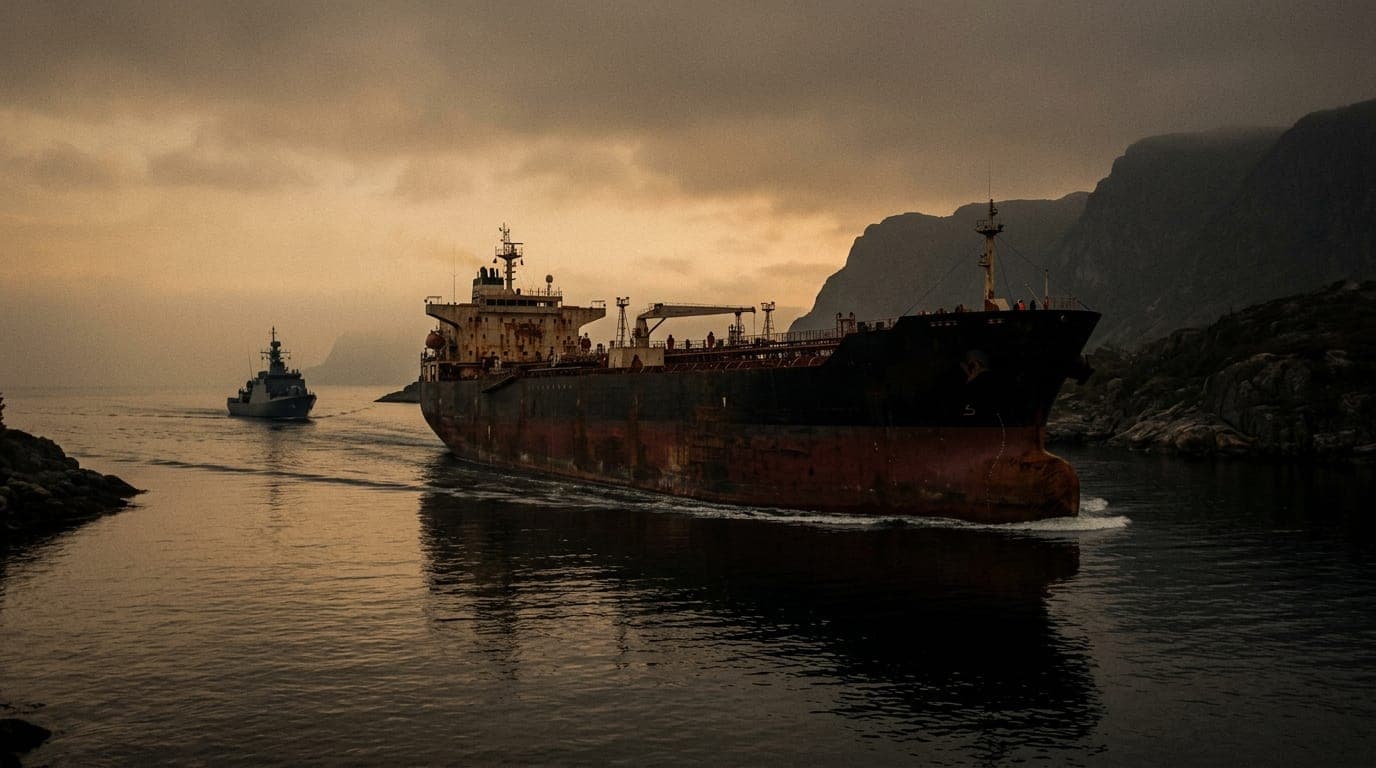
Saudi Aramco is no longer treating Hormuz disruption as a contingency. It's treating it as the baseline.
Key takeaways
- Saudi Aramco CEO Amin Nasser confirmed September 24 in Tokyo that Aramco is conducting engineering and feasibility work on a "fourth and a fifth" crude export route, beyond its three existing corridors, to reduce dependence on the Strait of Hormuz.
- Nasser said directly: "I don't think things are getting better," contradicting U.S. Treasury Secretary Scott Bessent's claim that Hormuz will be "like a worthless piece of water" in two years, a view Qatar's energy minister has also publicly rejected.
- Brent crude is trading above $100 per barrel, up sharply from pre-war levels, with Goldman Sachs warning of a path to $120 if Gulf output stays 4 million barrels per day below pre-war levels.
Saudi Aramco President and CEO Amin Nasser told Nikkei Asia in Tokyo on September 24 that the company is actively conducting "engineering and feasibility" work on two entirely new crude export routes, on top of the three it already operates. The announcement is not a hedge against a hypothetical. Aramco is committing engineering capital to the problem, which means the internal assessment at the world's largest oil exporter is that Hormuz risk is structural, not temporary.
Nasser declined to identify the locations of the two new routes. On the current crisis, he was unambiguous: "This crisis is not really getting better. The situation will get worse because this interruption is significant. It's not a small interruption. I don't think things are getting better."
Three Routes, Two Problems
Aramco currently moves crude through three primary corridors: the Strait of Hormuz through the Persian Gulf; the East-West pipeline system (rated at 7.0 million barrels per day at maximum capacity, per Aramco's Q1 2026 earnings release) connecting to the Red Sea port of Yanbu; and Egypt's SUMED pipeline from the Red Sea to the Mediterranean.
The East-West pipeline was hit by drone attacks earlier this month. Reports indicate it could restart at partial capacity soon, though no primary source confirmation of timing or exact capacity is available. Nasser acknowledged the attack but downplayed single-point vulnerability: "When people talk about the East-West [pipeline], they think it's one pipeline. It runs as multiple lines, making it difficult to interrupt all of them at the same time."
Aramco has also been expanding overseas crude storage, including in Japan, to give customers more buffer against supply interruptions. Nasser's message to customers was consistent: "We never stopped. We continue to supply our customers."
Bessent vs. Reality
The engineering announcement lands directly against a public narrative the U.S. Treasury Secretary has been running. Scott Bessent told Fox Business's Larry Kudlow, on the sidelines of the G20 finance ministers' summit in Asheville, North Carolina on September 1, that "In two years, the Strait of Hormuz will be like a worthless piece of water" as oil flows reroute to overland pipelines.
Qatari Energy Minister Saad Al-Kaabi pushed back at the Qatar Economic Forum in New York: "I think this is completely wrong."
Nasser's comments don't support Bessent's timeline either. The CEO of the company that would have to execute that rerouting says the crisis is getting worse, not better, and his company is now doing the engineering work to price in years of disruption, not months.
The IEA has characterized the current supply shock as the largest in the history of the global oil market, according to reporting citing IEA assessments. Nasser has separately attributed roughly 2.66 billion barrels of lost supply to the crisis since its onset, though that figure reflects Nasser's own characterization from prior remarks and has not been independently verified.
What Persistent Energy Inflation Actually Means
This is where the story stops being just an energy piece.
Aramco is pricing in permanent Hormuz risk on a multi-year engineering timeline. Permanent energy inflation is a structural cost floor embedded in freight, manufacturing, food production, and power generation that the Fed cannot wait out. The Fed, now under Chair Kevin Warsh, faces a trap: tighten further to arrest inflation and trigger a sovereign debt crisis at current debt levels, or hold and accept real rates that remain negative or barely positive. Neither path restores price stability while energy stays structurally elevated.
That is the environment where supply-shock inflation is most corrosive and hardest to cure with rate policy alone. It is also the environment where a fixed-supply, stateless, unconfiscatable asset earns its keep. Bitcoin's 21 million cap is indifferent to geopolitical escalation and pipeline feasibility reports, by design.
The second-order effect is worth flagging. Building new export corridors, expanding maritime terminals, and extending overseas storage capacity is a massive multi-year capex cycle. That capex requires enormous amounts of reliable, dispatchable energy to execute.
The same structural forces pushing Aramco to build redundant infrastructure expand the appetite for stranded or marginal energy that Bitcoin miners convert into hashrate. The Hormuz LNG blockade already spiking power costs in Japan illustrates how quickly these pressures propagate across the global grid.
What to Watch
The falsifying event for this thesis is specific: a durable Iran-U.S. agreement that reopens Hormuz to normal traffic within 90 days AND a subsequent Aramco announcement that it has suspended the route-four and route-five feasibility work. If Aramco stands down the engineering program, the market can credibly price a return to pre-war energy dynamics. Until then, Nasser's own language is the guide: "I don't think things are getting better." Watch Aramco's next earnings release for any update on the feasibility work timeline, and watch whether the East-West pipeline restart reaches full capacity or stalls at partial.
Goldman Sachs has warned that Brent could exceed $120 if Gulf output stays 4 million barrels per day below pre-war levels. With Brent above $100 today, that scenario sits on a short extension of the current trajectory.
Sources
Frequently Asked Questions
What are Aramco's three existing crude export routes?
The three current routes are: (1) the Strait of Hormuz through the Persian Gulf; (2) the East-West pipeline system connecting to the Red Sea port of Yanbu, from which tankers transit Bab-el-Mandeb; and (3) Egypt's SUMED pipeline, which runs from the Red Sea to the Mediterranean. The two routes under feasibility study have not been disclosed by Aramco.
Has the Strait of Hormuz actually been closed?
The strait has not been formally closed to all traffic, but military pressure and attacks tied to the ongoing Iran conflict have severely curtailed normal shipping flows since early 2026. The IEA has characterized the resulting disruption as the largest oil supply shock in the history of the global oil market, according to reporting citing IEA assessments. The global supply loss since the crisis onset has been estimated at roughly 2.66 billion barrels, a figure Nasser himself has cited in prior remarks.
Why does sustained oil inflation matter for Bitcoin specifically?
Structural energy inflation traps central banks between two bad options: raise rates high enough to break demand (and risk a sovereign debt crisis) or accept above-target inflation and negative real rates. Both outcomes degrade fiat purchasing power. Bitcoin's fixed 21-million supply and its independence from any monetary authority make it a direct hedge against that monetary disorder. The longer energy costs stay elevated for non-cyclical reasons, the more durable that macro case becomes.