Amazon's 7.65 GW Texas Gas Plant Cleared to Emit 33M Tons of CO₂
Amazon's GW Ranch plant in Pecos County, Texas holds a TCEQ air permit authorizing up to 33 million tons of CO₂ annually, roughly twice the output of the most-polluting coal plant in the US, and the largest air permit ever issued in the country.
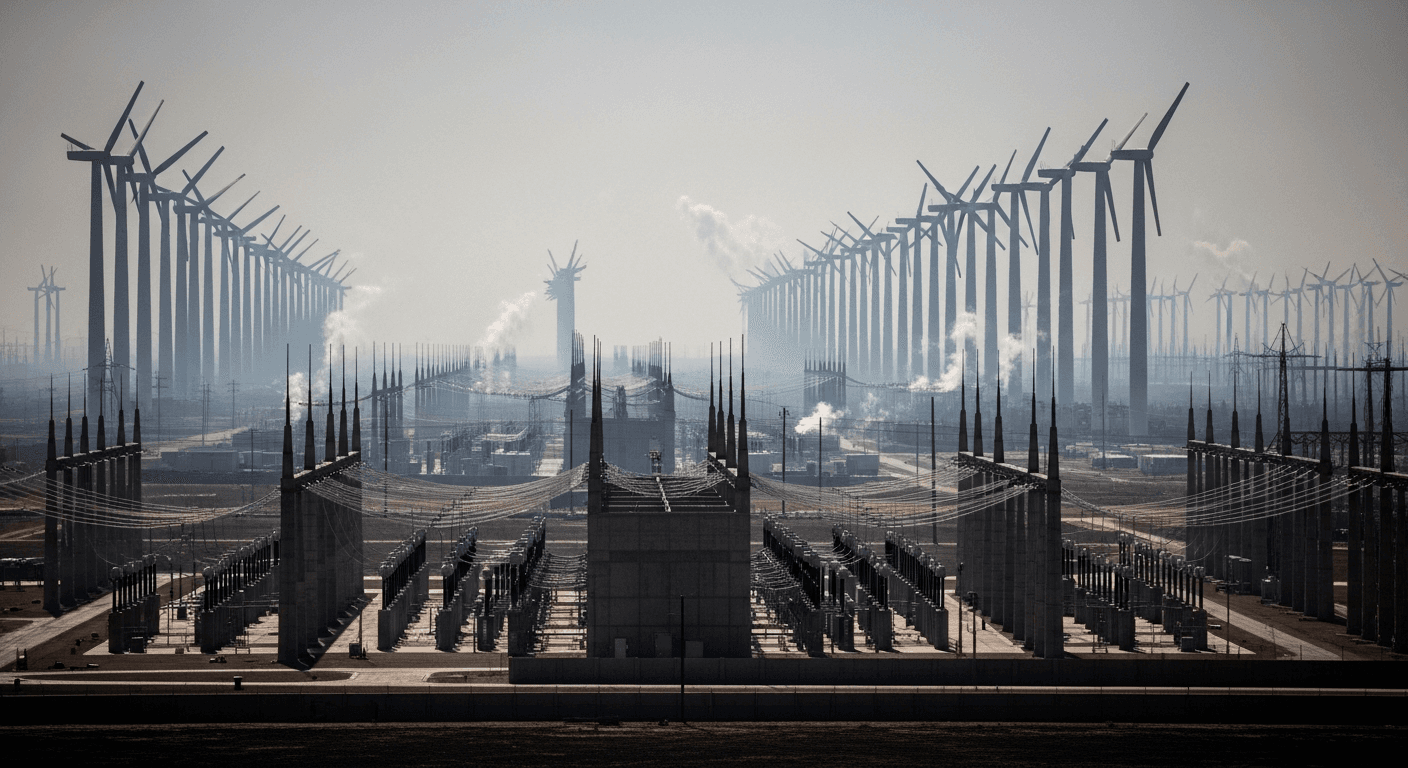
The largest air permit in US history goes to an AI data center campus, not a coal mine.
Key takeaways
- Amazon's GW Ranch plant in Pecos County, Texas, developed by Pacifico Energy, holds a TCEQ air permit authorizing up to 33 million tons of CO₂ annually, roughly twice the output of the most-polluting coal plant currently operating in the United States.
- The 7.65 GW, 35-turbine facility is Amazon's first off-grid, behind-the-meter AI data center campus, joining approximately 59 similar projects industry-wide totaling around 90 GW of announced capacity, per Cleanview's dataset.
- The same behind-the-meter gas buildout now competing for stranded West Texas gas capacity directly threatens the supply advantage Bitcoin miners have built over the past several years.
Amazon has secured a Texas Commission on Environmental Quality air permit authorizing GW Ranch, a 7.65 GW natural gas power plant in Pecos County developed by Pacifico Energy, to emit up to 33 million tons of CO₂ per year, the largest such authorization ever issued in the United States. The story was first reported by Distilled, whose parent firm Cleanview connected Amazon's construction permit filings to the site via satellite imagery, after which Amazon confirmed its involvement directly.
The facility runs 35 gas turbines and is designed as a private, off-grid campus to power Amazon AI data centers, bypassing the public utility grid entirely. Pacifico's January 2026 BusinessWire release confirmed the TCEQ permit and noted the project also includes 1.8 GW of battery storage and 750 MWac of solar capacity. The actual TCEQ permit record is publicly searchable via the TCEQ air permitting database. [EDITOR NOTE: The specific GW Ranch permit number and document URL must be pulled from TCEQ's public database and cited here before publication, per pre-publication requirements.]
The Numbers the "Clean AI" Story Can't Survive
The permitted ceiling of 33 million tons per year puts GW Ranch in a category by itself. The James H. Miller Jr. coal plant in Quinton, Alabama, currently the most-polluting facility in the US, emits approximately 16 million tons of CO₂ annually, per EPA FLIGHT data. GW Ranch's authorized limit is roughly double that figure.
That number is a ceiling, not a forecast. Permitted limits routinely exceed actual operating output, and real-world emissions will be lower at the outset. But the authorization itself signals the scale of power demand being built behind the meter for AI infrastructure, and it arrives while Amazon's own emissions rose 6% in 2024, up 33% since 2019, per Amazon's own sustainability report.
Amazon spokesperson Margaret Callahan acknowledged the tension directly: "The world looks different now than when we cofounded the climate pledge." Pacifico Energy CEO Nate Franklin, in the January BusinessWire release, framed it as market leadership: "As Texas solidifies its role as a leading market for data center expansion, this 7.65 GW TCEQ air permit underscores our ability to deliver the scale, speed, and regulatory certainty that hyperscale and other large-load customers require."
GW Ranch is not a one-off. Cleanview's dataset counts approximately 59 behind-the-meter gas projects announced across the US since early 2025, totaling around 90 GW of planned capacity. Microsoft announced a 2 GW off-grid data center campus in Pecos, Texas, paired with a Chevron power deal, in June 2026. Texas's data center interconnection backlog gives the broader context: the grid cannot absorb this load, so the industry is routing around it.
What This Means for Bitcoin Miners and the Gas Supply Stack
The energy warfare narrative that has followed Bitcoin mining for years just found a much larger target. AI infrastructure is now the primary driver of new fossil fuel buildout in the US, not mining rigs. The policy and PR pressure that follows will be directed at hyperscalers first.
The more immediate concern for miners is supply competition. Behind-the-meter AI campuses are competing for the same stranded, curtailed, and co-located gas that Bitcoin miners pioneered as an energy arbitrage model. Ninety gigawatts of announced AI capacity chasing remote West Texas gas is a direct constraint on the feedstock miners have treated as a strategic moat. The Nvidia-Lancium deal and the DOE's Texas grid loan both point the same direction: capital is moving at scale into the same geographic and fuel corridors miners occupy.
Texas's permitting structure, specifically TCEQ as the primary regulatory gate with no state siting statute, is what made GW Ranch possible at this speed. That same structure underpins Bitcoin mining's position as the dominant flexible load in the state. If environmental opposition to AI's behind-the-meter buildout (Public Citizen is already engaged) produces pressure on TCEQ rules or federal GHG preemption attempts, mining is implicated as collateral even though AI is driving the build.
What to Watch
Amazon filed three Texas data center construction permits in early August 2026, with land clearing confirmed by satellite as of late July. The company reportedly is also in talks connected to a 4.5 GW gas plant in Homer City, Pennsylvania, though no Amazon statement has confirmed that project. The near-term signal to watch is whether TCEQ or federal regulators respond to the permit's scale with new rulemaking, and whether other hyperscalers filing behind-the-meter gas permits face the same scrutiny or the same speed.
Sources
Frequently Asked Questions
What does "behind-the-meter" mean, and why does it matter here?
Behind-the-meter means the power is generated and consumed on the same private site, bypassing the public utility grid entirely. For GW Ranch, that removes ERCOT interconnection hurdles and demand-response obligations, but it also concentrates the full environmental footprint in one location and pulls gas supply out of the regional market that curtailed miners and other flexible loads have historically accessed.
Is 33 million tons the actual projected output, or a regulatory ceiling?
It is a ceiling. TCEQ permits authorize a maximum; actual operating emissions depend on utilization rates and the mix of gas, solar, and battery storage deployed. The James H. Miller Jr. coal plant in Alabama emits roughly 16 million tons per year at actual operation. GW Ranch's permit limit is about double that, but real-world output at initial power delivery will be lower.
How does this affect Bitcoin miners in Texas specifically?
The 90 GW of announced behind-the-meter AI capacity in the US pipeline is competing for the same stranded and remote gas that Bitcoin miners have accessed as a low-cost energy source. If AI locks up West Texas gas capacity at scale, the marginal economics for miners accessing the same fuel tighten. Regulatory blowback targeting all behind-the-meter gas buildout is a secondary risk that could constrain mining even though AI is the primary driver.