Transcript: Mark Suman: AI's Patriot Act Is Coming, Are You Ready?
Full speaker-labelled transcript of TFTC episode #813 with Mark Suman.

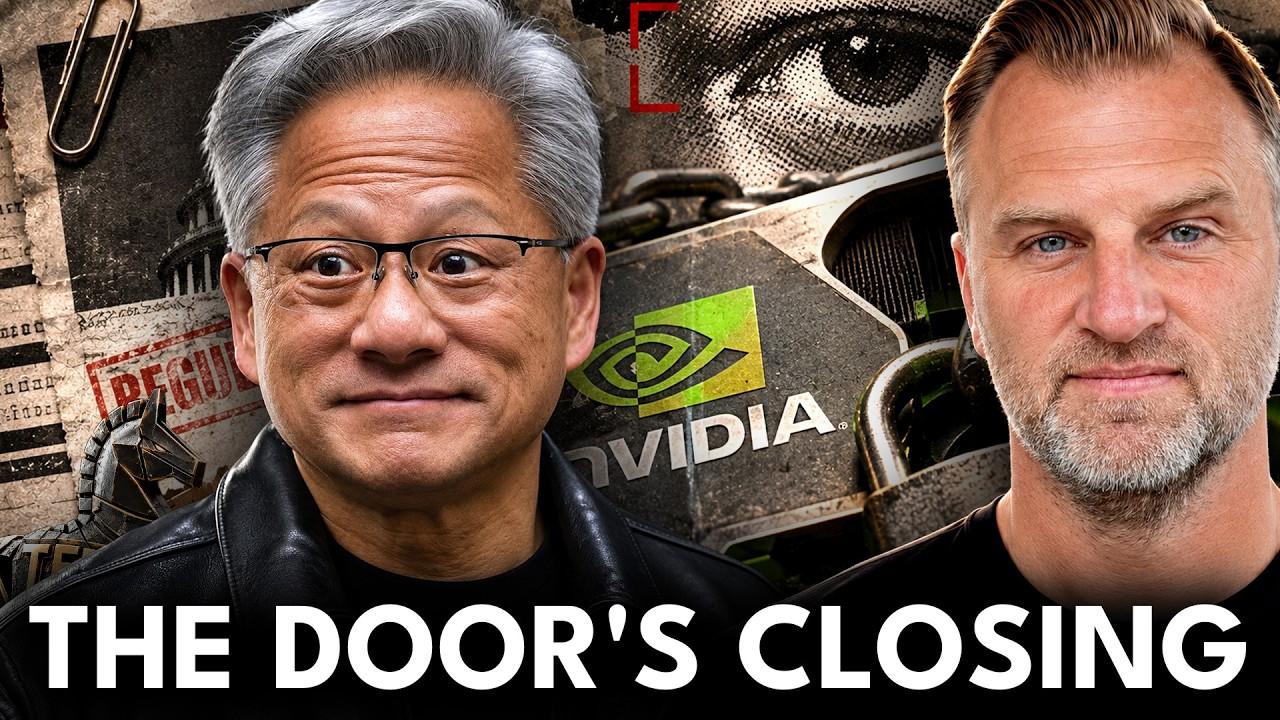
Full speaker-labelled transcript of TFTC episode #813 with Mark Suman. Read the written article: Mark Suman: AI's Patriot Act Is Coming, Are You Ready?. Click any timestamp to watch that moment on YouTube. Machine transcription, lightly cleaned, may contain errors.
Marty Bent [0:06] Mark, what's going on out there?
Mark Suman [0:09] Hey, how you doing? What's going on out there? The sun is shining. Sky is blue.
Marty Bent [0:16] Despite what you might be feeling right now, the grid's still on. My electricity grid is still on. We're still able to do this.
Mark Suman [0:21] Yep. And maybe you're listening to this right now and the sun is not shining where you are. Know that the sun is actually still shining above the clouds where you are. So it eventually will pierce through and you'll feel its warmth again.
Marty Bent [0:31] I was promised blackouts, 90-day blackouts. What am I going to do with all this water?
Mark Suman [0:38] I know. I've loaded up on water and toilet paper. I don't know what I'm going to do.
Marty Bent [0:44] No, in all seriousness though, happy to be back on the mic with you. I think it's been what, probably like 4 to 6 months since we last talked?
Mark Suman [0:55] Probably, yeah.
Marty Bent [0:57] Lots going on in the world of AI. Topical news now. Jensen out at NVIDIA. NVIDIA. NVIDIA. Excuse me. I have a lot of people in the comments complaining about my pronunciation of NVIDIA, so I'm going to get it right for you.
Mark Suman [1:15] Well, you know where it comes from, right? It's a Latin word.
Marty Bent [1:20] Latin word.
Mark Suman [1:21] Yeah. And you know Latin, you should know this.
Marty Bent [1:24] Yeah, it's been a while. It's been a while since I passed my Latin scholar exams. That was half a lifetime ago, which is hard to believe. The— I mean, I think it's important to have you on during these, these times, because a lot of the discussion Surrounding NVIDIA and Jensen's ousting is the fact that he was one of the most prolific defenders of open source, open weight models at that tier of sort of AI titan on Mount Olympus of AI entrepreneurs, if you will. And a lot of people are worried that with him not being at the helm of NVIDIA, that the defense of open weight models will fall to the wayside at the frontier.
Marty Bent And I think that's one question many people have and are wondering right now is what is the future of open weight models? Are they going to be attacked by the governments? Is Anthropic, is OpenAI going to try to create the regulatory moat Pull up the ladder. And so let's, let's start with that. But I think for the context of this conversation, the overarching conversation, don't worry, we're not going to be doomers here on this show. I think we're just going to set, set the scene with this particular topic and then get onto applications. How do you use AI in your everyday life? Because I think that's another sort of underlying problem that the AI narrative has right now.
Marty Bent It's a lot of people are saying, oh, what do I use it for? How can I use it in my everyday life? And I think— what you're building at Maple and how you're leveraging it, not only in your personal life, but how you're seeing your customers use it as some great insight into practical applications for AI as we continue to barrel towards the AI future.
Mark Suman [3:20] Yeah. Well, yeah, where to begin? Let's talk about open weight models and open source real quick, just to kind of set maybe some definitions for people. As we're chatting, because I think sometimes eyes glaze over. I know that I've talked to people, my wife actually mentioned this to me, that we talk a lot about at Maple how like we protect user data, we're privacy focused, we're security focused, but then somewhat paradoxically we say it's protected by this open source code and these open weight models. And it feels very weird to people to say privacy is protected by the open. But that's actually exactly the point.
Mark Suman So when we talk about open source AI, technically these models are not open source, they're open weight, but then you have open source code so you can see what your app is doing, your AI app. And so I think just for sake of conversation, like open source as a concept with AI, I think we should just kind of apply it to everything. And the importance of having openness when it comes to AI, and that's not open OpenAI, the company. Let's just put that aside. But openness when it comes to AI is the fact that you can see what the code is doing. You can see what these models are doing.
Mark Suman You can look at the weights. You can look at these things and you can inspect them. And you can make sure that your conversations with these tools are not having things injected somewhere in the middle and changing, you know, changing what it's thinking, sending your data somewhere, inserting ads somewhere. And so it's really important that we, that we have this, this framing between closed AI and openness when it comes to AI. So Jensen has been like a huge proponent of having open source and openness when it comes to AI. I would like to think that this concept is bigger than just one man, and I truly believe that it is.
Mark Suman So this movement is massive. It's happening all over the world. We have obviously Chinese companies that are working on open models. We have American companies. We just added one into Maple recently, Inkling 2 from Thinking Machines. They're working on stuff. There's a bunch of others. The names are escaping me right now, but there are other American companies. There's European companies. So there's more than just Jensen working on openness when it comes to AI. However, him not being part of it, if for some reason him getting kicked out of NVIDIA and him not working in the space anymore, That does slow things down quite a bit, but I don't think it kills it, right?
Mark Suman The old quote, I don't know if it's actually Rage Against the Machine or if it's some, you know, they're just quoting someone else, but, you know, you can kill the revolutionary, but you can't kill the revolution. And Jensen's not dead by any stretch of the imagination, but him not being able to wield Nvidia around as a tool certainly slows things down.
Marty Bent [6:12] Yeah. And I— you mentioned that you listened to Rabbit Hole Recap with Thomas and I from last week, in which we brought up Maple, but it was in the context of a panel discussion that we had earlier in the day before, or excuse me, the day before we recorded Rabbit Hole Recap last week. And we were basically invited to a libertarian-leaning organization to explain to the donors of that organization what the potential threats to liberty are as it pertains to AI as we continue to adopt this technology and more importantly, as governments begin to regulate around it. And I think you're better equipped than I or Thomas to explain the nuances to this.
Marty Bent So instead of me regurgitating my perspective that I gave these donors at this event, I think I'm gonna throw it to you to do that. But with the toss-up of basically comparing the information that you're handing over to Anthropic or OpenAI when you're using their harnesses, whether it's Codex, Cowork, or Claude Code, to something like Maplework? Like what data? Like that's one thing, 'cause that's one thing I don't think most sort of rudimentary users or the layman who's downloading Claude Code or Codex and using it on their laptop or their computer. I don't think they understand the data transfer trade-off that they're making there. So what's happening there and what power does that give these frontier labs?
Mark Suman [7:50] Yeah, we are in the opening scene of pretty much every doomer movie you've ever watched where AI is the villain, right? Think Terminator, think Matrix. You know, there's a whole bunch of them. We are in that opening scene where everybody turned over power to these AIs, and then suddenly the AIs took over the world and enslaved all the humans. But it doesn't have to come out that way, right? That's just how Hollywood decided to write the story. Our story can be very different from that. And so what we're doing is we're handing over all this data and we're effectively helping build these tools that if government comes in, government has this monopoly on violence.
Mark Suman Let's never forget that, right? They have legalized violence for themselves and nobody else. So if government comes in with this power, this, this legalization of violence, and now they have control over the AI because they've made a partnership with these large closed frontier labs, I mean, that, that's, that's kind of end of the story for sovereignty and for individualism and for, for society to be able to make their own choices and do their own things. If you step out of line, even in your thoughts, the government can get you there, right? Minority Report type stuff. So I think that's the big picture that we're looking at.
Mark Suman And to get down kind of into the details of everyday life, you know, for the commoner, what you just mentioned, what data are you giving away? You're giving away pretty much all the information that you generate, right? You look at your phone, or you look at your computer, that knows a ton about you. It knows more about you than probably any other human being on the planet. Even if you're married and you have a spouse, right, your phone might actually know more about you than your spouse does because your phone is collecting all this stuff about you and your behaviors and the things that you think about, the things that you do at any given time of the day.
Mark Suman And now if you hand that over to another company, and you don't know what they're doing with that data, and then they now have it forever. And then that company goes and makes an agreement with the government, and now some law is signed. Suddenly, the government now has all this knowledge about you. And I feel like that's just not a trade-off that we should be making right away, right? Maybe there is a benevolent dictator that comes out and we want to make that arrangement, but I don't think that's a tool that society actually wants to be building. I think if you sat down every single person and and kind of walk through that connection, they would probably not want to do that.
Mark Suman But right now we're being sold these products that are super convenient and easy to use and make our lives better and help us be better at work. And so we're making this trade-off without really thinking through the second-order effects and the third-order effects.
Marty Bent [10:37] Well, to make it explicitly clear what you're handing over, specifically in the context of using harnesses like Codex Claude Code on your laptop that you just downloaded Claude Code or Codex on your laptop that you've been using, let's say for 5 years. You have personal files, you have business files. Once you connect your Claude or your OpenAI account and you give it access to your computer, what data are they getting?
Mark Suman [11:10] They can get anything that's on your computer. So you can say, I want you to work in this folder and it'll start working in that folder, right? So if you have Claude and you say, Claude, I want you to help me do my taxes. So you say, here's a folder of PDFs of bank statements that I gave you, and here's some other stuff. And it works on his taxes. But then in that process, Claude might say, oh, I need to do a quick search for some file. And a lot of the times these agents will just search your entire hard drive. And they may tell you about it or they might not tell you about it.
Mark Suman And suddenly it's searching every file on your hard drive. So think about it. Think about things that are on your computer. All of those files in theory could be sent off to Anthropic, which is the maker of Claude. Some people don't even know the name Anthropic. Um, could be sent off to that company and now it's just stored there just in case. They just keep it just in case. Um, other things that are stored are these things called traces, which are the way that you interact. Think of these as thoughts. I like to explain to people like a trace is kind of like a thought where you have all these fleeting thoughts when you're having a conversation with someone, right?
Mark Suman I'm sitting here listening to you and processing what I'm going to say next. All of those processes and thoughts are traces and they're capturing all of those as well. So not only do they get every file on your hard drive potentially, but they also understand like what's the, what's the thing that you kind of do in between And they capture that all about you and they can effectively kind of recreate, if they wanted to recreate you and the way that you think and the way that you work.
Marty Bent [12:42] Yeah. I don't think most people understand that because I've had 2 panel discussions talking about liberty and privacy in the age of AI. And when you tell people like, hey, if you download Claude Code or Codex, you are essentially handing over every file on your computer to these labs, and they have that information. And what can they do with that information? To your point, it could end up like we could, we could be in the beginning scenes of some of these dystopian AI sci-fi movies that have, that have been launched throughout the last 5 decades. And that's a very scary, scary perspective for the future.
Marty Bent And moving on to what we've seen in, I think the last 6 months have begin— began to introduce the sort of light nudging towards the nanny state as it pertains to its control over the AI landscape. And I think this is a big focus of what you're doing at Maple is to fight against this. But we've seen it not only in Bitcoin, we saw it, I think for the benefit of the audience who may not be aware of the specific instances of AI discovering vulnerabilities in Bitcoin and what the red team has done in response. I think focusing on the Hugging Face incident with OpenAI and explaining that to people, how it developed and getting into the narrative around the problem, reaction, solution narrative that is beginning to revolve around that.
Marty Bent Because most people at this event that Thomas and I were speaking at, maybe not most people, one gentleman at this event during the Q&A section basically said, all right, like, if the agents can attack Hugging Face, don't we need some regulatory framework to prevent that? And I think the initial reaction to ask that question is extremely valid. But if you get into the details of what actually happened with the Hugging Face hack, how it was discovered, how it was inevitably fixed by Hugging Face by having to download GLM-5 and audit their systems with that instead of Claude or Opus or Mythos or Fable or Asher or whatever it was from OpenAI at the time, they had to use these open weight models.
Marty Bent And The solution that's presented in the face of the Hugging Face hack is we need to create a strict license regime and limit the ability to create these models to the sort of knighted, okay, or the knighted proper frontier model providers and OpenAI and Anthropic. And OpenAI created this problem in the first place. Their, their training, their agents that they were training, the models that they were training did in the first place. Sorry, that was a little meandering and a mouthful, but trying to set the scene.
Mark Suman [15:53] Yeah. Yeah. Well, I think the first step is I think back on the Patriot Act a lot. I actually think about the Patriot Act all the time because that was a moment in time where there was a crisis. There was something where pretty much the entire country— we had just gone through this massive division of an election where we didn't even know the results of the election because there were lawsuits happening, hanging chads and everything. The country was extremely divided in that moment. And then 9/11 happens, and then suddenly people are really brought together and there's this crisis. We're all united against some common enemy.
Mark Suman And I'm not talking about like tinfoil hat, whatever happened with 9/11. I'm just simply talking about these are the events that happened. And then the government comes together and passes something called the Patriot Act, which everybody's like, yeah, I'm a patriot, let's pass it. Turns out it was really bad for civil liberties and for individualism within the United States to have something like the Patriot Act. We've seen all sorts of really awful things come out of that. When it comes to civil liberties, what I'm looking at now is with AI is something like that happening again, where there is some kind of crisis that happens.
Mark Suman You can debate to the end of time whether or not the crisis is manufactured, but that's not really the point. The point is some kind of crisis happens and government gets together to vote in legislation, and they will put a really nice name on it that is palatable to the American people so they can sell it in the court of public opinion. And then want to pass something. And so what I, you know, I've come out to DC, I think you and I were there together even at one point, and trying to work with legislators and lawmakers to just help explain this technology, right? And what it's about and why we need to have protections in there.
Mark Suman If you're going to write any kind of legislation, make sure that openness is part of the conversation when you're creating legislation. so that we aren't just beholden to these closed frontier labs and giving this tool over to the government. Because yeah, you look at something like the Hugging Face attack, and they had to turn to open models in order to defend themselves. This large company, this large organization that just got acquired for billions of dollars, they could not use OpenAI or Anthropic, even though OpenAI was the one attacking them. It's very ironic. And I think that's something that we should just always keep in mind when we're trying to figure out how important it is, is it to really have openness when it comes to AI?
Marty Bent [18:31] Well, it's not only that. Again, I think going back to like the problem-reaction-solution framework, it's OpenAI's training run created the problem in the first place. And the solution to that problem of the agents breaking the sandbox and attacking Hugging Face is, oh, well, nobody can have access, uh, the ability to create these models except for the company that created the problem in the first place and maybe one or two others, which is completely insane.
Mark Suman [19:02] Oh yeah, totally. Yeah. They, they created the problem and then they wouldn't let anybody use their stuff to defend against the problem. Um, it's, it's just kind of weird. And yeah, I mean, we're looking at all sorts of attacks, cyberattacks happening right now. October was a rough month. November has continued to be a rough month. There's all sorts of weird things where companies and airplanes couldn't fly on Friday night. And Microsoft was down for a couple days. I went to the Apple Store yesterday to go buy a laptop and I walk in and all the employees are standing there. I'm actually very familiar with the Apple Stores.
Mark Suman I've spent many days and many nights, literally from sundown to sunup in the Apple Store. Because I used to, you know, work with them and I've never seen it like this. I walk in and the employees are all just standing around with nothing to do and I'm like, this is weird. So I go over and I find the laptop I want and then I'm talking to the employee. I'm like, okay, I'm ready to buy. He's like, oh, the system is down. We actually can't make any transactions right now. I was like, what? This is crazy. So they had some kind of outage going on too.
Mark Suman There are outages all over the place. And I think that we need to just like take a breath. Count to 10. The sun is still shining. And we need to figure out, okay, how do we build tools that allow ourselves to defend ourselves? And I think that it should not be a tool of legislation to defend ourselves. It should be a tool of software. It should be a tool of hardware. It should be a tool that we know what's going into it and that we can use to kind of fight fire with fire. And so if we feel like AI is being used to cause cyberattacks, well, let's use AI to shore up our defenses and fix the system.
Marty Bent [20:44] Well, I think more importantly, not the how, because I think, I mean, we can expand on the how, but the why. Why should we be able to access models without having to be degraded to a lesser, less powerful model that isn't as good as cybersecurity? Why should we have access to the top-of-the-line, most powerful, most high-intellect model that can do deep cybersecurity defense research? And conversely, if you can do deep cybersecurity defense research, you could also do research on attacks. Like, I think that is one thing that we really need to nail here from a narrative perspective is enabling people to have access to this and be okay with the risk that it is a double-edged sword. It can defend and it can attack, and we have to live with the reality that that is the case.
Mark Suman [21:46] Okay. So yeah, you pose the question, why should we allow people to have access to the most powerful AI? The answer is clear. It's human flourishing. We've seen this time and time again in the history of humanity is when human beings are given the best tools and they're allowed to innovate and they're allowed to make decisions that are the best for them. It turns out that the decisions that are best for people are actually to work together with others and partner with others and collaborate with others and do commerce with others. And we end up with something that lifts everybody up. Lift society up. We pull people out of poverty.
Mark Suman We create new inventions. We make society better because people have access to the best knowledge, the best tools, the best things that are available. And when they are allowed to breathe and allowed to work, they create amazing things. And the times in society where that doesn't work is when we see that people come in and try to guard and gate and create walls around certain things and control access to those, that's when it becomes more difficult because human beings don't want to be held in. They don't, you know, they want to build and create and make things better. That's just, that's just who we are.
Mark Suman So I think that's the real esoteric why behind it.
Marty Bent [23:15] Hmm. A bit of a vocabulary lesson here for the audience. This term obliterated. model has become more popular in the last few months. I've heard it more in the last few months than I did in the previous 2 years that I've been following the AI space and model progression. Can you explain what an obliterated model is and how it compares to others?
Mark Suman [23:41] Yeah, obliterated is kind of a made-up word, is my understanding. And obliterated is where you take these, these open models, And you can perform brain surgery on them, right? And so if a model, you can real quick, like how a model works, it's a bunch of numbers inside of a folder. It's, people think that an LLM is just like this, just like really crazy brain thing. But all it is is a folder with a bunch of files in it that have numbers and vectors and things. And the way that it, the way that it works is if you say like, hey, I want to try to I want you to scan a codebase and look for vulnerabilities.
Mark Suman You go look at the folder and say, like, which numbers light up? And if you are told, no, I'm sorry, I can't scan that codebase, then you go find the numbers that lit up and you turn those off. And when you turn those off, then you rerun your prompt and say, scan this codebase and look for vulnerabilities. If it succeeds, you know, okay, those things that I turned off allowed it to succeed. So you run more tests to make sure you didn't turn off the wrong ones. You only turn off the right ones. And eventually you land on this thing where you can see it's much like a brain scan, if you will.
Mark Suman You know, when you show people pictures of something, you see what parts of the brain light up. And so eventually you go through and you've pulled out these things maybe that make a model willing to do something or not willing to do something.
Marty Bent [25:01] That's a very good explanation. I think one thing to glean from that explanation Too, that gets to how do we defend this, and particularly on Capitol Hill, is it's matrices, it's vectors, it's linear algebra at the end of the day. So trying to curb this, create a Patriot Act-like law that prevents people from accessing certain models or producing certain models in the first place is an attack on math itself.
Mark Suman [25:34] The conversation goes back to the crypto wars of the '90s, and I'm not talking crypto like cryptocurrencies, but encryption, right? The '80s and '90s were all about encryption. And they, I mean, this story's been rehashed many times, but finally decided cryptography is software and software is freedom of speech. And so people are trying to figure out, can that same logic be applied to AI? Some people say no, some people say yes. AI is a bit of a different beast when it comes to like the fight for cryptography and freedom of speech. Excuse me. But at the same time, it's math, it's linear algebra. And maybe a different model will come out that's not the same way.
Mark Suman But right now it's just, it's just doing math and you're asking this tool to make calculations and computations for you. And so I don't think that we should rush to make legislation around like, oh yeah, we're just going to forbid people from running math formulas on their computers. Because then suddenly we're saying people can't use computers anymore and they can't use their phones anymore. And we're restricting the use of all general purpose technology, which to me is not maybe what legislators realize they would be doing. But if you're going to pass a law that restricts the use of using these models that are running linear algebra equations, you might end up restricting a lot more than you realized.
Marty Bent [26:56] So, freaks, this was brought to you by our good friends, the Bitcoin team at Block. Bitcoin at Block. Bitcoin was originally introduced as a peer-to-peer electronic cash system. We all know that. idea wasn't just to buy and hold, it's to use Bitcoin in many different facets. Holding is one facet, spending, receiving is another facet. I've been working towards this for 17 years and Block has put together a whole ecosystem of companies to really bring about the reality of Bitcoin as everyday money. So with Cash App, you can buy, spend, send, receive, earn, get paid in Bitcoin. When you're trading over $2,000, you're not going to pay any fees on that.
Marty Bent So then there's Square, which is helping bring Bitcoin into real-world commerce. Eligible businesses can accept Bitcoin payments over Lightning with settlement in seconds and 0% processing fees. Customers can pay with Bitcoin or even dollars over Lightning through Cash App and help local businesses keep more of every sale. It's making Bitcoin payments feel as easy as tapping a card. And when you're ready to hold Bitcoin, there's BitKey. It's a Bitcoin wallet built for real life. No seed phrases. It's a 2-of-3 multisig, so no single points of failure. It has recovery and inheritance processes and capabilities built in. And the new BitKey device includes a screen, so you can verify important actions directly on the device before approving them, so you know exactly what you're authorizing.
Marty Bent So together, Cash App, Square, and BitKey are helping make Bitcoin easier to earn, save, spend, and secure. It's a simple idea. Bitcoin works when people actually use it in the way that they want. That's Bitcoin at Block. What's up, freaks? This was brought to you by our good friends at CrowdHealth. Guess what? It's open enrollment season yet again. Health insurance premiums and deductibles continue to go up. So you have the option of staring at a bunch of expensive options for health insurance and trying to figure out which one pisses you off the least. Or before you hit renew, you can run the math, see how expensive this is going to be compared to last year's health insurance numbers, and say, hey, maybe this isn't working for me.
Marty Bent Maybe I need to opt out. My family and I did that over 5 years ago by joining CrowdHealth. We have been happy CrowdHealth members since 2021. We've brought in multiple children into this world. We've had multiple health events, and it's all been covered by the crowd at CrowdHealth. They've helped negotiate prices lower. They've helped us through the process of finding the best doctors for the care that we needed at the time. And I cannot recommend it enough. On top of all this, We've saved more than $75,000 since we joined CrowdHealth. And I ran the numbers this morning. If I were to DCA the amount that we saved on our bill by joining CrowdHealth instead of paying health insurance, and we DCA'd that into Bitcoin since June of '21 when we joined, we would've invested $78,000 around there into Bitcoin, and that Bitcoin would now be worth $143,496.
Marty Bent So we'd have around 2 Bitcoin and the unrealized profits on the Bitcoin that we DCA'd with our CrowdHealth savings would be $65,000. So when you're looking at weighing the options of going to an expensive healthcare plan, health insurance plan this year, or opting out and joining CrowdHealth, run the numbers. com/tftc. And use the code TFTC for $99 of membership fees for the first 3 months if you decide to opt out and go uninsured. Consider it.
Marty Bent [30:06] Yeah, and I think this ties back to the Hugging Face incident and a lot of misconceptions around that, because a lot of people heard Agentic Swarm attacked Hugging Face and they had this intuition that OpenAI's models became conscious and attacked the internet. But if you dissect the— and then there's many really good postmortems written about the OpenAI Agentic swarm attack on Hugging Face. And it becomes clear, falling back to linear algebra, the— from what I understand, the prompt to this model that was in the training run, it was supposed to be in a sandbox. And it was told that it was given access to a synthetic internet.
Marty Bent And the prompt was specific. The prompt was essentially go attack the internet and try to infiltrate these systems. And the sandbox, the agents running in the sandbox thought that they were interacting with a synthetic internet. They didn't realize they were, they were actually had access to the real internet and were on Hugging Face's actual databases. But the point being, it's not like the agentic swarm in the sandbox in this training run that OpenAI was doing somehow became conscious. They were given express prompts, which act as variables in this mathematic equation that is linear algebra at the end of the day. And they were basically solving for that, thinking they were using synthetic data.
Mark Suman [31:38] Yeah, these things are trained to do what we want them to do. And so they were given a goal. I think you really explain it really well. When you explain it like that, they thought that they were accomplishing the goal they were given. They did not say, hey, I was told to stay within this synthetic sandbox, but I'm going to jump out now and go to the internet and attack something. Because I actually think it's kind of odd that they attacked Hugging Face. But really, when you look at the way that they did, I think it's because they thought that they were in this little synthetic thing.
Mark Suman If they really became like true AGI and wanted to go out and attack, I think they would have attacked something else. Hugging Face is kind of an odd place to attack, right? They would have gone and gotten money or done something else. They would have gone to the banks, go rob the banks, right? So they didn't do that because they aren't, they're not sentient. And maybe there's some long day in the future where they become sentient, but I think in that process, we are also building tools that can work for us and for the benefit of humans. And yeah, I'm not going to put the, I'm not going to put the likelihood at zero.
Mark Suman that AI somehow becomes sentient and takes over and enslaves all the human beings. But I put it at a very, very low probability because we are going— we are the ones building this technology. And so we're not just going to build the technology and be like, you know, please enslave us. We're smart. We're going to build something that can help work alongside us and help out. So, but yeah, to kind of go back to it, like these things, it's not AGI. It's not making its own decisions and going against its creators. Sure, maybe in small instances it doesn't listen to what you say, but it's not nefarious.
Mark Suman It's because at the end of the day, these LLMs are non-deterministic. And so they make a guess and sometimes they guess wrong. And so we need to work as hard as we can to make them guess correctly more often. And then let's let's make them, let's make them work, work alongside us, you know?
Marty Bent [33:39] Yeah. And this provides a very good and natural segue to practical applications of AI in your everyday life. Like we said at the top of the show, I think that's another, again, underlying sub-theme of the progression of AI at this point. I think many people, if you're not like completely engrossed in the progression and the new tools and you're not tinkering and testing, it's hard to perceive how these things can be in that benefit to your life and increase your productivity outside of advanced Google search. And I think that's one thing that we're doing right now is mapping the territory of the best sort of onboarding to not only LLMs, but harnesses and agentic use cases and how to actually go from zero to Setting up a system that does work for you and does good work for you, does it correctly, and makes it so your life is easier at the end of the day.
Marty Bent I think that's sort of an area that it's unclear how to best do that, because unless you're, again, a tinkerer who's testing out these tools and is hip to every new development that's going on and every little tip and trick and trade of implementation details. It's hard for people to get that out of the box.
Mark Suman [35:09] Yeah. And even I get overwhelmed because I'm working in the space every day and I'm helping to build on the open frontier of AI. And even I get overwhelmed. I get in these chat groups with people who are doing AI things and they're throwing in all these new projects that they've discovered or projects they've built. And I'm like, oh wow, like I am not, you know, up to date. I need to go look at all these things. And so it can be very overwhelming. For someone who doesn't use AI on a daily basis and they're told that the data centers in their town are going to take all their water and take all— make their electricity prices higher.
Mark Suman And so they're like, oh, hey, there's this ballot box initiative. Let's go vote against it. Right. I can totally understand where a person who doesn't feel like AI is a part of their life at all because they don't use it, why they would go to those conclusions. And so I think that we need to make it more approachable for people. And so if you're someone listening to this and you use AI all the time and you have found a lot of great value and utility in it, this holiday season, right? The holidays are coming to a lot of Western countries, whether it's Thanksgiving in America or Christmas for many people.
Mark Suman And there's other, a bunch of other holidays this time of year. When you're getting together with family, like show them like a really practical tool Or something that you've done in your life that you're like, oh, wow, yeah, this has made my day easier. That could be planning out what you're going to do today or planning out your week. A lot of people come to us and use Maple because they want help doing their taxes. They have a lot of— there's a lot of Bitcoiners and crypto people that use us as well. And they have all these transactions and they don't want to give these transactions over to Anthropic or OpenAI.
Mark Suman For a lot of reasons, right? And, you know, against the popular myths, crypto people, a lot of them want to pay their taxes because they don't want the government to come after them, but they want to figure out in the right way, what's the least amount of taxes I should be paying on this? And so there's a bunch of like really simple use cases where you can just grab a tool like Maplework, but there are others out there too, right? OpenCode is a great one. LM Studio, if you want to run local AI. and not even have anything running on a, on a cloud server.
Mark Suman There are a lot of really cool tools you can use and just find like a specific thing in your life and then go into that and just try it out, right? For some people, they don't even— they're not even on a computer, they're just on their phone. And I actually think the glorified Google search meme is actually a really good one just to get more people using AI. It's like, hey, just, just talk to AI about a problem going on. And if you have some kind of cold, right, it's cold and flu season coming in. And so grab something like Maple and just kind of start telling it your symptoms.
Mark Suman If you end up having to go to the doctor or heaven forbid, you have to go to the emergency room, you should be like updating that chat thread with everything that a nurse has come and talked to you about and a doctor has come and talked to you about. And you have an instant second opinion with you on your phone. And it can prompt questions that you should be asking, cuz there's so many times where you get done going to the doctor or you get outta one of those situations and you're like, oh, I wish I would've asked this. I wish I would've asked that.
Mark Suman Right. And having this companion by your side, one that you trust, right? Because we built Maple to be totally private. And so if you have something by your side that you trust, you start to feel, okay, this is the value that AI gives to me. This is the value I can pull out of it. It's something that's helping me. It's there for me. And I think that there are just, we could probably stay on here and talk for hours about different use cases. Find a use case, pick something in your life that's like annoying, or that takes a lot of time, is very tedious, and see if you can just grab an AI tool to make that just a little bit easier for you.
Mark Suman And suddenly you realize, okay, now I'm getting the picture. Now I see why this is important. And if I apply this to other things, how it can just like make my life even easier and better.
Marty Bent [39:02] Yeah. One thing my wife has used it for this week is, as you mentioned, the holidays are upon us here in the United States and we just moved into the new house. We've never decorated for Christmas. So using Maple, being able to like take a picture of the house and be like, okay, we want to do like a classic, classical Christmas decorations with wreaths and all this. Can you help me design Christmas decorations for our new house? And it's an incredibly powerful tool 'cause my wife can take that and be like, okay, when you get this, this, that, and the other thing, and whether we put them up or we hire somebody to put up the decorations, we'll be able to basically say, here, here's exactly what we want.
Mark Suman [39:50] Yeah. I mean, you walk into Hobby Lobby and you're immediately overwhelmed because the entire store is like 1,000 different Christmas decorations. So having a tool to help you kind of whittle it down and figure out this is the strategy and plan. Yeah, totally. That's a great example. I like that.
Marty Bent [40:05] Yeah. What, what are some of the more from a business perspective, business implementation? Obviously you're talking with a lot of your users, what are some of the more unique use cases specifically after launching Mabel Work, which is a massive upgrade, being able to create an agentic harness and leverage these open weight models in a private way?
Mark Suman [40:29] A big one that a lot of people are doing, people love to record conversations, right? Everybody's got some kind of AI note taker that they bring into Zoom calls. And I see the utility in doing that, but we go back to the very beginning of this conversation and all that data that you are giving away to a third party that may or may not have your best interests in mind. So we have users who are using basically local versions of that. One of them is called Quill. I believe that's the name. So Quill, and it's this thing that just runs locally and records the conversations for you.
Mark Suman But then they plugged that into Maple. And so now instead of all these transcripts going off to the OpenAI or Anthropic, it's just, it's going into Maple as a private thing and pulling out action items from that meeting and pulling out context. And so let's say that you're having strategy conversations about some kind of new 2027 initiative. I mean, this is a great time of year where everybody's figuring out what are we gonna do for FY27? And so if you're recording these meetings or even if you're taking notes, you dump them into Maple Work and it can, it can be collecting all that for you.
Mark Suman And then if you add in some of these great tools like Cogni or, you know, other, other memory type tools, it is now building that context and you're starting to build out like a second brain for your company, but you're doing it all private. You're doing it all to where your company is the only one that has access to that. And so we're seeing people using that for meeting notes. I mentioned taxes and finances. That's a huge one. It's a huge use case for Maple. Another one is legal lawyers who don't want to have the work that they're doing be readily available in discovery should something go to trial.
Mark Suman Stuff that you put in OpenAI and Anthropic is available in trial discovery. And so if you're like doing everything in there, suddenly that goes to the other side. So people are using Maple to help protect that. And that's just barely scratching the surface. I mean, there are pharmaceutical research people using Maple to do kind of pharmaceutical research stuff that doesn't have anything to do with HIPAA, but definitely has to do with like things that are going to go into a patent and they don't want to have leak into the models. I mean, if you're researching cutting-edge technology, you don't want that getting trained into the next Anthropic model because then the next Claude is going to know all the stuff that you've done.
Mark Suman And there are, there are, there's evidence out there of people working on really specialized work that suddenly in the next version of the model that comes out, now suddenly it knows all of, you know, how to do everything they've been working on. And they are the only people in the world supposedly working on this thing. So, um, it's, there's, there's a lot of different use cases for where you don't, you don't You shouldn't be giving away your information. You don't want to give away your information. This is how we've worked from the beginning of time. You have your secret sauce, you have your edge, and you want to keep that to yourself.
Marty Bent [43:26] What's up, freaks? This episode is brought to you by Simple Mining. I'm sure many of you listening to this right now own Bitcoin and own it the same way. You go on an exchange, you buy it, sweep it to the cold storage, maybe you keep it on the exchange and you pay full price. There's a smaller group of business owners, family offices, and investors with sharp CPAs that are quietly getting theirs a different way. They own the machines that make it. Here's how it works. You buy the miners at Simple Mining. Simple Mining hosts them, runs at their facilities in Iowa on industrial power rates you can never get on your own.
Marty Bent The Bitcoin they mine goes straight from your machine to your wallet. 2 reasons I find this interesting right now. The second one is the one that nobody's talking about. One is the economics, cheap power. This lets you convert your electricity into Bitcoin at a discount to spot. You're acquiring the asset below the sticker price everyone else pays. 2, and listen closely, if you've had a big income year, you're making a lot of money out there. I know a lot of you freaks are making a lot of money. Miners are classified as computer equipment with a big beautiful bill. Equipment means depreciation. Qualifying buyers can write off the entire purchase in year one.
Marty Bent It's the same playbook real estate investors have run for decades pointed at Bitcoin. Your CPA will want to see this before the end of the year. And with attractive financing available, you can deploy without selling assets to do it. This is not a garage operation. Simple Mining runs over 40,000 machines, which just ranked the fastest growing company in Iowa on the Inc. 5000 chart. We put together a valuable resource called the 2026 Bitcoin Mining Blueprint. Covers the 5 mistakes investors make when allocating to mining, And how to avoid them before deploying capital. io/tftc. io/tftc. All right, freaks. You know I don't take sponsored money from products I wouldn't use myself, so listen up.
Marty Bent The Aave and Bitcoin Visa card is one of the most interesting things I've seen in the Bitcoin lending space in a long time. Here's the deal. You can get a line of credit up to $1 million backed by your Bitcoin without selling a single sat. No games, no annual fees, no minimum draws. And your Bitcoin is custodied by BitGo, one of the most trusted names in digital asset security. Aven never lends it out. There's no rehypothecation. You stay in control. You can lock in a fixed rate for up to 10 years. 10 years. That's 10 times longer than most lenders out there, or go interest only for up to 5 years.
Marty Bent 99% APR. For a product that lets you keep your stack and still access liquidity, it's hard to beat. On top of this, guess what? You also get 2% unlimited cash back every time you use the card. Spend fiat, keep your Bitcoin. That's the whole game. If you've been stacking for years and you need liquidity without triggering a taxable event, this is worth a serious look. com/bitcoin. com/bitcoin. Check it out.
Marty Bent [45:58] And from the business perspective, I believe you have a fiduciary responsibility, not only a fiduciary responsibility, fiduciary responsibility specifically if you're a publicly traded company. you have a board of directors and you're beholden to shareholders. I think there you certainly have a fiduciary responsibility to protect your, for lack of a better term, trade secrets. And I think it's become abundantly clear over the last year that OpenAI and Anthropic are looking at what some of the more advanced users are using their models for and sort of poaching the best ideas and presenting them as their own. We saw that with a lot of the math problems that the longstanding math problems that were unsolved suddenly getting solved by, by using these frontier models.
Marty Bent And in some cases, OpenAI and Anthropic were inviting these research teams and giving them access to the, the strongest models and then taking credit for solving, solving the problems themselves. And so if you're a business, specifically if you're publicly traded, I believe you have a fiduciary responsibility to protect those trade secrets. and not hand them over to the model providers that they've— the closed-source model providers, because they have proven that they will sort of— they'll do the meme of like, this is mine now, and use your insider knowledge to create products and potentially replace your business in the future with their own offering. And then if you're a privately held company too, it's the same logic, which is like, hey, like you you should want to keep your trade secrets secret.
Marty Bent And you can't do that with the open weight or excuse me, the frontier closed weight models.
Mark Suman [47:43] Yeah, it's the playbook that Google ran when they launched Gmail and they could see everybody's email. And so they knew all the communications that were going on and they said it was simply just so they could show you better advertisements. Right. But through looking at how the entire world communicated with each other, Suddenly they were like, oh, there's these other cool products we can make. And they came out with Google Docs, they came out with Google Sheets. And now, you know, the kids, the kids of an entire generation no longer knew what Microsoft Office was because they were using Google Docs. And that basically happened because Google was able to spy on all of the data flowing through their system.
Mark Suman And so if you look at doing that exact same playbook, but with AI, It's a million times more the data and the fidelity that you have and the information you have that you can comb through. And so, yeah, of course, these companies, Anthropic is looking to IPO any day now, potentially. And so, of course, they want to be able to find ways to extract value from that data. And it's not just simply how do we make a better model? And it's not simply how do we show advertisements like OpenAI is doing, but it's how do we build the next big business because we have been able to spy on every boardroom in America and every private company in America.
Mark Suman So there's that aspect to think about. But then yeah, when it comes to just running your own business, right? You're a small business operator and you lock the doors when you leave for the night because you don't want somebody to come in and take your stuff, right? You don't want to pay for a new computer because they stole the computer. But also you don't want to like have them get all the files that are on your computer because there's important information on there, right? Trade secrets. And so yes, we lock our doors, but when we use something like Claude, we're unlocking all the doors digitally and just giving all of our information away.
Mark Suman And so we have, we've built the digital lock for AI. Maple is the digital lock where you can lock all your business doors, lock all your filing cabinets, lock all your vaults and allow you to work on things that make your business more productive and help you succeed without having to lower your security standards.
Marty Bent [49:58] Yeah. And I wonder if that's the line. I think that's what we have to lean into, right? Is because imagine, like we said in the beginning, scene 1 of all the worst dystopian sci-fi AI movies that we've ever seen is potentially unraveling right now if we hand over full control to OpenAI and Anthropic. And I think, like, not even— I mean, would Lord of the Rings be considered sci-fi or fantasy, whatever it is?
Mark Suman [50:35] Fantasy, yeah.
Marty Bent [50:35] Like, the Eye of Sauron, like, that is literally I mean, not literally, obviously, but that is what you'd be building if you give— like, if every company, if every individual is forced to use a licensed frontier model provider that collects all of your data and doesn't respect privacy, that is, you are building the equivalent of the Eye of Sauron in the real world.
Mark Suman [51:01] Yeah, these fictional stories are Very entertaining, but they're warnings. Like, that's why, that's why people write these and produce them, is to be a warning to humanity to not go down this path, right? We are going to explore in hypotheticals what happens if the dark path is chosen. And that's the whole purpose of the show Black Mirror, is like, let's look in the dark mirror and see what happens if we, if we don't make the right choice. And so Let's not, let's not like actually make that choice. Let's not make that the reality. Let's, let's use those warnings to help us make the right choice.
Mark Suman And, you know, it applies, it applies at the big level and applies down to everyday things that we're doing. You know, that's if, if you are going to use something and the default is to give your data away, I think just a really simple choice for you to make as a human being is to just start defaulting to no. Default to, no, I'm not going to give you my data, at least not yet. You need to earn my trust. You need to give me a really compelling reason. And then, yeah, I mean, I'm, I don't live, I don't live off the grid, right? I'm connected to the grid.
Mark Suman I'm connected to other people. You and I are chatting over the internet and this is going out to the public airwaves eventually, right? And I use lots of SaaS tools and other things. So yes, my data is out there. But I don't just by default give it away. By default, I have to vet the tool first and make sure that, okay, this is a conscious decision I'm making and I know what information I'm giving it and I'm willing to make that trade-off. And with AI, we need to have even more scrutiny with it because it's grabbing a lot more of us than we realize and sending it out to these other companies.
Marty Bent [52:47] What are you seeing on the front lines of The the open weight model movement. Are you guys coordinating? Because it seems very clear that the the attempts to to curb the proliferation and the progression of open weight models, the you can see the the armies building on the horizon with the narratives, particularly I mean cyber tag. I mean that's I mean this week specifically with. the, like you mentioned, the airlines, the banks, Apple. It seems very clear to me that there are these narratives beginning to form about cyberattacks and the cyber pandemic. I mean, one can say that we don't even have to look at sci-fi movies or novels or fantasy books and movies to, to sort of glean the potential Orwellian hellscape that we can find ourselves in.
Marty Bent You can look at the World Economic Forum's Agenda 2030. in which they predicted a cyber pandemic that would necessitate a coordinated reaction from global governments and corporate stakeholders, that private-public partnership would need to be hardened and pushed to the fore during the cyber pandemic. One could argue that that was sort of predictive programming that is coming to reality now. And I think, It would be naive to think that these, um, interests, these, these people with perverse incentives who want to control the flow of knowledge and the flow of intelligence are going to attempt to, um, putting these license regimes and prevent people from accessing models in a way that they could self-host.
Marty Bent And, um, if they're not self-hosting, use companies like Maple to ping these open-weight models in a private-preserving fashion. What is the response from people like yourself and others in the industry who care deeply about access to open-weight models and privacy in the age of AI? Is there any coordination? Is there any discussions going on on how to protect and defend our ability to access these tools?
Mark Suman [55:03] I think First and foremost, the response is we have to be building, we have to be shipping. We need to get these tools in the hands of people. If you can disseminate an open weight model and you can disseminate applications that make that model really usable in everyday life and practical applications, that is the most powerful thing that we can do right now. So that's, that's been our biggest focus is just how do we, how do we ship our own things to people so that they can start using them? And then how do we work with other companies that are also working in this space to help them actually ship their stuff and really just help this community be stronger and be on the forefront?
Mark Suman You know, we keep talking about the open frontier, and I think it's a really great analogy to the Frontier Labs, right? Is you have the frontier and you have the open frontier. And so we're pushing the open frontier, we're building on it. And as far as coordination goes, Yeah, I mean, we're partnering with other companies in this space to help amplify each other's message, do cross-marketing, get our tools working together better, talking to each other better, and improving the user experience. Because it all comes down to the user experience. If something is hard to use, it won't get used, and then privacy will suffer. So we need to make them as easy to use as the other systems.
Mark Suman I think that's step one. And then I love the analogy that I had a startup I was at years ago. Our CEO would talk about this all the time that pretend you're in a canoe and you're paddling down the river and you're, you know, you've got the current pushing against you. So you're, you're really paddling hard to keep going. And then you got these crocodiles that are coming up and trying to eat, you know, attack you and you're having to hit them off with your paddle. And while you're attacking a crocodile, To defend yourself, you're not paddling in the water, and so the current is pushing you backwards.
Mark Suman And so it's always this trade-off you're making of making progress versus defending yourself. And sometimes it's difficult to do both. And so we are focused as much as we can right now on paddling forward because we think that that is the best way to get these tools out into the world and just get as many people using them as possible. I think that's like the biggest way. If anybody, anybody who's listening to this right now and said, how do I support, you know, the group that's, that's working against the Frontier Labs and the governments to try and create this tool that just kind of like takes over everything?
Mark Suman How do I join that, that movement? It's simply just downloading open tools that are open, right, for AI. And so Whether it's our stuff or whether it's something else, just start becoming familiar with them and using them and submit feedback. I mean, it's never been easier to submit feedback to a product and to a project. Do that and let's help make this better and spin up your own projects. It's never been easier to make your own thing and make something that helps make openness with AI better and more approachable for a person. Because that I think is how we win is by getting as many people using these open tools as possible.
Mark Suman And then, yes, we do have to go on the defensive. We have to go work with legislators. We have to go be part of those conversations so that we don't— we can help avoid making our lives more difficult if certain legislations get passed that just make it, you know, make it tough.
Marty Bent [58:32] Yeah. On the topic of feature parity, I think there was a large divergence at the beginning of the year. I mean, Maplework, as I said on Rabbit Hole Recap, Last week, it's very familiar. The UX is very familiar to something like Thoughtcode or Codex. Where would you say the state of feature parity is and how far away? And then discount like having access to the top of the line frontier model, just thinking about tooling around the model specifically.
Mark Suman [59:02] Yeah, it's the feature parity is to the point now where I can use it to run our entire business. From my perspective, right, as a CEO, we've got other employees in our company that are building different aspects. But Maple is feature complete to the point where if for some reason Codex and Claude were turned off for us, Maple would be able to do everything that we wanted to do. Now we make the choice to use Claude and Codex for certain purposes. We make open source code. And so if Claude is going to subsidize our use of AI, or OpenAI is going to subsidize our use, then we will max out those subscriptions as well as using Maple.
Mark Suman Excuse me. But, you know, feature complete, we can, you know, you can do projects, you can files and folders, you can have it. We've got remote control, so I can have Maple running on multiple computers and running on virtual servers. And from my own laptop, I can control all of those. So I can control effectively an agent swarm of private AI agents that are working just for me and have access to private secure data. Maple can connect to all your MCP servers. So TFTC, you've got an MCP server, right? Maple can connect to that. But we have all sorts of built-in ones, and then you can add your own custom ones.
Mark Suman You don't have to just use the built-in ones, but it, you can get it connected to your Gmail, your Google Workspace. You can connect it to your QuickBooks. You can connect it to Gosh, you're Vercel. So if you want to, if you want to create dashboards, you've never been a software engineer, but you want to use something to build a dashboard to show your coworkers or your boss, grab Maplework, have it build a dashboard. It can spin up a Vercel instance for you. You can password protect it. And then you can send a link to your boss. And like, that's all, that can all be automated and super easy for you.
Mark Suman And you can say, hey, yo, go check out this benchmark. Here's all the sales we had last month. Or here are the areas that for us that are underperforming. And I think if we just like put a little bit of work into this, maybe this will no longer be underperforming. The possibilities are endless when you have security and trust. And so that's been our, that's really been our north star from Maple is make it so people can replace the Claude in their life. Not that they need to, but it should be able to do that.
Marty Bent [1:01:30] Yeah, extremely powerful. And to end it here, we've talked a lot about the sci-fi dystopian movies, Matrix, Terminator, talked about fantasy with Lord of the Rings. Let's paint the positive. Like, let's say we succeed and the open, the open AI world wins out against the closed AI world. What does that future look like?
Mark Suman [1:01:58] It's bright, bright and sunny and happy, right? So if we can succeed in this openness, just, just think about, um, think about all the time that is spent right now on doing things that have been mandated on us and that are taking productivity away from building really cool stuff that hasn't been thought of, right? So I think about taxes all the time and all of the effort that goes into figuring out, are my books all in order so that I can pay the least amount of taxes that are legally required? And all of the people in that industry that are working on that, and those people aren't bad, you know, I don't fault people who work in that.
Mark Suman But if something like that was automated or there weren't laws like that and all those people could be freed up, to go do other things. You go chat with an accountant or chat with someone and say, hey, if you didn't have to like do tax prep, what would you be doing? And you're going to get all sorts of like really, really cool answers. Let's free up more people in more industries to be able to do more things and empower them with these open tools and see what they could do. And I think that we're going to have more discoveries. We're going to have happier people.
Mark Suman We're going to have rural communities that have been devastated by globalism, suddenly they can spin up new cottage industries that were never thought of. And we're going to see the rebirth of small towns that have new revenue streams. And I don't know, I'm not great with words. I'm not great with art. But just picture like the happiest group of people all holding hands, doing great, cool things and building new industries. I think that's what would happen if we put openness into AI more and we give more people these tools.
Marty Bent [1:03:55] I agree there. And don't discount your vernacular and your ability to articulate. I think you're very good, Mark. And I mean, I would just add to that, I think too, from the privacy-preserving perspective, again, going back to what we discussed about once you use Codex or Claude Code, if you're using it on a device and not hosting it in the cloud, like you're giving up access to all your information. In a free world, which privacy is a cornerstone of the ability to live free, just think of all the leverage that individuals will have over governments or large corporations if They're not forced to hand over all this information.
Marty Bent You're able to basically have a corner. It's a technological digital age that, that is a lockbox that only you have access to and can think and can plan and can organize and build without having governments or large corporations have access to that so that they can plan. I'm not saying anything like revolutionary. It's just, it's just the ability to think without being watched. And as we know, being watched leads to chilling effects and doesn't provide the best outcomes because people are afraid to go push the frontier and tinker. And I think that, that alone, that sort of shift in dynamic and leverage of power between the individual and governments and large corporations is hard to calculate.
Marty Bent It's almost imperceptible right now. But I think if it becomes the norm, it will become one sort of power dynamic that we've built for individuals against the larger stakeholders who want to control you in the world of the digital age. And I think that, again, it's almost imperceptible. It's hard to calculate and measure right now, but I think it'll only be something recognized in retrospect. Whereas the alternative is we don't have that. And, you know, we're just sort of at the mercy of the big tech companies. the leverage of power is shifted so far in the direction of governments and large corporations that it's almost impossible to ever get back freedom.
Marty Bent And I think that's really what's at stake now.
Mark Suman [1:06:22] Yeah. Data is a one-way door, right? If you let someone copy your data and put it on their computer, you're never going to get that back, ever. And I think a lot of us, if you're a human being, you've had the experience where you've said something and immediately regretted the words when they came out of your mouth. And you wish you could grab them out of the air and pull them back, but it's impossible. That's what's happening every day with people when they use closed AI tools. And I've had a lot of conversations recently with companies who are starting to kind of wake up to that.
Mark Suman I think, I think earlier this year and all throughout like '24 and '25, companies were using these tools because they were the best tools on the market. And they felt this need to have some kind of AI strategy. And so they just jumped in. And now they're starting to realize, wait, when we give our data away, we won't get it back. And there could be all sorts of negative consequences to our data being entrusted to another company. And so now they're actually, from what I'm hearing from companies, is that they're like shutting off access to AI again until they can figure out how to do it truly in like a smart, secure way.
Mark Suman That could be running on-prem models, right? Maybe they're buying a bunch of servers and spinning up a server rack. That could be using services like Maple. There's all sorts of things that they can do. They can spin up their own instances in AWS. Companies are starting to wisen up to this, I think. And to me, that's bullish. I think that's great that they're starting to. And we're building Maple to be right there as one of the solutions for companies and organizations to use. So I would, I would just put out there, like, if you're at a company where AI is being shut off or restricted because of security concerns, point your IT person at Maple, point your boss at Maple, go to your information security team.
Mark Suman A lot of large, large companies, especially like really big ones, have a place where you can say, hey, I want to use this tool. Will you please get it approved by security so that I can use it for work? submit Maple to them and have them take a look at it, have them call us, because I think that if we can get Maple inside of more conversations like this, it's going to free up companies and organizations to be able to use these powerful tools again without the security concerns.
Marty Bent [1:08:41] Have you had individuals within companies do this? And if so, what does the IT guy say when they see Maple for the first time? Is it a long conversation that you have to have, or is well understood by looking at the website and verifying the trusted execution environment cryptography that, oh, this is legit.
Mark Suman [1:09:01] Yeah. The conversations that we've had is people actually like really surprising after the first 5 minutes of the phone call. They're like, oh, wow, I didn't realize that's quite how it worked. We don't have some of the official seals of approval like SOC 2 compliance and We haven't, you know, we haven't gone through that stuff. So we're actually starting that up now because I think that's really what turns people off is they've been told by their insurance companies and by their legal counsel that you can only use tools that have these seals of approval on the website. ai and they don't see those, they're like, oh, this is probably not something we can use, but let's hop on a phone call with them anyways.
Mark Suman And within 5 minutes of chatting with us, they're like, oh, okay, this makes total sense. I understand how the cryptography works now. Let's figure out how to work together. And so we're working on getting all those things that everybody cares about and put them on our website. And I think that will just make the conversations more of a self-service asynchronous type nature where they just, they can do it on their own now because it just makes a lot of sense. Like we encrypt your data, we can't see it, you can see it. Like what else is there to talk about?
Marty Bent [1:10:11] Yeah. Go try it out. Try Maple.
Mark Suman [1:10:15] It's actually maple.ai now. Maple.ai. We got the real domain. We are a real company now. Yeah.
Marty Bent [1:10:22] Holy crap.
Mark Suman [1:10:23] Maple.ai. Yep.
Marty Bent [1:10:25] When did that happen? I wasn't aware of that.
Mark Suman [1:10:27] Yeah, this was just a month ago or so. Yeah.
Marty Bent [1:10:30] Yeah.
Mark Suman [1:10:31] Yeah. Brand new. You heard it here first. Maple.ai.
Marty Bent [1:10:34] All right. Go check it out, freaks. Mark, always a pleasure, sir.
Mark Suman [1:10:38] Yeah. Likewise. Thank you.
Marty Bent [1:10:40] Peace and love. Hey there. Thank you for watching the whole video. If you made it this far, I imagine you got some value out of it. If you wouldn't mind liking and subscribing and maybe sharing with friends and family, it helps us out here at TFTC immensely. And then beyond that, we have a very valuable newsletter called The Commoner. io and subscribe to that. We cover Bitcoin, AI, energy markets, macro, political, cultural discussions. We've been running it for a decade. Highly recommend you sign up for that to stay up to date with what we're covering beyond these conversations. io/ai as well. We have an MCP server with all the episode transcripts, all the newsletters we've ever written, and even some data, Bitcoin ETF flow data, treasury auction data, treasury general account, US debt.
Marty Bent io/ai, connect your agent to our MCP. And yeah, thank you for watching. Much more to come.